
FINANCING FOR LOW & MIDDLE INCOME GROUP IN PAKISTAN
Introduction
Financing for low and middle income group has become a cornerstone of inclusive economic development in Pakistan. With over 60% of the population living on less than $5 a day and a rapidly growing urban middle class, access to affordable financial services is essential for improving living standards, supporting entrepreneurship, and enabling home ownership. Yet, despite progress in financial inclusion, millions remain excluded from formal banking and credit systems. Financing for low and middle income group is not just a matter of economic policy—it is a pathway to social mobility, dignity, and national growth. This summary explores the current landscape, key challenges, innovative solutions, and future directions for expanding access to finance for these critical segments of society.
The Financial Exclusion Challenge
Financing for low and middle income group begins with understanding the depth of financial exclusion in Pakistan. According to the World Bank’s Global Findex, only about 21% of adults in Pakistan have a bank account, one of the lowest rates in South Asia. Among low-income households, the figure drops even further. Many rely on informal sources—money lenders, family loans, or savings in cash—for their financial needs, often at exorbitant interest rates. The reasons for exclusion are multifaceted. Lack of documentation, irregular income, absence of collateral, and limited financial literacy prevent many from accessing formal credit. For the middle-income group, while some have access to basic banking, they often face high interest rates and rigid loan terms that make long-term investments—like housing or education—difficult to finance. Financing for low and middle income group must therefore address both access and affordability.The Role of Microfinance Institutions (MFIs)
One of the most successful interventions in expanding financing for low and middle income group has been the rise of microfinance institutions (MFIs). Organizations like Khushhali Microfinance Bank, Telenor Microfinance Bank (Easypaisa), and First Women Bank have pioneered small loan programs tailored to low-income entrepreneurs, particularly women. These institutions offer microloans ranging from PKR 50,000 to PKR 500,000 for small businesses such as tailoring, poultry farming, or street vending. Repayment is often structured in weekly or monthly installments, making it manageable for those with irregular incomes. Financing for low and middle income group through microfinance has empowered thousands of women to start or expand businesses, contributing to household income and economic resilience. However, while microfinance has made significant strides, its reach remains limited. Most MFIs operate in urban or semi-urban areas, leaving rural populations underserved. Moreover, loan sizes are often too small to support larger investments, and interest rates—though lower than informal lenders—can still be high (18–25% annually). Financing for low and middle income group must evolve beyond microcredit to include savings, insurance, and housing finance.Housing Finance: A Critical Gap
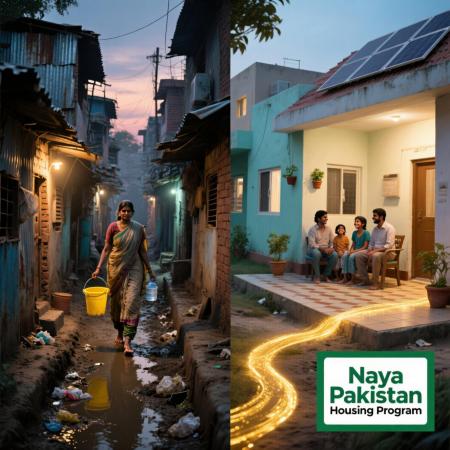
One of the most pressing areas where financing for low and middle income group falls short is housing. Pakistan faces a housing deficit of over 10 million units, with the majority of demand coming from low- and middle-income families. Yet, traditional mortgage systems are inaccessible to most due to high down payments (20–30%), strict documentation requirements, and long approval processes. The Naya Pakistan Housing Program (NPHP), launched in 2019, aims to bridge this gap by offering subsidized housing units and facilitating access to affordable loans. Under this initiative, the government provides land, infrastructure, and partial subsidies, while banks offer long-term financing at reduced interest rates. Financing for low and middle income group through NPHP has enabled thousands to purchase homes, but implementation challenges—such as delays, land disputes, and limited availability—have slowed progress. Moreover, many low-income families prefer incremental housing—building their homes gradually over time—rather than purchasing a complete unit. This model requires flexible financing that aligns with construction stages, but few banks offer such products. Financing for low and middle income group in the housing sector must therefore include innovative models like staged disbursement loans and rent-to-own schemes.Digital Finance and Fintech Innovation
The rise of digital finance has opened new avenues for financing for low and middle income group. Mobile banking platforms like JazzCash and Easypaisa have brought millions of unbanked Pakistanis into the formal financial system. With over 70 million mobile wallet accounts, these platforms enable users to send money, pay bills, save, and access small digital loans. Digital credit scoring, powered by AI and alternative data (e.g., mobile usage, transaction history), allows lenders to assess creditworthiness without traditional collateral. This has made it possible to offer instant microloans—sometimes as low as PKR 1,000—to individuals with no formal credit history. Financing for low and middle income group through fintech is faster, cheaper, and more inclusive than traditional banking. However, challenges remain. Digital literacy is low, especially among older and rural populations. Cybersecurity risks, data privacy concerns, and predatory lending practices also threaten consumer protection. Financing for low and middle income group through digital platforms must be accompanied by strong regulation, consumer education, and ethical lending standards.Government Initiatives and Policy Support
The Government of Pakistan has recognized the importance of financing for low and middle income group and has introduced several policy measures to support it. The State Bank of Pakistan (SBP) has directed commercial banks to allocate a certain percentage of their loan portfolios to small and medium enterprises (SMEs) and low-income housing. Additionally, the Benazir Income Support Program (BISP) has been linked with financial inclusion efforts, providing cash transfers directly into beneficiaries’ bank accounts. This not only ensures transparency but also introduces poor households to formal banking. Financing for low and middle income group is further supported through risk-sharing facilities, where the government absorbs part of the loss if borrowers default. Despite these efforts, policy implementation is inconsistent. Many banks still view lending to low-income clients as high-risk and prioritize corporate or elite customers. Financing for low and middle income group requires stronger enforcement of inclusion mandates, better monitoring, and incentives for banks to serve underserved markets.Gender and Financial Inclusion
A critical dimension of financing for low and middle income group is gender equity. Women in Pakistan face significant barriers to financial access due to cultural norms, lack of property ownership, and legal restrictions. Only about 12% of women have bank accounts, compared to 34% of men. However, targeted programs have shown promise. First Women Bank and Kashf Foundation focus exclusively on women entrepreneurs, offering microloans, financial literacy training, and business development support. Financing for low and middle income group that prioritizes women not only empowers individuals but also strengthens families and communities. Studies show that women are more likely to invest loan proceeds in children’s education, healthcare, and home improvement. By expanding financing for low and middle income group with a gender lens, Pakistan can unlock significant social and economic returns.The Middle-Income Dilemma
While much attention is given to the poor, the middle-income group also faces unique challenges in accessing finance. This group—earning between PKR 50,000 and PKR 150,000 per month—often falls into a “credit gap.” They earn too much to qualify for microloans but too little to afford conventional mortgages or car loans. Many middle-income families rely on informal borrowing or credit cards with high interest rates. They struggle to save for major life events like marriage, education, or home purchase. Financing for low and middle income group must therefore include tailored products such as personal loans, education financing, and affordable auto loans. Cooperative societies and housing finance companies have begun to fill this gap, but their reach is limited. Expanding financing for low and middle income group in the middle-income bracket requires innovative credit models, government-backed guarantees, and public-private partnerships.Challenges in Rural Areas
Financing for low and middle income group is especially difficult in rural Pakistan, where banking infrastructure is sparse. Many villages lack bank branches, ATMs, or internet connectivity, forcing residents to travel long distances for basic services. Agriculture, the main livelihood in rural areas, is highly vulnerable to climate change and market fluctuations, making lenders hesitant to finance farmers. Yet, agricultural microfinance and crop insurance can help smallholders invest in seeds, equipment, and irrigation. Financing for low and middle income group in rural areas must include mobile banking agents, agricultural credit, and weather-indexed insurance. The Punjab Rural Support Program (PRSP) and Sindh Rural Support Organization (SRSO) have demonstrated success through community-based savings groups and revolving funds. These models build trust and financial literacy at the grassroots level, laying the foundation for broader financial inclusion.The Role of International Partners
International organizations have played a vital role in advancing financing for low and middle income group in Pakistan. The World Bank, Asian Development Bank (ADB), and United Nations Development Programme (UNDP) have funded financial inclusion projects, housing programs, and digital infrastructure. For example, the ADB-supported Urban Sector Project includes components for affordable housing finance and slum upgrading. These initiatives provide technical assistance, risk-sharing mechanisms, and capacity building for local institutions. Financing for low and middle income group benefits from international expertise, funding, and best practices. Blended finance—combining public, private, and donor funds—is another promising model. By de-risking investments, blended finance encourages private sector participation in affordable housing and SME lending. Financing for low and middle income group can scale significantly with continued international cooperation.Building Financial Literacy
A major barrier to effective financing for low and middle income group is low financial literacy. Many people do not understand interest rates, loan terms, or the benefits of saving. This lack of knowledge leads to poor financial decisions, debt traps, and mistrust of formal institutions. NGOs and banks have launched financial education campaigns in schools, communities, and digital platforms. Topics include budgeting, saving, credit management, and digital banking. Financing for low and middle income group must include sustained investment in financial literacy to ensure that people can use financial tools wisely and safely.Future Directions and Recommendations
To strengthen financing for low and middle income group, Pakistan must adopt a holistic, multi-stakeholder approach. This includes:- Expanding digital finance with stronger regulation and consumer protection.
- Developing flexible housing finance models like incremental loans and rent-to-own.
- Strengthening rural financial infrastructure through agent banking and mobile networks.
- Promoting gender-inclusive financial products.
- Enhancing coordination between government, banks, and NGOs.