Financial Inclusion and Development in the CEMAC
Introduction
Financial Inclusion and Development have emerged as critical pillars for economic transformation across the Central African Economic and Monetary Community (CEMAC). Comprising six countries—Cameroon, Central African Republic, Chad, Republic of Congo, Equatorial Guinea, and Gabon—the CEMAC region faces persistent structural challenges, including low banking penetration, limited infrastructure, political instability, and heavy reliance on extractive industries. Yet, within these constraints lies a powerful opportunity: leveraging financial inclusion as a catalyst for broad-based development.
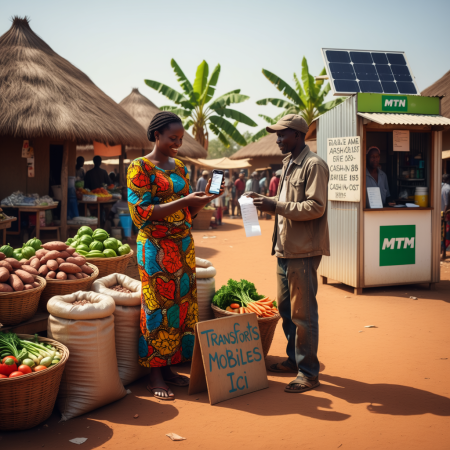
Financial Inclusion and Development are not merely about expanding access to bank accounts; they encompass the provision of affordable, appropriate, and secure financial services—credit, savings, insurance, and payments—that empower individuals, microenterprises, and small businesses to participate meaningfully in the economy. This summary explores the state, drivers, barriers, and policy pathways of Financial Inclusion and Development in the CEMAC region, highlighting how inclusive finance can unlock human capital, reduce poverty, and foster resilient, diversified economies.
The Current Landscape of Financial Access
Across CEMAC, formal financial inclusion remains strikingly low. According to recent data from the World Bank’s Global Findex and regional reports, fewer than 30% of adults in most CEMAC countries hold an account at a financial institution or mobile money provider—significantly below the Sub-Saharan Africa average. In rural areas, the gap widens dramatically, with access often limited to informal savings groups (tontines) or cash-based transactions.
Banking infrastructure is sparse: Gabon and Cameroon have relatively denser branch networks, while the Central African Republic and Chad suffer from severe financial deserts. This exclusion disproportionately affects women, youth, and agricultural communities—groups that form the backbone of local economies.
Without access to formal financial tools, these populations remain trapped in cycles of informality and vulnerability. Thus, advancing Financial Inclusion and Development is not just an economic imperative but a social justice issue in the CEMAC context.
The Role of Mobile Money and Digital Innovation
One of the most promising developments in the region has been the gradual expansion of mobile money services. While CEMAC lags behind East and West Africa in mobile money adoption—partly due to regulatory fragmentation and lower mobile internet penetration—pioneering efforts are underway. In Cameroon, services like Orange Money and MTN Mobile Money have gained traction, enabling users to send remittances, pay bills, and save digitally.
The BEAC (Bank of Central African States), the region’s central bank, launched the
Regional Interbank Payment and Settlement System (SITRAC) to facilitate cross-border digital transactions and promote interoperability. Additionally, the 2021 introduction of a
regional mobile money interoperability framework marked a turning point, allowing users on different networks to transact seamlessly.
These innovations are foundational to Financial Inclusion and Development, as they bypass traditional brick-and-mortar barriers and bring financial services directly to underserved populations via devices they already own.
Barriers to Inclusion: Structural and Systemic
Despite progress, formidable obstacles hinder Financial Inclusion and Development in CEMAC. First,
infrastructure deficits—including unreliable electricity, limited broadband, and poor road networks—impede the rollout of digital financial services, especially in remote areas. Second,
low financial literacy means many potential users lack the knowledge or trust to engage with formal systems.
Third,
regulatory fragmentation persists: while CEMAC shares a common currency (the CFA franc) and central bank, national regulations on KYC (Know Your Customer), agent banking, and data privacy vary, complicating regional scale-up.
Fourth,
gender disparities are pronounced: cultural norms, lack of identification documents, and limited asset ownership restrict women’s access to finance.
Finally,
economic informality—with over 80% of employment in the informal sector—makes income unpredictable and collateral scarce, deterring traditional lenders. Addressing these intertwined barriers is essential to unlocking the full potential of Financial Inclusion and Development.
The Link Between Financial Inclusion and Broader Development Goals
Financial Inclusion and Development are deeply interconnected with poverty reduction, gender equality, agricultural productivity, and SME growth. When farmers can access credit to buy seeds or insurance against drought, yields improve. When women control savings accounts, household spending on education and health increases. When micro-entrepreneurs obtain working capital, they hire locally and reinvest in their communities. In CEMAC, where agriculture employs the majority but contributes modestly to GDP due to underinvestment, inclusive finance can bridge this gap. Moreover, formal financial channels enhance
tax compliance and
fiscal transparency, strengthening state capacity. Thus, Financial Inclusion and Development serve as a multiplier effect—amplifying the impact of investments in health, education, and infrastructure.
Policy and Institutional Frameworks
Recognizing this potential, CEMAC institutions have taken steps to institutionalize Financial Inclusion and Development. The BEAC adopted a
Regional Financial Inclusion Strategy (2021–2025), aligned with the African Union’s Agenda 2063 and the UN Sustainable Development Goals. This strategy prioritizes: (1) expanding digital payment ecosystems, (2) promoting agent banking in rural zones, (3) developing credit bureaus and collateral registries, (4) integrating financial education into school curricula, and (5) harmonizing national inclusion policies. National governments have followed suit: Cameroon launched its National Financial Inclusion Strategy in 2020, while Gabon has piloted digital ID systems to ease KYC requirements. These coordinated efforts signal a growing consensus that Financial Inclusion and Development must be embedded in national development planning.
The Importance of Identity and Data Systems
A critical enabler of Financial Inclusion and Development is reliable identification. In CEMAC, millions lack official IDs, blocking access to bank accounts and digital services. To address this, countries are investing in civil registration and digital ID programs—often with World Bank or UN support. For example, Chad’s ongoing biometric ID rollout aims to cover 90% of adults by 2026. Coupled with secure data-sharing protocols, these systems allow financial providers to verify identities remotely, reduce fraud, and offer tailored products. Without such foundational infrastructure, even the most innovative fintech solutions will remain out of reach for the most marginalized. Hence, identity systems are not ancillary but central to Financial Inclusion and Development.
Fintech and the Private Sector’s Role
The private sector—particularly fintech startups and telecom operators—is increasingly driving Financial Inclusion and Development in CEMAC. Companies like
Wari (Senegal-based but active in Cameroon) and local aggregators are building agent networks that double as utility payment kiosks and microinsurance points. However, the fintech ecosystem remains nascent due to limited venture capital, unclear regulatory sandboxes, and small market sizes per country. Regional integration could help: a unified CEMAC fintech market would attract more investment and enable scalable business models. Encouraging public-private partnerships, offering innovation grants, and establishing regulatory sandboxes are vital steps to catalyze private-sector-led Financial Inclusion and Development.
Gender-Responsive Financial Inclusion
Women’s financial exclusion in CEMAC is both a symptom and a cause of gender inequality. Targeted interventions are needed: gender-disaggregated data collection, female-focused financial products (e.g., savings groups linked to mobile wallets), and training for women agents. In rural Chad, pilot programs that combine mobile savings with agricultural extension services have shown promising results in boosting women’s income and decision-making power. Mainstreaming gender into all aspects of policy ensures that Financial Inclusion and Development benefit everyone—not just the already-advantaged.
Challenges of Conflict and Fragility
Several CEMAC countries—particularly the Central African Republic and parts of Cameroon and Chad—face recurring conflict, displacement, and institutional fragility. In such contexts, traditional banking is impossible, and digital infrastructure is vulnerable. Yet, even here, Financial Inclusion and Development can play a role: mobile money has been used to deliver humanitarian cash transfers in conflict zones, restoring dignity and local market activity. Building
resilient, low-tech financial rails—such as USSD-based services that work on basic phones—is essential for inclusion in fragile settings. Thus, Financial Inclusion and Development must be conflict-sensitive and adaptive.
Regional Integration as a Force Multiplier
CEMAC’s greatest advantage is its monetary union. Unlike regions with multiple currencies, CEMAC can design
pan-regional financial products—a mobile wallet that works from Libreville to N’Djamena, a regional credit score, or a shared microinsurance pool. The BEAC’s push for interoperability is a step in this direction. Deeper integration—harmonizing business registration, collateral laws, and consumer protection—would dramatically lower costs and risks for providers, accelerating Financial Inclusion and Development across borders.
Measuring Progress and Accountability
To ensure accountability, CEMAC has begun establishing indicators to track Financial Inclusion and Development. These include adult account ownership rates, mobile money usage, SME loan access, and gender gaps. Regular surveys and dashboards—published by BEAC and national statistical offices—allow policymakers to course-correct. Transparent monitoring turns Financial Inclusion and Development from aspirational rhetoric into measurable outcomes.
The Road Ahead: A Call for Coherence
The path forward requires coherence across sectors: finance, telecom, education, agriculture, and social protection. Financial Inclusion and Development cannot succeed in silos. For example, linking agricultural subsidy programs to digital wallets not only improves efficiency but also onboards farmers into the formal financial system. Similarly, integrating financial literacy into adult education programs builds long-term capacity. Only through such synergies can CEMAC transform inclusion into sustained development.
Conclusion
In sum, Financial Inclusion and Development represent a transformative opportunity for the CEMAC region. While challenges are significant—infrastructure gaps, regulatory hurdles, gender inequality, and fragility—the building blocks are in place: a shared currency, growing mobile penetration, committed institutions, and a young, dynamic population. By prioritizing inclusive, digital-first, and gender-responsive strategies, CEMAC can turn financial access into a powerful engine for job creation, resilience, and shared prosperity. The success of its development agenda hinges on how effectively it advances Financial Inclusion and Development.
Also read: HOUSING FINANCE IN THE CEMAC REGION CURRENT STATUS
