Ethiopia: Condominium Housing the Integrated Housing Development Program
Introduction
Ethiopia: Condominium Housing emerged in the early 2000s as a cornerstone of the Ethiopian government’s ambitious strategy to tackle one of Africa’s most pressing urban challenges: a severe shortage of affordable housing. Spearheaded under the Integrated Housing Development Program (IHDP), launched in 2005, this initiative sought to transform Addis Ababa and other rapidly growing cities by delivering standardized, low-cost condominium units to low- and middle-income civil servants, teachers, and public sector employees.
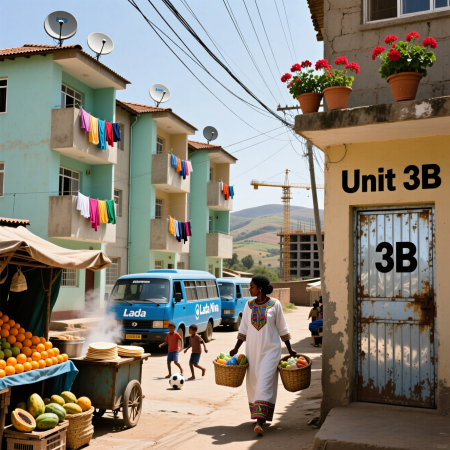
At a time when urban populations were swelling due to rural migration and natural growth, traditional informal settlements—often lacking basic services—dominated the housing landscape. Ethiopia: Condominium Housing promised a modern, orderly, and dignified alternative. Over the years, it has become both a symbol of state-led development and a subject of intense debate regarding affordability, quality, and social equity.
The Genesis of the Integrated Housing Development Program
The IHDP was conceived during a period of strong economic growth and centralized planning under Prime Minister Meles Zenawi. With Addis Ababa’s population projected to double within two decades, the government recognized that market-driven housing alone could not meet demand, especially for public sector workers earning modest salaries. The solution? A vertically integrated, state-coordinated model where the government would supply land, manage construction through public enterprises, and offer long-term mortgage financing via the Commercial Bank of Ethiopia.
Ethiopia: Condominium Housing was not just about shelter—it was a tool for urban restructuring, social engineering, and economic stimulus. By building high-density residential blocks on the city’s periphery, the state aimed to curb sprawl, formalize land use, and create “model communities” aligned with its vision of modern Ethiopian urbanism.
Design Philosophy and Standardization
One of the defining features of Ethiopia: Condominium Housing is its emphasis on standardization. Units typically come in two sizes—45 m² (one-bedroom) and 65 m² (two-bedroom)—with uniform layouts, materials, and finishes. This approach allowed for economies of scale, faster construction, and easier cost control. Buildings are usually four to six stories tall, constructed with reinforced concrete frames and brick infill, often painted in muted pastel tones. While critics have called the aesthetic monotonous, proponents argue that standardization was essential to keep costs low and ensure rapid delivery. Ethiopia: Condominium Housing thus reflects a pragmatic, almost industrial approach to urban housing—one that prioritizes function and accessibility over architectural flair.
Financing Mechanism: The Mortgage Model
Perhaps the most innovative aspect of the IHDP was its financing structure. Buyers were required to make a 10–20% down payment and then repay the balance over 15 to 30 years at a fixed interest rate (initially around 5–7%). Crucially, eligibility was tied to formal employment and regular income, effectively excluding informal workers and the urban poor. The government acted as both developer and financier, creating a closed-loop system that minimized private sector risk. For many civil servants, Ethiopia: Condominium Housing represented their first opportunity to own property—a path to stability and social mobility. However, the rigid payment schedules and income requirements meant that even modest economic shocks could lead to defaults, revealing vulnerabilities in the model.
Social Impact: Stability vs. Exclusion
On the surface, Ethiopia: Condominium Housing has delivered tangible benefits. Thousands of families have moved from cramped rental rooms or self-built shacks into secure, serviced apartments with running water, electricity, and sanitation. Many developments include shared amenities like playgrounds, community centers, and small retail spaces. Residents often report improved quality of life, reduced commuting times (in well-located sites), and a sense of pride in homeownership. Yet, the program has also been criticized for deepening social stratification. By targeting only the “deserving poor”—those with formal jobs—it excluded the most vulnerable urban dwellers. In effect, Ethiopia: Condominium Housing created a new urban middle class while leaving behind the informal sector, reinforcing rather than reducing inequality.
Urban Planning and Spatial Consequences
The location of most IHDP sites—on the outskirts of Addis Ababa and other cities—has had significant spatial implications. While this allowed the government to use cheaper, state-owned land, it also contributed to urban fragmentation. Many residents face long commutes due to inadequate public transportation, undermining the program’s promise of convenience. Moreover, the rapid construction of large housing blocks without proportional investment in schools, clinics, or commercial infrastructure has led to “dormitory towns” that lack vibrancy and self-sufficiency. Thus, Ethiopia: Condominium Housing, though well-intentioned, sometimes exacerbates urban inefficiencies rather than solving them.
Construction Quality and Maintenance Challenges
Despite its scale, the IHDP has faced persistent concerns about construction quality. Reports of cracked walls, leaking roofs, poor sound insulation, and substandard plumbing are common, especially in early-phase projects. These issues stem from rushed timelines, contractor inexperience, and weak oversight. Furthermore, once handed over, many condominium associations struggle with maintenance due to limited funds and weak governance structures. Without functioning homeowners’ associations or reserve funds, common areas deteriorate quickly. This raises questions about the long-term sustainability of Ethiopia: Condominium Housing as a durable housing solution.
Political Economy: State Control and Limited Private Participation
The IHDP reflects Ethiopia’s historically state-centric development model. Private developers were largely sidelined in favor of public construction enterprises like the Ethiopian Construction Works Corporation. While this ensured control and alignment with policy goals, it also stifled innovation and competition. Only in recent years has the government begun to encourage private sector involvement through public-private partnerships. Nevertheless, Ethiopia: Condominium Housing remains emblematic of a top-down, bureaucratic approach to urban development—one that values order and control over flexibility and market responsiveness.
Gender Dimensions and Household Dynamics
Interestingly, the IHDP has had notable gender implications. Because property titles are often registered in the name of the primary income earner—frequently the male head of household—women’s housing security can be precarious, especially in cases of separation or widowhood. However, some studies show that female civil servants have used the program to assert independent homeownership, challenging traditional norms. Ethiopia: Condominium Housing thus sits at the intersection of housing policy and gender equity, with outcomes that vary widely based on household structure and local context.
Comparison with Informal Settlements
When compared to the informal settlements it was meant to replace, Ethiopia: Condominium Housing offers clear advantages: legal tenure, basic services, and structural safety. Yet, it also sacrifices the organic social networks, incremental building practices, and economic flexibility of informal neighborhoods. In ketches (informal areas), residents often run small businesses from their homes, adapt spaces to changing needs, and rely on mutual aid. In contrast, condominium rules may prohibit commercial activity, and modifications to units are restricted. Thus, Ethiopia: Condominium Housing trades informality for formality—but not always for greater livability.
Affordability: A Moving Target
While marketed as “affordable,” the actual cost of Ethiopia: Condominium Housing has risen over time due to inflation, material costs, and land scarcity. For many eligible buyers, monthly mortgage payments consume 30–50% of their income, leaving little room for other essentials. Moreover, hidden costs—utility connections, association fees, transportation—add to the burden. As a result, some units remain vacant or are rented out illegally, while others are abandoned due to financial strain. This suggests that Ethiopia: Condominium Housing, despite its intentions, may not be truly affordable for its target population in the long run.
Environmental Considerations
The environmental footprint of the IHDP is mixed. On one hand, high-density construction reduces per-capita land consumption and can lower energy use compared to single-family homes. On the other, many sites lack green spaces, stormwater management, or energy-efficient design. Waste collection and water recycling systems are often underdeveloped. As climate resilience becomes a priority, future iterations of Ethiopia: Condominium Housing will need to integrate sustainable building practices and ecological planning.
Lessons for Other African Cities
Ethiopia’s experience offers valuable lessons for other rapidly urbanizing nations. The IHDP demonstrates that large-scale, state-led housing programs can deliver significant volumes of units quickly. However, it also shows the risks of over-standardization, exclusionary eligibility, and poor post-occupancy support. Countries like Kenya, Rwanda, and Nigeria have studied Ethiopia’s model but are adapting it with greater private sector involvement and flexible tenure options. In this sense, Ethiopia: Condominium Housing serves as both a blueprint and a cautionary tale.
Recent Reforms and Future Directions
In response to criticisms, the Ethiopian government has introduced reforms to the IHDP. These include shorter mortgage terms, inclusion of lower-income brackets, and pilot projects with private developers. There’s also growing emphasis on in-situ upgrading of informal settlements rather than wholesale relocation. Digital platforms for application and payment have improved transparency, though access remains uneven. The future of Ethiopia: Condominium Housing may lie in hybrid models that blend public oversight with market efficiency and community participation.
Cultural Reception and Public Perception
Public opinion on Ethiopia: Condominium Housing is deeply divided. For many civil servants, it represents hard-won stability and national progress. For others, it symbolizes bureaucratic rigidity and unmet promises. Social media is filled with testimonials—some praising clean, modern living; others lamenting poor construction or isolation. This duality reflects the broader tension in Ethiopia’s development narrative: between state ambition and lived reality. Ethiopia: Condominium Housing, therefore, is not just a housing program but a social mirror.
The Role of Community and Social Cohesion
Despite physical uniformity, many condominium communities have developed strong social bonds. Neighborhood associations organize clean-up days, cultural events, and mutual aid networks. In some cases, residents have collectively lobbied for better bus routes or school placements. This grassroots agency shows that Ethiopia: Condominium Housing can foster community—if given the right support structures. The challenge is institutionalizing this bottom-up energy within a top-down system.
Economic Multiplier Effects
The IHDP has generated significant economic activity. Thousands of construction jobs were created, demand for cement and steel surged, and ancillary services—from plumbing to furniture—flourished. Local economies around new sites have slowly grown, though often lagging behind housing delivery. In this way, Ethiopia: Condominium Housing acted as a macroeconomic stimulus, demonstrating how housing can be a driver of industrial and employment policy.
Tenure Security and Legal Framework
One of the program’s greatest achievements is the provision of formal land titles—a rarity in much of urban Africa. Secure tenure reduces the threat of eviction and enables residents to use property as collateral. However, bureaucratic delays in title issuance and restrictions on resale (units cannot be sold for 10–15 years) limit liquidity. Still, Ethiopia: Condominium Housing has advanced property rights in a context where land is state-owned and private ownership is historically limited.
Conclusion: Promise, Problems, and Possibility
Ethiopia: Condominium Housing stands as one of Africa’s most ambitious urban housing experiments. It has provided homes to over 500,000 households and reshaped the urban fabric of major cities. Yet, its legacy is complex—marked by genuine progress and persistent shortcomings. The program succeeded in scaling up formal housing but struggled with affordability, quality, and inclusivity. As Ethiopia navigates political transition and economic reform, the future of its housing policy remains uncertain. What is clear, however, is that Ethiopia: Condominium Housing has sparked a vital conversation about what equitable, sustainable urban development looks like in the 21st century.
Final Thoughts: Beyond Bricks and Mortar
Ultimately, Ethiopia: Condominium Housing is more than a construction project—it is a social contract between the state and its citizens. It reflects aspirations for modernity, dignity, and order. But it also reveals the limits of technocratic solutions in deeply unequal societies. Moving forward, success will depend not just on building more units, but on listening to residents, adapting to local needs, and integrating housing into a broader vision of inclusive urbanism. Only then can the promise of Ethiopia: Condominium Housing be fully realized.
Also read: Factors Affecting Housing Affordability in Ethiopia
