
GLOBAL: EFFICIENCY OF MICROFINANCE IN ISLAMIC ECONOMIC PERSPECTIVE
Introduction
The efficiency of microfinance in Islamic economic perspective is evident in its role as a transformative tool for financial inclusion, poverty alleviation, and economic empowerment worldwide. Particularly in Muslim-majority countries and communities, aligning microfinance with Islamic economic principles is not only ethically imperative but also practically effective. This model integrates core religious values such as justice, equity, and risk-sharing into financial services, ensuring that developmental impact is achieved without compromising moral and Shariah-compliant standards.
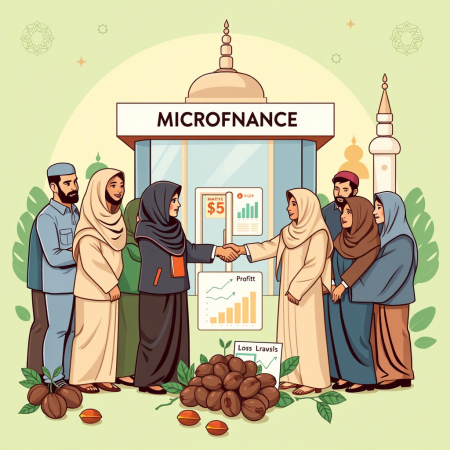
Foundations of Islamic Economics and Its Relevance to Microfinance
To fully grasp the efficiency of microfinance in Islamic economic perspective, one must first understand the core tenets of Islamic economics. Unlike secular economic models that often prioritize profit maximization, Islamic economics integrates spiritual and ethical dimensions into financial behavior. Key principles include:- Prohibition of Riba (Interest): Interest is considered exploitative and unjust under Islamic law.
- Profit and Loss Sharing (PLS): Financial relationships are based on mutual risk and reward.
- Social Justice: Wealth should be distributed fairly and used to uplift the poor.
- Charitable Giving (Zakat): A mandatory portion of income is given to those in need.
- Ethical Investment: Only halal (permissible) economic activities are supported.
Operational Models in Islamic Microfinance
The efficiency of microfinance in Islamic economic perspective is largely determined by the financial instruments used. These instruments must comply with Shariah law while delivering practical benefits to borrowers and lenders alike. Commonly used models include:Mudarabah (Profit-Sharing Partnership)
In this arrangement, one party provides capital (the financier) while the other manages the business (the entrepreneur). Profits are shared according to a pre-agreed ratio, while losses are borne solely by the investor unless caused by negligence. This model encourages entrepreneurship and fosters a sense of shared accountability.Musharakah (Joint Venture)
Both parties contribute capital and share in profits and losses proportionally. This model is particularly useful for funding small businesses where both lender and borrower have a vested interest in success.Qard al-Hasan (Benevolent Loan)
An interest-free loan extended to those in need, often used in charitable microfinance programs. It reflects the Islamic value of compassion and social responsibility.Murabaha (Cost-Plus Sale)
Though more commonly associated with consumer finance, some MFIs use Murabaha to sell goods at cost plus an agreed markup, paid overtime. While not strictly PLS-based, it offers a Shariah-compliant alternative to conventional credit. Through the lens of the efficiency of microfinance in Islamic economic perspective, these models offer flexibility, fairness, and alignment with ethical norms, making them suitable for serving marginalized communities.Promoting Financial Inclusion Through Islamic Microfinance
One of the most compelling aspects of the efficiency of microfinance in Islamic economic perspective is its role in promoting financial inclusion. Traditional banking systems often exclude the poor due to high costs, lack of collateral, and complex documentation. Islamic microfinance addresses these barriers through accessible and culturally appropriate financial tools. Many Islamic MFIs operate within cooperative structures or community-based organizations, allowing for localized decision-making and increased outreach. Additionally, savings products based on PLS encourage individuals to build their assets ethically while contributing to broader community development. From the standpoint of the efficiency of microfinance in Islamic economic perspective, this inclusiveness not only expands access to financial services but also builds trust and long-term engagement with formal financial systems.Empowering Women and Marginalized Groups
A significant outcome identified through the efficiency of microfinance in Islamic economic perspective is its positive impact on women's empowerment. Many Islamic microfinance programs specifically target women, recognizing their potential as entrepreneurs and change-makers within families and communities. In countries like Pakistan, Bangladesh, and Indonesia, Islamic MFIs have successfully provided interest-free loans and profit-sharing investments to women who otherwise would have no access to credit. These initiatives have led to increased household incomes, improved education for children, and greater decision-making power for women. Furthermore, because Islamic microfinance emphasizes ethical conduct and social responsibility, it fosters a supportive environment for female borrowers, reducing stigma and increasing confidence. This aspect of the efficiency of microfinance in Islamic economic perspective highlights how financial tools can serve as catalysts for gender equality and social progress.Risk Sharing and Economic Stability
An essential component of the efficiency of microfinance in Islamic economic perspective lies in its emphasis on risk sharing. Unlike conventional microfinance, which often places the burden of repayment solely on the borrower regardless of business performance, Islamic models distribute risks between the lender and the borrower. This shared-risk mechanism encourages prudent investment decisions and discourages speculative behavior. It also reduces the likelihood of loan defaults during economic downturns, enhancing the overall stability of the financial system. Moreover, the participatory nature of Islamic microfinance—where both parties have a stake in the outcome—builds stronger relationships between institutions and clients. This trust is vital for long-term engagement and program sustainability, reinforcing the efficiency of microfinance in Islamic economic perspective.Social Equity and Poverty Reduction
The efficiency of microfinance in Islamic economic perspective is further enhanced by its commitment to social equity. Islamic microfinance integrates Zakat, Sadaqah, and Waqf into its operations, ensuring that wealth redistribution remains a central goal. For instance, many Islamic MFIs collect and distribute Zakat funds alongside microfinance services, targeting the poorest segments of society. This dual approach ensures that financial inclusion is not just about providing credit but also about lifting people out of poverty through targeted assistance. By aligning microfinance with Islamic values of charity and justice, the efficiency of microfinance in Islamic economic perspective contributes to reducing inequality and fostering inclusive development.Challenges Facing Islamic Microfinance
Despite its many strengths, the efficiency of microfinance in Islamic economic perspective also reveals several challenges that hinder widespread adoption and effectiveness.Lack of Awareness and Understanding
Many people, even within Muslim-majority countries, are unfamiliar with Islamic finance principles. This lack of awareness can lead to misconceptions and reluctance to engage with Islamic MFIs.Operational Complexity
Managing profit-sharing and joint venture models requires sophisticated accounting and monitoring systems. Without proper infrastructure, MFIs may struggle with accurate profit distribution and client communication.Regulatory Hurdles
Many national regulatory frameworks are designed for conventional banking systems and do not adequately accommodate Islamic financial instruments. This creates legal and operational challenges for Islamic MFIs.Limited Funding Sources
Compared to conventional microfinance, Islamic MFIs often face difficulties in securing capital. Since they cannot offer interest-based returns, attracting investors can be challenging.Scalability Issues
While Islamic microfinance works well in localized settings, scaling up operations to reach larger populations requires significant investment in technology, training, and institutional capacity. Addressing these issues is crucial for maximizing the efficiency of microfinance in Islamic economic perspective and ensuring that Islamic MFIs can deliver impactful, sustainable services.Case Studies Demonstrating Success
Several countries have successfully implemented Islamic microfinance programs, demonstrating the practical relevance of the efficiency of microfinance in Islamic economic perspective. Some notable examples include:Akhuwat Foundation – Pakistan
Akhuwat is one of the largest Islamic microfinance institutions globally, offering interest-free loans to low-income entrepreneurs. Its community-based lending model has helped thousands of families escape poverty and become self-reliant.Baitul Maal wat Tamwil (BMT) – Indonesia
These cooperative-style institutions provide Shariah-compliant financial services to rural communities. They combine microfinance with Zakat collection and distribution, creating a holistic model of poverty alleviation.Grameen Islamic Bank – Bangladesh
Launched as an alternative to conventional microfinance, this institution uses Mudarabah and Musharakah contracts to offer ethical financing options to women and small businesses. These case studies illustrate how the efficiency of microfinance in Islamic economic perspective translates into real-world outcomes. They demonstrate that when properly structured, Islamic microfinance can be a powerful engine for economic transformation.Policy Recommendations for Enhancing Efficiency
To strengthen the efficiency of microfinance in Islamic economic perspective, policymakers and financial regulators should consider the following recommendations:Develop Clear Regulatory Frameworks
Governments should create legal environments that recognize and support Islamic financial instruments, including microfinance.Promote Financial Literacy
Public education campaigns can increase awareness of Islamic finance principles and encourage broader participation.Encourage Institutional Capacity Building
Training programs for MFI staff, along with investment in digital infrastructure, can improve service delivery and scalability.Facilitate Access to Capital
Governments and international donors can establish funds or guarantee schemes to attract investors to Islamic microfinance.Integrate with Social Safety Nets
Combining microfinance with Zakat, Waqf, and other Islamic philanthropy tools can enhance poverty reduction efforts.Support Research and Innovation
Continued research into best practices and innovative models will help refine the efficiency of microfinance in Islamic economic perspective. These policy interventions are essential for unlocking the full potential of Islamic microfinance and ensuring its long-term viability as a poverty alleviation tool.Conclusion: The Future of Islamic Microfinance
In conclusion, analyzing the efficiency of microfinance in Islamic economic perspective underscores the importance of integrating ethical finance with development goals. Islamic microfinance not only provides financial services to the unbanked but also builds stronger, more resilient communities rooted in fairness and shared prosperity. While challenges remain, the successes observed in various regions indicate that Islamic microfinance is a viable and scalable solution for addressing global poverty. With continued innovation, supportive policies, and public-private partnerships, the efficiency of microfinance in Islamic economic perspective can be further enhanced to meet the needs of millions still living in economic hardship.As the world seeks sustainable and inclusive financial systems, the Islamic microfinance model offers valuable lessons on how to align finance with human dignity, social justice, and economic empowerment.
Also read: PAKISTAN: ISLAMIC MICROFINANCE