
DEVELOPING HOUSING FINANCE IN PAKISTAN – CHALLENGES AND OPPORTUNITIES
Introduction
Developing housing finance in Pakistan is central to addressing the nation’s growing housing crisis—one of the most pressing socio-economic challenges of our time. With a rapidly expanding population, accelerating urbanization, and a housing deficit exceeding 10 million units, millions of families lack access to safe, secure, and affordable homes.
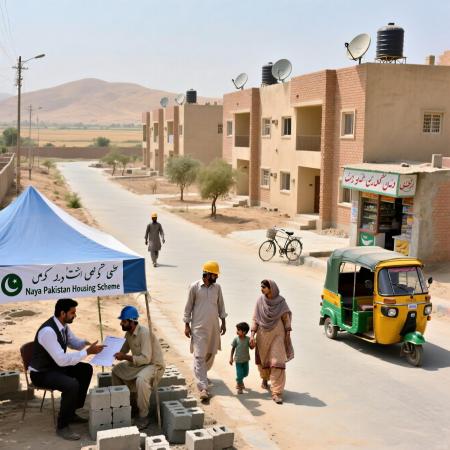
At the heart of any sustainable solution lies the need for developing housing finance in Pakistan, a process that entails building a robust, inclusive, and resilient financial ecosystem. This system must enable individuals across all income levels—particularly low- and middle-income households—to access affordable mortgage loans, construction financing, and long-term savings instruments tailored for housing needs. Without significant progress in developing housing finance in Pakistan, the dream of homeownership will remain out of reach for the majority, undermining economic stability, urban development, and social equity.
While Pakistan has made some progress in recent years, particularly through government initiatives like the Naya Pakistan Housing Program (NPHP), the broader system of housing finance remains underdeveloped. Banks and financial institutions offer limited mortgage products, interest rates are often high, and formal credit access is restricted to a small fraction of the population. As a result, most Pakistanis rely on informal financing, personal savings, or family support to build or buy homes—methods that are neither scalable nor sustainable. Therefore, developing housing finance in Pakistan is not just an economic necessity but a social imperative to ensure inclusive urban development and improved living standards.Historical Context of Developing Housing Finance in Pakistan
The roots of formal housing finance in Pakistan can be traced back to the establishment of the Pakistan Housing Finance Corporation (PHFC) in 1980, modeled after similar institutions in other developing countries. However, due to limited funding, weak regulatory oversight, and lack of integration with the broader banking sector, PHFC struggled to make a meaningful impact. Over the decades, housing remained largely outside the formal financial system, with most construction funded through cash transactions and informal loans. The real push for Developing housing finance in Pakistan began in the early 2000s with the introduction of mortgage-backed financing and the gradual liberalization of the financial sector. The State Bank of Pakistan (SBP) and the Securities and Exchange Commission of Pakistan (SECP) started exploring ways to deepen mortgage markets, including the creation of a legal framework for property registration and collateral enforcement. Despite these efforts, progress remained slow, and by 2018, mortgage penetration was still below 1% of GDP—among the lowest in South Asia.The Current State of Developing Housing Finance in Pakistan
Today, Pakistan faces a dual challenge: a massive housing shortage and an underdeveloped financial system to support housing investment. According to the Ministry of Housing and Works, the country requires 400,000 new housing units annually to keep pace with demand, yet only a fraction of this target is met. The informal sector accounts for over 80% of housing construction, further weakening the case for formal financing. The banking sector, while growing, remains cautious about housing loans due to high perceived risks—especially related to unclear land titles, lengthy foreclosure processes, and economic volatility. As a result, mortgage loans make up less than 5% of total bank lending. This lack of access disproportionately affects low- and middle-income earners, who are often excluded from formal credit due to insufficient documentation, irregular income, or lack of credit history. However, there are signs of progress. The launch of the Naya Pakistan Housing Program in 2019 marked a significant policy shift, aiming to promote Developing housing finance in Pakistan through public-private partnerships, subsidized interest rates, and incentives for developers. The program also emphasized the use of modern construction technologies to reduce costs and accelerate delivery.Government Initiatives and Policy Reforms
The government has taken several steps to support Developing housing finance in Pakistan. In addition to the NPHP, the State Bank of Pakistan introduced the Refinance Scheme for Housing Finance Companies (HFCs) in 2020, providing low-cost refinancing to institutions offering housing loans. This initiative aimed to increase liquidity and lower interest rates for borrowers. Tax reforms have also played a role. The government has offered exemptions on sales tax, customs duties, and withholding taxes for housing projects under the NPHP, making it more attractive for private developers to participate. Additionally, efforts are underway to digitize land records and streamline property registration through the e-Registry system, which could reduce fraud and improve collateral security—key prerequisites for expanding housing finance. Despite these efforts, implementation remains inconsistent across provinces. Bureaucratic delays, political interference, and lack of coordination between federal and provincial authorities have slowed project execution. For Developing housing finance in Pakistan to succeed, these structural issues must be addressed through stronger governance and institutional capacity.Role of Financial Institutions and Housing Finance Companies
Banks and specialized housing finance companies (HFCs) are central to Developing housing finance in Pakistan. While traditional banks have been slow to enter the mortgage market, HFCs like Askari Housing Finance, MCB Arif Habib Mortgage, and Faysal Housing Finance have begun offering tailored products for different income segments. These institutions face several challenges, including high funding costs, limited access to long-term capital, and inadequate risk-sharing mechanisms. Most HFCs rely on short-term deposits or interbank borrowing, which makes it difficult to offer long-duration loans at stable interest rates. This mismatch between asset and liability maturity is a major constraint. To overcome this, there is growing interest in securitization and the development of a secondary mortgage market. By bundling mortgage loans and selling them as securities, HFCs could unlock capital and recycle funds into new loans. However, this requires a strong legal framework, credit rating infrastructure, and investor confidence—elements that are still in early stages of development.Challenges in Developing Housing Finance in Pakistan
Despite the potential, Developing housing finance in Pakistan faces numerous obstacles. One of the biggest is the lack of a reliable property rights system. In many areas, land titles are unclear, disputed, or undocumented, making it difficult to use property as collateral. This deters banks from offering mortgage loans and increases the risk of default. Another challenge is the high cost of financing. Interest rates on housing loans often exceed 15%, which is unaffordable for most households. While subsidized schemes exist, they are limited in scope and often benefit higher-income groups who already have better access to credit. Cultural factors also play a role. Many Pakistanis prefer to save cash or build homes incrementally rather than take on debt. There is also a general lack of financial literacy about mortgage products, repayment terms, and the benefits of formal financing. Without targeted awareness campaigns, demand for housing loans will remain low. Finally, macroeconomic instability—such as inflation, currency depreciation, and fluctuating interest rates—creates uncertainty for both lenders and borrowers. This volatility discourages long-term lending and makes it difficult to plan for multi-year housing projects.Opportunities for Expanding Housing Finance
Despite these challenges, there are significant opportunities for Developing housing finance in Pakistan. The country has a young and growing population, with over 60% under the age of 30. This demographic dividend represents a vast potential market for first-time homebuyers, especially as urbanization continues to accelerate. The rise of digital banking and fintech platforms offers a transformative opportunity. Mobile wallets, digital credit scoring, and online loan applications can help reach underserved populations in rural and peri-urban areas. Companies like Jazz Cash and EasyPaisa are already experimenting with micro-housing loans and construction financing, leveraging data analytics to assess creditworthiness. Another opportunity lies in public-private partnerships (PPPs). By collaborating with private developers, financial institutions, and international donors, the government can pool resources and expertise to deliver large-scale housing projects. The NPHP has already demonstrated the potential of this model, though scalability remains a challenge. Green financing is another emerging area. With climate change posing risks to urban infrastructure, there is growing interest in energy-efficient, disaster-resilient housing. International development banks like the World Bank and Asian Development Bank (ADB) are offering funding and technical support for sustainable housing projects, which could be linked to green mortgage products.Importance of Financial Inclusion
A key goal of Developing housing finance in Pakistan must be financial inclusion. Currently, millions of low-income families—especially women, informal workers, and rural residents—are excluded from the formal financial system. Without bank accounts, credit histories, or collateral, they cannot access mortgage loans or government subsidies. To address this, financial institutions need to design flexible products that accommodate irregular incomes and alternative forms of collateral. Group lending models, rent-to-own schemes, and lease financing could serve as entry points for those unable to qualify for traditional mortgages. Gender-inclusive policies are also essential. In many cases, property is registered in male names, limiting women’s ability to secure loans. Encouraging joint ownership and providing targeted financing for women-led households can promote equity and empower female homeownership.Technological Innovations and Digital Transformation
Technology is a game-changer for Developing housing finance in Pakistan. Digital platforms can streamline loan applications, reduce processing times, and lower operational costs. Blockchain technology could be used to create tamper-proof land registries, reducing fraud and improving transparency. Fintech startups are already piloting innovative solutions. For example, some are using satellite imagery and geospatial data to assess property values in areas without formal addresses. Others are leveraging artificial intelligence to predict repayment behavior based on mobile phone usage and utility payment history. Moreover, digital payment systems can facilitate rent collection, utility payments, and maintenance fees in housing societies, creating a more efficient ecosystem. As smartphone penetration increases—now over 60% of the population—these tools can reach even remote areas.Regional and Urban-Rural Disparities
The challenges and opportunities of Developing housing finance in Pakistan vary significantly across regions. Major cities like Karachi, Lahore, and Islamabad have more developed financial infrastructure and higher demand for formal housing loans. However, prices in these cities are often out of reach for average earners. In contrast, smaller towns and rural areas face different barriers: limited bank branches, poor connectivity, and lower awareness of financial products. Yet, these areas also offer lower land costs and untapped potential for affordable housing development. To ensure equitable growth, national policies must be adapted to local contexts. Provincial housing authorities should be empowered to implement region-specific strategies, supported by federal funding and technical assistance. Special focus should be given to disaster-prone areas, where resilient housing can save lives and reduce long-term costs.The Role of International Support and Investment
International organizations and foreign investors can play a crucial role in Developing housing finance in Pakistan. Institutions like the World Bank, ADB, and Islamic Development Bank have already funded housing projects and technical assistance programs. Their support can help build institutional capacity, pilot innovative financing models, and attract private capital. Foreign direct investment (FDI) in real estate and construction can also stimulate the market. However, safeguards are needed to prevent land speculation and ensure that investments benefit local communities. Transparent regulations and anti-corruption measures are essential to build investor confidence. Diaspora engagement is another opportunity. Millions of overseas Pakistanis send billions in remittances annually—funds that could be channeled into housing savings and investment products. Special mortgage schemes for expatriates have already been introduced, but more can be done to integrate remittances into the formal housing finance system.Future Outlook and Policy Recommendations
Looking ahead, developing housing finance in Pakistan requires a comprehensive, long-term strategy. Key recommendations include:- Strengthen land titling and registration systems through digitization.
- Expand the Refinance Scheme and support the creation of a secondary mortgage market.
- Promote financial literacy and consumer protection in housing finance.
- Encourage innovation through fintech sandboxes and regulatory support.
- Increase budgetary allocation for affordable housing and ensure timely project execution.
- Foster inter-provincial coordination and decentralize implementation.