
CALIFORNIA – PARKING REQUIREMENTS GUIDE FOR AFFORDABLE HOUSING DEVELOPERS
Introduction
California- Parking requirements have long been a defining feature of urban planning and development across the state, shaping everything from housing affordability to traffic congestion and environmental sustainability. For decades, local zoning codes mandated minimum parking requirements—often requiring developers to provide one or more off-street parking spaces per housing unit. While intended to reduce street congestion, these rules have had unintended consequences, especially in the realm of affordable housing. Over time, California Parking requirements became a significant barrier to building more homes, particularly for low- and moderate-income residents.
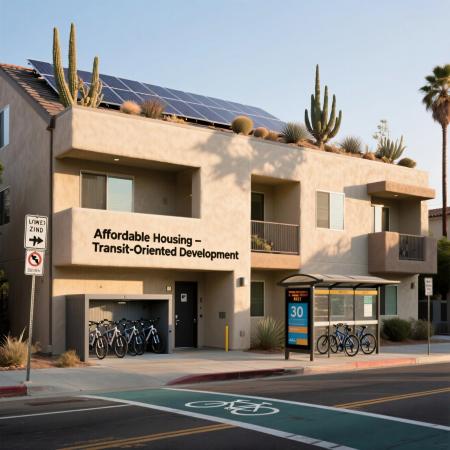
The Historical Role of California- Parking requirements
Historically, California- Parking requirements were rooted in mid-20th-century planning ideals that prioritized automobile use. As cities expanded and car ownership surged, local governments introduced zoning ordinances requiring developers to provide a minimum number of off-street parking spaces. These rules were applied uniformly, regardless of location, transit access, or household income. For affordable housing developers, this meant building costly underground garages or surface lots—even in dense urban neighborhoods where many residents do not own cars. Parking structures can cost between $25,000 and $50,000 per space, significantly increasing the overall budget of a project. These added expenses make it harder to keep rents low and reduce the number of units that can be built on a given site. As a result, California- Parking requirments contributed to the very crisis they were meant to manage: by limiting housing supply, they exacerbated affordability issues and urban sprawl. Over time, planners and advocates began to question whether these rules served the public interest—or simply favored car owners at the expense of renters and low-income households.Reforming California- Parking requirements: A Policy Shift
Recognizing the negative impacts of rigid parking mandates, California has enacted a series of legislative reforms to relax California- Parking requirements, especially for affordable housing. Key laws include:- SB 271 (2019): Allows developers of affordable housing to reduce or eliminate parking if the project is near public transit.
- AB 2097 (2022): Prohibits local governments from imposing minimum parking requirements for new residential developments within half a mile of major transit stops.
- SB 4 (2023): Expands incentives for affordable housing and includes provisions that further limit parking mandates.
Cost Savings and Increased Housing Supply
One of the most immediate benefits of reforming California- Parking requirements is cost reduction. Eliminating even a single parking space per unit can save tens of thousands of dollars per project. These savings can be redirected toward:- Building more units on the same site
- Improving building quality and energy efficiency
- Lowering rents for tenants
- Funding supportive services for vulnerable populations
- Green spaces and playgrounds
- Community centers
- Additional housing units
- Bike storage and electric vehicle charging stations
Equity and Accessibility in Affordable Housing
California- Parking requirements have long had a disproportionate impact on low-income households. Data shows that residents of affordable housing are far less likely to own cars than market-rate tenants. In some urban areas, up to 40% of low-income households are car-free. Yet, under old rules, they still had to "pay" for parking—either through higher rents or by occupying space they didn’t use. This inefficiency wasted resources and excluded those who needed housing most. Reforming California- Parking requirements corrects this imbalance by aligning development standards with actual resident behavior. The California Parking Requirements Guide emphasizes equity by encouraging developers to:- Assess local car ownership rates
- Prioritize transit, biking, and walking infrastructure
- Provide alternative mobility options (e.g., car-share programs)
- Design for accessibility, not just automobile access
Transit-Oriented Development and California- Parking requirements
A major focus of the updated California- Parking requirements is transit-oriented development (TOD). Projects located near bus, rail, or subway stations are ideal candidates for reduced or zero parking mandates, as residents have viable alternatives to driving. The California Parking Requirements Guide supports this approach by allowing developers to apply for parking reductions if their project is within:- ½ mile of a major transit stop
- ¼ mile of a high-frequency bus route
- A designated transit priority area
Local Implementation and Challenges
While state law sets the framework, local governments are responsible for implementing changes to California- Parking requirements. Some cities—like San Diego, Oakland, and Sacramento—have embraced reform, updating their zoning codes to eliminate minimum parking for affordable projects. Others have been slower to adapt, either due to bureaucratic inertia or community resistance. Concerns about street parking congestion, neighborhood character, and perceived impacts on property values can delay or block reforms. The California Parking Requirements Guide helps overcome these barriers by providing:- Model ordinances
- Case studies of successful projects
- Tools for public engagement and education
- Data on car ownership and transit use by neighborhood
Innovative Design and Shared Mobility
With reduced California- Parking requirements, developers are exploring new models of mobility and design. Instead of private garages, projects are incorporating:- Bike storage and repair stations
- Car-share hubs (e.g., Zipcar, Free2Move)
- Electric scooter and bike docking
- Kiss-and-ride zones for drop-offs
- Mobility credits for transit passes
Supportive Housing and Special Populations
California- Parking requirements are especially problematic for supportive housing—projects that serve people experiencing homelessness, seniors, or individuals with disabilities. These residents are even less likely to drive, yet were often required to fund parking they didn’t use. Reforms have made it easier to build supportive housing without parking mandates. The California Parking Requirements Guide specifically addresses this by:- Exempting supportive housing from minimum parking rules
- Encouraging on-site services over car access
- Promoting proximity to healthcare and social services
Environmental and Climate Benefits
Reducing California- Parking requirements support California’s ambitious climate goals. Transportation is the state’s largest source of greenhouse gas emissions, and reducing car dependency is essential to meeting emissions targets. By discouraging excessive parking, the state promotes:- Transit use
- Active transportation (walking, biking)
- Compact urban form
- Reduced heat island effect (less asphalt)
Future of California- Parking requirements
The trajectory is clear: California- Parking requirements are moving toward flexibility, equity, and sustainability. As more cities adopt parking-maximums instead of minimums, and as shared mobility becomes more widespread, the need for mandatory parking will continue to decline. Future reforms may include:- Expanding zero-parking allowances to all housing near transit
- Implementing parking cash-out programs (giving tenants money instead of a space)
- Using dynamic pricing for public parking
- Requiring developers to report actual parking use post-occupancy