Alternative Building Material in Bangladesh
Introduction
Building Material in Bangladesh has long been dominated by traditional resources such as brick, cement, sand, and steel. However, with rising environmental concerns, rapid urbanization, and increasing construction costs, the country is witnessing a transformative shift toward Alternative Building Material in Bangladesh.
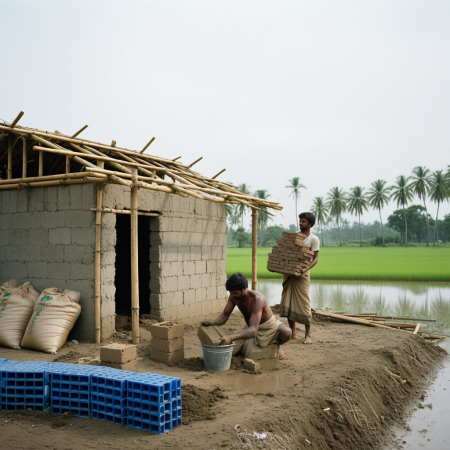
These innovative materials not only address sustainability but also offer cost-effective, durable, and locally sourced solutions for a nation grappling with housing shortages, climate vulnerability, and resource depletion. This summary explores the context, types, benefits, challenges, and future prospects of Alternative Building Material in Bangladesh, highlighting why this transition is both timely and essential.
The Current Landscape of Building Material in Bangladesh
Bangladesh’s construction industry is one of the fastest-growing sectors in the country, fueled by urban migration, infrastructure development, and a booming real estate market. Traditional Building Material in Bangladesh—particularly fired clay bricks—has been the backbone of construction for decades.
However, this reliance comes at a steep environmental cost. Brick kilns are among the largest contributors to air pollution and greenhouse gas emissions in the country, consuming vast amounts of topsoil and fossil fuels. Moreover, the extraction of river sand for concrete has led to ecological imbalances and riverbed degradation. As the demand for housing and infrastructure continues to surge, the limitations of conventional Building Material in Bangladesh are becoming increasingly apparent, paving the way for sustainable alternatives.
Why Explore Alternative Building Material in Bangladesh?
The need for Alternative Building Material in Bangladesh arises from multiple intersecting challenges. First, climate change poses a direct threat to Bangladesh’s built environment, with frequent floods, cyclones, and salinity intrusion compromising the durability of conventional structures.
Second, the affordability crisis in housing—especially for low-income populations—demands cheaper yet resilient construction solutions. Third, the environmental toll of traditional practices necessitates a shift toward greener technologies. Alternative Building Material in Bangladesh offers a holistic response to these issues by leveraging local resources, reducing carbon footprints, and enhancing structural resilience.
Types of Alternative Building Material in Bangladesh
A wide range of Alternative Building Material in Bangladesh is currently being researched, piloted, and implemented across the country. These include:
1. Compressed Stabilized Earth Blocks (CSEB)
CSEB is made from a mixture of local soil, a small amount of cement or lime, and water, compressed under high pressure. These blocks are energy-efficient, thermally insulating, and significantly cheaper than fired bricks. Several NGOs and government initiatives have promoted CSEB in rural housing projects, demonstrating its viability as a sustainable Building Material in Bangladesh.
2. Bamboo
Bamboo is abundant in Bangladesh and has been used traditionally in rural construction. Modern treatment techniques now enhance its durability and resistance to pests and moisture. Engineered bamboo products, such as laminated bamboo beams and panels, are emerging as strong, lightweight, and renewable Alternative Building Material in Bangladesh options, especially for low-rise and temporary structures.
3. Rice Husk Ash (RHA) and Fly Ash Bricks
Agricultural and industrial waste products like rice husk ash and fly ash are being repurposed into eco-friendly bricks. These materials reduce landfill waste and lower the carbon footprint of construction. RHA bricks, in particular, offer good compressive strength and thermal insulation, making them a promising Building Material in Bangladesh for both residential and commercial use.
4. Recycled Plastic and Composite Materials
With plastic waste becoming a national crisis, innovators are developing construction blocks and panels from recycled plastics. These composites are lightweight, water-resistant, and durable. Though still in the experimental phase, they represent a circular economy approach to Alternative Building Material in Bangladesh.
5. Ferrocement and Ferrocrete
Ferrocement—a composite of cement mortar and wire mesh—offers high tensile strength with minimal material use. It is ideal for roofing, water tanks, and prefabricated housing units. Its adaptability and low cost make it a compelling Building Material in Bangladesh, especially in disaster-prone areas.
6. Hempcrete and Other Bio-based Materials
While not yet mainstream, bio-based materials like hempcrete (a mix of hemp fibers and lime) are being explored for their insulation properties and
carbon-sequestering potential. Though hemp cultivation is restricted in Bangladesh, similar plant fibers such as jute could be adapted, opening new avenues for Alternative Building Material in Bangladesh.
Benefits of Adopting Alternative Building Material in Bangladesh
The adoption of Alternative Building Material in Bangladesh brings multifaceted advantages:
- Environmental Sustainability: Most alternatives reduce reliance on non-renewable resources, lower CO₂ emissions, and minimize waste.
- Cost Efficiency: Locally sourced and often labor-intensive, these materials can significantly cut construction costs—critical in a price-sensitive market like Bangladesh.
- Disaster Resilience: Many alternatives, such as CSEB and bamboo, perform better than conventional materials in earthquakes and floods due to their flexibility and light weight.
- Job Creation: The decentralized production of alternative materials supports rural economies and creates green jobs in manufacturing and construction.
- Energy Efficiency: Materials like CSEB and RHA bricks provide better thermal insulation, reducing the need for artificial cooling—a major energy drain in Bangladesh’s hot climate.
These benefits collectively position
Alternative Building Material in Bangladesh as a cornerstone of sustainable development.
Government Policies and Institutional Support
Recognizing the urgency, the Government of Bangladesh has begun integrating Alternative Building Material in Bangladesh into national strategies. The National Housing Policy and the Sustainable Development Goals (SDG) framework emphasize affordable, eco-friendly housing. The Housing and Building Research Institute (HBRI) actively researches and promotes alternatives like CSEB and fly ash bricks. Additionally, the Department of Environment has imposed stricter regulations on brick kilns, indirectly encouraging the shift toward cleaner Building Material in Bangladesh.
International development partners, including UNDP, World Bank, and GIZ, have also funded pilot projects showcasing Alternative Building Material in Bangladesh in climate-vulnerable regions like the coastal belt and char (river island) areas.
Challenges to Widespread Adoption
Despite its promise, the transition to Alternative Building Material in Bangladesh faces significant hurdles:
- Lack of Awareness: Many builders, engineers, and homeowners remain unfamiliar with alternative options or skeptical of their performance.
- Regulatory Gaps: Building codes in Bangladesh are largely based on conventional materials, leaving little room for innovation or certification of new Building Material in Bangladesh.
- Supply Chain Limitations: Unlike mass-produced bricks and cement, alternative materials often lack standardized production and distribution networks.
- Perception and Aesthetics: There’s a cultural preference for “modern” concrete and brick structures, with alternatives often seen as “rural” or “temporary.”
- Financing Barriers: Banks and financial institutions are hesitant to fund projects using non-standard Building Material in Bangladesh, citing perceived risks.
Addressing these challenges requires coordinated efforts in education, policy reform, and market development.
Case Studies and Real-World Applications
Several successful implementations demonstrate the potential of Alternative Building Material in Bangladesh:
- In Gaibandha, a post-flood reconstruction project used CSEB to build over 200 homes that withstood subsequent monsoons.
- BRAC, one of the world’s largest NGOs, has incorporated bamboo and CSEB into its rural school and clinic designs, proving durability and cost savings.
- In Dhaka, startups like Eco Brick and GreenTech are producing RHA and plastic composite bricks, targeting both low-cost housing and commercial developers.
- After Cyclone Sidr, ferrocement was used to construct cyclone shelters that doubled as community centers—showcasing the versatility of Building Material in Bangladesh in emergency contexts.
These examples underscore that Alternative Building Material in Bangladesh is not just theoretical but already making a tangible impact.
The Role of Innovation and Technology
Technological advancements are accelerating the viability of Alternative Building Material in Bangladesh. Mobile apps now help identify suitable soil for CSEB production. 3D printing with earth-based materials is being tested in university labs. Digital platforms connect rural producers of bamboo and jute composites with urban architects. Moreover, life-cycle assessment tools are enabling better comparisons between traditional and alternative Building Material in Bangladesh, informing policy and consumer choices.
Community Engagement and Capacity Building
For Alternative Building Material in Bangladesh to scale, local communities must be empowered. Training masons in CSEB construction, educating women’s groups on bamboo treatment, and involving youth in recycling initiatives are all critical. Organizations like the Bangladesh University of Engineering and Technology (BUET) and the Centre for Sustainable Development (CSD) run workshops and certification programs, fostering a skilled workforce ready to adopt and promote new Building Material.
Future Outlook: Scaling Alternative Building Material in Bangladesh
The future of Alternative Building Material in Bangladesh is promising but hinges on strategic action. Key recommendations include:
- Updating the Bangladesh National Building Code to include standards for alternative materials.
- Offering tax incentives or subsidies for manufacturers of eco-friendly Building Material in Bangladesh.
- Launching nationwide awareness campaigns to shift public perception.
- Integrating alternative materials into public infrastructure projects—schools, hospitals, and roads—to demonstrate reliability at scale.
- Encouraging research partnerships between universities, industries, and international bodies.
If these steps are taken, Alternative Building Material in Bangladesh could become the norm rather than the exception within a decade.
Conclusion: A Sustainable Foundation for Tomorrow
Building Material in Bangladesh stands at a crossroads. The old ways—resource-intensive, polluting, and increasingly unaffordable—are no longer tenable. Alternative Building Material in Bangladesh offers a path forward that aligns with ecological limits, economic realities, and social needs. From compressed earth blocks to recycled plastic composites, these innovations are not just about construction—they’re about reimagining how Bangladesh builds its future.
As climate pressures mount and urban populations swell, the adoption of Alternative Building Material in Bangladesh will be crucial for resilient, inclusive, and sustainable development. With the right mix of policy, innovation, and community involvement, Bangladesh can lead the Global South in transforming its construction sector. The journey has begun, and every brick—whether fired or compressed—counts.
Also read: Housing Finance Institutions in Bangladesh- A Comparative Study on BHBFC & DBH
