AUCKLAND’S HOLISTIC THINKING AND ACTION FOR HOUSING
Introduction
Auckland's Holistic Thinking and action represent a transformative shift in how one of the fastest-growing cities in the Southern Hemisphere is addressing its deep-rooted housing challenges. As New Zealand’s largest urban center, Auckland has long struggled with a growing gap between housing supply and demand, skyrocketing prices, and rising inequality.
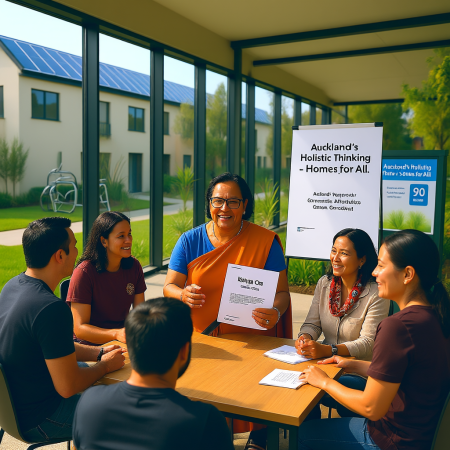
For decades, housing policy was fragmented—focused on short-term fixes, market-driven solutions, and siloed decision-making. But in recent years, a new approach has emerged:
Auckland's Holistic Thinking and action, which recognizes that housing cannot be solved in isolation. It is deeply connected to transport, employment, environment, equity, and community well-being. This integrated mindset is reshaping urban planning, policy design, and community engagement, positioning Auckland as a model for sustainable and inclusive city development.
The Housing Crisis in Auckland: A City Under Pressure
Auckland’s housing crisis did not happen overnight. Over the past two decades, the city’s population has surged, growing by over 30% since 2006. This growth has been fueled by both domestic migration and international immigration, making Auckland one of the most diverse cities in the world. However, the supply of housing has failed to keep pace. The result? Skyrocketing house prices, unaffordable rents, and a growing number of people living in overcrowded or insecure conditions.
By 2023, the median house price in Auckland had reached over NZ$900,000—far beyond the reach of first-time buyers and low-income families. At the same time, homelessness increased, with over 4,000 people estimated to be sleeping rough, in emergency shelters, or in temporary accommodations. The traditional response—building more homes on the urban fringe—only deepened car dependency and environmental strain. It became clear that a new way of thinking was needed. Auckland's Holistic Thinking and action emerged as the answer.
What Does Holistic Mean in Practice?
Auckland's Holistic Thinking and action is not just a slogan—it is a framework for integrated urban development. It means understanding that housing does not exist in a vacuum. Where people live affects how they move, work, access healthcare, and connect with their communities. A home is not just a structure; it is a foundation for health, education, and economic participation.
This approach brings together multiple sectors—transport, planning, environment, social services, and Māori and community leaders—to co-design solutions. For example, instead of simply approving a new housing development, planners now ask:
- Is there public transport nearby?
- Are there schools, clinics, and parks within walking distance?
- Can low-income families afford to live here?
- Will this development protect natural ecosystems?
Auckland's Holistic Thinking and action ensures that every housing decision considers its broader impact on people and the planet.
The Role of the Auckland Council and Central Government
Achieving Auckland's Holistic Thinking and action requires strong leadership and collaboration between local and national authorities. The Auckland Council, established in 2010 as a unified city-region government, has played a central role in driving this integrated approach. Its long-term strategy,
Auckland Plan 2050, explicitly prioritizes housing affordability, sustainability, and equity.
Key initiatives include:
- The Housing and Business Growth Strategy, which identifies areas for higher-density development near transport hubs.
- The Special Housing Areas (SHAs), which fast-track the construction of affordable homes.
- The City Rail Link (CRL), a major infrastructure project designed to connect housing with jobs and services.
The central government has also supported Auckland's Holistic Thinking and action through funding, policy reform, and the establishment of Kāinga Ora – Homes and Communities, a public agency tasked with delivering state and affordable housing.
Affordable Housing: Building for All Incomes
At the heart of Auckland's Holistic Thinking and action is the goal of making housing affordable for everyone. This means going beyond market-rate developments and investing in social and affordable housing that serves low- and middle-income households. Kāinga Ora has been instrumental in this effort, building thousands of new homes in mixed-tenure communities.
One notable example is the
Mangere Bridge redevelopment, where state houses are being rebuilt alongside private homes, creating a diverse and inclusive neighborhood. These projects include community facilities, green spaces, and energy-efficient design, ensuring long-term sustainability.
Auckland's Holistic Thinking and action also supports innovative models like:
- Community Land Trusts (CLTs): Non-profit organizations that own land permanently, ensuring homes remain affordable.
- Rent-to-own schemes: Helping low-income families transition into homeownership.
- Modular and prefabricated housing: Reducing construction time and cost.
By diversifying housing options, Auckland is moving closer to a truly inclusive housing system.
Transport and Urban Form: Ending Car Dependency
A critical component of Auckland's Holistic Thinking and action is the integration of housing and transport. For years, Auckland was known as a “city of sprawl,” where people lived far from work and relied on cars. This not only increased household costs but also contributed to congestion, pollution, and social isolation.
Today, the city is shifting toward a
transit-oriented development (TOD) model. This means building more homes—especially affordable ones—within walking distance of train stations, busways, and cycle paths. The City Rail Link, set to open in 2026, is a game-changer, connecting key employment centers like Britomart, Aotea, and Mount Eden with new housing zones.
Auckland's Holistic Thinking and action ensures that new developments are not just “houses in a field,” but part of vibrant, walkable neighborhoods with access to jobs, services, and recreation.
Environmental Sustainability and Climate Resilience
Housing is also a climate issue. Buildings account for a significant portion of Auckland’s carbon emissions, and many low-income households live in cold, damp homes that worsen health outcomes. Auckland's Holistic Thinking and action addresses this by promoting energy-efficient, climate-resilient housing.
New developments are required to meet higher building standards, including:
- Insulation and double glazing
- Solar panel installations
- Rainwater harvesting
- Passive solar design
The council also protects natural areas like wetlands, forests, and coastlines from inappropriate development. Green belts and
urban limits prevent sprawl and preserve biodiversity.
Auckland's Holistic Thinking and action recognizes that a healthy city must also be a green city.
Engaging Māori and Indigenous Perspectives
A truly holistic approach must include the voices of tangata whenua—Māori, the Indigenous people of Aotearoa (New Zealand). For too long, urban planning in Auckland excluded Māori values and knowledge.
Auckland's Holistic Thinking and action seeks to change that.
The council works in partnership with iwi (tribes) and Māori organizations through co-governance models. For example, the
Tamaki Collective represents 13 Iwi in the Auckland region and plays a key role in housing and development decisions on Māori-owned land.
Māori concepts like
kaitiakitanga (guardianship of the environment) and
whanaungatanga (family and community connection) are being integrated into planning. This ensures that housing developments respect cultural heritage, support intergenerational living, and strengthen community ties.
Addressing Homelessness with Dignity and Support
Homelessness is one of the most visible failures of the old housing system. Auckland's Holistic Thinking and action treats homelessness not as an individual failing, but as a systemic issue requiring coordinated solutions.
The city has adopted the
Housing First model, which provides permanent housing to people experiencing homelessness without preconditions like sobriety or employment. Once housed, individuals receive wraparound support—mental health services, addiction counseling, job training—to help them rebuild their lives.
Outreach teams, mobile clinics, and emergency shelters work in tandem with long-term housing programs. Data is used to identify at-risk individuals and prevent evictions before they happen. Auckland's Holistic Thinking and action ensures that no one is left behind.
Community-Led and Co-Designed Housing
Top-down planning often fails because it doesn’t reflect the needs of residents. Auckland's Holistic Thinking and action emphasizes community participation. Residents are invited to co-design housing projects, from layout to materials to shared spaces.
For example, in the
Papakura regeneration project, local families helped shape the design of new homes, ensuring they met cultural and practical needs. Community workshops, digital platforms, and advisory boards give people a real voice in shaping their neighborhoods.
This participatory approach builds trust, reduces resistance to change, and leads to better outcomes. When people feel ownership over their homes and communities, they are more likely to stay and contribute.
Measuring Success: Indicators and Accountability
To ensure that Auckland's Holistic Thinking and action delivers real results, the city uses a range of indicators to track progress. These include:
- Number of affordable homes built
- Reduction in homelessness
- Increase in public transport use
- Energy efficiency of new homes
- Resident satisfaction and sense of safety
Annual reports and public dashboards make this data transparent. Independent evaluations assess whether policies are meeting their goals. Auckland's Holistic Thinking and action is not just about good intentions—it is about measurable impact.
Challenges and the Road Ahead
Despite progress, challenges remain. Construction costs are high, skilled labor is in short supply, and regulatory processes can be slow. Some communities resist higher-density housing, fearing loss of character or parking. Political changes at the national level can also affect funding and policy continuity.
But Auckland's Holistic Thinking and action provides a resilient framework to navigate these obstacles. By focusing on long-term goals, collaboration, and equity, the city can adapt and persevere.
Conclusion: A Model for the Future
Auckland's Holistic Thinking and action is more than a policy—it is a philosophy of urban life. It understands that housing is not just about bricks and mortar, but about people, connection, and dignity. It brings together diverse sectors, cultures, and perspectives to create a city that works for everyone.
Also read: New Zealand- Affordability of Housing in Auckland
