
Affordable Housing in Africa: Integration and Synergy of Actions
Introduction
Affordable Housing in Africa stands at the critical intersection of demographic transformation, urban expansion, and sustainable development imperatives. With the continent's urban population projected to triple by 2050, the demand for decent, secure, and affordable shelter has reached unprecedented urgency.
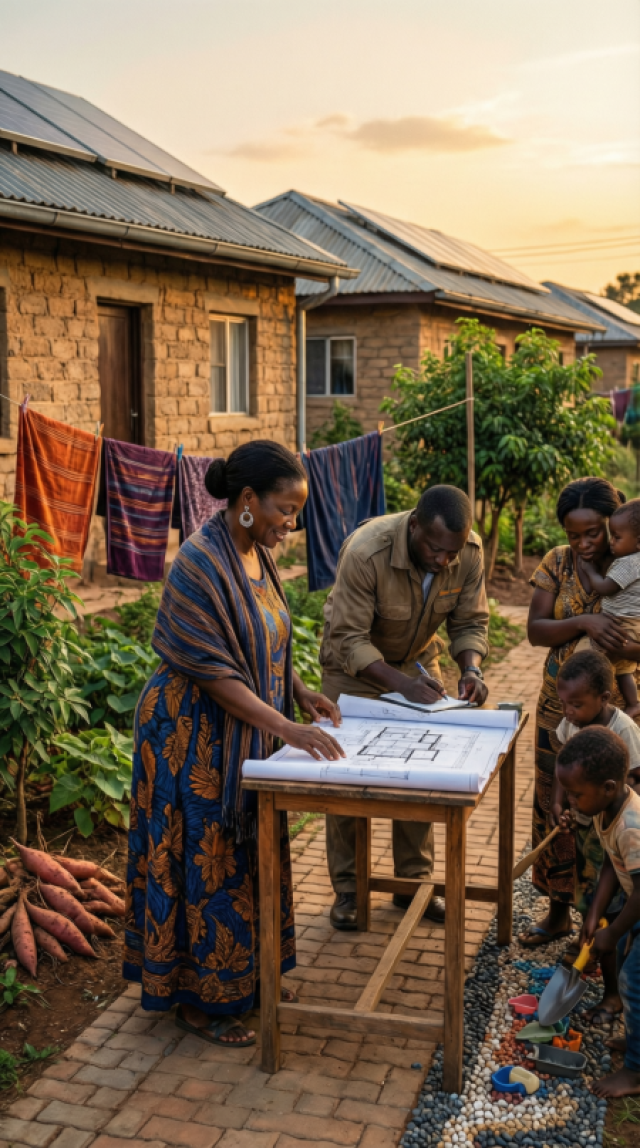
Yet this challenge also presents a profound opportunity to reimagine urban growth through integrated, synergistic approaches that prioritize human dignity alongside environmental stewardship.
Affordable Housing in Africa cannot succeed through fragmented interventions or isolated policy silos; rather, it demands a holistic ecosystem where land governance, financing innovation, construction technology, community participation, and climate adaptation operate in deliberate concert.
This integrated framework recognizes housing not merely as physical shelter but as foundational infrastructure for health, education, economic mobility, and social cohesion.
Affordable Housing in Africa requires synchronized action across public institutions, private developers, financial intermediaries, and community organizations to transform piecemeal efforts into scalable, resilient solutions that serve millions rather than thousands.
The Imperative for Integration in Affordable Housing in Africa
The historical approach to housing delivery across much of Africa has suffered from dangerous fragmentation—land allocation divorced from infrastructure planning, construction disconnected from financing mechanisms, and policy design detached from community realities.
This siloed thinking has produced housing developments stranded far from employment centers, structures vulnerable to climate shocks, and neighborhoods lacking basic services despite substantial public investment.
The integration imperative demands breaking down these barriers through coordinated spatial planning that aligns housing location with transportation networks, employment zones, and social infrastructure.
When a new Affordable Housing in Africa project incorporates water and sanitation systems during initial construction rather than as costly retrofits, when solar-ready electrical conduits are embedded during foundation work, and when pedestrian pathways connect directly to bus rapid transit stations, the result is dramatically enhanced affordability through reduced lifetime costs and improved quality of life.
Integration also means connecting formal housing programs with the organic, incremental building practices that have long characterized African urbanism—providing secure tenure, technical assistance, and core infrastructure that enables self-builders to gradually improve their homes rather than displacing them with rigid, one-size-fits-all solutions.
Affordable Housing in Africa gains transformative power when national policy frameworks establish clear affordability targets and sustainability standards while empowering municipal authorities with implementation flexibility and community groups with meaningful participation rights.
This multi-scalar integration ensures macro-level objectives translate into contextually appropriate, dignified living environments at the neighborhood level.
Financing Synergies for Affordable Housing in Africa
Financial fragmentation has long crippled housing delivery across the continent, with public subsidies insufficient to meet demand, commercial banks reluctant to lend for low-income housing, and informal savings groups lacking scale for construction finance.
The synergy breakthrough emerges when these disparate capital sources are deliberately connected through innovative blended finance structures.
Public funds can de-risk projects by acquiring and servicing land with basic infrastructure—water, roads, drainage—then transferring serviced plots to private developers or community cooperatives at below-market rates.
Private equity provides construction capital for core structures while impact investors finance sustainability features like rainwater harvesting or solar water heating that generate long-term household savings.
Microfinance institutions then offer incremental improvement loans, allowing residents to expand or upgrade their homes as incomes grow.
Affordable Housing in Africa initiatives gain financial viability when green mortgage products recognize that energy-efficient homes reduce utility burdens, effectively increasing household disposable income and lowering default risk—justifying preferential interest rates that make ownership accessible to previously excluded populations.
Mobile money platforms further accelerate financial inclusion by enabling informal sector workers with irregular incomes to build credit histories through consistent micro-savings directed toward housing goals.
Diaspora investment channels represent another powerful synergy, transforming remittance flows—which already exceed official development assistance to many African nations—into productive capital for family housing development through regulated, transparent platforms.
When these financial mechanisms operate in concert rather than in competition, Affordable Housing in Africa transitions from aid-dependent charity to an economically sustainable market segment attracting professional developers and institutional capital.
Material Innovation and Local Sourcing in Affordable Housing in Africa
The construction sector's reliance on imported materials—cement, steel, glass—has inflated housing costs while undermining local economies and increasing embodied carbon.
A synergistic approach to Affordable Housing in Africa prioritizes material innovation rooted in local resources and traditional knowledge systems. Compressed earth blocks stabilized with minimal cement offer thermally massive, culturally resonant wall systems in appropriate climates, reducing material costs by up to 30% while creating rural employment in block production.
Bamboo, when properly treated and engineered, provides rapid-growth structural alternatives for roofing and framing in forested regions. Recycled aggregates from construction waste and plastic waste transformed into composite building products address the dual challenges of material affordability and urban waste management.
Critically, these innovations gain traction only when integrated with skills development programs, training masons and artisans in new techniques, certification systems ensuring structural safety, and supply chain development connecting rural material producers to urban construction sites.
Affordable Housing in Africa achieves both cost reduction and cultural continuity when design professionals collaborate with master builders possessing generations of climate-responsive construction knowledge—adapting traditional passive cooling strategies, natural ventilation patterns, and spatial configurations to contemporary standards and densities.
This material localization strategy simultaneously advances affordability through import substitution, sustainability through reduced transportation emissions, and economic development through decentralized production networks that keep capital circulating within communities.
Climate Resilience as Core to Affordable Housing in Africa
Climate vulnerability cannot be treated as an optional add-on in African housing development; it must be fundamentally integrated into design, location, and construction decisions from inception.
The synergy between climate adaptation and affordability becomes evident when elevated structures in flood-prone areas create shaded community space beneath buildings, when rainwater harvesting systems simultaneously reduce flood risk and household water bills, and when thermal mass walls moderate indoor temperatures year-round without expensive mechanical cooling.
Affordable Housing in Africa developments in coastal zones must incorporate natural infrastructure—mangrove restoration, permeable surfaces, elevated foundations—while those in drought-prone regions prioritize water-efficient fixtures, greywater recycling, and drought-tolerant landscaping.
Passive design strategies leveraging natural ventilation, strategic shading, and optimal building orientation deliver comfort with minimal energy consumption, keeping operational costs within reach of low-income households.
Critically, climate resilience investments must prioritize historically marginalized communities, often concentrated in high-risk locations due to historical exclusion from safer urban areas.
When Affordable Housing in Africa programs deliberately site new developments away from floodplains and landslide zones while retrofitting existing vulnerable settlements with drainage improvements and early warning systems, they address both immediate safety needs and long-term displacement risks.
This integrated approach recognizes that climate-resilient housing is not a luxury but a prerequisite for lasting affordability—structures destroyed by floods or rendered uninhabitable by extreme heat represent total financial loss for families with minimal savings.
Community Agency and Participatory Development in Affordable Housing in Africa
Top-down housing delivery models have repeatedly failed across Africa, producing vacant units mismatched to cultural needs, poorly maintained common areas, and communities with no stake in long-term stewardship.
The synergy breakthrough emerges when residents transition from passive beneficiaries to active co-creators through structured participation mechanisms. Participatory design workshops enable future residents to influence spatial layouts, material selections, and shared space programming—resulting in higher satisfaction rates, stronger maintenance cultures, and reduced vacancy.
Community land trusts and cooperative ownership models provide institutional frameworks for collective land stewardship while allowing individual households to build equity through home ownership—preserving permanent affordability while fostering asset accumulation for historically excluded populations.
Incremental housing approaches honor resident agency by providing core structures with essential services that families expand over time according to their means and evolving needs—recognizing that housing is a process rather than a single transaction.
Affordable Housing in Africa gains social sustainability when programs incorporate skills training alongside construction, creating local employment in building trades while ensuring residents possess the capacity to maintain and improve their homes.
Women's participation proves particularly critical—when land titling and housing programs deliberately include women as co-owners or primary titleholders, outcomes improve across health, education, and economic security metrics for entire households.
This gender-intentional approach transforms housing from shelter into empowerment infrastructure.
Governance Integration for Affordable Housing in Africa
Institutional fragmentation remains perhaps the greatest barrier to scaled housing delivery—housing ministries operating without coordination with environment agencies on climate standards, transportation departments planning transit routes disconnected from housing locations, and municipal authorities lacking capacity to implement national frameworks.
Effective Affordable Housing in Africa demands deliberate governance integration through inter-ministerial task forces with shared performance metrics, spatial development frameworks that align housing, transport, and land use planning, and digital platforms enabling transparent land inventory management and allocation.
Public land banking strategies—identifying, acquiring, and servicing underutilized government-owned parcels—provide a critical foundation for affordable development when integrated with transparent allocation systems prioritizing vulnerable populations and strategic locations near employment centers.
Streamlined permitting processes specifically for certified affordable sustainable projects reduce development timelines from years to months, directly lowering soft costs that inflate final prices.
Crucially, governance integration must extend vertically—connecting national policy frameworks with municipal implementation capacity and community-level participation structures—to ensure coherence across scales.
When monitoring systems track integrated outcomes rather than isolated outputs—measuring not just units built but reductions in household transportation costs, improvements in child health indicators, and growth in neighborhood enterprise—the result is accountability aligned with genuine human impact rather than bureaucratic box-ticking.
Measuring Success Through Integrated Metrics in Affordable Housing in Africa
Evaluating Affordable Housing in Africa requires moving beyond simplistic unit production counts to multidimensional metrics capturing environmental, economic, and social outcomes.
Environmental indicators should track energy consumption intensity, water use efficiency, waste diversion during construction, and biodiversity impacts of site development.
Economic metrics must measure true affordability—total housing costs as a percentage of household income, including utilities and transportation—alongside resident savings from operational efficiencies and local job creation in green construction sectors.
Social outcomes demand equally rigorous assessment: health indicators including respiratory illness rates and mental well-being scores, commute times and transportation cost burdens, social cohesion measured through community participation rates, and resident satisfaction with thermal comfort and acoustic privacy.
Critically, long-term affordability retention rates—tracking whether units remain accessible to low-income households across resale cycles through mechanisms like community land trusts or resale restrictions—determine whether initial public investment yields permanent rather than temporary benefits.
Affordable Housing in Africa programs that integrate this measurement domains generate evidence demonstrating that sustainability features enhance rather than compromise affordability through reduced lifetime costs, that well-located developments generate economic returns through reduced public subsidy for transportation and healthcare, and that participatory processes produce more durable, cherished communities requiring less public maintenance expenditure.
The Path Forward: Scaling Synergy in Affordable Housing in Africa
Scaling Affordable Housing in Africa demands deliberate cultivation of synergies across all domains simultaneously.
Demonstration projects proving technical feasibility and financial viability must be accompanied by policy reforms that remove regulatory barriers, provide capacity building for local construction firms to adopt new techniques, and conduct public awareness campaigns that reframe affordable housing as a community asset rather than a burden.
South-South knowledge exchange platforms connecting African cities facing similar challenges—Lagos learning from Nairobi's incremental upgrading programs, Kigali sharing Rwanda's compressed earth block standards with landlocked neighbors—accelerate adaptation of context-appropriate solutions without costly reinvention.
International development partners can maximize impact by aligning financing with integrated frameworks rather than funding isolated components, while private developers gain a competitive advantage by embracing sustainability as a value creator rather than a cost center.
Ultimately, Affordable Housing in Africa succeeds when it rejects the false dichotomy between affordability and quality, demonstrating through integrated design that dignified, sustainable, well-located housing can be delivered at scale.
The synergy of actions—policy coherence, financial innovation, appropriate technology, community agency, and climate resilience—creates virtuous cycles where each element reinforces others, building momentum toward a future where every African family has access to safe, secure, sustainable shelter.
Affordable Housing in Africa represents not merely a development challenge but a civilizational opportunity to build cities that work for people and planet simultaneously—where housing serves as a platform for human flourishing rather than a source of perpetual stress.
Affordable Housing in Africa, when approached through genuinely integrated and synergistic action, becomes the foundation upon which resilient, equitable, and vibrant African urbanism will be built for generations to come.
Affordable Housing in Africa must remain centered on human dignity—recognizing that success extends far beyond square footage and cost per unit to encompass quality of life, sense of belonging, and opportunities for advancement that housing enables.
Affordable Housing in Africa demands our collective imagination, political courage, and practical collaboration to transform this vision into a lived reality across the continent's rapidly urbanizing landscapes.
Also read: Affordable Housing Production in Africa