

Top Successful Slum Upgrading Projects
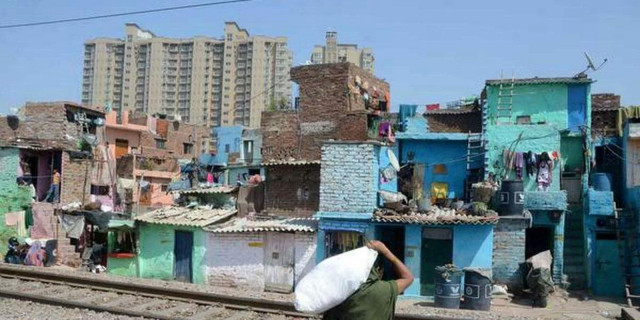
Urbanisation is one of the generically phenomena our time. In the world, millions of people are migrating from rural areas to urban areas in a bid to get better opportunities, livelihoods, and quality of life. However, many cities, especially in developing nations, have great difficulty trying to cope with such a rapid expansion. The infrastructure and housing stock do not address the need, thus development of informal settlements or slums takes place. These regions are usually without such basic services such as clean water, sanitation, safe houses, electricity and education among others. Moreover, locals are often victims of an insecure land tenure and social marginalisation.
Slum upgrading initiatives have come forth as vital initiatives to tackle these challenges. Contrary to demolition or relocation strategies, slum upgrading slums focuses on making existing conditions better with the provision of necessary infrastructure, tenure regularisation, improvement of housing together with promoting community empowerment. Successful when implemented, such projects not only beautify the environment, but also create social cohesion, promote economic opportunities and promote general wellbeing. This blog will discuss five exemplary slum upgrading projects scattered across the world, portraying different design solutions, struggles, and results. From this, we can appreciate how slum upgrading can become a way of achieving a more equitable and more sustainable urbanisation.

Favela-Bairro Project-Rio de Janeiro, Brazil
The Favela-Bairro project in Rio de Janeiro is considered as one of the pioneer and influential slum upgrading projects. This project was started by the municipal government in the 1990s with such an ambitious agenda of incorporating the Rio’s favelas (neighbourhoods, which were long stigmatised and ghettoized) into the formal city fabric. Before the project, favelas were physically and socially segregated, with very few services of the state and rights on law.
The approach adopted in the project was holistic in that more than one dimension was being targeted at a time. It spent highly in developing basic infrastructure i.e roads, drainage, water supply and electricity. Several homes received physical make-over to make them safer and more habitable. More significantly, the Favela-Bairro project ensured that the residents were actively involved in all aspects of the project from the decision-making level to planning stage to see that the interventions served their needs. This participatory approach went a long way in building the sense of ownership and responsibility among the residents which is very essential in ensuring that any urban upgrade is sustainable.
Besides infrastructure, Favela-Bairro encompassed social development programmes that provided education, healthcare, and cultural practise. Regularisation of land tenure, which had huge ramifications in terms of security and access to credit of the residents, was also the objective of the project. The result was a noticeable improvement of living conditions, decrease in the rates of crime because of better lighting and infrastructure, and increased social inclusion. The success of the project triggered the interest of many other Brazilian cities and urban areas of the world towards such holistic and participatory upgradation methods.
Nairobi, Kenya, Kenya Slum Upgrading Programme (KENSUP).
Among Africa’s many slum upgrading projects, Nairobi’s KENSUP or Kenya Slum Upgrading programme is one of the most ambitious projects aimed at improving the life in the sprawling urban slums in Kenya, especially in Kibera and Korogocho. Launched in 2004 in cooperation with the Kenyan government and UN-Habitat, NGOs, and community groups, KENSUP has an objective of ensuring that the complex challenges facing the slums dwellers are addressed through focusing on issues of housing, infrastructure and social empowerment.
Based on its multi-stakeholder approach, KENSUP is known as such. Aware that there cannot be one actor to the variety of the problems of informal settlements, this programme gathers in government bodies, local NGOs, donor agencies and, most importantly, the residents themselves. The Project has prioritised building permanent and affordable residential units in place of temporary structures that are made out of corrugated iron sheets and other temporary material. Apart from housing, it has provided better basic facilities like water pipelines, sanitation systems, electricity and roads.
Another important one of KENSUP has been community empowerment. Huge numbers of the local residents have undergone training and employment to construction activities, thus equipping them with skills and income. The programme also includes environmental sustainability through adding better waste management system and the incorporation of green spaces. Although KENSUP has made a lot of progress especially in terms of infrastructure development and rehousing thousands of families it has struggled with the high cost of relocating, complex land tenure problem, lack of adequate funding. All these constraints emphasise the difficulties of scaling such programmes in the fast-growing cities but also show the necessity of a continued political desire and viable funding.
Slum Networking Project, Ahmedabad, India
The Slum Networking Project (SNP), Ahmedabad, India, is one such innovative and not very expensive model for the settlement improvement which does not drive people out. Different from various other slum interventions that are based on relocation, SNP concentrated on in-situ upgrading i.e. the improvement of infrastructure while keeping people in their houses and vicinities. Introduced in late 1980s by the Ahmedabad Municipal Corporation, with help from NGOs and international donors, SNP reformed the way urban upgrading works by emphasising participation and cost sharing from the people.
At the core of SNP lay a massive reconstruction of the infrastructure, such as construction of underground drainage, provision of clean water, road development, and appropriate waste management. The project introduced cost recovery mechanism in which residents paid little amounts to make investment in infrastructural improvements through microfinance. Not only did this make the project financially viable, but it also create a sense of ownership by members of the community.
Involving the local residents in consultations and participatory planning, ensured that the solutions addressed the priority and context of the residents. SNP also established strong partnerships among the municipal authorities, NGOs, and communities and established trust and cooperation. The changes resulted in incredible advances in sanitation and health, substantial decrease in waterborne diseases, and increased mobility. The success storey of SNP has impacted upon various urban upgrading policies in India, showing that low cost community driven and in-situ upgrading can be excellently successful.
Orangi Pilot Project, Karachi, Pakistan
The OPP in Karachi, Pakistan, is one of the noteworthy examples of community led-slum-upgrading. Established in the early 80s as a sanitation initiative to meet the extremely needed sewerage and drainage facilities in one of the largest informal settlement in the metropolitan city of Karachi, Orangi Town, by the social scientist Dr. Akhtar hameed Khan, OPP has been playing an instrumental role in all the sectors including the occupation and skills While top-down operations insisted on their right of compulsion, OPP had based its operation on the principle of empowering residents to solve problems in a communal perspective.
What made OPP non-traditional was that it did not depend on government money or massive external investments. Rather, it offered technical assistance, trained households, and gave access to cheap materials while stimulating households to finance and make their own sanitation networks. This self-help measures reduced drastically costs by a high margin and also it sped up the implementation process to a high degree. There was responsibility over planning, building and maintaining sewer lines by the local community organisations thus achieving sustainability and accountability.
With time, OPP grew from the programme of the sanitation to the programme of housing improvements, health services, education, and microcredit programmes. The project’s impact was transformative: it brought more than 90% of residents within access of improved sanitation, waterborne diseases rates dropped by a huge magnitude and community institutions grew strong. The model employed by OPP has been replicated in other parts of the country and other countries that show that community-led initiatives can indeed be effective and scalable.
Slum Upgrading and Urban Transformation Project in Medellín, Colombia
Colombian city of Medellín can provide an outstanding example of how slum upgrading can become a component of comprehensive transformations of the city aimed at social inclusion and innovation. Where it was once rife with violence and drug-crime, the city has since gone through a renaissance in the past two decades by utilising integrated urban development that uses physical infrastructure together with social programmes.
At the centre of the success of Medellín has been the idea of “social urbanism”. The city spent a lot of money on the infrastructure: for example, the metro cable – an aerial cable car system that coordinates hillside informal settlements with the city centre, majorly enhancing the residents’ mobility and access to work and education. The government also established libraries, parks, and cultural centres in the slums, which have made the slum upgrading come alive with people mingling and taking pride in the slums.
These physical interventions were accompanied by attempts to improve public safety by means of better illumination, more policemen and community policing programmes. The city also explored the issue of environmental restoration including establishment of green spaces and enhanced use of waste system. What made the approach taken by Medellín distinctive was massive engagement of communities in planning and programming, hence, incorporating their needs and aspirations into development.
The results have been impressive: the rates of crime reduced drastically, public services increased, and the quality of living of citizens within the area improved. Medellín’s experience shows one way in which slum upgrading can become an urban strategy that is inclusive and combines infrastructure, social equity, and environmental sustainability to form inclusive cities.
The Role of Community Participation in Successful Slum Upgrading
The participation of community itself is one of the most important of all factors, which differentiate successful slum upgrading projects from the less effective ones. Community participation refers to community engagement whereby residents do not become passive beneficiaries but real stakeholders in every stage of the project – from its planning and design to implementation and management. This strategy is acknowledging that residents have priceless information about their needs, difficult, and priorities, and can help to adopt accommodating and sustainable solutions.
If the communities are actively involved, projects will be legitimate and trusted. Residents are likely to sustain infrastructure improvements, thus leading towards long term success. Participation also helps build up sense of ownership and empowerment; self-help initiatives emanating from the slums and social cohesion also are enhanced. In many instances, the community-based organisations as well as the local leaders serve as important intermediaries who connect the residents with government agencies or NGOs.
For instance, Orangi Pilot Project in Karachi flourished exactly because it involved mobilising residents to create their own systems of sanitation with technology aid and not depending solely on outside agencies. In the same way, the Favela-Bairro project in Rio de Janeiro with participatory planning allowed comprehensive adjustment of municipal spending to the local priorities and brought those changes that the local residents estimated worth the most.
However, community feelings lack so many challenges. There are cases when power dynamics in communities lead to the exclusion of the marginalised groups such as women or the worst off residents. Inclusion and equitability are deliberate strategies towards effective participation. Capacity building and training may also be required to impart skills for effective participation in technical and administrative issues to the residents.
There is therefore need for governments and implementing agencies to also be willing to share control as well as be ready to truly listen to community voices. Unfortunately, approaches that come top-down fail to consider the local input, which causes resistance or unsustainable results. Open communication and trust building is an integral part of participatory processes.
Overall, promoting real community participation is not just one of the check boxes in slum upgrading projects; it is part of success when achieved. Inclusion as well as empowerment of residents are strong and resilient communities which make use of and respect local knowledge created by projects. They turn slum upgrading from an exercise that is purely technical into a social transformation and urban justice exercises.
Financing Slum Upgrading: Challenges and Innovative Solutions
This financing of slum upgrading is one of the grandest challenges for the whole world of cities. The magnitude of the informal settlements and the complexity of issues involved call for massive financial provisions, often way beyond the capability of local governments. As opposed to the conventional means of financial resource like government budgets or donor grants, there is a high likelihood that it is not sufficient and at times unreliable. In addition, the informal nature of slums makes investment difficult due to uncertainty of land tenure and lack of formal property markets.
In spite of all these hurdles, there are new innovative financing mechanisms that have sprouted taking advantage of plural sources and methods of financing slum upgrading more in a sustainable manner. One of the popular strategies is cost-sharing with residents as in Ahmedabad’s Slum Networking Project, where households paid small fee to enhance infrastructure development. This strategy not only eases the strain on the government financially but also sets ownership and ownership among the residents.
The roles of the microfinance, as well as revolving loan funds, have played an exponentially growing role in facilitating a solid foundation in accessing credit to slum dwellers for home improvement, sanitation connexions, and small scale entrepreneurship. Such projects as Orangi Pilot Project have proven their ability to use community-managed finance schemes in order to mobilise local resources efficiently. Also, public-private partnerships can draw the private investors’ investment in the slum upgrading projects, particularly when they are connected to the urban regeneration or affordable housing development.
The other prospective area for the use of innovative urban land policies. Finding tenure for slum dwellers can unleash the value of land and enable collateral for loans, enabling access to formal financing. In some cities, land readjustment mechanisms and value capture mechanisms, enable municipalities to finance infrastructural projects by capturing a share of the increased land value resulted from upgrading cities.
The international donors and development banks are also very important who mainly offer seed funding, technical assistance, and risk-sharing mechanism. For instance, World Bank and UN-Habitat have launched financing packages to help slum upgrading programmes in various countries. Finally, a combination of a set of financing tools, adapted to local settings and with community engagement, is needed. The sustainable financing involves long term commitment on the part of government, donor’s private sector and residents as well. Playing a creative and inclusive role in overcoming the challenge of financing is a crucial step in ramping up the slum upgrading and realising its overall ability to change millions of lives across the globe.
Conclusion
Slum upgrading is one of the most difficult yet menial activities in urban development of today. The case studies of Rio de Janeiro, Nairobi, Ahmedabad, Karachi, and Medellín demonstrate the multifaceted approach that should be applied for the upgrading to be successful and include physical improvements, social programmes, legal tenure and most importantly, community participation. These initiatives show that with political will power and novel financing, as well as actual efforts to interact with residents, informal settlements can change from the marginalised dorms to vibrant sustainable communities.
Although each context for different cities is different, the lessons learned emphasise the need to respect local knowledge, establish partnership and ensure social inclusion. Slums are not issues that need to be fixed but living spaces and communities of power and potential. An investment in slum upgrading is not just an issue of social justice, but an essential part of creating sustainable and equitable cities in the future.
Also Read: Top Successful Slum Upgrading Projects





-3dkuLgKhRD.jpg)
-49HupTvwDD.jpg)








LEAVE A REPLY