

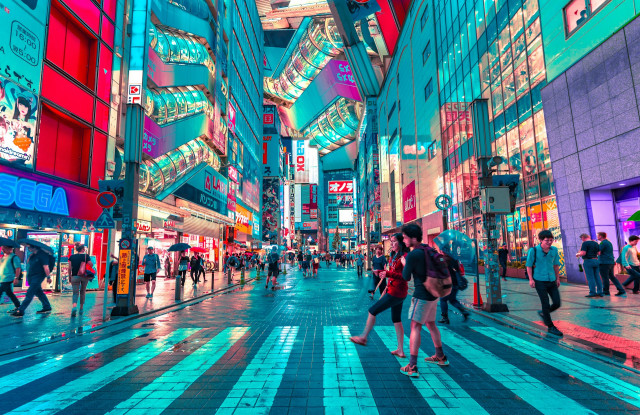
Tokyo’s Urban Model: Lessons for Managing Mega-Cities
Tokyo functions as the capital of Japan and ranks among the biggest cities coupled with densest population distributions worldwide.
The greater metropolitan area of Tokyo supports more than 37 million residents who make the city stand at the top of urban management standards worldwide.
Tokyo differs from numerous other megacities that face ongoing problems with traffic jams combined with environmental pollution and failing infrastructure since the city has perfected a balanced approach to efficiency and sustainability and innovation.
Multiple careful approaches and advanced policies together with consistent focus on life quality have made Tokyo's achievements possible.
Efficient and World-Class Public Transportation
Public transportation in Tokyo functions as one of its most remarkable achievements through its highly efficient operations.
Tokyo defines exceptional mass transit through its railway and subway systems because it avoids the usual traffic and transit problems that plague other megacities.
A Rail Network That Moves Millions
Hundreds of millions of Tokyo residents depend on the Tokyo Metro and JR East with private railway lines for their daily public transportation needs because they operate with exceptional precision.
The rail system maintains efficient operations through less than one minute delays which produces reliable train service.
In opposition to cities such as New York and Mumbai residents of Tokyo experience minimal travel delays.
Technology and Automation
Tokyo train operations function at high frequencies thanks to advanced automation integration and AI-based scheduling which produces train intervals of 2-3 minutes.
The Suica and Pasmo IC cards offer optimal convenience because they allow users to move between rail lines easily.
Discouraging Car Dependency
Tokyo exists as a global economic powerhouse but works against privatized vehicle ownership because of its wealth status.
The combination of high parking expenses and congestion rates together with streamlined pedestrian zones encourages city dwellers to adopt public transportation rather than driving.
The implementation of these policies has resulted in decreased pollution quantities while simultaneously decreasing traffic jams and promoting better access throughout the city.
Lessons for Other Megacities
Delhi along with Jakarta and São Paulo can manage congestion better by enhancing public transport and developing rail systems with connected technology.
Public transportation must receive primary focus above private means of travel as part of a plan to make transportation affordable for every citizen.
Smart Urban Planning and Infrastructure
The urban planning system of Tokyo presents a perfect integration of architectural order and density systems and modern infrastructure development.
Tokyo excels in up building its urban landscape to maximize vertical space instead of spreading out while maintaining high life quality standards.
Mixed-Use Development for Efficiency
The primary strength of Tokyo stems from its commitment to blend residential and business sectors in one location.
Tokyo allows residential and commercial and industrial types of activities to exist near one another instead of keeping them in different zones.
High-rise buildings that include offices and shopping centers along with residential apartments exist together in the districts of Shinjuku and Shibuya.
The city becomes more efficient because residents need fewer long-distance commutes which results in higher walkability.
High-Density Living without Chaos
Despite its dense population Tokyo controls population density effectively through its well-designed urban master plan.
The combination of zoning regulations with high-rise development and organized public platforms enables millions of people to live harmoniously in restricted urban zones.
Efficient infrastructure distribution of essential services including water supply together with electricity and waste management allows Tokyo to minimize urban stress and create sustainable urban management.
Public Spaces and Green Areas
The dense urban environment of Tokyo maintains extensive parks together with clean gardening areas and comfortable spaces dedicated for pedestrians.
Three significant parks such as Ueno Park and Shinjuku Gyoen and Yoyogi Park serve as urban relaxation areas for city residents.
The city functions as a highly accessible space because it has sidewalks alongside tunnels for pedestrians and bike paths.
Lessons for Other Megacities
Urban sprawl management can be achieved by Mexico City and Lagos and Manila through adopting Tokyo's model which includes the following attributes:
- The development of mixed-use neighborhoods should be supported to eliminate urban development shortcomings.
- The city needs to invest in tall residential buildings which follow design guidelines to maximize their space efficiency.
- The city works to enhance walking areas together with parks and public service systems to create better living standards.
Sustainability and Disaster Resilience
The Japanese capital operates successfully even though its susceptibility to natural disasters remains.
Tokyo demonstrates an exceptional disaster resilience system which serves as a valuable example for other global cities that face frequent earthquakes typhoons together with flooding.
Earthquake-Resistant Infrastructure
The part of Earth's crust where seismic activity remains active houses numerous facilities built to resist earthquakes which rank among the most advanced on the planet.
All modern construction projects must adhere to strict design requirements according to building regulations.
- The foundations utilize shock-absorbing technologies to protect buildings from structural damage.
- The automatic shutdown system of gas and power lines acts to avoid fires.
- Every resident receives training about emergency responses together with earthquake drill sessions.
The infrastructure standards have produced minimal structure destruction together with a reduction of fatalities in major earthquake events.
Sustainable Waste Management
The waste management system in Tokyo operates through an extremely efficient process for recycling and removal.
The city promotes:
- Waste segregation practices enforce residents to divide trash into multiple separate categories.
- Waste-to-energy plants of advanced technology convert organic waste materials into electrical energy.
- The city reduces dependency on landfills which produces lower waste-related environmental effects.
The zero-waste approach adopted by Tokyo helps decrease environmental pollution while demonstrating sustainable urban development practices.
Public Transport’s Role in Sustainability
Public transportation use among Tokyo residents leads to low carbon emissions per person which ranks the city at the bottom among worldwide metropolitan areas.
Policies like:
- Promoting electric and hybrid vehicles.
- Encouraging cycling and pedestrian-friendly roads.
- The construction of environment-friendly infrastructure includes the development of buildings that use solar power.
The city now stands vigorously as an environmental leader across urban development.
Lessons for Other Megacities
Beijing Bangkok and Cairo should adopt Tokyo's remedial approach to environmental risk management since they face shared challenges with climate impacts and air pollution issues.
- Strict disaster-resilient infrastructure policies.
- Advanced waste management systems.
- Carbon-neutral urban transport initiatives.
The implementation of these strategies enables megacities to defend the lives of residents from natural disasters while simultaneously minimizing destructive environmental impacts.

Technology-Driven Governance and Smart City Innovations
The city of Tokyo addresses its governance needs by implementing advanced technology which optimizes both municipal administration and public service operations and administration.
The smart city approach includes:
- Transportation management through artificial intelligence controls both traffic delays and selects optimal transportation routes.
- Big data analytics for real-time monitoring of pollution, water usage, and energy consumption.
- Through e-governance residents can use online platforms to handle their payments bills and service access and report issues.
- 5G technology enables the implementation of automated systems and smart buildings and digital security operations.
The central role which technology plays in urban efficiency implementation enables Tokyo to achieve operational excellence and improve resident quality of life.
Various giant urban areas could enhance their performance by dedicating resources to digital advancements and data-driven leadership systems.
Housing Policies and Affordable Living Solutions.
In spite of its world-class pricing position Tokyo remains free from the extensive housing crises experienced by London and New York and Hong Kong.
Tokyo's success in housing development relies on the following four factors:
- Further regulations are needed for the quick construction of homes combined with limited-density housing standards.
- Housing affordability and wide access to properties arise from private sector housing market involvement.
- Executive regulations that restrict housing cost increases together with discrimination against property speculators help maintain real estate affordability.
- The design of functional mini-apartments supports affordability through reduced space requirements.
Tokyo delivers a scale able housing approach to megacities which balances affordability with well-made living spaces for city inhabitants.
Cultural Preservation amidst Modernization
Modern leadership stands as Tokyo's primary claim while its cultural legacy together with traditional ways of living remains sheltered within its borders.
In the middle of advanced infrastructure development the city has managed to sustain:
- Asakusa together with Yanaka preserve their traditional architecture and customary practices in separate historical zones.
- Conservation of temples, shrines, and old markets amid rapid urbanization.
- A strong cultural identity through festivals, street food, and community traditions.
- The city achieves its distinct urban essence by maintaining equilibrium between modern technological progress and cultural historic preservation.
Modernization of megacities often results in the detachment of both historical heritage and cultural character.
Tokyo establishes a model to transform cities into modern facilities that honor traditional roots through an identity which unites progressive development with heritage elements.
Integrated Smart City Solutions: Leveraging Technology for Efficiency
The city of Tokyo implements smart city technologies to provide improved benefits for its urban living population.
AI traffic control systems combined with IoT energy management allow the city to maximize its governance through effective data utilization. This includes
- Real-time data analysis allows the city to enhance both mobility systems and public transportation routes.
- AI-driven waste management and smart grids for energy conservation.
- Digital platforms which fall under E-Governance offer citizens fast and streamlined access to multiple government online services.
Affordable Housing and Space Optimization in a Megacity
In spite of its high housing costs Tokyo uses these methods to supply cost-efficient residential options.
- Limited space utilization in the city happens through capsules combined with microscopic housing solutions.
- An elevated building construction along with combined land use development receives endorsement through the city's zoning regulations.
- Residential programs operated by the government unify with modern rental systems to deliver affordable apartments to middle-class and working-class residents.
Tokyo’s Pedestrian-Centric Urban Design and Mobility
Tokyo distinguishes itself from other crowded urban environments by arranging its city areas to invite pedestrians which simultaneously improves living quality and basic service access.
This section can discuss:
- The municipal transportation becomes smoother because residents follow planned subterranean walking routes.
- Safe cycling lanes and car-free zones in busy districts.
- Public facilities at transport centers function together to create easier access for residents traveling to their destinations.
Crisis Management and Emergency Preparedness in a High-Risk City
Tokyo functions with world-class disaster response systems which operate among the best worldwide despite enduring various threats associated with earthquakes and typhoons along with other potential catastrophes.
This section can explore:
- Advanced earthquake-resistant building designs.
- Early warning systems and real-time emergency alerts.
- The implementation of effective disaster recovery planning systems results in fast recovery operations together with lower mortality statistics and responses.
Economic Powerhouse: Tokyo’s Role as a Global Financial and Business Hub
The capital city of Tokyo surpasses being a well-planned and technologically advanced urban area to become a prominent economic center worldwide.
Tokyo serves as Japan’s financial core and international market driver which teaches valuable economic principles to cities worldwide seeking continuous economic development and global industry leadership.
A Thriving Financial Ecosystem
The Tokyo Stock Exchange (TSE) operates from Tokyo as one of the biggest stock market facilities worldwide.
The economic fabric in the city stems from its ability to draw economic capital from multinational businesses alongside fintech startup operations.
Policies that ensure:
- Business-friendly regulations create a favorable environment for investment as well as innovation to occur.
- The city summons technological advanced banking institutions together with financial services providers to facilitate international business establishment.
- The implementation of global market integration enables businesses to conduct smooth economic growth through international commerce.
Innovation and Technology as Economic Drivers
The economy of Tokyo succeeds through technological innovation because it includes these major industries:
- Artificial Intelligence and robotics driving industrial advancements.
- Automobile and electronics giants like Toyota, Sony, and Panasonic leading global markets.
- Technology incubators assist startup businesses through their processes of developing new markets and promoting digital transformation.
Strategic Urban Policies Supporting Business Growth
Tokyo stands apart from many megacities since it operates with:
- Business entities experience rapid registration systems because of streamlined governmental bureaucracy.
- The city operates efficient transportation systems together with logistics infrastructure which facilitates business operations.
- Business operations remain uninterrupted due to reliable power systems together with intelligent infrastructure.
Lessons for Other Megacities
Mumbai São Paulo along with Lagos can use Tokyo's model through implementation which consists of:
- Encouraging foreign investments with business-friendly policies.
- The city needs to use its funds for technology development and innovation efforts to generate economic growth.
- The city needs to invest in building first-class infrastructure facilities that will draw multinational corporations to operate there.
The economic development of Tokyo demonstrates that large cities can achieve simultaneously high quality of life and successful financial operations while maintaining equilibrium between urban growth and economic achievements.
Conclusion: Tokyo’s Urban Model—A Blueprint for the Future of Megacities
Tokyo demonstrates to the world how massive urban centers can find equilibrium between operational efficiency and environmental sustainability while maintaining high quality of life.
Population-scale makes Tokyo the planet's most populous urban area yet the city continues to thrive through its well-planned solutions which combine technology advancements with modern governance systems.
Tokyo exemplifies municipal growth management by implementing a resilient transportation infrastructure because it remains free from typical megacity problems of congestion and environmental pollution.
1. Efficient Public Transportation over Private Vehicles
The combination of smooth and efficient public transportation along with other factors makes Tokyo one of the most successful urban cities in the world.
The city attained notable reductions in congestion and pollution by making rail networks the priority and activating pedestrian-friendly streets and decreasing the dependency on cars.
2. Smart Urban Planning for Maximum Efficiency
Urban density works optimally in Tokyo because the city shows that high population concentrations do not result in disorder.
The implementation of mixed-use developments combined with vertical development along with proper zoning statutes enables the city to house millions of residents while preserving high living standards.
3. Sustainability and Disaster Resilience as a Priority
Tokyo demonstrates its disaster management effectiveness by demonstrating resilience before earthquakes and typhoons and various climate threats.
The city maintains its existence and expands through earthquake-proof infrastructure in combination with early warning systems and intelligent waste management plans despite operating in an unstable zone.
4. Leveraging Technology for Smart City Governance.
The primary contributor to Tokyo’s operational excellence comes from its deployment of technology throughout governance structures and urban service delivery.
The city operates smoothly without significant bureaucratic delays because AI controls traffic flow and IoT tracks urban areas along with e-governance systems.
5. Affordable Housing through Smart Policies
Tokyo maintains its position as an expensive metropolis by granting flexibility in zoning policies along with tall apartment construction and maintained metered apartment rents.
The city maintains affordable housing conditions because it maintains continuous access to new residential spaces therefore preventing crises like New York, Hong Kong or London have experienced.
6. Balancing Modernization with Cultural Preservation
Tokyo stands unique among large cities because it successfully safeguards its historical landmarks without giving up progress and innovation.
The city has established a distinctive traditional-innovation mix through continuous support for cultural celebrations and preservation of Asakusa district along with the integration of historic landmarks into contemporary urban developments
7. Economic Strength through Innovation and Business-Friendly Policies
As an economic power center Tokyo draws both international business investors and large companies as well as emerging startups.
The city maintains its position as a premier urban economy by offering a business-friendly business environment and financial sophistication and technological strength.
Mumbai Lagos and Bangkok and other emerging global hubs can model Tokyo's economic success through their development of innovation together with business facilitation and global market integration.
Also read: Dubai Smart City: Tech-Driven Transformation & Urban Growth




-3dkuLgKhRD.jpg)
-49HupTvwDD.jpg)



LEAVE A REPLY