

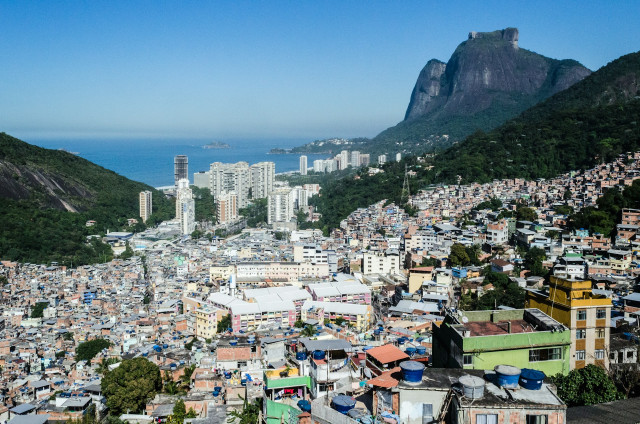
The History of Rocinha: From Rural Settlement to Urban Favela
Rio de Janeiro saw the establishment of the rural community known as Rocinha during the beginning of the twentieth century.
The area got its name from the Portuguese expression which means “small agricultural holding” that properly describes its first form.
Rio de Janeiro required additional food from farmland during its rapid urban growth at that time and wealthy elites retained land ownership yet allowed individual farmers to cultivate their plots.
The transition from agricultural land to informal housing created the base that led to the development of Rocinha into a popular Brazilian favela during the era of rising land values and urban development.
Urban growth did not change Rocinha into an urbanized zone because it continued as an agricultural location with minimal housing and unpaved streets and farming practices.
At that time only slaves who were freed from their masters alongside indigenous people joined European workers as the main residents of the area.
The area lacked any involvement from the government which paved the way for the development of self-reliant communities.
The economic expansion of Rio de Janeiro forced rural farmers and low-income individuals to find other areas for habitation because land values increased.
The change of agricultural land into shanty settlements started Rocinha's transition process. The initial small rural communities developed through time into Brazil’s largest favela structure while also showing the city’s general urban expansion pattern.
Rocinha functions today as a dynamic residential area which combines diverse development difficulties with positive progress aspects while demonstrating its inhabitants' ability to endure urbanization.
Urban Expansion and the Birth of a Favela
The middle of the 20th century marked a period of quick population expansion for Rio de Janeiro because industrial growth offered new jobs to many people. H
undreds of Brazilian people migrated from northeast districts into Rio de Janeiro seeking job opportunities because droughts and poverty were prevalent there.
Rocinha became one of many informal communities that low-income residents formed because Rio lacked sufficient affordable housing options.
Rocinha started to develop self-built homes made with wood and bricks and metal sheets throughout this period.
The settlement lacked basic infrastructure since it had no paved streets and no sewage system and minimal electricity connections and water supply.
The population of Rocinha expanded significantly until the 1960s when the Brazilian government acknowledged the area as a favela.
Residents of favelas had to construct neighborhoods and schools while providing basic services because the government showed no interest in the area.
Although facing obstacles during its growth the favela of Rocinha acquired organization through community spirit and entrepreneurial development to become Brazil's biggest and best-organized favela.
Growth, Struggles, and Resilience (1970s–1990s)
During the period from the 1970s through the 1990s Rocinha expanded at an extremely fast pace.
The territory kept expanding as residents constructed their dwellings vertically along narrow corridors and steep staircases which created a crowded urban territory.
During this time period the region faced significant problems which became dominant issues of the period.
Authorities abandoned their control over the area which allowed drug cartels along with gangs to dominate parts of Rocinha while making it their criminal operations center.
The people of Rocinha faced the dangerous combination of extensive violence alongside police invasions and neighborhood wars in their daily lives.
The sense of community within Rocinha continued to flourish despite all obstacles that faced the residents.
The local people established multiple community groups which fought to obtain improved town infrastructure and educational facilities and healthcare services.
Various local organizations and tribal leaders developed education programs and sanitary facilities and employment projects together.
Throughout this adversity Rocinha maintained an image of incessant perseverance through which culture and creativity could still flourish.
Modern-Day Rocinha: A City within a City
Rocinha stands as one of Brazil's most successful favelas during present times. The favela contains various businesses while maintaining schools and churches alongside a prosperous local market.
Most residential properties in the area now offer residents access to running water combined with electricity as well as internet service.
Rocinha contains several higher structure buildings as well as banks alongside tourism businesses.
However, challenges remain. The area suffers from multiple problems which affect numerous residents through unemployment and social unfairness and criminal activity.
Security enhancement drives from police forces and government agencies are questioned in their effectiveness through public scrutiny.
The implementation of "Pacifying Police Units" (UPP) has produced ambivalent outcomes because residents express divergent views about security conditions after these initiatives were launched.
Despite its problems Rocinha functions as a successful residential area with residents who show pride in their musical traditions and social relationships.
The future of Rocinha undergoes transformation through initiatives aimed at legalizing property ownership and constructing better infrastructure and promoting business development.
The Future of Rocinha: Challenges and Opportunities
Rocinha stands at a point where it confronts numerous obstacles but also multiple prospects.
The Brazilian economic uncertainties create ongoing stress regarding employment stability as well as the extent of poverty throughout the nation.
The prospects for improvement emerge through new urban development ventures and community-based initiatives and government-sponsored social programs.
- The current investment projects focus on creating passable roads together with proper sewage systems and developing improved public transportation.
- Resident accessibility to new economic growth happens through small business development and tourism markets and digital business opportunities.
- The youth can break free from poverty through educational institutions and social initiatives which include schools plus vocational training and community centers toward building brighter tomorrows.
- Law enforcement and social welfare organizations face ongoing obstacles to reduce crime since they need both community-focused policing and social improvement strategies to succeed.
Rocinha faces multiple challenges but its growth has begun to develop.
Through the strength of its residents the community demonstrates how groups build enduring transformations even as they face challenging circumstances.

Life in Rocinha: Daily Struggles and Community Resilience
The people who reside in Rocinha develop successful community networks in spite of adversity which typically defines this area.
The exploration within this section dives into the lifestyle patterns alongside economic operations along with educational matters healthcare facilities and social coordination networks of Rocinha.
The densely packed residential area exposes inhabitants to inadequate access to sanitary services together with water and electrical power supplies.
The population of Rocinha has established an organized system of urban space along with community-based businesses that provide services and markets.
The majority of individuals in the area fulfill their income needs by participating in unofficial businesses including street markets and basic construction jobs and tourism activities.
People in the favela travel daily to better-off sections of Rio de Janeiro for employment because the favela District remains poorer than other parts of the city.
The educational institutions including local NGOs in Rocinha support students but they face issues caused by scarce resources and gang recruitment pressures among young people.
The public healthcare system exists yet it faces overwhelming crowding issues and insufficient funding.
The local population depends on community medical clinics and NGO healthcare services due to poor government assistance.
The community preserves its spirit through musical and dance events and local organized events.
The following section delivers comprehensive information about population routines alongside their methods for sustaining hope along with resilience.
Crime, Security, and the Role of Police in Rocinha
Rocinha has constantly endured fighting between drug organizations and police forces that are attempting to control this territory.
An investigation of criminal history and police response together with a study of current security risks takes place in this segment.
The 1970s and 1980s became a period when drug cartels infiltrated power spaces after governments withdrew from management leaving citizens with employment options yet subjecting them to security threats.
The UPP (Pacifying Police Unit) program initiated operations in 2008 both lowered criminal activity and pursued government control across territory.
The operation achieved challenging results since officials documented corruption while security forces engaged in inappropriate actions and drug dealers still operated in Rio.
Residents experience extreme danger because police forces engage in dangerous fights with drug leaders which put innocent civilians at risk.
The population supports educational initiatives and employment solutions over law enforcement involvement in fighting criminal activity.
Rocinha's long-term peace and stability requires analysis of existing methods and evaluation of reform requirements.
The Cultural Identity of Rocinha: Music, Art, and Festivals
Rocinha positions itself as a cultural center through its talented musicians and dancers and creators who transform every aspect of the community.
Culture together with creativity defines the identity of Rocinha through this section.
- The community of Rocinha shows deep commitment to Brazilian music tradition samba. Most Rio de Janeiro residents take part in Carnaval by making costumes and performing while dancing.
- Through the musical genre of Funk carioca (favela funk) youth received an empowering musical expression which spreading truthful stories about living in favela communities. The existence of controversies has not hindered funk from becoming an influential cultural economic power.
- Thematic street art graffiti covers every wall of Rocinha which depicts inspiring messages about identity and resistance together with stories of hope. People in the community use graffiti to build a platform which leads to both social change and empowerment.
- Rocinha organizes multiple cultural events and celebrations dedicated to honoring its rich background as well as its multicultural population.
Infrastructure Challenges in Rocinha
The combination of population density and urban structure growth within Rocinha transformed this Brazilian settlement into one of the most structured favelas yet municipal development created substantial infrastructure problems.
Unplanned Growth and Housing Issues:
The inhabitants of Rocinha lacked proper control over their community expansion so they constructed housing whenever they found available space using substandard materials.
Exponential population growth has produced severe residential zone congestion together with environmental threat and poor shelter quality.
Access to Basic Services:
Most homes in Rocinha continue to experience irregular access to three basic services which include electricity, water, and sewage systems.
The use of illicit utility connections by residents results in regular interruptions of power and water supply throughout the area.
Transportation and Mobility:
Transportation remains challenging throughout the tight network of alleys combined with steep hillside positions within Rocinha.
Even though buses and moto-taxis operate in the area the insufficient road structure together with poor traffic regulation results in transportation disorders and safety risks.
Sanitation and Waste Management:
The poor waste disposal services and defective drainage network in the favela serve as health hazards because they spread infectious diseases and create conditions for mosquito-borne illness outbreaks.
The government lacks a permanent solution and non-governmental organizations along with local community groups work toward improving sanitation while pursuing their own approach.
The Role of Art and Culture in Rocinha’s Identity
Brazil's largest favela along with being a cultural heart hosts multiple artistic expressions which help residents maintain their collective identity and survive despite challenges.
Samba and Carnival: The Heartbeat of Rocinha
The cultural practice of Samba runs through the heart of Rocinha because many local samba schools participate in Rio Carnival.
The schools enable artistic self-expression for youth while fostering opportunities for community awareness and group spirit.
Street Art and Graffiti: Telling Rocinha’s Story
The walls of the favela showcase colorful paintings and graffiti which document the stories of pain along with dreams and defiant spirit.
Artists from both domestic and international backgrounds visit Rocinha to develop this urban artistic movement.
Music and Dance as a Form of Expression
Apart from samba Rocinha houses thriving elements of hip-hop along with reggae and funk music and dance.
oung people use music as both a political and social force which enables them to share their current reality while facing stereotypes and social marginalization.
Cultural Centers and Community Initiatives
Casa de Cultura along with local youth groups organize art classes combined with theater events and dance workshops in Rocinha.
The cultural preservation efforts combined with job creation and social transformation form the core of these initiatives.
The Impact of Government Policies on Rocinha’s Development
The development and expansion of Rocinha has proceeded through important government policies. Different urbanization programs along with security methods and social programs have been developed through years to enhance living standards.
The performance of these government policies is still considered controversial by experts.
Urban Upgrading Programs
The Favela-Bairro and Morar Carioca government programs existed to combine favelas with the city structure by constructing fundamental infrastructure while improving sanitation systems and delivering public amenities.
Past progress has encountered obstacles because of erratic funding support together with political changes which limited sustained development.
Security and Pacification Efforts
Rio de Janeiro established Pacifying Police Units (UPPs) for the purpose of combating crime along with gang violence within Rocinha.
Critics describe these initiatives as temporary solutions because they did not resolve basic factors that lead to criminal activity including joblessness and inadequate education.
Housing and Land Ownership Reforms
The majority of Rocinha residents do not own their land legally which exposes them to threats from both evictions and speculative buying of property.
The government launched programs to legalize land ownership yet the administrative problems continue to block further advancement.
Education and Employment Policies
Through public school investments combined with vocational training and social welfare spending some individuals from Rocinha have gained improved prospects.
The problem persists because not enough money is available and many people face physical barriers.
Conclusion: The Ever-Evolving Spirit of Rocinha
Rocinha demonstrates remarkable spirit through its transformation from a rural settlement into the largest Brazilian favela in history.
Rocinha has refused to be limited by its challenges including inadequate infrastructure as well as crime and social inequality since it has continuously evolved while creating an original story that transcends the negative favela stereotypes.
Rocinha residents have achieved notable accomplishments in educational advancement alongside economic progress alongside cultural heritage protection.
Public initiatives together with favela tourism and local community-based projects have proven essential for boosting the standards of living in residential communities.
The community needs extended funding and policy changes to address ongoing problems like property conflicts and restricted healthcare resources and overwhelming joblessness.
The enormous cultural heritage of Rocinha stands as the community’s most significant factor of strength.
Residents of the community find personal expression through samba schools and street art combined with music and dance which has also developed economic prospects for the area.
The artistic and cultural traditions in the favela attract worldwide interest which strengthens its role as an artistic and resilient cultural center.
To develop a bright future for Rocinha the community needs assistance from government programs and neighborhood involvement together with sustainable development strategies.
Projects which focus on creating affordable housing alongside improved infrastructure alongside skill-building programs remain vital to break persistent poverty and create upward mobility in society.
Other than tourism the local entrepreneurial ventures create a sustainable economic force that enables residents to construct their own prosperous future.
The true character of Rocinha rests on its strong-hearted population along with its active community life.
The community presents an inspiring story about transformation combined with resistance and hope because unity and its cultural heritage and resilience allow a community to thrive despite adversity.
Also read: Mental Health in Slums: Coping with Poverty, Violence, and Stigma




-ySWGlp0vgc.jpg)

-3dkuLgKhRD.jpg)


LEAVE A REPLY