

-LVWqdgYaOl.jpg)
The Global Affordable Housing Crisis – Causes, Scale & Solutions
On the continent and in almost all countries, the crisis of shocking proportions is developing. It does not declare itself in the dramatic immediacy of a natural calamity or the apparent violence of civil war, but its effects are equally disastrous. The worldwide affordable housing crisis has sneakily turned into one of the challenges of the twenty-first century, including billions of lives, and threatening the social fabric of cities in Lagos or London, in Mumbai or Mexico City.
The crisis can be seen in the world
richest cities with skyrocketing rents, eat up over half the wages of an
employee, living alone in their twenties, or with their parents well into their
thirties, and a generation that is no longer interested in owning a home.
The crisis in the developing world is of a more desperate nature: over one billion people living in slums and informal settlements and without access to clean water, sufficient sanitation, and tenure security. The numbers are staggering. UN-Habitat estimates that 1.6 billion individuals are in poor housing conditions at present.
That figure will reach three billion by
2030, or almost a 1/3rd of the estimated world population. It is not a scarcity
crisis in absolute terms. Sufficiency of land, sufficiency of materials,
sufficiency of labor, and sufficiency of wealth to house all the people on
earth with dignity is available. It is a distribution crisis; a crisis of
policy options; a crisis of a global economic system that has progressively
commercialized housing as a human right.
This blog explores the factors, magnitude, and possible
remedies to the international affordable housing crisis- a crisis that will be
used to characterize the habitability and fairness of our cities over the
coming generations.
Scale of the Crisis: A Worldwide Snapshot
The affordable housing crisis is not specific to some
troubled cities; it is a worldwide phenomenon that is impacting countries with
different levels of development. In developed economies, the crisis is
quantified in price incomes ratio that has hit an all-time high. In urban areas
such as Sydney, Vancouver and London, housing costs in the form of median home
prices are more than ten times the median household incomes- prices that have
rendered owning a home unaffordable by most working people. The situation with
rental markets is also deplorable.
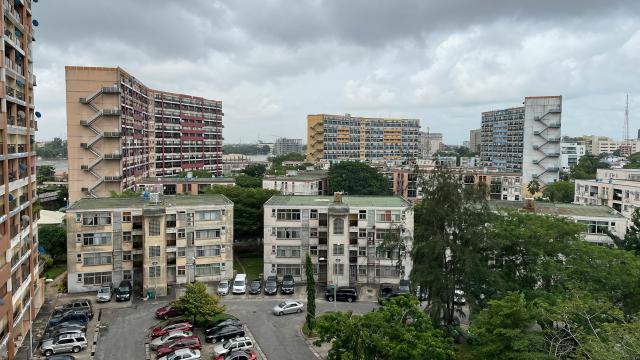
In the European Union, over a quarter of all households with low-income allocate in excess of 40 percent of their disposable income on housing, which is a very severe threshold. In the US, no county has a full-time minimum wage earner that can afford a small two-bedroom rental house. The crisis is worst in the rapidly developing cities of the Global South. In Lagos, Nigeria, which may soon become the largest city in the world, an estimated 70 percent of the population resides in informal settlements.
That is more than 60 percent in Karachi,
Pakistan. In Dhaka, Bangladesh, there are over 3.5 million slum dwellers,
usually residing on land that is prone to flooding, and lack access to basic
sanitation. These are not fringe groups, but the majority of urban dwellers in
most of the rapidly expanding cities around the world. The magnitude of the
crisis is also generational.
Homeownership rates
of young adults in the developed world have plummeted. In the UK, the number of
individuals who have homes within the 25-34 age bracket has decreased by almost
30 percentages points since the early nineties. First-time homebuyers in Canada
have reduced by over 20 per cent in the last ten years. This gap in generations
is driving what economists are describing as intergenerational inequality,
namely, the fact that people who could afford homes in previous decades have
amassed massive amounts of wealth through appreciation, and younger generations
are being excluded of the market altogether, with no means to accumulate any
equity or attain financial security.
Root Cause One: Housing as a Financial Asset
The most basic reason behind the affordable housing crisis is, perhaps, the financial commoditization of housing as a living space. In the last 40 years, housing has become less of a shelter and more of an investment vehicle, a store of value, an inflation hedge, and a wealth accumulation vehicle. This change has radically changed the functioning of the housing markets. When housing is viewed as an investment, the needs of communities do not meet the incentives that inside the market. Investors desire appreciation, i.e. to be beneficiaries of scarcity.
The developers also target luxury units
that have the highest profit margins. Governments, which depend on property
taxes and are keen to encourage investment, tend to focus on policies that
promote values of appreciation rather than those that boost affordability. The
net effect is to create a market that produces too little housing to the people
who most need it, and a lot to those who want to invest.
Decades of low interest rates have added a burst of
financialization to housing as borrowing became cheap and speculative purchases
spurred buying. Tax policies that have encouraged real estate investment have
facilitated it, such as mortgage-interest deduction, treatment of capital gains
preferential treatment, and depreciation allowances which make ownership of
rental properties very tax-favored. The move into single-family rentals by
institutional investors has speeded it up, with Wall Street companies buying
tens of thousands of homes, transforming them into corporate-controlled rental
properties. The consequences are clear.
Root Cause Two: Exclusionary Zoning and Supply Constraints
The second key cause of the affordability crisis, along with
the financialization of housing, is an intentional reduction of housing supply
via exclusionary zoning and land-use policies. In the most desirable cities in
the world, most residential land is zoned to single-family housing only, so
constructing an apartment, townhouse or even a small multi-unit building in the
area most residents desire to live is prohibited. This is not something that
was created in the natural market, but rather a product of decades of policy
decisions that have favored the interests of the existing homeowners at the
expense of the needs of the general population.
Exclusionary zoning
makes perfect sense: place a limit on supply and those who already own a home
will ensure their own value. Single-family zones are opposed to densification
because neighborhoods zoned to single homes oppose the character changes that
multi-family development would impose on them. The consequence is some sort of
a yellow-belt around cities - large areas of land that will not be switched to
high-density development as housing demand continues to sky-rocket. The effects
are disastrous. Even in cities such as San Francisco, Los Angeles and New York,
the inability to construct housing in proportion to job creation has resulted
in shortages of hundreds of thousands of units.
The supply restrictions extend beyond zoning. The shortage is caused by lengthy approval processes, systems of discretionary review that provide neighbors with a veto over new development and building standards that increase costs. In most urban centers, it can take more than five years to build a new housing unit; a duration that renders such an undertaking to be economically not viable. The outcome is a market that continually fails to produce housing, in terms of both quantity and quality, especially the so-called missing middle, townhouses, duplexes, and small apartment buildings that middle-class families could traditionally afford. A solution to the affordability crisis is conditional on reform of these exclusionary policies.

Root Cause three: Inequality, Stagnant Wages, and the Urban Premium
The third pillar of the affordable housing crisis is not in the housing markets but in the economy. In the last 40 years, the wages of the working and middle class households have remained constant as living expenses have increased tremendously. It is the basic arithmetic of the affordability crisis, this disjunction between the income that people receive and the price they pay to rent or own homes.
Compensation in the production and
nonsupervisory US worker category has risen in real wage terms only slightly
since the 1970s, as the real home value has more than tripled. Ratio of house
prices to earnings in the United Kingdom has risen by more than eight to one
compared to an average of three to one in 1970s. And these trends are also true
in the developed world.
It is a tale of
decoupling the housing market has become more about the incomes of the
affluent, and most workers have been left out. The erosion of the bargaining
power of workers by globalization and deindustrialization, the waning of labor
unions, has further compressed wages despite the rise in productivity.
Meanwhile, in a process called the urban premium, the economic benefits of
residing in a big city have become concentrated around fewer and larger
superstar cities with clustered high-paying sectors such as technology and
finance. These cities are the engines of the world economy but also no longer
affordable by everyone other than those in the industries they host.
The effect is a
geography of inequality. In the superstar cities the rich-poor divide has
become a huge one, with low- and middle-income laborers relegated to the urban
margins or even beyond the city. In secondary cities and the countryside, where
housing can still be affordable, economic opportunity tends to be constrained,
and an awful decision must be made between place and means of living.
The Human and Economic Consequences
The affordable housing crisis is not just an abstract
economic issue; it has enormous human and economic implications which spread
across all levels of society. To people and families, housing instability poses
a direct health, education, and well-being threat. The children experiencing
housing insecurity as they move often perform poorly at school and one trip
backwards by months. Adults with housing cost burdens are at higher risk of
developing chronic stress, anxiety and depression. Homelessness leads to
adverse physical health conditions because families cannot pay nutritious meals
and medical treatment to cover the rent.
The economic implications are also dire. When employees are unable to afford to live near their employment, they are forced to travel long distances that decrease productivity and life quality. With companies failing to attract employees because of housing expenses, businesses have a difficult time staffing jobs, which limits economic growth. Communities lose the dynamism and continuity of multigenerational populations when the young people are not able to live in the place they were brought up.
Homelessness is also fuelled by the crisis. Homelessness in urban areas of the developed world has increased proportionate to cost of housing. The connection is obvious: the population unable to afford the price of housing becomes homeless when its cost is higher than the amount that low-income families can afford. It is not an issue of personal pathology or addiction; it is the issue of supply and demand and of the markets which have already priced the poorest out of shelter, altogether.
The most visible
expression of a crisis that has affected much more people than the visible
homelessness on the streets of Los Angeles, San Francisco, and Seattle is the
fact that many more people are housed and are already at a breaking point. The
ramifications are also far reaching to the economy in general. Housing expenses
are also objected as a tax on labor mobility as a worker is not able to
relocate to the city with the highest economic potential. They redirect
household consumption and investment, and suppress economic growth.
Solutions from Incremental Reforms to Systemic Change
The global affordable housing crisis needs a multi-pronged strategy to include both short-term relief, as well as long-term structural redesign. There is no one-stop-policy solution to the crisis, it requires a multi-faceted approach that will address the issue at all angles. This should first and foremost be done by adding housing especially affordable housing.
This involves a reform of exclusionary zoning in order to permit increased
development in areas traditionally used as single-family houses. Minneapolis
and other cities in the USA, as well as Auckland and Berlin in New Zealand,
have started this task, abolishing single-family zoning and allowing multi-unit
housing regardless of urban boundaries. It is the process of simplifying
approval procedures in order to minimize development time and cost. It involves
spending on social and public housing on a mass scale never witnessed in
generations.
The second focus is
to change the economic incentives that have skewed the housing markets. This
includes the elimination of tax policies that promote speculation in real
estate rather than the ownership of homes and long-term rent. It involves more
as an extension of human rights to housing rather than a commodity and the
regulation of financial markets to curb the type of speculative excess that
drives price bubbles. It refers to increasing rent control and tenants
protection to give security to tenants.
The third priority is to deal with the underlying level of
inequality that renders housing unaffordable. This would include increasing
wages, making labor more secure, and distributing economic growth more widely.
It involves investing in infrastructure and in development of the economy in
the secondary cities to decrease the concentration of opportunities in few
superstar cities. It entails the creation of a social safety net so that the
instability of housing can be prevented to spill over to homelessness.
The fourth one is to go large with proven solutions.
Community land trusts, allowing land to be off the speculative market and held
in trust with the community, have been shown to be effective in permanently
maintaining affordability. Hundreds of thousands of affordable homes have been
created through inclusionary zoning, which requires developers to create
affordable units as part of market-rate developments. Social models of housing
like in Vienna and Singapore have shown that governments are capable of constructing
and managing high-quality housing in large quantities
Conclusion
One of the challenges of our time is the global affordable housing crisis. It touches over a billion people today and is likely to swallow billions more in the next few decades. It is a tragedy of massive injustices: in an era of unprecedented affluence, the most vital of human rights, a safe and stable home to call ones home, is not available to an astonishing percentage of the human population. The reasons behind the crisis are not obscure.
They rest in the commodification of housing that has turned shelter
into a speculative commodity. They are exclusionary zoning and supply lockouts,
which have shut the doors to development in the places where people most want
to live. They sleep in growing inequality and stagnant wages, which have left
working families incapable of affording the prices of urban life. And they rest
in the inability of governments to consider housing as a right instead of a
market commodity. But the remedies are close at hand, too. We understand how to
develop low cost housing.
We understand how to
redesign zoning to permit denser and open-inclusive communities. We understand
how to control financial markets in order to avoid speculation leading to high
costs. We understand how to keep tenants out of the streets, and housing
affordable over generations. The missing piece is the political will- the
acknowledgement that the affordable housing crisis is not a predestination, but
the outcome of decisions that may or may not be made. Whether we will solve the
crisis or not is not a question before us, the only question is whether we will
want to solve.
The price of not doing anything is the lives of human beings: in the number of children raised in insecure living conditions, in the number of families unable to afford living in the communities they call home, in the billions of people living in slums without clean water or tenure security. The price of doing so is quantified in political courage, and readiness to take on the vested interests that enjoy the status quo.




-3dkuLgKhRD.jpg)
-49HupTvwDD.jpg)






LEAVE A REPLY