

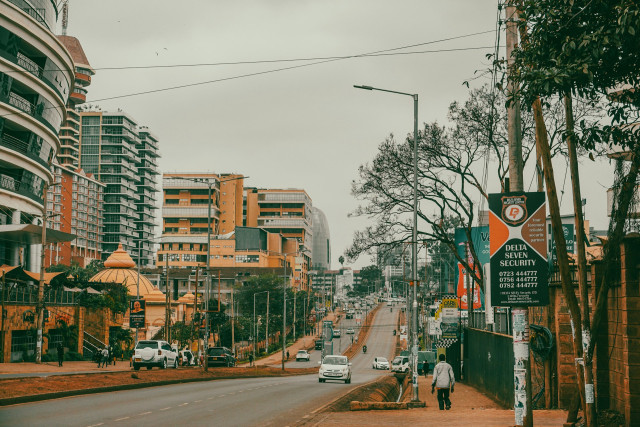
The Future Of Rdp Homes In Kenya: Are They Still Relevant For Today’s Housing Needs?
One of the most burning development issues in Kenya is
housing. As urbanization continues to pick up, population increases, and
construction prices soar, the need to have affordable housing has continued to
surpass supply. With the decades, housing projects driven by the government
based on the Reconstruction and Development Programme (RDP)-style have been
seeking to deliver low-priced housing to vulnerable and low-income citizens.
Although RDP homes were first introduced in South Africa, the idea of a state-subsidized
housing with low income has also informed housing policies in Africa such as in
Kenya through the affordable housing agenda.
In Kenya, other housing initiatives have aimed at mitigating
housing shortage, upgrading the informal settlements and enhancing the
livelihoods of the low-income earning families. Yet, with the change in urban
landscape and socioeconomic processes, one wonders whether this type of
housing, as it used to be planned by RDP is still advisable. Are the
subsidized, standardized units still discovering solutions to the modern
housing demands? Or must Kenya be subject to a new and innovative policy that
mirrors contemporary realities?
This blog discusses the future of RDP-style home in Kenya,
its historical background, success, shortcomings, and its possible future
change. It analyses policy, financing, sustainability, social impact, and
innovation to explain whether this type of housing can continue to benefit the
urban population of Kenya that is growing.
The Foundations and Idea of the RDP-Style Housing in Kenya.
RDP-type housing are government subsidized residential
properties designed to house low-income earners, which are normally tiny and
standardized, and manufactured at the lowest production expenses. Although
Kenya did not actually apply the principles of the RDP policy of South Africa,
it pursued the same principles in its own public housing projects and
affordable housing projects. Such programs aimed to deal with inequality in
housing by offering citizens affordable basic housing through secure shelter at
a price that they would not otherwise be able to afford in the market.
In Kenya, the initial public housing initiative targeted the
urban workers and civil servants. Gradually the government became larger in its
scope to encompass slum improvements and affordable housing projects aimed at
the people of informal settlements. The main philosophy was the same: house as
a social right and not a commodity in the marketplace.
These houses were normally provided with the basic
facilities like sanitation, availability of water and electricity. It was not
luxury it was dignity and security. The purpose of providing the subsidized
housing was to decrease homelessness, overpopulation, and development of
informal settlements.
Nevertheless, with the increase in population and the
development of urban centres in Kenya, the initial model of RDP is subject to
new demands. The lack of land, the increase in the prices of different
materials, and the altering lifestyle demands because the reflection of whether
the traditional model is still appropriate in the modern situation.
Achievements of Government-Subsidized Housing Programs
The government-initiated housing schemes in Kenya have
registered significant achievements. Housing has been provided to thousands of
families who are no longer living in informal settlements, but in the formal
communities. Such efforts have enhanced living standards, minimized
environmental risks, and overall health of people.
Increased security of tenure has been one of the most
successful. Benefits of having or owning a home which is government subsidized
is stability and long term economic gains. There is no fear of eviction whereby
families invest in education, small enterprises, and home development.
Also, these housing projects have caused a rise in
construction and associated industries. In the form of talented engineers and
local craftsmen, affordable housing projects help in economic development.
Other benefits of slum upgrading programs include integration of infrastructure
like roads, drainage networks and provision of communal facilities. These are
not limited to single households but also to whole communities.
Regardless of these criticisms, these milestones prove that
the RDP-style of housing has been very instrumental in the social development
of Kenya. The dilemma is now how to multiply such successes with the available
limitations resolved.
Limitations of Traditional RDP Housing Models
As much as the RDP-style homes have had the benefit of
sheltering people, they too have been criticized. One of the weaknesses is
standardization. Stylized designs usually do not represent different family
sizes, cultural tastes and economic activities. Most beneficiaries alter their
houses shortly after occupancy, which means that the design lacks
effectiveness.
The other issue is location. In some cases, affordable
housing projects are constructed in remote areas which do not have employment
hubs, thereby making transport expensive to the residents. Such lack of
connection negates the intention of enhancing livelihoods.
Issues of quality have also arisen. Negligent construction
and cost limitations have in certain situations, led to structural problems.
Inadequate maintenance also has an impact on the sustainability in the long
run. Besides, the practice of allocation has been sometimes criticized because
of lack of transparency. The fairness and accountability is crucial in ensuring
public trust.
Such restrictions point to the necessity of reform. Although
the idea of RDP-style housing is good, its application needs to adapt to modern
times to fulfill the present day expectations and the economic realities.
Changing Housing Demands and Urbanization.
The population in Kenya is growing at an unprecedented rate
in urban centers with cities like Nairobi, Mombasa and Kisumu developing at
tremendous rates. This boom has greatly changed the demand of housing to such
an extent that it is now more complex and dynamic than ever. There is a shift
in urban lifestyle and consequently in the expectation and tastes of urban
people.
The modern city residents value the distance to their
workplaces, the availability of social facilities, including schools and
healthcare facilities, and the ability to change their living place to fit
their needs. The younger generations, specifically, might favor rental, as
opposed to owning a home based on mobility, career changes, and financial
benefits. The conventional RDP-type housing that is normally planned to serve
stable nuclear families and long term ownership might not be suitable in capturing
these changing trends.
Moreover, the emergence of mixed-use projects (such as
residential, commercial, and recreational areas) is an indication of a new way
of urban living. Housing has become considered as part of a larger, integrated
urban ecosystem and not as a separate structure. Comprehensive planning which
involves housing with transportation networks, job zones and government
services is emerging vital.
Another sustainable alternative to the estates that are
isolated is Transit-Oriented Developments (TODs) that prioritize high-density
housing in areas around the hubs of mass transportation. They save on commute
time, transportation expense and enhance urban development that is friendly to
the environment. RDP-style housing models in Kenya need to be adjusted to these
new ideals of planning and realities of contemporary urban life.
Funding Affordable Housing in Kenya of today.
Funding is also one of the greatest obstacles to the
proliferation of affordable housing in Kenya. Government budgets alone cannot
adequately meet the increasing demand of housing and therefore, the housing
programs will require creative and sustainable financing strategies to
guarantee the sustainability and success of its implementation.
In Kenya, mortgage penetration is low and thus as a citizen,
many people would not be able to own their own houses. The high interest rate
and lending practices leave out a significant segment of the low-income earners
out of formal financial systems. This has caused a number of families to fail
to afford to buy houses. The government has responded to this by providing
housing funds and encouraging public- private partnerships to marshal more
resources and lighten the financial load on individual buyers.
Blended finance models where the subsidies provided by the
government are mingled with investments made by the private sector hold bright
prospects to scale affordable housing projects. These strategies help diversify
the risk and get capital through different sources. Other schemes like
rent-to-own plans and co-op housing models are also offering various ways of
acquiring homes, where the standard mortgages might not apply.
But, it is important that long-term economic sustainability is a condition. The housing programs in the form of RDPs must not be too dependent on the state, as this may overburden the budget. Shared responsibility and financial inclusion can be encouraged by encouraging savings programs, housing cooperatives, and community-based funding programs. The transformation of financing models will be one of the essential factors to ensure the sustainability of subsidized housing in the long term.

The Innovation and the Role of Technology.
Technology has also become a great opportunity to revive
affordable housing in Kenya. Contemporary building techniques like
prefabrication and modular building have the potential to save a considerable
amount of money on construction and decrease the project completion time. The
strategies enable housing elements to be produced outside and combined in a
very short period, which enhances efficiency and reduces material wastage.
Consequently, additional housing units will be available in a relatively shorter
time, and this will contribute to the reduction of the housing shortage.
Digital innovation is also very critical in enhancing
governance and transparency. With the advent of digital land registries, land
ownership is made clear, fraud is lessened, and long court battles that usually
slow down housing development are reduced. Land systems that are secure and
transparent build more confidence to the investors, developers as well as
homeowners.
The intelligent housing also makes it affordable by
enhancing both energy saving and reducing the utility bills of the occupants.
Energy-efficient lighting, adequate insulation, and optimal ventilation are
some of the features that minimize the costs of living in the long-term.
Sustainable building materials and green technologies can be incorporated in
order to make the RDP-style homes greener and more sustainable. Solar panels,
rainwater harvesting systems and better insulation are environmentally friendly
and also increase the cost saving of a household in the long run.
Another way that technology empowers urban planning is
through technology. Evidence-based decision-making and data will assist
authorities in determining priority areas of development and properly
distributing resources. Innovation will help Kenya to reshape the traditional
housing architectures into resilient and modern communities that are responsive
to the contemporary conditions as well as ensuring sustainability and
efficiency.
Housing and Social Equity and Inclusion.
The social justice aspect of housing is closely connected to
the housing issue, especially in a nation where the inaccessibility of proper
housing is frequently indicative of the general economic and social inequality.
RDP-style housing programs are aimed at decreasing such differences by focusing
on marginalized and low-income communities. Through availing subsidized housing
facilities, such programs are intended to foster dignity, stability, and equal
provision of the basic services to people who may not be in the formal housing
market.
These programs should be all-inclusive in order to work
effectively. Females, young people, and persons with disabilities have other
forms of obstacles in getting the land, credit and housing opportunities.
Policies should then be keenly formulated in order to seal these gaps by use of
balanced eligibility standards, specific support systems and safeguarding
legislation. Transparent and open allocation systems are also crucial, as they
contribute to the increased credibility and popularity of the organization and
also make sure that the benefits are delivered to the target audience.
Involvement of the community goes a long way in enhancing
housing. With the active participation of residents in the process of planning
and making decisions, the development becomes more sensitive to the needs of
the area and the cultural contexts of the region. This participatory style
promotes the feeling of ownership and sustainability.
In upgrading of slums, displacement must be avoided.
Solutions to the problem of housing must enhance living standards without
interfering with livelihoods or breaking up social systems on which communities
depend. Having a high degree of social equity means that the housing programs
will continue to be focused on national development objectives, which will help
in the inclusive development and social stability in the long run.
Environmental Sustainability and Climate Resilience.
Climate change is among the factors that are getting more
powerful on housing infrastructure. In Kenya, societies are increasingly
experiencing the effects of flooding, extended droughts and extreme
temperatures among other weather disasters. The most susceptible areas are
usually informal settlements and low income housing, since these are often
situated in the most hazardous areas like floodplains or land with low
drainage. Unplanned and poorly constructed structures can undo the years of the
developmental work made in pushing a society to become more vulnerable to
climate-driven disasters without proper planning.
It is hence necessary to incorporate climate-resilience
qualities into affordable housing. Environmental risks can be greatly minimized
through the use of simple measures like proper drainage systems, elevated
foundations and use of durable and weatherproof material. Home designs that
have a better ventilation system and roofing materials that are resistant to
heat can also be used to enable the residents to manage the increasing
temperatures. These changes do not only cover the physical structures but also
save lives and livelihoods.
Urban sustainable planning also enhances resiliency. Public
transportation encourages the reduction of carbon emission and congestion and
green space within housing developments increases the quality of air in terms
of air quality and the overall wellbeing of the population. Storm water can
also be controlled by trees and open spaces that help in mitigating urban heat
island effect.
It is very important to strike a balance between
affordability and environmental sustainability. Though climate-resilient
building can be costly in the short term, it reduces the cost of repairs in the
long term and increases its lifespan. Ensuring that its housing solutions will
be ready to meet future environmental challenges by instilling sustainability
into the affordable housing strategies, Kenya will be able to have its
solutions to housing problems.
Conclusion
The RDP-style housing has been significant in solving the
housing shortage in Kenya. It has helped thousands of families have safe
lodging, raised the living standards, and brought more social equity by
focusing on low-income and marginalized groups. Under subsidized housing
schemes, stability has been achieved by a huge number of families and they are
now able to access necessities. Nonetheless, the dynamic change of the city
life today demands modernization and transformation of this outdated model.
Kenya needs to shift to innovative, sustainable, and
inclusive solutions to housing as opposed to the conventional subsidized ones
in order to be relevant. This change demands significant financing changes to
make it sustainable in the long term, more utilization of modern construction
technologies to save money and increase quality, and more fundamental
environmental concerns to make climate-resistant. There should also be
enhancements in the policies to facilitate the implementation process, enhance
transparency and attract the participation of the private sectors.
The future of RDP-style housing in Kenya is not in throwing off the concept but rather in revisiting the concept and redefining it to fit into realities. Subsidized housing remains a pillar of national development with good governance, strategic planning, and partnership between the government, the private investors, and the communities. Thoughtful evolution will help Kenya to achieve a situation where every citizen will be able to afford safe dignified and affordable housing in the generations to come.





-3dkuLgKhRD.jpg)
-49HupTvwDD.jpg)










LEAVE A REPLY