

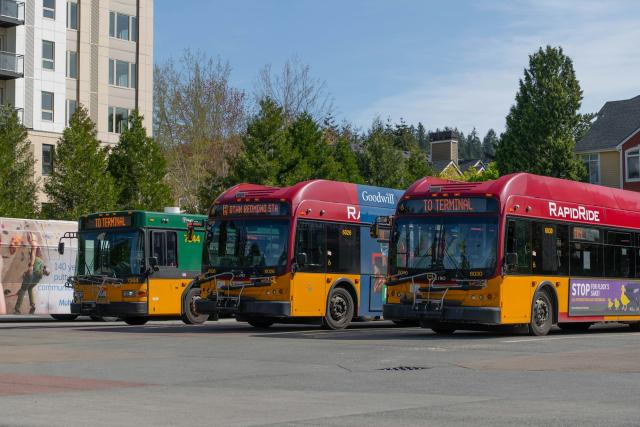
The Failed Dream of Metro Buses: What Went Wrong?
When metro bus systems began to appear in developing countries, people praised them for solving many city traffic issues. By showcasing efficiency, lower costs and sustainability, metro buses were set to transform the way millions travel in cities. Using simple designs, their own lanes and the latest technology for tickets and monitoring, buses were meant to control crowded streets and confusing traffic in the future.
In different countries from Latin America to South Asia, Bus Rapid Transit (BRT) showed governments and town planners how to repeat its achievements. Often, cities such as Bogotá, Curitiba and later Istanbul have demonstrated that an efficient metro bus system can make city travel much better, lower emissions and enhance daily life for commuters. To do what developed countries did, many developing countries launched their own metro bus projects.
In Pakistan, India, Nigeria and some areas in Southeast Asia, starting metro bus systems was celebrated with great political excitement. Such projects were presented as signs of advancing times and usually became prominent during electoral campaigns. The media wrote good reports, the public hoped for success and nations providing financial funding felt it was a way to add to sustainable urban growth. Roads were advertised as making commutes faster, the air fresher and the quality of life higher. In its promotion, the metro bus was promoted as a way to help everyone move and ensure the working class had strong transportation. For plenty of residents in big and underserved cities, the launch of metro buses was a major step forward.
Some cities first showed encouraging results from the initiative. Piloted routes attracted a lot of travelers, they were happy with being on time and noticing how clean everything was and local officials noticed less traffic in the area. Classifying lanes made things more efficient and the centralized way of managing data allowed for live tracking of information and selecting the best routes. Because the fare was commonly paid for with government money, metro bus tickets became cheaper than other forms of transport. It was clear that the vision was taking form and more people could use mass transit.
Still, as time went on, flaws in the dream became more noticeable. As time went on, project completion was delayed, operational work was poorly managed, agencies did not coordinate well and politics became a problem, causing these systems to fail. Once efficient buses started having problems that made them late and unreliable. The ticket machines were not available for use. Other vehicles crossed the dedicated lanes. Eventually, the excitement and promises of transformation weakened when things were not handled properly and long-term strategies were missing. A bus service on the metro looked like a hope for better urban planning, but now seemed to remind citizens of the city leaders’ many broken promises.
Cracks in the System Appear as Bureaucratic Concern Grows
The main reason many metro bus systems have failed is due to the complex red tape in much of public transportation in emerging nations. Originally, the planning systems began with a strong vision, centralized leadership and outside experts who helped make sure the plans used data and real knowledge of cities. As they started operating, these projects got caught up in the same slow routines that other local authorities followed. The same agencies in charge of managing buses were handed over the job of coordinating large transit systems. Rather than forming new and expert control boards for transport, governments often dropped the metro bus project into existing systems not designed for it.
The department’s many responsibilities were shared among several units, making things less efficient. Getting the funds required by the country was difficult and people frequently abused the process. Contracts were assigned more on the way companies bid than on true merit. There was a lack of t watch over the maintenance of buses and terminals and this caused the facilities to decay. Due to late order or payment issues with spare parts, many bus fleets got smaller as cities faced supply interruptions. A system that was designed to work smoothly became a jammed and neglected system full of bureaucracy.
Additionally, having weak and not very qualified managers made the problem worse. Metro bus systems depend on trained leaders in planning, fleet management, computers and maintenance. Political support was usually more important than a person’s skills when choosing who to hire. The distribution of important roles in the company was sometimes determined by people’s political parties. This prevented the company from having anyone to answer to or goals to achieve. Many managers, because they had limited qualifications, were unable to learn or use the best practices followed internationally. A lack of good planning, poorly organized driver timings and sketchy maintenance plans made what could have been an excellent system really modest.
A further problem was that the new systems did not connect well with existing transport systems. Most cities planned metro bus systems on their own, apart from their overall transport system. There weren’t special routes to bring passengers to and from metro stations, single tickets for use across all services or cooperation with planning departments. Because everything was separated, users didn’t make full use of the services and were often unhappy. People gave up using metro buses for their whole trip and they trusted rickshaws or minibuses instead.
Poor handling of finances was one of the reasons. At the beginning, operating subsidies were important, but once there was no way to fully cover costs, they were no longer working. Because fare collection was routinely inefficient, cities often suffered from loss of their ticket sales. When operators tried to increase fares, they met with opposition from the public and saw fewer people use the services. When people’s utility bills were not paid, they sometimes had their service interrupted. With the passage of time, an urban service meant to be independent started to cost financial resources.
The lack of strong, independent institutions to control metro buses has been the key reason they failed. Even the best ideas will fail unless there is professionalism, honesty and a clear future plan present. Because of poor management, metro buses have gone from helping cities improve to being seen as signs of lost opportunity.
Political Short-Termism and the Incomplete Vision
Metro buses are built differently to regular buses and in the case of starting metro bus systems, politics often causes more troubles than support. It was often government officials looking for ways to be remembered during their term who launched such projects. As a result, cities introduced and launched metro buses very quickly, sometimes overlooking how sustainable they would be in the future. Rather than being part of a planned urban strategy, the projects ended up as political promotion efforts. As a result, large-scale financing, regular maintenance and linking projects to the whole transport system were either overlooked or set aside.
As soon as a new metro bus project began, people in government often stopped paying it much attention, except to monitor any problems. These follow-up actions, including expansion, upgradation or stabilizing the institutions, were either delayed or their progress stopped. Leadership changed, what was important shifted and incoming authorities rarely agreed to follow in the footsteps of their predecessors. There are several cities where partially finished metro bus networks testify to ongoing political inconsistency. Even though they were built, bus lanes never saw use, terminals stayed closed even after construction and routes remained on paper. Public funds were used, but the work was not completed.
Focus on how something looks instead of how it functions was another way political short-termism showed. In some regions, there was a greater emphasis on elegant station design rather than ensuring that buses could reach and leave from the nearest road, depots were cleaned or routes were well thought out. There was a problem, as the infrastructure looked organized but did not deliver the needed results. Instead of focusing on systems, politicians tried to draw attention by making inaugurations glamorous. As soon as the metro bus hit the road, its promising appearance was gone after experiencing everyday challenges.
Management’s ability to control their work was often affected by political interference. Changing leaders at transport agencies was common and those leading were often chosen because of their loyalty. With politics in mind, many budgets went to projects that helped politicians, leaving metro buses undeveloped. Transport fare structures were changed in ways that benefited the public, but did not meet the company’s costs. Therefore, there were missing resources and regular disruptions to operations. Since there was no firm agreement among politicians, productive changes failed to remain in place.
Additionally, the use of transport for politics turned away members of the public and potential private partners. In many countries, administrations chose to see metro bus services as political gains rather than part of a broader social agreement. This kept many from participating in society and made it hard for everyone to care about the system’s results. Sometimes, both workers and unions in transport became involved in politics which resulted in walkouts, poor organization and trouble for the public.
At the close, metro bus projects followed the common problem in developing countries: a focus on instant rewards instead of making needed reforms. Lacking both political maturity and a long-term plan, the desire to change urban transportation with metro buses became just a series of failed projects and never realized plans.

The Infrastructure Challenges: Incomplete Networks and Urban Realities
One important cause is that grand visions for the bus systems did not fit with what was really possible on the ground. Most of these metro bus projects were built using positively biased assumptions about road access, how traffic behaves and city planning. The actual truth is that important parts of these systems—exclusive bus lanes, new terminals and smart traffic lights—were frequently unfinished or not properly looked after. Frequent encroachments from parked vehicles, vendors and normal traffic along the planned bus corridors reduced the major advantage of no traffic delays in the metro bus system.
Many problems for metro bus systems come from urban congestion. Multiple cities face chronic traffic delays, crowded streets without planning and not enough legal control over land use. If the lane system is not strong or follows no guidelines, metro buses slow down alongside other vehicles. Very few rules are followed in these lanes, mainly because law enforcement usually does not stop unauthorized cars from using them. This ruins the advantage of speedier travel and makes waiting passengers upset.
Moreover, due to fast city growth in developing countries, metro bus services do not reach the most critical places as well as they should. Oftentimes, main roads plan to avoid emerging areas where many people reside, preventing the system from reaching everyone. Parts of this problem can be traced to old city maps or a lack of communication between those who make transport plans and those in charge of city development. If feeder services and connectivity on the last leg are missing, lots of people find it difficult to use the metro bus and instead use other forms of transport that can stop near their final destination.
Issues were found with both the layout of terminals and the services provided for flyers. At many terminals, either more travelers turned up than could be accommodated or the number was low and important amenities such as shelters, seats, clean restrooms and safety features were missing. As a result, people encountered inconsistent passenger experiences and less people decided to use the service in the future. Some terminals attracted criminal and unauthorized activities, preventing more passengers from using public transportation. The route was hard to use for women, the elderly and people with disabilities, due to poor lighting, a shortage of security and not enough notices.
In addition, the infrastructure challenges applied to the buses themselves. Because of a lack of adequate depots, garages and workshop spaces, transport frequently broke down and repairs were delayed. Without good infrastructure to maintain and repair them, buses got old more quickly which led to unreliable transport. With a lack of parts and expertise, this situation only got more difficult. In certain situations, the buses were bought from overseas manufacturers and because they didn’t match the local roads or what was available for maintenance, the bus company ended up spending a lot on repairs.
Poorly developed and maintained infrastructure, together with weak management and city complexity, have significantly lowered both the performance and appeal of metro bus systems. When infrastructure was lacking, travel became slower, less comfortable and less reliable, prompting many to give up on Tokyo’s new public transport.
Unwise Approaches: Financial Models That Cannot Work and Need Aid
All public transport relies on financial stability and this also applies to metro buses. A lot of metro bus projects began without proper plans for ongoing funding. A lot of systems struggled because they depended on subsidies and failed to generate enough earnings. As a consequence, there was persistent unmet funding, ongoing decline in quality and a collapse in services.
When metro buses began, the government subsidized them a lot to support low fares and more people riding. Thanks to public transportation subsidies, travel on public transport was kept affordable, but this reliance on state funding without proper revenue management caused great problems. Fare systems were developed with access in mind, though they did not manage to cover the practical expenses. Service problems led more passengers to stay home which brought the firebox recovery ratio down, widening the gap in funding. Many people protested and went on strike whenever fares were increased.
A lack of ticketing enforcement and people cheating on tickets made the company spend more on expenses. Since the fare collection system was weak, a large amount of money was frequently lost. In particular cases, bribery or selling tickets under the table became usual, making the system expensive instead of profitable. Because investment in electronic ticketing and smart card systems was either delayed or not perfected, the system lacked proper revenue control.
In addition, higher operating costs were caused by inefficiencies. The daily costs of fuel, maintenance, driver compensation and administration increased, but our funds stayed the same. Not taking care of vehicles resulted in constant repairs and a higher expense. In certain communities, buses were run on less expensive, sometimes subsidized, fuel which led to problems with both performance and costs. Outstanding bills payable to suppliers and the delays in paying staff became extra financial challenges.
An additional issue was the lack of multiple ways businesses could earn revenue. Often, metro bus services add to their incomes by advertising, renting retail space in their stations and gaining from projects around stations. Still, a lot of projects did not look at these possible income streams but depended only on grants and ticket sales. So, they could not allocate resources to growing their business.
Tackling issues in capital expenditure happened to be a big obstacle. Most metro bus projects had cost issues, problems with contracts and delays which increased the amount of money needed upfront. There were strict rules for procuring goods and equipment with donor money which led to time delays in buying the things needed for development. Problems developed after projects were finished, as the IT department did not get adequate budget to renew or expand and demand increased.
Conclusion
All in all, most metro bus systems have failed mainly because they were unable to create a suitable financial model. The company’s finances were hardly secure unless it had strong revenue strategies, managed its expenses well and created many revenue streams. As a result of the poor finances, service suffered, ridership went down and trust from the public weakened, making the goal of a successful bus network impossible to achieve.
Also Read: Prospects of Modernization in the Transport and Logical Services













LEAVE A REPLY