

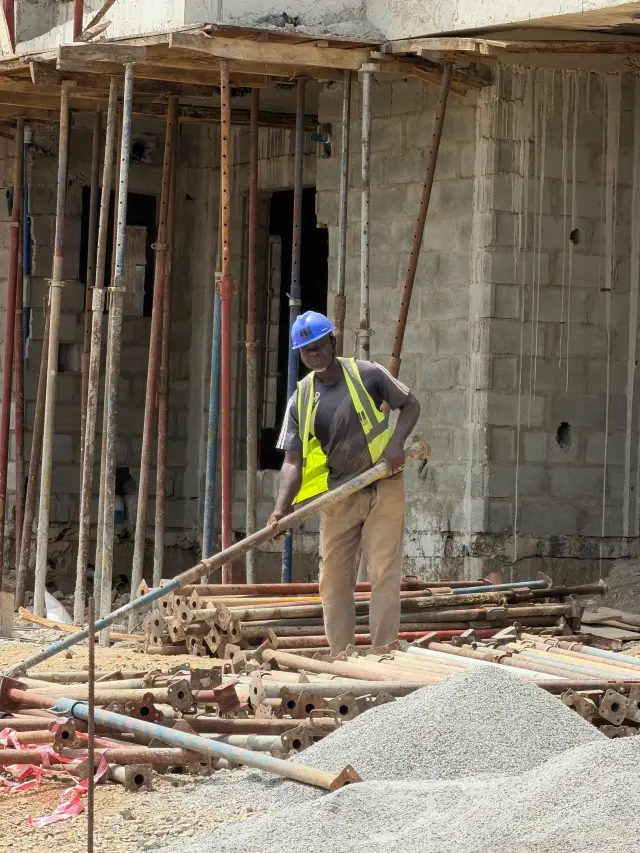
Exploring The Affordable Housing Act (2024): How Legal Reforms Are Shaping Housing in Ghana
In 2024, Ghana made a decisive lawful move against its centuries-old housing crisis with the enactment of the Affordable Housing Act (2024). The housing industry in the country has over decades, been frantically trying to grapple with the burden of rapid urbanization, exorbitant construction rates, land tenure, and a shortage of long-term finance.
 From the
grandiose plans of the post-independence, state-led housing plans of the Kwame
Nkrumah days to the current day private-public alliances of Accra and Kumasi,
the dilemma has been thorny and multi-faceted.
From the
grandiose plans of the post-independence, state-led housing plans of the Kwame
Nkrumah days to the current day private-public alliances of Accra and Kumasi,
the dilemma has been thorny and multi-faceted.
The Affordable Housing Act
(2024) is a broad-based effort to update the legal and institutional framework
of the process of housing delivery, affordability and access in Ghana.
The importance of the Act is not only the policy ambitions but its legal power. An Act of Parliament entrenches housing reform in the fabric of statutory frameworks in contrast to policy blueprints or executive programs, which strongly rely on political will and administrative stability.
It sets specific requirements, financing system, regulation processes, and
regulations. By so doing, it is an indication of transformation by pieces
together initiatives on housing programs into a unified legal-based framework
that would last longer than electoral periods.
The Affordable Housing Act (2024) is fundamentally aimed at striking a balance between three closely connected goals, namely: increasing housing supply, increasing the affordability of low- and middle-income households, and boosting economic growth by introducing reforms to structured housing finance and the construction sector.
The Act acknowledges housing
as a social need as well as an economic resource. This dual recognition guides
provisions geared towards mobilizing domestic capital, simplifying land
administration, facilitating involvement of the private sector, propagating the
interests of the beneficiaries.
More importantly, the Act is developed in the wider perspective of law modernization. The property rights regime in Ghana has developed considerably within the past few years, which also includes land governance and urban planning systems reform.
The Affordable Housing Act
extends these foundations, aiming at harmonization of ministries and regulatory bodies. The Act tries to overcome institutional fragmentation, long experienced
in delays in project implementation and cost inflation, by instilling coordination
mechanisms into the very law.
Cautious optimism has influenced the way the Act has been received by the general public. The need to change the structure is felt by many stakeholders including developers, financial institutions, groups of civil societies and housing advocates.
Nonetheless, concerns have been raised on the
capacity to implement, financial sustainability, and whether the Act will
indeed be truly beneficial to lower-income households or serve more mainly the middle-income groups.
In this blog, the author examines the Affordable Housing Act (2024) in six dimensions which are interconnected, including the legislative philosophy, institutional design, financing innovations, land and regulatory reforms, social equity implications, and the long-term economic impact.
It is through these pillars that we are able to understand the total transformation of the housing landscape in Ghana and the obstacles in converting the legislative aspirations into concrete homes for citizens.
Legislative Philosophy and Policy Intent of the Affordable Housing Act (2024)
The policy of the Affordable Housing Act (2024) is based on a legislative philosophy, which considers housing as a social good that needs to be systematically intervened in by the state without disrupting the market mechanism.
Historically, Ghana housing delivery has been swinging between heavy
state intervention and market-oriented interventions. The Act is also a hybrid
design, with the role of the state in coordinating being codified, and the
efficiency and capital of the private sector being exploited.
Among other characteristics of the Act, the formalization of the standards of affordability is one of the elements. Instead of being open to the definition of the term, which is affordable housing, the legislation defines income levels and price rules that are connected to median household income.
Such legal precision is aimed at averting the usual drift of policy
of putting projects that are supposed to be affordable well out of the
financial capability of those who are supposedly target beneficiaries.
The long-term planning can also be observed in the Act. It
requires the drafting of national and regional affordable housing policies,
which will be reviewed on a regular basis. By entrenching the criteria of
planning into the law, the legislation transcends ad hoc approvals in
projects to systematic and data-driven assignments of resources. This is more
so the case in the rapidly expanding cities like Tamale and Takoradi, whose
population growth strains infrastructure and the land market.
Sustainability is another philosophical premise. The Act includes environmental standards and promotes building practices that should be climate resistant. Since Ghana is prone to floods and coastal erosion, it is a societal and economic necessity to incorporate resilience in cost-effective housing.
These legal requirements on sustainable materials
and energy efficiency are an indication of a proactive strategy that places
development of housing in line with the larger environmental undertakings.
Notably, the Act acknowledges housing as more than a
covering but as an economic inclusion force. The mandatory provisions that
promote local content in construction materials are meant to enhance domestic industries. In this regard, the housing reform is made parallel to the
goals of industrial policy, which reinforces the notion that legal change could
trigger a wider structural change.
But the philosophy of law appreciates limitations also. It
does not contain unrealistic general assurances, but on empowering structures.
The state should only control, encourage, and organize and not directly build
all the housing units. Such a practical point of view is indicative of the
financial facts and experiences of other state dominated plans that failed to
perform financially.
To sum up, it can be concluded that the Affordable Housing
Act (2024) is informed by a moderate policy approach: aggressive enough to meet
market failures but practical enough to tap the dynamism of the private sector.
Whether the balance of philosophy will be applied in a consistent
implementation and credible enforcement mechanisms is going to determine its
success.
Institutional Governance and Architecture.
One of the key innovations of the Affordable Housing Act (2024) is the restructuring of the institutions. Housing reform needs more than policy vision; it needs well-defined responsibilities and efficient governance.
The housing sector in Ghana has long been plagued by duplication of mandates between the ministries, agencies and the local authorities. The Act aims at redressing this disintegration.
The law forms or reinforces a permanent Affordable Housing
Authority that coordinates the project approvals, compliance, and distribution
of funds. This is the centralized body, which functions under statutory authority; there is no confusion regarding leadership and
accountability. The Act seeks to reduce bureaucratic delays that led to delays
in past housing projects since the roles were not codified.
The other pillar of the governance structure is the inter-agency coordination mechanisms. The Act stipulates co-operation among land administration agencies, the local government bodies, and the infrastructure providers.
As an example, the collaboration with the Lands Commission
is used to make sure that the land registration operations are in line with the
housing development planning. This coordination is essential in dealing with
delays due to land disputes that have not been resolved or when the title documentation
is not complete.
Provisions of transparency also take their place. The Act
mandates that the project progress, beneficiary selection, and fund utilization
be periodically publicly reported. This disclosure focus will ensure that the
people have confidence and discourage corruption. The Act takes a step further
by enforcing accountability measures into the law to ensure that it is no
longer a voluntary reporting practice.
The local government participation is well organized. Metropolitan, Municipal and District Assemblies are given powers to locate appropriate land parcels and encompass affordable housing targets in the local development schemes.
They should, however, act in line with national guidelines
so that there is uniformity. This decentralization and national control mix
indicates that it is understood that the housing issues in the different areas
differ yet need to be connected using a common standard.
The other governance dimension is capacity building. The Act
also empowers planning officer training, building inspector and project manager
training programs to increase technical competence. In the absence of such
investments, legal reforms are likely to be sabotaged by gaps in the
implementation at the working level.
To sum up, the institutional design of the Affordable
Housing Act (2024) is a premeditated effort to professionalize and integrate
the governance of housing in Ghana. The Act will establish the conditions for more efficient delivery by elucidating the mandates, enhancing supervision and
fostering transparency. The longevity of these reforms will depend on political
dedication and proper allocation of resources.
Financing Innovations and Housing Affordability
Funding is the most decisive factor in the accessibility of
housing. The Affordable Housing Act (2024) presents new systems that aim to
mobilize long-term capital and minimize cost barriers to the target
beneficiaries. In the realization that the mortgage market in Ghana is shallow,
the Act provides organized funding facilities that are a combination of
government- and privately financed.
The establishment of an Affordable Housing Fund is one of
them. This fund is a pool of contributions of governmental funds, funds of
development partners, and possibly special levies. The Act attempts to cushion
the projects against annual fiscal volatility by ring-fencing resources to
house them. The Fund also subsidizes infrastructure services, interest rates,
and credit guarantees.
These funding structures are accompanied with mortgage market reforms. The Act promotes alliances with business banks and pension funds in order to lend in the long term. This is necessary in an economy whereby high interest rates tend to discourage borrowing. Other innovations include incremental housing finance.
To understand that most Ghanaians
construct their houses in stages, the Act allows micro-mortgage products based
on the construction in stages. This flexibility is indicative of subtle
knowledge of local housing practices as opposed to foisting a set of rigid
ownership models.
Financing guidelines are protective of affordability.
Subsidies are provided depending on income verification and resale limits are
provided against profiteering. These law regulations aim at maintaining
affordability in the long run, and not letting the market skyrocket.
But there are still sustainability issues. The sources of
funds should be reliable and adequate to service demand. Slumps in the economy
or decrease in revenues might place a strain on the Fund. Clear management and
external audits will then play a critical role in keeping a credible
management.
Finally, the financing framework of the Affordable Housing Act (2024) will help solve one of the most enduring challenges of the Ghanaian housing market: affordable long-term credit.
The Act offers avenues of wider
inclusion through statutory funding mechanisms coupled with mortgage reforms.
The determining factor in whether these avenues turn to highways or leave
behind mere roads is economic security and prudent fiscal policies.
Planning, Integration of Land Reform and Regulation.
One of the greatest barriers to the provision of housing in
Ghana is land administration. Affordable Housing Act (2024) unifies land
reforms to ease the process of acquisition, registration, and the development
approval. The land tenure must be clearly laid down in law so as to provide a
chance to developers and homeowners who need mortgage financing.
The Act brings housing initiatives into unison with the national land governance framework, strengthening cooperation with the Ministry of Works and Housing and the related planning institutions.
It requires a
faster way of processing special low-cost housing development, shortening the
bottlenecks. Rapid approvals are intended to reduce holding and shorten the
construction schedules.
Another very important factor is the integration of urban planning. The Act mandates that affordable housing projects be consistent with the approved spatial development plans.
This helps avoid the development
of remote estates with no transportation or social facilities. Planned
coordination improves living standards and safeguards future property
prices.
Digitization has a transformative role. The Act enhances
the use of technology to curb corruption and inefficiency by encouraging the
use of land records and permit applications electronically. Clear electronic
systems have the potential to reduce the period of approval and enhance
investor confidence.
Environmental compliance is also stressed. The housing
development should also comply with the building codes and environmental impact
standards, which necessitate resilience to floods and other climatic hazards.
These protective measures are indicative of the fact that price should not be
used to interfere with safety or sustainability.
Finally, there are land and regulatory reforms in the
Affordable Housing Act (2024) that deal with structural constraints that have
long driven up housing prices. As it combines planning, digitization, and
environmental standards, the Act enhances legal frameworks of an efficient
housing delivery.
Social Equity, Economic Impact and the Future.
The final indicator of the Affordable Housing Act (2024) is
social and economic consequences. Affordability standards and transparent
allocation systems are developed legally to make sure that benefits are
received by the target populations. There are special provisions that promote
inclusivity of women, the disabled, and employees in the public sector.
The Act boosts construction, job creation, and demand in
local manufacturing. It provides capital market with deepening
through formalizing of the housing finance. Over time, more people owning homes
will be able to enhance household wealth accumulation and social stability.
Yet challenges persist. Affordability is affected by income
inequality, inflationary pressures, and currency volatility. Macroeconomic
constraints cannot be solved only by reforming legislation. There will be a
need to continuously monitor and make adaptive adjustments to policy.
Outcomes are also determined by the community. Residents should be empowered to contribute towards planning so that they develop a sense of ownership and accountability. The introduction of affordability into the overall legal system would make housing policy more of an aspiration than a legal requirement.
The future needs disciplined execution, open
administration, and long-term economic stability. Provided such conditions, the
Act may redefine access to housing in Ghana, transforming the legal change
into an opportunity in the hands of thousands of households and the future of
the country's cities.
Conclusion
The Act goes beyond rhetoric to action by entrenching affordability requirements, institutional coordination, financing, and land-use integration into an enforceable legal framework.
It recognizes that
housing is not just a commodity in the market but a social base and economic
booster. The implementation issues of concern, such as fiscal limitations and administrative capacity, are not an illusion, but the legislation creates a
systematic platform to transform it over time. The focus on transparency, sustainability,
and inclusivity is an indication that it focuses on fair urban development.
Finally, the Act will be successful based on disciplined implementation, cooperation between stakeholders, and macroeconomic stability. When properly controlled, it can help reduce the housing shortage in Ghana, increase availability of decent housing, and consolidate the process of national building even to future generations.
Also read: The Impact of the Affordable Housing Act, 2024: Legal Framework for Kenya’s Housing Market





-3dkuLgKhRD.jpg)
-49HupTvwDD.jpg)









LEAVE A REPLY