

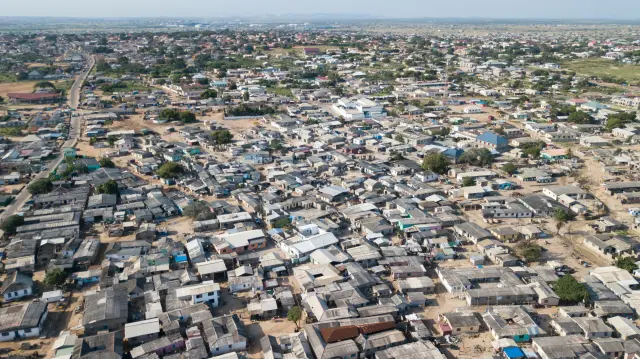
The Affordable Housing Act 2024: How Legal Changes Are Reshaping Housing in Ghana
Safe and affordable housing is one of the most urgent development issues in the whole world. Housing insecurity may cause overpopulation, increase in rent, informal settlement in highly urbanizing countries and high social inequalities. The housing condition in Ghana in West Africa has been an issue of concern over the decades.
 As population has grown
with the increasing urban migration, population growth, and rising construction
costs, the gap between housing supply and demand in the country has continued
to increase. There are millions of families that find it difficult to afford
good houses, especially houses of the low and middle income earners.
As population has grown
with the increasing urban migration, population growth, and rising construction
costs, the gap between housing supply and demand in the country has continued
to increase. There are millions of families that find it difficult to afford
good houses, especially houses of the low and middle income earners.
To address these issues, the government of Ghana has come up with the Affordable Housing Act 2024, a proposed law that is expected to change the housing industry in the country. The Act is a significant change in policy aimed at solving structural impediments in housing finance, land acquisition, construction control, and housing development.
The government believes that the
establishment of a better legal framework in affordable housing projects will
help in spurring investment, raising the supply of housing, and ensuring a
broader range of the population can become homeowners.
The Affordable Housing Act 2024 is an indication that the
housing issue is not merely a social requirement but also a vital economic
development impetus. Proper housing has led to health among people, social
stability, city planning and economic development. By having secure homes,
families can invest in education, entrepreneurship and financial security in
the long run.
The act also goes in line with the global trend of
sustainable urban development promoted by the international bodies that include
UN-Habitat and the World Bank. These groups have been a longtime supporter of
policies that increase access to affordable housing and promote sustainable
land use as well as inclusive city planning.
In this blog, the author discusses the changes that have been brought about by the Affordable Housing Act 2024 on the housing landscape in Ghana. It discusses the legislation brought by the Act, what it means to developers and homeowners and the overall social and economic consequences it is poised to produce.
Through the examination of the most important elements of
this law, we will be in a better position to perceive how the legal changes can
be transformed into a revolution in the housing crises and the creation of more
tolerant societies.
Since Ghana is still in the process of modernization and
urbanization, housing policy is going to be one of the key aspects of the
national development. The Affordable Housing Act 2024 is an important
initiative that will help close the housing gap and make homes safe,
affordable, and sustainable to more citizens.
Explaining the Housing Crisis in Ghana
Housing crisis in Ghana is not new as a process and it is developed over decades because of the complex of demographic, economic, and structural factors. The high rate of urbanization has resulted in a high housing demand, especially in the large urban areas of Accra, Kumasi, and Takoradi.
With rural population moving to urban centers to get jobs and other
opportunities, the cities have been facing the challenge of sustaining the
increasing demand of residential infrastructure.
Housing crisis has also been caused by population growth.
The population of Ghana has been growing steadily in the last decades, and it
pressured on the already limited housing stock. The country is reported to have
a housing shortage of over two million houses according to estimates that have
been quoted by housing experts and international organizations. This difference
is getting bigger year after year and could not keep pace with the construction
and demand.
The high cost of construction is one of the major challenges
to sufficient supply of housing. Cement, steel and roofing sheets are among the
materials that have been costly to build and partly because of inflation, and
also because of depending on imported materials. These increases complicate the
process of developers having to construct affordable homes and still be
profitable.
Another important issue is land acquisition. The land tenure process in Ghana is an elaborate process that covers traditional ownership by the traditional authorities and government lands.
The system leads to crossover
of claims, extended legal battles and delays in the acquisition of land titles.
Lack of clear land ownership documentation makes financing of housing projects
by developers and the financial institutions hard.
The housing finance is also limited. Conventional mortgage
systems are tailored to those people who have regular formal jobs and earn high
salaries. A big percentage of the workforce in Ghana however is in the informal
sector where there may not be much documentation of their income. This has seen
a lot of families being unable to access conventional mortgages.
Lack of affordable housing has been a cause of the
development of informal settlements in the cities. Such communities are usually
unsanitary and have no adequate water, and infrastructure, which poses severe
health and environmental risks. There is also the problem of overcrowding where
several families live in small rooms.
The policymakers have tried numerous programs over the
years, such as government housing schemes and collaboration with commercial
developers, after realizing the magnitude of the crisis. Nevertheless, a good
number of these projects have been faced with financial constraints, delays
caused by bureaucracies and the cost factor.
The international bodies like UN-Habitat have added that
housing policies should be comprehensive in that they look at construction and
also land management, funding and planning of the city. The Affordable Housing
Act 2024 was created based on these recommendations as well as the increased
necessity to reform the structure.
The new legislation will aim at minimizing housing shortage
in Ghana by tackling the systemic obstacles in place and putting in place
incentives to invest in Ghana and sustainably and inclusively develop its cities.
Important stipulations of the Affordable Housing Act 2024
The Affordable Housing Act 2024 comprises a number of legal
provisions that are aimed at restructuring the housing sector in Ghana. These
provisions are meant to streamline the process of housing development, enhance
financing procedures and make more stakeholders, both governmental and private,
to be more involved.
The establishment of a national framework of affordable
housing development is one of the most important aspects of the Act. This
structure will provide clear guidelines to be followed in planning, financing,
building, and running of the housing projects that are aimed at low and
middle-income families. Standardization will enable the government to minimize
bureaucracy impediments that used to slow down the development of houses.
The second notable one is the creation of an Affordable
Housing Fund. The foundation is set to mobilize financial resources in the form
of government allocation, international development partners as well as
individual investors. The fund will finance housing projects, infrastructural
projects and financing schemes that will ensure housing is made more affordable
to the citizens.
The Act also presents incentives to the private developers.
Some of the policies that are meant to make developers invest in affordable
housing projects include tax relief, lowering of import taxes on some
construction materials and simplification of processes that approvers give.
These incentives will see the local and international investors flock the
housing market in Ghana.
The bank of Ghana also encourages financial institutions to
come up with special mortgage products aimed at the lower-income borrowers.
Such products can also have longer duration of repayment, lower interest rates
and relaxed requirements.
The transparency and accountability is another important
point of the Act. The developers in the government-sponsored housing schemes
are required to meet rigorous reporting regulations and quality standards. This
ensures that the program housing units constructed are within the safety and
affordability regulations.
The act also encourages the adoption of new construction technologies and eco-friendly construction materials.
The government believes
that through the promotion of modern methods of construction, the construction
cost will be lowered and the rate of delivering the houses will be faster. These
provisions are combined in an attempt to come up with a holistic attempt to
solve the structural hurdles that have been hindering housing development in
Ghana.
Implication on Real Estate Developers and Investors
The Affordable Housing Act 2024 would change the landscape
of the real estate business in Ghana substantially as it is set to provide new
opportunities to developers and investors. In the course of several years, the
attention of the majority of the private developers was destined to a high-end
residential development since it had greater returns. The affordability of
housing plans has been viewed as a financial risk because of reduced returns
and regulations.
The government hopes to alter this situation, after the introduction of the new legislation, to cause the development of affordable housing to become more appealing to the private investors.
The financial risks
and the participation of the developers are likely to decrease because of the
tax incentives, simplified approval process, and the availability of the
Affordable Housing Fund.
Developers in government-sponsored housing schemes may be
allowed to enjoy the cheaper acquisition of land as well as better access to
the infrastructure like roads, electricity and even water supply. These steps
can reduce the project development costs to a significant extent.
The new legal system may also make the Ghana housing market
very appealing to foreign investors. Regulations are clearer and there is a
greater institutional control that forms a more predictable environment of
investment which is necessary in large-scale real estate-development.
The involvement of the government agencies and the private
developers in a partnership, commonly known as the public-private partnerships,
is likely to take a central part in the implementation of the housing projects
under the Act. Such alliances enable the government to draw on the expertise of
the private sector at the same time keeping a check over the affordability and
quality levels.
There can also be the increased participation of financial
institutions and investment funds in housing development by issuing
construction financing and mortgage products. The World Bank and other
organizations used to fund the housing finance projects in developing nations
and such partnerships might arise in Ghana.
All in all, the Affordable Housing Act 2024 is set to create
a beneficial development in the real estate market and, at the same time, make
the development projects more inclusive to accommodate more diverse income
levels.
Social and Economic Values of the New Housing Law
The Affordable Housing Act 2024 will likely produce great
social and economic welfare to the Ghanaian society. Housing is not merely a
building but it has a key role in determining health, education, economic
opportunity and stability within the community.
The potential increase in housing supply can be called one
of the greatest advantages of the Act. The legislation will seal the housing
shortfall that has plagued millions of families in Ghana by promoting new construction
and ease of regulation.
Poor housing conditions and their improvement can have a
significant effect on population health. Adequate sanitation, air space and
structural safety minimizes the chances of disease and environmental risk.
Quality life is also enhanced by accessibility to good housing infrastructure.
Another outcome is economic growth. Construction of housing
results in creation of job opportunities in various industries which include
construction, manufacturing, transport and retail. With the growth in housing
projects, engineers, architects, contractors and laborers get employment.
Financial stability may also be facilitated by home owned
families. Property ownership offers a long term security that may also be used
as a property that gains value with time. A great number of families use home
equity to fund education or business.
The planning of cities also gets better with development of
organized housing communities. Housing developments can also be fitted with
infrastructure like roads, schools and health, which are more sustainable and
livable.
International institutions like UN-Habitat highlight the fact that access to good housing is a necessity towards the realization of sustainable development objectives. The Affordable Housing Act 2024 is consistent with such global goals in that it fosters inclusive urbanization and nurses out housing inequality.
Difficulties and Prospects of the Affordable Housing Act
Although the Affordable Housing Act 2024 is a significant
progressive move, its success will solely be judged by its implementation.
There are various issues that should be tackled to make sure that the
legislation realizes its desired purposes.
Funding is among the main obstacles. The affordable housing
should be built at large scale using substantial financial resources. Even
though the Affordable Housing Fund offers a valuable initiation point, other
investments made by the private institutions and foreign partners will probably
be required.
Another issue is that of land tenure. Resistive ownership
structure may slow down the housing projects and dishearten investors. To boost
the speed of housing development, it will be necessary to strengthen land
registration systems and enhance systems of dispute resolution.
The cost of construction might also remain problematic.
Change in prices of commodities in the world market may lead to the escalation
of construction material prices, which may impact the affordability of housing
units.
Another important factor is regulatory coordination among
government agencies. There are various institutions involved in housing
development and they are in charge of land management, infrastructure, finance
and urban planning. A close coordination of these agencies will be needed to
prevent bureaucracies.
Even with these issues, there is a bright future of
affordable housing in Ghana. The efficiency of housing policies may be improved
with the help of development of digital technology, more effective financial
structures, and more collaborative relationships on the international level.
The Affordable Housing Act 2024 offers a legal basis of
long-term housing reformation. When done effectively, it can revolutionize the
housing industry in Ghana and make a huge improvement in the housing shortage
in the country.
Conclusion
One of the cornerstones of human prosperity and state growth
is housing. Decades of poverty Ghana has been experiencing over the years have
seen millions of families struggling to secure safe and affordable housing,
with complex land systems, not to mention inadequate housing supply in Ghana.
Introducing the Affordable Housing Act 2024 can be seen as a
radical approach by the government to dealing with these issues by legal
reform. The legislation would redefine the housing environment in the country
by introducing a national housing system, developing schemes of financial
assistance and inviting individual businesses to take part in the process.
The list of the possibilities of the Act does not limit
itself to housing construction. Successful implementation can result in
improved living conditions and job creation, strong communities and economic
growth.
These goals will require collaboration between the government agencies, financial institutions, the private developers, and international organizations like the World Bank and UN-Habitat.
Things have not been smooth but the Affordable Housing Act 2024 is one step in the right direction in ensuring that Ghana is gradually attaining inclusive and sustainable development. Focusing on affordable housing, the nation is making a great move forward to providing all citizens with the possibility to have safe, dignified housing and a good safe home.
Also read: Exploring the Affordable Housing Act (2024): How Legal Reforms Are Shaping Housing in Ghana





-3dkuLgKhRD.jpg)
-49HupTvwDD.jpg)








LEAVE A REPLY