

The 10 Least Affordable Cities In The World (2026 Ranking)
Homeownership has turned into a far-flung dream to many
millions of individuals globally. By the year 2026, the ratio between the local
incomes and property prices has become larger than ever in history, which is
why the crisis is not limited by borders, cultures or economies. The key number
that is applied in the measurement of this phenomenon is the price to income
ratio-median home price/median household income. A market is assumed to be
highly unaffordable when this ratio is more than 5.1. Cities included in this
ranking regularly report ratios of over 15, or an average worker would have to
spend fifteen years or more of all his income on a median-priced house.
This crisis can be described as a result of numerous overlapping forces. Several decades of restrictive zoning laws have constrained the construction in the very locations which are most in demand. Housing has been turned into a speculative investment tool, instead of being the place of shelter, due to the financialization of housing. International capitals are seeking safe haven in the posh cities and pushing the prices out of reach of local laborers.
The demographic changes have been putting the bulk of wealth
and opportunity in the few so-called superstar cities, and the pandemic-era
migration patterns have shuffled classical affordability hierarchy. The effect
is a world in which the middle class is being steadily taxed out of city
living. This non-merely-the-cost-of-square-ft ranking of 2026 indicates that it
not only takes away social mobility but the escalating inequality between
generations, the very redefinition of the city as a place of the rich in
enclaves.
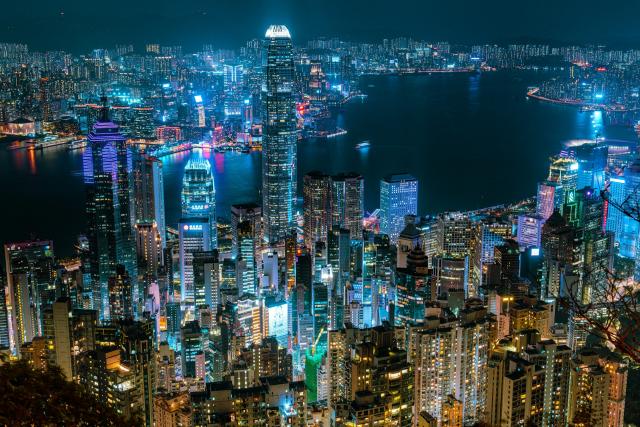
Hong Kong Special Administrative Region, China
The city of Hong Kong has been the most unfortunate city in
the world to be ranked as the least affordable housing market across the world
over a decade, and with the latest ranking of 2026, we have confirmed that it
is still the same. The city is in a category of its own with a consistent price
to income ratio of 45 and above. It would require the average household close
to fifty years to save all its income to be able to afford a median-priced
apartment. This abject unaffordability is a result of an ideal set of
geographic limitations and strategic policy decisions.
Rugged topography of Hong Kong allows only a small part of
the total land to be developed and steep mountains and sheltered green belts
inhibit expansion. To worsen this natural scarcity the government has been
historically suppressing land supply to keep property prices high, and land
traders have been one of the major sources of their own revenue. The outcome is
that it becomes nano-flat city with subdivided units in which a shipping
container sized space may have a family.
In addition to the physical limitation, Hong Kong has been a financial hub that is linked to the rest of the world, and it receives enormous amounts of capital both domestically and internationally in a bid to acquire a stable asset class. The city has become a favorite parking place of the rich with low property taxes and no capital gains tax on real estate making a housing into a speculative commodity not necessarily tied to the local demand.
The social economic effects are catastrophic. The notorious cage homes and
subdivided flats have become the order of the day, which has put into
perspective a crisis where even the middle-income earners cannot afford
dignity. The picture in 2026 is of a glittering financial skyscraper erected on
a platform of housing misery in Hong Kong.
Vancouver, Canada
The continuing citation of Vancouver at the top of the
unaffordability lists worldwide makes it an ideal example of a curse of
desirability. Canada Pacific gateway price-to-income ratio stands at over 20
which has turned it to the stronghold of exclusivity where the local wages are
not tied to the property value. The housing crisis in the city is a bid-richer
phenomena as the global wealth has permanently shifted market levels. Over the
decades, Vancouver is one of the major destinations of East Asian immigrants
who bring major capital and consider the local real estate as a safe place of
investment as opposed to refuge.
Geography is equally very critical. Vancouver is a city that
is bounded by nature since it is surrounded by mountains as well as the Pacific
Ocean. Lack of outward expansion causes densification and thus this has been
opposed by intense community opposition in the single family home areas where
development of the so-called missing middle housing that may serve as access
points by the middle classes has been slowed. In 2026, Vancouver is a
spectacular metropolis with mountains, ocean, and the mild climate becoming a
kind of a gilded cage of which the population is no longer able to hold onto
the ground in the motherland.
Sydney, Australia
The fact that Sydney was ranked the least affordable city in
the world in 2026 is the result of a distinctly Australian combination of
taxation and culture, fascination with property, and acute shortage of supply.
At 15-17 price-income ratio, this has made the homeownership dream of the
nation become a more and more unreachable fantasy in Australia that is the
largest city. It has a long history of using negative gearing an investment
method in which investors are able to deduct losses incurred on property to
taxable income and capital gains tax discount, as the Australian tax system has
historically promoted property investment.
Though it was meant to increase the amount of rental
properties, these incentives have actually overvalued the prices of assets and
have created a situation where individuals who entered the market prior to
2010s have generation-old wealth, whereas younger Australians have to endure
permanent renting. The problem is aggravated by the geography of Sydney. The
south is a huge national park and the east is the ocean which limits growth and
the city has to move to the west and far away the central business district.
The 2026 market is also facing the effects of a post-pandemic construction boom that failed because of the increasing cost of materials and insolvency of builders, resulting in a supply crunch and the immigration is back to pre-pandemic levels. The state government has tried making sweeping changes in the planning reforms, yet these are being met with strong political winds. In 2026, Sydney will continue to be a city of the spectacular beauty and economic potential, yet the housing marketplace will have turned into a savage jungle where lineages frequently decide who will live where.

San Jose, California, USA
Though it is common knowledge that the city attracts headlines of technology-driven housing prices, it is San Jose, the epicenter of the Silicon Valley, which reflects the most extreme version of this crisis at the United States level in 2026. Having an income-to-price ratio of over eighteen, this is the most unaffordable big city in America, the city of tech giants.
This is because the kind of concentration of wealth creation is high.
Being the center of the entire global technology market, San Jose is the home
of the headquarters of Apple, Google, NVIDIA, and endless startups, which has
resulted in the labour market where large part of the labour force earns the
stock options and earns in the top one percent of the national income
distribution. Nevertheless, this prosperity is on a bubble.
One software engineer
who earns four hundred thousand dollars annually has twelve service workers,
teachers, nurses, retail employees, whose salaries have not increased. The
residential market is no longer sensitive to the median income; it is sensitive
only to the income of the tech elite. Geography is a strait-jacketing
influence. The landscape in 2026 will be characterized by the median
single-family home prices regularly going above two million dollars, which is
completely unaffordable by a family with local median income. In 2026, San Jose
is the symbol of the contradiction of the contemporary superstar city: the
machine of inexplicable financial activity whose housing market has turned into
the system of exclusion.
Toronto, Canada
The fact that Toronto is among the least affordable cities in the world in 2026 is an indicator that the housing crisis is nationwide since the problem of housing has been fuelled by the unending influx of population and the financialization of the housing market. Canada has the biggest city with a price-to-income ratio that is in the high teens, this has made its largest city a case study of how demand shock can cause even the most ambitious supply response to become overwhelmed.
In contrast to Vancouver the
geography of Toronto does not inherently limit the sprawl, however decades of
disjointed regional governance, use of restrictive zoning and the fact that
Canadians desire to live in low-density development have not kept up with the
aggressive immigration policies.
Canada has attempted to achieve one of the most immigration levels in the developed world and most immigrants have their settlements in the Toronto area. This pressure of demand organism crashed into a supply pipeline that was impaired by slow approval procedures and a construction industry that never entirely recovered since the 2008 financial crisis.
The market in 2026 is
unique considering that there is a great number of investor participation. The
provincial government has tried to come in with new vigorous zoning reforms,
but the size of the deficit, estimated to be more than a hundred thousand
housing units, ensures that prices are high. Toronto is a dynamic metropolis,
and younger people nowadays see homeownership as a dream accessible only to the
wealthy in a family.
Miami, Florida, USA
The drastic increase in the rankings of Miami in the
unaffordability list in 2026 is a big cause of change in the geography of the
world housing crisis. South Florida used to be, traditionally, a relatively
cheap substitute to New York or California, but now it has become one of the
most closed markets in the world with an already solid price-to-income ratio
belonging to the double digits. The mechanism that triggered this change was
the pandemic-induced migration, with remote work permitting high-income residents
of high-tax jurisdictions to move to Florida, carrying their high salaries and
house equity there with them.
This great migration was enhanced by the entry of affluent people of Latin America, Europe and Canada, who were attracted by the absence of state income tax in Florida besides its perceived political and economic stability. The outcome was an influx of demand in Miami that increased the housing supply. The physical geography of the city is constrained by Atlantic Ocean and everglades which restricts growth and compels development to rise up the building of luxury condos has risen significantly beyond the development of work place housing.
The market is overshadowed by the climate crisis. The
services led economy has not experienced the same with wages, which have not
kept up with the housing prices explosion. Educators, nurses, and hospitality
employees are being driven even further into the western exurbs whereby they
experience the worst traffic gridlock in the country. The future of the global
affordability crisis is in Miami in 2026.
London, United Kingdom
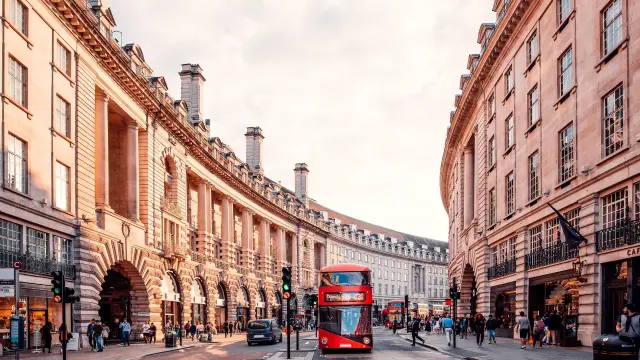
The fact that London remains one of the least affordable cities in the world in 2026 puts into perspective the long-term effects of its attractiveness as a global financial hub and an international haven of money. Having a price-income ratio that is in a steady and constant of over 12, the UK capital has a market division between the hyper-rich areas and the outer boroughs that are not as well-off in terms of economic capacity.
The
vulnerability of the London market to currency and geopolitical instabilities
is a market peculiarity. The devaluation of the pound following Brexit and the
consequent political unrest would seem to have artificially discounted London
real estate to foreign investors, and has become a wave of foreign investment,
with prices kept to an artificial level even as the local economy found itself
feeling uncertain.
The greenbelt is an area of open space that has been preserved along the north, south, east and west boundaries of the city which has been effective in eliminating urban growth but has also made land values in the city boundaries even higher. Average first time buyer is now dependent upon the Bank of Mum and Dad to get into the market as it would take up a typical earner more than twenty years to save a deposit to do so.
The leasing market is
also ruthless and rents are at an all-time high, following a chronic supply
shortage in the rental market. London in 2026 is still a global city of
colossal cultural and economic importance, yet its housing market has turned
into a process of exclusion, and it is likely to turn the city into a global
gaming table of the rich and the famous.
Auckland, New Zealand
The inclusion of Auckland in this list in 2026 is a
indicator of it being a Pacific hotspot of unaffordability, as the
price-to-income ratio has always been above 10. Being the main economic centre
in a country of slightly more than five million, Auckland concentrates the
wealth, opportunity, and in-migration of other parts of New Zealand. This
domestic demand is compounded with the reentry of expatriates and the rich
foreigners who consider New Zealand a geopolitical haven. Traditionally,
conservative urban planning policies took the form of artificial limitation of
land supply, which pushed prices up as the demand increased. Although these
policies have been re-modeled, it was too late to undo the hurt they inflicted
on affordability.
Market 2026 is also addressing the consequences of major weather-related disasters that cost billions of dollars in damages and diminished the housing stock available at a very important time. Another layer to the crisis has been the skyrocketing insurance costs. More so, the housing market in New Zealand is ideal in terms of a high investor ownership rate. The government has made efforts to seal off tax loopholes that have favored investors, but the tide of the market has proved hard to turn.
Homeownership
dropped to levels not seen since the 1950s, and social repercussions are
far-reaching in a nation where home ownership is long viewed as a retirement
security lynchpin. Auckland is a city that is trying to come to terms with
itself in 2026, with a gorgeous natural setting existing alongside a housing
market that has produced a society of property owners and a rising precariat.
Los Angeles, California, USA
Los Angeles can be considered a distinct type of housing unaffordability in 2026: the sprawl unable to sprawl anymore. Los Angeles County is a geographically large area, unlike the dense and geographically limited cities in this list, however, its price-income ratio is always among the highest in the world.
The main force is a serious lack of housing units in
comparison with the increase of jobs. Over the decades, Los Angeles has been
creating many more jobs than homes, which has led to a shortage of hundreds of
thousands of units. This is made worse by the fact that strict zoning laws have
only made most of the residential lands to be taken up by single-family houses
thus it is unlawful to construct multi-family houses in most places.
The current homelessness crisis is another characteristic of the 2026 landscape where tens of thousands of people live on the street in crisis proportions. The main cause of this crisis is high cost of housing. The costs of construction are extremely high because of the shortage of labor, the cost of materials, and the long process of entitlement which may offer years.
The 2026 market is bifurcated,
with the coastals retaining the ultra-rich segment, but working families are
further into the exurbs, with their souls being sucked out by the commute. Los
Angeles is a world-city cultural capital that is facing an affordability crisis
that has endangered its diversity, its human resource base and the livability
that made it an embodiment of an American possibility.
Tel Aviv, Israel
Now to complete the list of least affordable cities in the world in 2026, it is possible to refer to Tel Aviv, a bustling metropolis in the Mediterranean Sea, where the prices on houses are already at a crisis point. The housing crisis in Tel Aviv is a miniature of the economic problems of Israel as the price-to-income ratio of the city is competitive with those of Vancouver and Sydney. The city is the center of the Israeli Start-Up Nation economy, a technology hub in the world that has spawned a group of highly paid tech employees who are increasing prices. But unlike other technological centers, Tel Aviv has special limitations.
The Land Authority in the country
regulates most of the land and release of land to be developed is usually very
slow and politicized which has led to continuous shortage of supply.
The demand is driven by the unique factors: a high rate of birth guarantees the stable population increase, and geopolitical instability usually induces the foreign investment by the Jewish diaspora in search of a secure property in the homeland. Young Israelis bear the brunt of the consequences and they experience one of the largest housing prices against wages in the OECD.
The young couples are obliged
to stay with parents until they reach their thirties, and there is a sense of
desperation that is prevailing regarding the possibility of creating a family
in the economic powerhouse of the country. Tel Aviv, in 2026, is a 24-hour,
vibrant city where the cultural life of the world meets, but is also the place
where the dream of owning a home is becoming more and more the privilege of the
heirs of fortune.
Conclusion
In the 2026 best/ worst city living in the world ranking the world is in a complete housing market crisis. Between the vertical city of Hong Kong and the Miami spread of the sun, these two extreme forms of urban landscapes have one thing in common; not a local income as relating to property value. They are economic powerhouses, attracting the world capital, and the casualties of policy failures that have focused on the growth of assets at the expense of the basic human need shelter.
The impacts go much deeper than
balance sheets. We observe them in late marriages and falling birth rates among
the youth who are not able to establish a home, the soul sucking commutes that
reduce the quality of life, the emergence of precarious rental tenures where
one is not able to build a community, and in the openness of homelessness that
has become the order of the day in the most affluent cities.
The conventional policy tools like increasing the interest rates have been rude and ineffective in these markets, which are dominated by cash heavy investors not sensitive to the interest rates or with inelastic demand due to the lack of supply. However, looking upstream of 2026, it stops being merely the question of how to make housing cheaper but how to rethink the social purpose of a city. Is an urban center a financial asset or is it a community? The proposals under trial vacancy taxes, zoning reform, grand-scale programs of public housing, are just the beginning of a protracted struggle against the special interests.



-3dkuLgKhRD.jpg)
-49HupTvwDD.jpg)









LEAVE A REPLY