

Tackling Insecurity in Slums: How Affordable Housing Can Improve Living Conditions in Ghana’s Urban Poor Areas
Urbanization has turned out to be one of the biggest demographic changes that are affecting most of the African countries, and Ghana is not an exception. In recent decades, there has been a booming population of cities like Accra, Kumasi, and Tamale as people relocate out of the rural areas to find jobs and education among other better living conditions in the newly developed urban areas.
 Urbanization may lead to economic development, even more
so innovations, but it is very problematic when infrastructure and housing
constructions cannot keep up with the growing population. The increase in slums
and informal settlements is one of the most apparent effects of this imbalance
in Ghana as millions of urban poor people live in overpopulated and unsafe
conditions.
Urbanization may lead to economic development, even more
so innovations, but it is very problematic when infrastructure and housing
constructions cannot keep up with the growing population. The increase in slums
and informal settlements is one of the most apparent effects of this imbalance
in Ghana as millions of urban poor people live in overpopulated and unsafe
conditions.
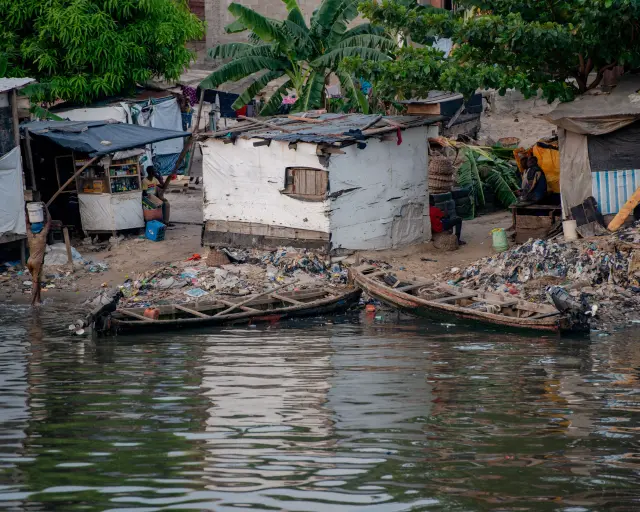
Poor housing constructions, inaccessibility to basic amenities like clean water and sanitation, overcrowding and insecurity, generally feature the slums. Certain communities in Ghana like Old fadama in Accra provide an example of how fast urban populations can exceed the formal housing systems.
Such locations usually take up fringe land like
floodplains, around industrial areas or on idle public land. Since they are
formed outside of formal planning systems, slums often lack basic
infrastructures and thus, living in such communities is challenging and risky.
Slum insecurity is a multidimensional issue that is not limited to crime. Several insecurity issues like housing insecurity, environmental risk, health risks, and social vulnerability are experienced by residents.
Criminal activities in most cases are facilitated by poor lighting,
congested accommodation, and improper road systems. Besides, the dwellers might
always stand the risk of being evicted since a number of informal settlements
are constructed on tenure free land. This feeling of insecurity impacts the
physical safety of the residents and their mental health.
Affordable housing has been widely regarded as an important measure to overcome most of the challenges witnessed in slums. Governments and policymakers can also play a big role in enhancing the living conditions of low-income urban residents by ensuring that they have safe, stable, and affordable housing.
Affordable housing is not only a way of solving shelter
needs, but a way of ensuring better health, safety, and economic opportunities.
Individuals who are resettled in safe housing conditions and have access to
infrastructures and services ensure the community is more stable and resilient.
This blog determines the connection between slum insecurity
and housing in Ghana urban poor communities. It looks at how insecurity is
caused in the slums, how bad housing conditions affect the slum dwellers and
how affordable housing programs can uplift such communities. With awareness
on how housing, safety, and urban development are related, policymakers and
interested parties will be able to devise mechanisms through which cities can
become more inclusive and secure to all urban dwellers.
The Urban Slum Growth of Ghana
In Ghana, the process of urbanization has gained a much faster pace during the past decades, and the number of cities and metropolitan centers has grown rapidly. This has been contributed by rural-urban migration that has seen people and families move into cities in search of job opportunities, education, healthcare and improved standards of living.
Although
these opportunities are availed in the urban centers, population growth rate
has greatly surpassed the housing systems and the urban planning institutions.
This has made slums and informal settlements one of the characteristics of
Ghanaian urban environment.
The slums commonly emerge whereby the residents who are low-income earners cannot afford formal accommodation because of its high prices, stringent rules or inadequate supply.
Prices of land and rental
accommodation have shot up significantly in cities such as Accra and Kumasi
thus poor households cannot afford a house. Most of the landlord's demand
tenants to pay years of rent upfront, which makes formal accommodation out of
reach to a major part of the low-income migrants and informal workers.
Due to such obstacles, migrants often reside in places where
houses can be built in an informal and inexpensive manner. Such settlements are
generally situated on unregulated, environmentally susceptible or undesirable
land which could not be developed formally. With time, with increased
population in such places, small groups of temporary housing formations would
transform into slums where there are many people.
Weaknesses in city governance and planning also contribute
to the growth of slums. The local government is not always able to implement
zoning laws or to supply the infrastructure in the fast-developing cities. City
governments have limited resources and bureaucratic inefficiencies, thus
lacking the capacity to oversee land development, or even stop unlawful
constructions. Therefore, informal settlements expand without proper control or
planning.
There is also economic inequality that leads to the development of slums. Although urban economies could create an opportunity of generating wealth and jobs, the gains are not evenly spread amongst residents.
The informal sector has many urban migrants who get employment in an area with
low and fluctuating income. Such employees do not have enough money resources
and due to the lack of finances, they are unable to afford the cost of the
formal housing and have to use informal solutions.
The other factor that leads to the expansion of slums is the
absence of large-scale affordable housing projects. Historically, government
housing programs have targeted the middle-income population or the employees in
the state sector and not the urban poor. Consequently, the poor have limited
access to subsidized housing schemes that have the potential of enhancing their
quality of life.
Slum growth has been a major problem for Ghana urban
development. Crowded settlements strain the available infrastructure, cause
environmental degradation and heighten susceptibility to catastrophes like
floods and fires. Nonetheless, slums are also the relevant access points to
migrants who want to get economic opportunities in cities.
Insecurity and Vulnerability in Slum Communities
The slum communities are usually characterized by various
types of insecurity that influence the lives of the inhabitants. These
insecurities are not confined to crime alone, there are also housing
instability, environmental risks, poor health conditions and restricted access
to basic services. All these factors combined make the environment quite
complicated as inhabitants are under the constant threat and insecurity.
Housing insecurity is one of the greatest types of
insecurity in slums. Most of the dwellers are residing in buildings which are
not well built and can easily be ruined by weather like heavy rainfall and
strong winds. Homes may be lost or badly damaged in times of rainy seasons in
flood-prone areas leaving families homeless. Absence of long-term constructions
and correct methods of construction make the hazard of accidents and buildings
collapse more probable.
The second key issue is that there is no secure land tenure.
Due to the location of most of the slums on land without government permission,
there is a constant risk of eviction among the residents. The government or
landowners could choose to reclaim the land to be used in developmental
projects and this case causes people to be displaced without much warning or
even compensation. Such insecurity does not encourage people to invest in the
enhancement of their homes or communities.
Some slum areas also have a serious problem of crime and
personal safety. Due to overcrowding, joblessness and inadequate street
lighting, there would be conditions where criminal acts like stealing and
violence would be practiced. Poor planning and the use of Narrow Street routes
will ensure that law enforcement patrols are hard to conduct, and this may lead to a
higher feeling of insecurity among the locals.
Another significant issue that slums dwellers have is health
insecurity. This is because of the diseases that are spread by lack of access
to clean water and sanitation facilities. Excessive congestion of living
disorders facilitates the rapid propagation of diseases among the communities.
Bad waste management and drains may also pose unhealthy environments which pose
a threat to the population.
The Role of Affordable Housing in Improving Safety
Low-income housing could greatly enhance the security and
stability of the urban poor neighborhoods. A great number of risks that lie
with slum communities can be diminished when the people and families are able
to obtain safe and secure residences. Housing is not a mere human need but also
a source of social stability, economic opportunity and personal well-being.
Physical security is one of the major advantages of
affordable housing. Well-designed houses that are constructed using long
lasting materials offer cover against environmental risks like floods, storms
and fire. Secure housing buildings minimize accidents and injuries which are
usually manifested in mal-constructed housing units in the informal
settlements.
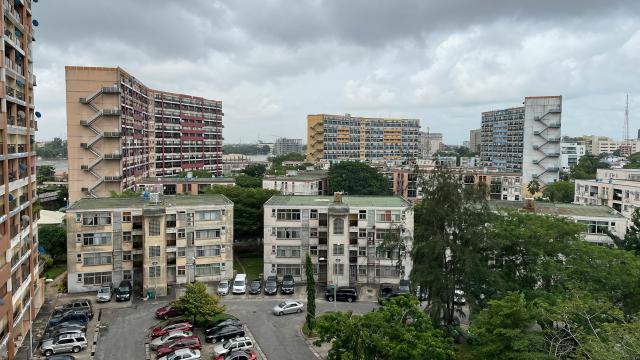
Personal safety is also promoted through affordable housing which improves the neighborhood design and infrastructure. The typical characteristics in planned housing developments are broader roads, streetlights, drainage systems, and identified open areas.
These characteristics
provide safer places where residents would move around without fear of crime or
accidents. Emergency services like police, firefighters and the medical staff
can also reach the neighborhoods with ease due to well-planned communities.
Another significant benefit is that of housing stability. In
case residents own tenure legally or have a safe rental contract, they will not
be at risk of eviction or sudden displacement. This stability motivates
families to invest in the community and homes, and the conditions of living
will be improved in the long-term.
Affordable housing can also be used to enhance improved
health outcomes. With homes having the right sanitation facilities,
availability of clean water and ventilation systems, this will decrease the
spread of diseases. The better living conditions enable the families to lead
better lifestyles and lower the cost of living in regard to health care costs.
Affordable housing is also linked with economic benefits.
Proper housing enables individuals to concentrate on their jobs and studies
instead of fearing being transferred or how to live in such poor conditions.
Children who are in stable homes will be in a better position to attend schools
on a regular basis whereas adults will have a chance of accessing job
opportunities without the inconvenience of having to move around as a result of
poor housing.
Ghana and Housing Development Policy issues.
Despite various potential advantages of affordable housing,
there are serious challenges involved in implementation of large-scale housing
programs in Ghana. There are barriers to the development of affordable houses
projects that affect government agencies, private developers and even the
financial institutions.
Financing is one of the largest challenges. It is a
capital-intensive activity to construct housing units, and most real estate
developers are aiming at investment in projects that would yield better profits
as opposed to low-cost housing. Ghana has mortgage systems that are in their
infantile stages and most low-income households are unable to get housing
loans, as they have irregular income or no formal jobs.
Another significant impediment is land acquisition. Land
tenure system in Ghana entails various players which include, traditional
authorities, private owners and government institutions. This complexity has
the potential to slow down and make land transactions expensive, slowing down
the development projects in housing.
Development of infrastructure is also not easy. Roads, water
supply, electricity and garbage management facilities are needed in the
affordable housing projects. Housing developments will not work without these
services. Such infrastructure is expensive to provide since the various
government bodies have to be coordinated and the government needs to spend a
lot of money.
The urban planning policies are not always able to support
the needs of the low-income populations. Building standards, zoning and permits
may raise construction expenses and make it less incentive to develop
affordable housing. These regulations can be simplified and safety maintained
to increase the housing opportunities.
In spite of these, Ghana has tried to solve the shortage of
houses collaborating with foreign developers and other international
organizations. The partnership between the government and the private sector
can be used to marshal resources and experience required in massive housing
projects.
Planning to transform the Urban poor Communities
The living conditions in the urban poor population of Ghana
need long term measures to adopt housing crunch and social inequality issues.
Housing programs (Affordable Housing) should be incorporated in the wider urban
development policy to have sustainable changes.
Slum upgrading is one of the successful strategies, and this
is aimed at developing the old settlements instead of destroying them. Such
programs as the installation of water supply systems, sanitation facilities,
roads, and street lighting can be upgraded. These developments increase safety
and health levels and enable the residents to stay within their communities.
Another potential solution is incremental housing development. Governments and developers can construct simple housing units upon
which residents can enhance as time goes by instead of constructing complete
houses. Such a solution saves the upfront expenses and allows households to
make their houses depending on their income level.
It is also very important to increase access to housing
finance. Small loans that can be given to residents to invest in housing
improvement can be offered by microfinance institutions and community savings
groups. These instruments of finance enable the communities to actively
participate in living conditions enhancement.
It is also vital to fortify the city governments. City
leaders require resources as well as institutional capacity to deal with urban
development. The implementation of housing policy can be enhanced by having
transparent planning processes and enhanced coordination among government
agencies.
The urban poor residents can also be given a chance to
become economically stable through education and skills training programs. The
fact that the people are able to have improved job opportunities makes them
more able to afford a better housing as well as investing in community
development.
Conclusion
The problem of security in slums is closely related to the
further problem of the housing lack, poverty, and the rapid urbanization in
Ghana. With the constant urbanization, informal settlements are bound to get
more and more population unless effective solutions to housing issues are
applied to the people. There are various insecurities that slum residents
experience such as poor housing constructions, environmental risks, crime, and
the fear of eviction at any time.
Affordable housing is an effective instrument of tackling
such issues and livelihood in the urban poor neighborhoods. Economic
opportunity, security, and health can be enhanced through safe and stable
housing that can minimize the physical and social vulnerabilities. Governments
can make cities more resilient and inclusive by ensuring that they have access
to the basic facilities on the homes that are secure.
Nonetheless, the development of affordable housing at large
scales needs to overcome major obstacles on the way of policies, finances, and
institutions. Issues of land acquisition, high construction prices and low
access to housing finance should be all dealt with using new policy reforms and
collaborations.
Plans that consider sustainability will be relying on
all-inclusive planning processes that require incorporation of communities,
government agencies and players in the private sector. Slum upgrading,
incremental housing development and better urban governance are some of the
strategies that can assist in transforming insecure settlements into safe and
penultimate neighborhoods.
Since Ghana is still on its urbanization path, the issue of affordable housing will be of prime importance in ensuring that economic growth is felt by all the citizens. By addressing insecurity in slums through housing reforms and community-based development strategies, the country can move toward a future where urban dwellers enjoy safe, dignified, and stable living conditions.
Also read: Transforming Urban Living: Ghana’s Slum Upgrading and Prevention Strategy




-3dkuLgKhRD.jpg)
-49HupTvwDD.jpg)







LEAVE A REPLY