

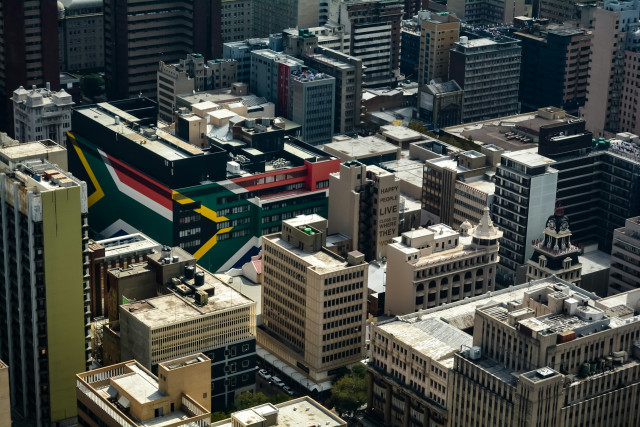
Case Study: Successful Affordable Housing Projects in South Africa
One of the developmental priorities of South Africa is the issue of affordable housing. The government has also pledged to provide inclusive human settlements as a social transformation agenda since the end of apartheid in 1994. However, an accelerated urbanization, stagnated economy and disparity have kept on increasing the housing gap. The country has over 2.3 million units on backlog and millions of South Africans are still living in informal settlements or in overcrowded homes. To these, various innovative, government-initiated, privately-led, and community-based initiatives have come into being in order to deal with these issues.
This case study will focus on the successful affordable housing programs that have already left a tangible impact of enhancing the access to decent shelter in South Africa. It concentrates on projects that integrate innovation, sustainability, and inclusiveness and proves that in the case of the right partners and funding structures, affordable housing can be socially responsible and economically viable.
Since Reconstruction and Development Programme (RDP), Breaking New Ground (BNG) through large-scale government interventions, up to the urban regeneration project of Flamingo Crescent in Cape Town and Cosmo City in Johannesburg, South Africa has witnessed a lot of improvements. In these cases, there are several important lessons concerning the areas of financing, planning, design, and community involvement- which are vital in sustainable urban development.
It is hoped that with the analysis of these successful models, we will know what works, why it works and how we can replicate or scale it to other African contexts. Both projects show that affordable housing does not necessarily mean low-quality and bad location; on the contrary, it can be an instrument of economic empowerment, social integration, and environmental sustainability.
The Reconstruction and Development Programme (RDP): The Foundation.
One of the most notable affordable housing interventions in South African history is still the Reconstruction and Development Programme (RDP). The RDP was introduced by the African National Congress (ANC) in 1994 and attempted to rectify the inequalities of the apartheid era by undertaking widespread social investment in housing, health and infrastructure. The aim of the program was to offer simple housing units to the low-income families that had an income below a certain threshold, as well as, grant them access to ownership, water, sanitation, and electricity.
The RDP provided more than three million subsidized dwellings between 1994 and 2014 serving close to 20 million individuals. These were quite small houses (about 40 m 2 ) but this was a revolutionary move towards the formal ownership of households who used to be in informal settlements. The RDP not only provided provision of temporary shelter, but it also encouraged security of tenure, which allowed the beneficiary to use the house as a security or generational property.
Nonetheless, the success of the program is beyond numbers. It offered work to the local communities by giving them labor intensive methods of construction which boosted the local economies and also attracted local contractors which promoted the economy. Complementary development of infrastructure such as roads, schools and clinics also occurred as a result of RDP projects, which served to improve the well-being of the community at large.
Housing issues like standardisation of house designs, small size and peripheral location have been cited to be some of the challenges. However, these unmet expectations can provide very important insights on future projects. The scale and social effectiveness of the RDP preconditioned the following housing initiatives which showed that massive state intervention could help to decrease homelessness and improve living conditions greatly in case of the political goodwill and definite social goals.
Effectually, the RDP is one of the pillars of reconstruction after apartheid, as it is the first practical implementation of the constitution provision of appropriate housing. It is still a living legend of how state-led housing provision can empower millions and change the urban scenery in South Africa.
Breaking New Ground (BNG): Towards Integrated Human Settlement.
The Breaking New Ground (BNG) policy which was introduced in 2004 was a strategic change in addressing the way housing is done in South Africa: no longer in large quantities and delivered in large numbers but rather in quality, integration, and sustainability. The BNG model was to develop sustainable human settlements that incorporate cheap housing with provision of economic and social facilities.
The BNG projects are just another form of the RDP model. Instead of building individual houses, BNG developments incorporate schools, transport facilities, shopping facilities and recreational areas. The Cosmo City is a mixed-income, mixed-use, township, built on the north side of Johannesburg, which could be viewed as an excellent example. Cosmo City, which was a government and privately developed initiative, integrated low-cost, bonded and fully subsidized units into one community.
The new financing structure of the project made it possible to cross-subsidize and the profit of market-rate housing was used to fund low-income units. This combination strategy did not lead to the traps of socioeconomic segregation that other public housing plans had. Cosmo City accommodates more than 70,000 people today; and it has an exciting urban atmosphere with transportation in the form of a bus, schools, parks and shopping malls.
BNG also focuses on the community involvement and gradual upgrading. Beneficiaries are advised to own housing enhancement in the long run to make them proud and supportive of stewardship. In addition, the environmental sustainability is incorporated via energy efficient materials, storm-water management and waste recycling system.
The BNG is successful because of its holistic vision: the housing is not only considered as a place to stay, but as a place of social mobility and inclusion to urban life. It shows that affordable housing, once combined with the principles of urban planning, can be a point of spatial change and comprehensive development.
Social Housing and Public-Private Partnerships: Fleurhof and Brickfields.
In addition to state-subsidised housing, social housing has become an important tool of dealing with urban affordability issues. This model is administered by accredited Social Housing Institutions (SHIs) under the supervision of the Social Housing Regulatory Authority (SHRA) and it is focused on low to middle-income earners who are not in the subsidized bracket but cannot afford to rent in the market.
The most notable one of them is the Fleurhof Development in Johannesburg as one of the largest integrated housing projects in South Africa. Fleurhof, which is a joint venture by Calgro M3, city of Johannesburg and SHRA consists of over 9,000 housing units, a combination of subsidized rental, bonded and full market houses. The design incorporates schools, medical centers, and transit to form a self-sustainable, socially diverse community.
Equally, other successful urban regeneration through partnership is the Brickfields Housing Project in Newtown, Johannesburg. Previously a run-down inner-city neighborhood, Brickfields is being turned into a successful residential community that consists of more than 700 affordable rental housing. It is run by the Johannesburg Housing Company (JHC), which provides an example of how urban spaces can be rejuvenated through joint financing, effective management, and location optimization.
Both projects emphasise the strength of the public-private partnership (PPPs). The government offers policy frameworks, subsidies, and serviced land whereas the work of the private developers involves provision of capital and technical know-how. This synergy makes projects to be financially viable and they are addressing the needs of people.
The crucial success in those models is the balance: they are cost-effective, but they do not focus on the design or even social inclusion. Through the innovation of the private sector, within a controlled, socially aware system, these projects develop what can be done in delivering affordable housing.

Incremental and Community-Driven Approaches: The Example of Flamingo Crescent
Big projects make the headlines of the news but at the grassroots, small-scale projects show that micro-level efforts can be as transformative as their larger counterparts. A good example is afforded by the Flamingo Crescent project in Cape Town.
Flamingo Crescent which is in Observatory started as an informal settlement with a population of about 120 families. The residents participated actively in planning, designing and building their new homes through a participatory upgrading process which was facilitated by Community Organization Resource Centre (CORC) and the City of Cape Town. The project focused on in-situ upgrading as opposed to relocation to enable families to stay in their available social networks.
The project came up with a gradual housing where inhabitants were able to add or advance units as finances permitted. The community members were empowered through training programs to equip them with building skills that encouraged employment and ownership. Notably, the project placed a high emphasis on gender inclusivity, where women were at the forefront in leadership and other aspects in the construction.
The success of Flamingo Crescent is based not on better housing conditions, but empowerment and dignity. It shows the possibilities of bottom-up growth - when the government agencies work together with organized communities, results are more sustainable and context-specific.
Another important lesson identified in this case is that affordable housing is not a technical or financial matter only, but a social process that is based on participation, trust and capacity building. As long-term social resilience has its route in housing delivery, communities gain strength as co-producers, instead of mere beneficiaries.
Green and Sustainable Innovations in Housing.
South Africa is struggling with climate change and increased energy prices, which makes the need to incorporate sustainability in affordable housing an imperative issue. A number of innovative projects have proven that green design can be affordable at the same time.
Joe Slovo Housing Project in Cape Town had used passive solar design, water saving technologies and environment friendly materials to minimize the use of energy. Equally, the Savanna City development project, located south of Johannesburg, and among the largest housing developments in the country by the privately funded company, has incorporated renewable energy providers, natural storm-water management, and green spaces.
Empower Shack Project in Khayelitsha is another model, designed by the NGO Urban-Think Tank with ETH Zurich and examines modular and cost-effective typologies of housing that can be easily repeated and extended. These units adopt recycled materials, solar panels and community financing creating scalable urban prototypes.
The paradigm shift observed through such projects is that sustainable housing is not a luxury anymore, but a resiliency necessity. Renewable power, efficient design and climate-sensitive planning do not only reduce the long-term expenses of the residents, but also help the country meet its objectives of cutting carbon emissions.
These green initiatives are successful and this is evidence that affordable and sustainable housing do not necessarily go hand in hand. South Africa can be the first continent in Africa to create an environmentally aware urban development with supportive policies, mechanisms of green financing and technical training.
Lessons Learned and Policy Implications.
The lessons that can be learned with regard to future strategies are based on the experiences of successful affordable housing projects in South Africa:
- Assimilation instead of seclusion:
Mixed-income, mixed-use projects such as Cosmo City and Fleurhof show that these projects promote social cohesion and economic prosperity.
- Community involvement:
Flamingo Crescent demonstrates that participatory planning makes the place more sustainable and socially acceptable.
- Innovative funding:
Public-Private-Partnerships and cross-subsidization strategies increase financial feasibility.
- Sustainability:
Green building should be made a policy to make it affordable and environmentally sound in the long term.
- Policy consistency:
The constant change of policies interrupts the process. Sound structures make the investments confident and effective.
Government measures to expand success should include enhancement of institutions like SHRA and municipal housing departments, stream land allocation and enhance data-driven planning. Also, innovation can be expedited by regional cooperation and sharing of knowledge between cities in Africa.
The secret of success, in the long run, however, is balance, between market efficiency and social justice, between innovation and inclusiveness, and between short-term performance and long-term sustainability.
The Role of Technology and Innovation in Strengthening Affordable Housing Delivery
The issue of technology and innovativeness have emerged as a strong driving force in changing the outlook of affordable housing in South Africa. With housing demands still surpassing supply, online technologies, build innovations, and data-centered planning are providing new ways to efficiency, cost-saving, and high quality. The combination of new building methods and technologies, online services, and data analysis is assisting to facilitate the project delivery process and improve the transparency and long-term sustainability.
The use of alternative building technologies (ABTs) in the form of prefabrication, modular housing, or 3D printing is one of the most transformational innovations in the last years. The techniques save major construction time and waste of materials and still maintain the durability and safety levels. To take one case, light steel frame construction and the use of eco-bricks have enabled developers to save up to 30 percent of the cost and take a fraction of the time that is taken by the traditional construction methods to finish a project. Along with that, modular housing units, which are made out of site and assembled on-site, allow scalability and precision and offer a flexible solution to both urban and peri-urban projects.
Digital innovation is also of significance. Smart city dashboards and GIS-based housing information systems have created an opportunity to improve planners and policymakers indicative of land availability, monitor project progress, and predict housing needs more precisely. In addition, the access of low- and middle-income households to housing finance is increased through fintech solutions. There is now the possibility of small-scale housing loans through digital mortgage apps and micro-lending apps that allows people with informal incomes streams to apply for loans as this is a critical gap in financial inclusion.
More so, the incorporation of green technology (solar energy systems, harvesting rainwater, and low cost insulation) has become a continuous feature of innovative housing design. Startups and social enterprises are at the forefront by coming up with cost-effective, energy-saving products that save money on utility expenses to residents as it helps South Africa to meet its climate commitments. Such initiatives make sure that affordability is not just determined by the purchase price; but also in regard to long term sustainability as well as livability.
Finally, affordable housing is increasingly being redefined by technology and innovation. They create a paradigm shift between traditional top-down delivery paradigms to agile information-driven and environmental friendly systems. With the further development of these innovations, South Africa is ready to boost the advances towards inclusive, efficient, and future-driven housing that is not only capable of satisfying the needs of all South African citizens.
Conclusion
The experience of South Africa is that affordable housing, when taken as a whole, has the capability of changing lives and cities. Since the initial RDP undertakings to the modern mixed-income, green and community-based works, the nation has shown flexibility and creativity. These initiatives reveal the fact that affordable housing is not merely the construction of buildings, but rather an opportunity, equity and dignity to be constructed.
The need to have low cost housing will only continue to inflame as the South African country is becoming more urbanized. The issue in the future lies in making lessons of successful case studies institutionalized that is, making sure that future projects are affordable yet sustainable, inclusive, and empowering communities.
By so doing, South Africa can provide a model to the continent and demonstrate how inclusive housing development can lead to economic development, social peace, and environmental stewardship. Affordable housing cannot be limited to its price alone, but rather it must be creative, collaborative and dedicated to a collective vision of equity in urban restructuring.
Also Read: Housing Policies in Brazil and South Africa



-3dkuLgKhRD.jpg)
-49HupTvwDD.jpg)









LEAVE A REPLY