

The Struggle for Secure, Affordable Rental Housing in South Africa’s Major Cities
The great cities of South Africa are the force of economic possibilities, education, and social growth, which millions of people seek in pursuit of improved lives. Other major urban centers such as Johannesburg, CapeTown, Durban, Tshwane and others keep expanding due to increased urbanization. However, to most citizens, particularly low and middle income families, the city dream is tainted by the same bane, which is the availability of safe and affordable rentals.
As long as housing policy debates have revolved around
homeownership, renting is the new reality of a large and growing segment of the
urban population. The affordability of rental housing has become obvious, and
more and more pronounced, due to the increasing prices of property, wage
levels, unemployment and spatial inequality.
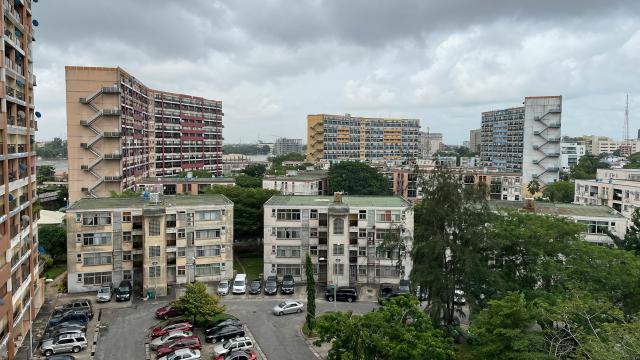
The battle of affordable rental housing is not simply about the affordability but also on security, area, and dignity. Households also experience exploitative renting arrangements, overcrowding, or eviction at any moment. The rest of them are shoved towards the outskirts of the urban areas where they cannot afford to rent places in the core areas. These issues are entangled with the South African history, the economic system and urbanism.
The
present blog addresses the issue of secure and affordable rental accommodation
in the major cities of South Africa by attempting to document the past, the
market dynamics, policy frameworks, lived experiences, regulatory issues, as
well as the way forward. Combined, this insight would indicate why rental
housing is an urgent element in the struggle against more inclusive and
equitable cities.
Historical and Structural Precedents of Urban Rental Crisis.
The South African situation in the rental housing crisis in
the cities is not disassociated with historical and structural inequalities in
the country. In apartheid, it was strategically planned that urban space should
leave a large percentage of the population out of the well-placed locations.
The black South Africans were confined and relegated to the townships and
informal settlements and the rental possibilities of the central cities were
banned or strictly regulated. This history had a legacy of spatial inequality
that economic opportunities were concentrated where urban cores were and
economic low-income populations were forced to the periphery. These trends were
not easy to reverse after 1994 despite the opening of cities and the extensive
migration.
The housing policy after apartheid was very keen on
encouraging homeownership by giving subsidized housing programs. Millions of
houses were constructed although they were usually situated in the periphery of
cities where land was relatively cheaper. This strategy failed to respond to
the needs of the rentals in the core locations where employment and other
services are found. With the increase in population in the urban areas, the
rental industry was developed in a large scale with little to no planning or
regulation. Backyard rentals, overcrowded inner-city buildings and informal
settlements became major sources of rental housing to low-income households.
The crisis has also been worsened by economic factors. The
unemployment and income inequality are also high and restrict the affordability
of market rent by many households. Meanwhile, increasing construction prices,
land prices, and interest rates have caused the private developers to shift to
the high-end of the rental markets, with better returns. This has led to the
surplus supply and demand mismatch whereby there is an oversupply of costly
rentals and drastic lack of affordable ones.
The systemic character of the crisis of rentals implies that
it cannot be addressed by individual measures. It is the result of decades of
exclusionary planning, uneven investment, and policy decisions that placed more
emphasis on ownership than on rental security. It is important to understand
these origins to come up with solutions that will go beyond affordability and
into the broader inequality that dwells in the urban environment of South
Africa.
Market Pressures and the Renting Cost in the big cities.
The market pressures are very important in influencing the
affordability of rent in major cities in South Africa. The rent houses are in
demand especially in the urban areas where there are employment opportunities,
learning institutions, and transport systems. Nevertheless, this demand has not
been matched by supply, particularly in the low-end and the lower-middle-income
market. This has led to steady rise in rents straining household spending.
Housing expenses take up a disproportionate portion of the income of many urban
renters, and as such, they will have little time to save or deal with
emergencies.
Profit is a major factor that runs the private rental
market, and it does not favor low-income tenants. Developers and landlords will
concentrate on the part and price range with greater returns, like luxury
apartments or short-term rentals in prime areas. This has especially impacted
long-term rental accommodation since it has been discovered that the
development of tourism and short-term rental services in cities such as Cape
town have further depleted the development of the same in central locations forcing
the prices to increase. This force has ousted long time occupants and
heightened the competition of affordable units.
In the case of lower-income families, there is usually a
limited choice to informal or semi-formal renting. Backyard houses, dorm rooms
and divided apartments offer certain access but they are usually not secure, do
not offer sufficient services, and are not legally safeguarded. In such
arrangements, tenants can experience abrupt rent rises, lack of good living
conditions or eviction. Although these types of rental residence are critical
in providing shelter to urban dwellers, they portray the inability of the
formal market to address the needs of different people.
Renting is not merely a market-driven force, but also a
regulatory one as well as disproportionate bargaining power. Without good
interventions, the forces of the market will continue to render the renting of
affordable houses unaffordable to the majority of the urban residents to
reinforce the dynamics of exclusion and vulnerability.
Policy Responses and the Role of Government
The government policy has been instrumental in the
development of the rental housing industry, although the reaction to the rental
crisis in South Africa has been rather inconsistent and inadequate.
Traditionally, the ownership was taken as the channel to stability and wealth
generation and rental housing was not well-developed in the history of the
housing policy. Although this strategy helped some households, it did not
appreciate renting as a long-term and legal tenure of millions of urban
dwellers. During the last few years, people have become more aware of the
necessity to accommodate rental houses, and it is difficult to implement this
at the moment.
Social housing programs are by far one of the greatest
policy interventions within the rental sector. Targeting the low to
middle-income households, social housing is aimed at offering low-cost, secure
flats in good-location urban regions. Although these projects have had positive
effects, they have been too small in comparison with demand. The number of
units that it can deliver is limited by funding constraints, availability of
land and institutional capacity. Consequently, social housing is accessed by a
limited number of people in need.
The municipal governments also affect the rental markets
through zoning, land-use planning, and the infrastructure investment. In other
cities where there is a move towards densification and mixed-use development,
the developments have provided a chance to rent a housing close to transport
corridors. Non-uniform planning systems and sluggish granting of approval are,
however, known to deter the development of affordable rentals. Meanwhile, the
implementation of rental laws (including those on evictions and habitation
conditions) is uneven, and many tenants are not covered.
The change in attitude is needed to ensure effective policy
responses to the issue, where rentals become a core part of urban development,
not a side element. These involve the coordination of national, provincial and
local policies, investment in affordable rental supply, and enhancement of
tenant security. The government interventions will find it difficult to keep up
with the increasing demand of secure and affordable rental houses without a
more coordinated and proactive approach.
Urban Renter Lived Experiences.
There are people who are behind the statistics and policy
discussions and they are millions of urban renters who have to deal with
insecurity and affordability issues on a daily basis. Renting is not a
transitional period to many households, and rather a permanent occurrence
dictated by financial limitations and absence of options. These renters usually
have hard choices on location, cost, and quality. This can result in a higher
rent payment or an overcrowded living arrangement in order to get closer to work,
or more affordable places to live tend to be very distant to economic
opportunities.
The tenants in the inner-city districts often reside in
overcrowded or run-down structures. Although these areas provide access to
employment and means of transport, they may subject the population to health
and safety hazards. Informal rentals usually do not refer to any written
agreements and tenants are prone to either a sudden upsurge of the rent or
eviction. These conditions are the only possible choice of migrant workers and
young people, which supports the cycle of pre carity.
In the urban outskirts, the situation is different as the
renters experience a different set of challenges. Reduced rents are compensated
by expensive transportation procedures, extended commuting duration and
restricted services. This spatial incompatibility influences both quality of
life and economic mobility, especially to low-paid workers and women. There is
the absence of rental security, which endangers household stability and leads
to stress and uncertainty in both occurrences.
Nevertheless, tenants are also resilient and adaptable.
Homeless families are supported by informal networks, joint living and communal
support systems which assist them to counter insecurity. Nonetheless,
resilience is not to be confused with acceptance. The conditions of urban
renters emphasize the necessity of the policies and interventions that would
include renting as a highly valued and legitimate type of urban life that
should be safeguarded and invested in.
Tenant Rights, Regulation, and Enformcement Problems.
One of the important obstacles to good regulation is
informality. Most of the low-cost rental housing is not part of the official
system and includes backyard houses and informal rentals in inner city areas.
They are usually informal and unregistered and hence authorities can hardly
control situations or interfere in conflicts. The reason why landlords would
avoid compliance is because it is costly or they are afraid of revenue loss and
tenants would be reluctant to report abuses as they might be evicted.
The capacity constraints in institutions also undermine
enforcement. Municipal departments and tribunals that deal with rental housing
are usually under-staffed and overworked. The time taken in solving disputes
may make tenants to end up staying in delicate position. Simultaneously, too
strict enforcement has unforeseen effects, which include deterring small-scale
landlords to offer rental services.
To build up a stronger regulation there is need to find a
harmonious balance where the tenants are not compromised and yet supply is not
compromised. These involve ensuring there is enhanced awareness on rights of
tenants, making the process of settling disputes easier and facilitating
conformity through incentives and not by just punitive measures. The regulation
is important in such a way that rental housing would be affordable as well as
secure and dignified.
Pathways toward a More Inclusive Urban Rental System
The problem of finding safe and affordable rental
accommodation in the major cities of South Africa demands a multi-faceted
approach in the long-term perspective. The first important step is the
expansion of provision of affordable rental housing. These involve expansion of
social housing, backing of community-based, non-profits developers and
encouraging the involvement of the private sector in the lower-income rental
markets. Cost barriers can be addressed by providing access to good locations
and new financing structures.
As well is the inclusion of the aspect of rental housing in
the wider urban planning and transport strategies. These developments can be
affordable in areas that are close to employment, schools, and transport to
help lower household expenses and social inclusion. When done in a smart way,
densification provides a chance to house increasing populations without
increasing urban sprawl. Meanwhile, it is necessary to conserve current
affordable rental stock to avoid displacement and community networks.
Security and stability can be improved by improving the
tenant protections and management practices. Chaptered rules, more vigorous
enforcement, and available dispute management systems can be used to improve
vulnerability and foster trust in the rental system. The tenants can also be
empowered by means of education and representation so that the capacity to
claim the rights and engage in the decision-making process can be enhanced.
Conclusion
The insecure and unaffordable rental housing in large urban
centers of South Africa is the battle over inequality, accelerated urbanization
and economic marginalization. Cities have been cited as the places of
opportunity, where people get access to jobs, education, and services. However,
such opportunities are still not accessible to most urban dwellers due to the
high rental prices and also due to the insecurity in the rental market. The
rising rents, temporary type of arrangements and the fear of being evicted at
any given moment make many households not to maximize their presence in the
city life, which solidifies the modes of exclusion instead of inclusion.
This is not an isolated case. It is the culmination of
centuries-old history of spatial inequality, coupled with the strong market
forces that strive to make profit over affordability. Lack of policies and poor
regulatory systems have also played a role in the development of a rental
system that is hardly able to safeguard the individuals who rely on it the
most. The households of low-income and working classes tend to be confined to
overcrowded, under-maintained or informally controlled accommodation, with
their rights as tenants being unstable and their living conditions being
precarious. These pressures are growing stronger as cities keep expanding and
worsening social and economic disparities.
Though these have been the challenges, the prevailing crisis is also an opportunity to do something significant. South Africa could start remaking its cities by investing in various types of affordable rental housing, enhancing the protection of tenants, and incorporating rental housing in inclusive city planning. These efforts may assist in making sure that the urban areas are not restricted to the rich people alone, but also to everyone involved in the city life. Affordable and safe rental housing is thus not just a housing issue, but a base to social justice and more equal and inclusive urban future.





-3dkuLgKhRD.jpg)
-49HupTvwDD.jpg)



LEAVE A REPLY