

Exploring South
Africa’s Social Housing Solutions: Addressing Inequality through Housing
Accessibility
The problem of housing in South Africa has its roots in its historical, social, and economical facts. Spatial inequalities and inefficient access to decent housing are some of the most recognizable representations of inequality in the nation even decades after the abolition of apartheid. Safe, affordable, and properly located housing has remained a daily challenge to millions of South Africans (particularly low- and middle-income households).
 The existence of informal settlements, congested cities, and excessive
distances before going to economic centers in the extreme corners of townships
and urban areas signify structural issues that extend much beyond the housing
scarcity.
The existence of informal settlements, congested cities, and excessive
distances before going to economic centers in the extreme corners of townships
and urban areas signify structural issues that extend much beyond the housing
scarcity.
Social housing is one of the main policy responses to these issues
which attempts to fill the gap between housing which is fully subsidized and
provided to the poorest population and housing in the private market offered to
higher income groups.
In South Africa, social housing is not merely the provision of a roof, it is rebuilding cities, dignity, and social and economic inclusion. Due to affordability, quality, and closeness to opportunities, social housing programs aim to reverse the history of exclusionary planning and establish more integrated cities.
The present blog is a deep insight into the social housing
solutions in South Africa, its historical background, policy, models of
implementation, social and economic effects, challenges, and a future
perspective. In this exploration, it is evident that social housing is not a
panacea, but it is a key solution to the inequality issue by enhancing access
to housing.
Historical Roots of Housing Inequality in South Africa
The housing inequality in South Africa could not be interpreted without historical forces that predetermined the urban environment in the country. Housing policy was a divisive instrument of segregation and control especially during the colonialism and apartheid periods.
The black South Africans were literally forcibly dislocated in the well placed urban locations and moved to the outskirts of the townships or rural homelands where jobs, education and services were far away.
These policies institutionalized
the inequality of space, which locked the economic opportunity to the white
minority places. Provisions of housing to non-whites were low, under-financed
and set up to strengthen social inequalities instead of fulfilling human needs.
The advent of the new democratic government in 1994 changed all that, and the new government pledged to redress the historical injustices, and one of those was the housing crisis. Delivery programs on massive housing were initiated to curb the backlog which led to millions of subsidized houses being constructed to low-income families.
Although these measures helped a
great deal to increase access to shelter, they tended to reproduce the spatial
patterns of the era of apartheid. Numerous new housing cases were built on
inexpensive land at the edges of the city, further cementing the long commute
and social loneliness in inhabitants. This brought out the necessity to have
alternative methods of housing that were not just concerned with quantity but
location and incorporation.
Social housing was the answer to these restrictions. Social housing, unlike fully subsidized housing, appeals to households whose earnings are too high to enjoy free housing, but too low to afford the market-based rentals or ownership of a home. Social housing aims at reversing historic practices of exclusion by targeting the provision of rental accommodation in strategically situated urban centers.
This historical background is crucial to
understand because it can be seen as the reason why the problem of housing in
South Africa cannot be discussed outside of general issues of inequality,
justice, and urban change. Social housing is a response to this legacy that
tries to directly challenge the meaning of who should be in the city and where.
Social Housing Policy Framework and Institutional Framework.
The institutional framework that underpins the development of social housing in South Africa is a complete policy together with an institutional framework meant to facilitate sustainable and equitable housing delivery.
The government realized a disconnection between the subsidized housing sector and the private market, and this prompted it to introduce social housing as a separate part of national housing policy.
The Social Housing Actof 2008 enabled the formal legislative basis, which defined social housing,
described the institutional roles, and provided the means of regulation and
assistance. This law was a great move in establishing an organized and
responsible social housing sector.
The main component of this framework is the Social Housing Regulatory Authority which regulates the industry, accredits social housing bodies and makes sure that policy objectives are met.
Rental housing is developed, managed and maintained by social housing institutions which are usually non-profit based organizations. They work in the controlled environment with the focus on affordability, quality, and financial sustainability.
The
government is contributing some support in terms of capital grant, like the
Restructuring Capital Grant, that subsidizes the cost of development within
well-located urban centers where land prices are high.
Another important feature of the framework is policy alignment between various levels of governance. The national policy establishes general goals, and provincial and municipal governments are in a strategic position to determine appropriate land, analyze social housing into the spatial development plans, and establish access to bulk infrastructures.
Social housing
in metropolitan regions may frequently be associated with wider city
regeneration, and city densification policies, to improve utilization of pre-existing
infrastructure, and to minimize urban sprawl.
Although these structures exist, the efficiency of the policy framework relies on the coordination, capacity and political will. Policies can be derailed by the implementation challenges like land release delays or funding bottlenecks. However, the presence of a definite legislative and institutional framework makes the social housing more differentiating than the previous ad hoc methods and indicates that the long-term solutions are present.
By incorporating social housing into the wider policy frameworks, South
Africa has provided the platform on which it is possible to respond to the
problem of housing inequality in a more strategic and sustainable way.
Plans of Social Housing Supply and Design.
The social housing in South Africa is provided by various models depending on the urban context, income and goals of development. Social housing is fundamental in that it is rental based, which boasts of secure tenure without making the household bear the financial risks involved in home ownership.
This can be seen as a key characteristic of a nation that
experiences high rates of unemployment and unpredictable income. The majority
of social housing projects are medium- to high-density and thus maximize limited
urban space and contribute to compact and integrated cities.
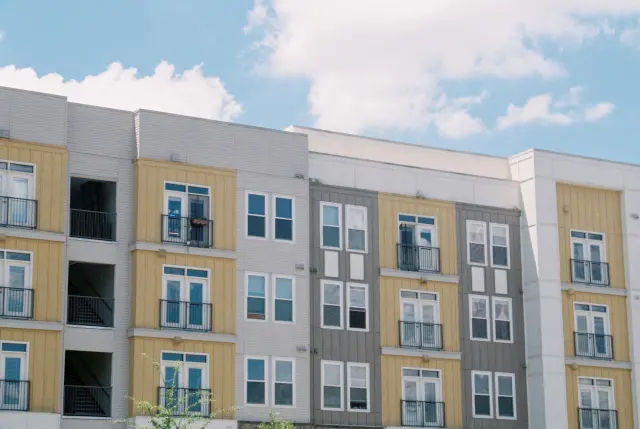
A typical paradigm is restructuring of inner-city housings or unused land near economic centers. In some urban areas such as Johannesburg, Cape Town, and Durban, social housing projects have also changed abandoned buildings into lively residential areas.
These developments in addition to
giving affordable housing, also help in the regeneration of the city by developing
neglected parts and its investment potential. The proximity to jobs, social
amenities, and public transport reduces the cost of living and commuting time
which benefits the residents.
The other model is centered at purpose-built developments in the well located suburban or transitional areas. These projects usually have a combination of unit sizes so as to fit in the various types of households, as few as single persons to families.
The principles of design are
durability, safety, and community spaces where it is acknowledged that the
quality of housing influences the well-being and social cohesion of residents
of a given area. Although the budget can restrict opulence, social housing
projects are meant to offer decent living conditions that can overturn the
stereotypes that come with low-income accommodation.
The most important aspect of all the models is financial sustainability. There should also be rental income to cover operating maintenance, and this will necessitate close selection and management of tenants. Cross-subsidization is occasionally employed, whereby slightly more affluent tenants' subsidies the poorer ones in the same development.
This
mixed-income model enhances financial sustainability besides encouraging social
integration. Social housing has shown that affordability does not necessarily mean
reduced quality and inclusion through various models of delivery and design.
Social and Economic Effects on Societies.
Social housing is not just a phenomenon but also has a significant effect on the overall social and economic forces in the cities. Affordable housing that is well located can contribute a lot to quality of life at the household level. Less time commuting translates to family time, education and leisure, and lower transport costs have released income to other needs.
Secure tenure also offers permanence so the households can plan as well
as invest into their own growth. The mentioned advantages are of most
significance to working-class families and young professionals who frequently
cannot access not only the subsidized houses but also the private rental
market.
Social cohesion and diversity at the community level can be achieved through social housing. The presence of mixed-income developments will unite individuals and people of various backgrounds, defy spatial segregation and promoting interaction.
The communal areas are well designed and
facilitate social networks and a sense of belonging which are critical towards
safe and resilient communities. Social housing can be used in regeneration
areas to avoid displacement since this will not only benefit high-income
residents but also the lower-income earners in the region.
Socially, social housing plays an important role in local development on an economic aspect. The construction and maintenance activities provide employment and as well, the higher residential density offers a boost to the local businesses and the transport systems.
Social housing can enhance
labor market productivity and efficiency because it allows workers to reside
near the places of work. In the long run, such impacts may help bring a more
inclusive economic development, in a way that is both about housing but also
about better access to opportunity.
Nevertheless, the beneficial effects of social housing are conditional on the good management and combination with the larger cities. The community outcomes may be affected by poor quality of developments or insufficient social support.
Providing a profound insight into the role of
social housing as an engine of social and economic change, when implemented
intelligently, it helps to emphasize the point that housing policy is one of
the potent tools to combat inequality.
Difficulties and constraints to Social Housing Programs
In spite of its potential, social housing in South Africa is being challenged by some issues which restrain its magnitude and influence. Funding is one of the most burning issues. Building of affordable housing to rent is costly and in the urban areas, the government subsidies do not cover the entire expenses.
This fiscal deficit restricts the development of projects
and the capacity of the social housing institutions to increase their
portfolios. These pressures are further aggravated by the increase in the cost
of construction and the cost of land.
The other significant challenge is institutional capacity. Most social housing organizations are faced with inadequate technical, financial and managerial resources. Long-term sustainability requires proper management of property, but the lack of skills and high operational pressures can undermine performance.
Meanwhile there are tendencies to have an uneven
coordination between the national, provincial and municipal authorities which
causes delays in approvals, release of land and provision of infrastructures.
These bureaucratic processes slow down the delivery process and demoralize
prospective developers.
The social housing is also known to be in a wider housing system characterized by stark imbalance and missed demand. The magnitude of demand is way beyond supply implying that the housing crisis cannot be effectively solved only through social housing.
Eligibility criteria is
important but it can rule out vulnerable groups like informal workers who have
irregular incomes. The possibility of social housing being seen as a niche
solution as opposed to a part and parcel of urban development is also present.
To mitigate these challenges, there is a need to commit
we politically, develop creative finance tools and more effective
cooperation between the government, the corporate sector, and the civilian
population. The limitations are a fact, but it does not imply the
meaninglessness of social housing, just that the improvements must have been
and are to be made continuously and structural change should be made.
The Future of Urban Equality and Social Housing.
In the future, the future of social housing in South Africa is strongly connected with the bigger vision, in which the urban equality and sustainability is the object of search. Cities are only becoming bigger and the need to have affordable housing with good location will only rise.
Social
housing can become a more significant part of the inclusive urban development,
but only on the condition of scaling them up and increasing their inclusion
into the planning and investment decisions. This demands that pilot projects
should be forgotten and social housing should be seen as a necessary city
infrastructure.
The future success will be based on innovation. Bridging funding gaps and attracting more investment can be achieved through new financing models, including the blended finance and the openness to the private and the government. Better land management and release of state-owned land in strategic areas can make development costs very low.
Concurrently, the quality
and sustainability of the sector will be effective through the strengthening of
the capacity of the social housing institutions as the sector expands.
Social housing is associated with wider social objectives such as climate resilience and social inclusion that determine the future of social housing. Environmental sustainability can be increased through energy-saving designs, availability of mass transport, and closeness to services, which will lower the cost of living of the residents.
Trust can be
established by inclusive planning procedures where communities are involved in
decision making and the developments are based on the actual needs.
Conclusion
The social housing in South Africa is at the crossroads of history, policy and social justice. It can be characterized as a persistent attempt to address ingrained inequality by providing access to affordable, well-placed housing to individuals locked out of the state-subsidized as well as private markets.
Social housing has shown that it can make life better and
transform cities through considered policy frameworks, different forms of
delivery, and an emphasis on integration. Although the issues associated with
finance, volume, and size are still substantial, they do not take away the
weight of the role of social housing as a transformation instrument.
Instead, they stress the need of the new commitment,
innovation, and teamwork. The social housing in the country that is still
struggling with the spatial heritage of apartheid can offer an escape to the
more exclusionary and unequal urban spaces where a chance to opportunity is
subject to income or origin, instead of a sense of shared ideal.
Lastly, social housing is a more equitable, available and humanitarian perspective of the city. Though it cannot solve all of the housing problems on its own, it can offer a reasonable and effective solution to the inequality by offering the housing.
Social housing is the solution to South Africa developing a more equal urban future because with the lessons of the past, South Africa would have to invest in long-term housing benefits.
Also read: How South Africa’s Housing Loan Market Can Be Made More Inclusive For First-Time Buyers

















LEAVE A REPLY