

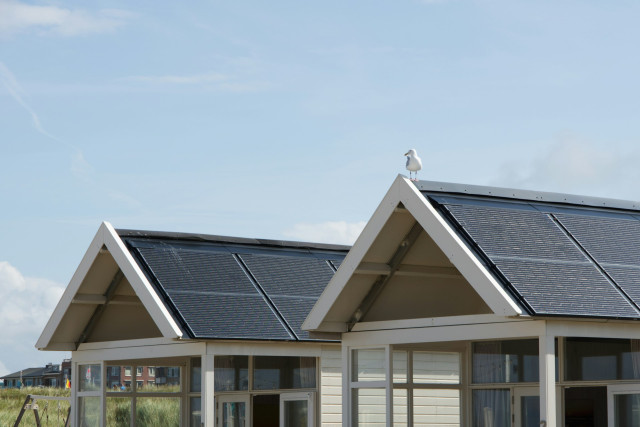
KP’s Dual Scheme: Solar Panels + Home Loans for Rural Families
Millions of rural households in Pakistan living in the province of Khyber Pakhtunkhwa (KP) that is distinguished by its picturesque natural environment and enduring people, nonetheless, still struggle to attain steady sources of energy and quality shelters. The underdevelopment of infrastructure, financial difficulties, and lack of the modern infrastructure has placed the rural populations in a position to be unable to match the country in the level of development and progress.
The government of KP has taken cognizance of these problems and it has come up with a new dual scheme in which solar panels will be installed with the provision of cheap home loans to the families living in the rural areas. The idea of the initiative is to alleviate two urgent needs at one time, that is, the energy shortage and the housing shortage.
The attention of the program towards solar energy can be termed as apt at this juncture due to the current electricity crises and soaring power tariffs in Pakistan. A big part of the territory of KP has been off-grid or has been a victim of frequent load shedding with families being left to use costly and environmentally unfriendly means like diesel generators or kerosene lamps.
The government is offering subsidized solar panels so that the rural families can have their energy independence on condition that the government would facilitate their bills on monthly basis. At the same time, home loans on low interests will eliminate the lack of appropriate housing infrastructure by helping families to construct or improve operate home with current standards of living.
KP dual scheme is not only a welfare scheme; it is movement towards people and sustainable development. The strategy of connections between renewable energy and affordable housing contributes to tendencies in clean energy and socially equitable economic development across the globe. It can also give strength to the communities locally, as well as generate employment and access small tier industries like the maintenance and building of solar panels.
This blog looks at the details, effects and what the KP dual scheme holds in five major areas. It takes a look into the issues that prompted the coming up of the program, its innovative design, the social-economical value addition, the importance of sustainable development and the future way forward towards propagating its success all over Pakistan. We have shown that this dual approach may become a precedent in a future rural change in other provinces and also stimulate more general policy guidelines.
Rural Problems of Housing and Energy
In Khyber Pakhtunkhwa, there is a high rural rate in the use and the distribution of energy as well as poor housing infrastructures, which really affects the families based in the rural area. Although the city areas in Pakistan are relatively better as far as electricity and basic amenities are concerned, in KP, a good number of villages have still not received proper power access.
The electricity is not so reliable even in places where a supply connection is in place because of the frequent power falls and overvoltage difficulties. Such energy crisis has curbed the capabilities of the rural households to advance their quality of life in every aspect of education and healthcare which is propagated through to economic activities.
This is worsened by the increase in cost of electricity. Increases in tariff, as well as unreliable power cuts have put low-income households in rural areas at challenging positions to cover their monthly expenditure. Most homes use conventional power such as wood, kerosene and even generators which are very expensive and causing damage to the environment and to the health of the people. The reliance on the sources continues the cycle of energy poverty, which worsens the ability of rural people to advance.
Another important problem is housing. Most of the houses in the rural parts of KP are either built of mud or are ill built with no facilities like health sanitation, ventilation or even protection of adverse weather. Crafting a sturdy and contemporary house is expensive in most cases and rural families live on erratic earnings with farming or daily wages. Loans offered by banks are hardly available, where criteria are strict, collaterals are demanded, and the interest rates are high. Consequently, families still dwell in less satisfactory conditions that do not provide standard safety and comfort.
The impoverished combination of energy and housing leads to the poverty-underdevelopment cycle. The children cannot concentrate on late night study in a room with very minimal light, the health services cannot be supported due to the unavailability of power, and the families have to use an abnormally high share of their money in purchasing energy and replacing house components. These problems demonstrate the necessity of effective combination solutions, which will be able to address both of these problems.
This was why the KP dual scheme was crafted. The program affords families two critical tools in the process of bettering their lives by combining solar panel installation with low-cost home financing. It does not only make them less dependent on the national power grid, but it also enables them to construct or improve homes, which are sustainable and resilient. This people-based business model is a necessary change in the fragmented welfare model to the more cohesive long-term development model.

The Solar Energy and Home Loans Dual Scheme Model
The two-scheme presented by KP government is the new thing. It does not only work on energy or simply houses; it confines both necessities into one program that deals with the causes of rural underdevelopment. In essence, the program enables the rural communities to access subsidized solar panels and cheap loans to build or remodel houses.
The component of solar panels is especially relevant in the sphere of energy issues in Pakistan. Solar energy is renewable, does not have scarcity and it is cheap in the long run. Through the solar panels installed on the houses in rural set ups, the government is also hoping to decrease the reliance of the rural sectors on the national grid and get them a stable uninterrupted supply of electricity.
Such energy independence allows individuals and families to operate household capacity, supply energy to small businesses and enhance their general standards. Moreover, the implementation of the use of solar energy minimizes emissions of carbon dioxide, which is in line with the climate change pledges of the country, contributing to environmental sustainability.
Housing deficit in rural KP is a long-standing phenomenon. The home loan scheme of the scheme is conceived to handle it. Conventional sources of financing are out of the reach or not affordable to a majority of rural households. What the government has done to solve the problem is that it has availed microloans or subsidized credit facilities on an informal payback schedule where fathers and mothers can construct new houses or renovate their existing facilities. These are the loans that are used to finance the critical components of constructions such as strengthened walls, roofs, floorings and sanitation systems so that the houses are secure and sustainable.
The key aspect of this model is the fact that it brings together these two aspects. The issues of energy and housing are interrelated: homes require stable sources of energy to work efficiently, and the energy supply is best deployed when they are accompanied by stable homes. Combining the two features, the KP dual scheme has the multiplier effect, where the level of life improves, and economic opportunities increase.
Local creation of jobs is also fostered by the program. Installation, maintenance and housing construction of solar panels results in the generation of employment of skilled and semi-skilled members of the community. The rural economy is boosted because there is the increment of demand of services by local contractors, technicians and artisans.
Socio-Economic Impact on Rural Communities
The KP dual scheme can change the rural communities dramatically since their fundamental needs will be satisfied along with the opening of new horizons in terms of economic development. This is one of the shortest sequels which is the decrease of household energy costs. Families will save money that they have to use to buy the costly diesel or kerosene to light or cook using it by switching to solar power. One can use the savings made on education, on medical care or invest in the small scale business.
Quality of life is also enhanced by the existence of quality electricity. Children will be able to study after sunset without the harshness of low lights and families will have the option of battling harsh weather with fans or heater. Normal home-based businesses (home-based workshops, shops) will be able to work longer time and will be more productive. Time and money-saving appliances and enhanced efficiency at the household level offer the benefit to women, who usually bear the brunt of energy poverty.
The home loan part is one that adds to the social stability and dignity. Having a well-constructed, secure house enhances the feeling of security of the families, it also has an effect on improving their self-esteem. It makes the property resale better too and gives long term asset that can be used in future in terms of finances. Better housing conditions are positively correlated to better health results, given that there is a lesser chance of respiratory diseases and water contagion due to proper ventilation and sanitation provided in good housing conditions.
At macro economical level the dual scheme also drives rural development. The ripple effect on the economy happens because construction activities create a demand of materials, labor and transportation services. Even the solar energy sector shares the optimism as more panels, batteries and other parts are in demand stimulating the need to invest in renewable energy infrastructure.
The environmental effect of the scheme is positive as well. The program will result in fewer emissions of greenhouse gases and a clean environment by the replacement of energy sources based on fossil fuels with the use of solar power. This is special especially in the open country where the burning of wood and kerosene may affect the quality of air.
More so, the program enhances the social structures of the rural society. Housing and access to energy also limits rural-to-urban migration because modern housing and availability of basic amenities make families tend to remain in the village. This aids in conservation of the rural values and avoidance of congestion in urban areas.
Sustainable Development and Long Term Payments
Indeed, the KP dual scheme is an illustration of sustainable development since it does not deserve the future generations to perish, as it fulfills the present needs. The program also supports the Pakistani ambitions in regard to global climate objectives such as a carbon reduction and share of clean energy within the power mix. The solar panels need very little maintenance and could last 20-25 years hence providing long term energy solutions to the rural households.
The sustainability of the program is also enhanced through the financial model of the program. Rather than depending on government subsidies alone, the fact that affordable loans are involved promotes the interest of families in their future. By the beneficiaries repaid their loans the finances can be reused in other projects already forming a self-sustaining development process. This makes the program self-organizing and less dependent on external funding since it can grow with time.
The success of the scheme includes education and awareness. The schedule of training local technicians guarantees proper installation and maintenance of solar equipment and money management workshops provide a capacity to families so that they can sustain their loans. Such capacity-building activities enable the communities to be the owners of the results of the program.
The two plans are economically beneficial in the long term as well. Dependable energy service enables rural families to make money out of income generating activities, i.e. small scale production, handicrafts, or farm processing. This not only enhances household earnings but also makes the economy in the rural settings to be enhanced. These economic activities are able to lower poverty and enhance resilience to external shocks in case of external shocks like natural calamities or market shocks after a certain period of time.
Besides, the combination of houses and green energy serves as an example of how to change modern infrastructure in Pakistan. It shows that there is no need to sacrifice the environment when it comes to development and sustainable solutions can be effective not only cost wise but also socially inclusive. The KP dual scheme would achieve reform and could become a leading principle of the rural development policy of Pakistan in the case of its replication in other provinces.
Scaling and Replicating the Model the Road Ahead:
This KP two-scheme is an adventurous move, yet success will only be dependent on the successful implementation, scaling, and flexibility. The government will have to provide sustained funding to the program, will have to have collaboration with the private economies and community participation to increase the scope of the program. Public-private partnerships (PPPs) may be critically important in funding solar infrastructure and housing-related infrastructure in general and non-governmental organizations (NGOs) can help to train and conduct awareness campaigns.
Financial sustainability is one of the most important factors somehow related to scaling the program. Although low-interest loans are a good beginning it might be necessary to initiate additional incentive delivery like tax rebates, micro-finance and donor resources as grants to make it apply to the poorest of households. The provision of rural families with a broader range of accessible loans may be offered by encouragement of the local banks and microfinance institutions to cooperate with the government.
Technological innovation will also be a major factor. The solar energy business is fast changing, and new more potent panels are being introduced at cheaper prices. Cost-effectiveness of the program can be enhanced taking advantage of these advances. On the same note, updated building methods like usage of prefabricated materials or environmentally friendly building constructs can also lower cost of houses without sacrificing quality.
Community outreach is another of these. The success of the scheme in the long run will be determined by the status of its acceptance and sustenance by the local communities. The feedback should be continuous as well as the planning process, and the leadership should occur locally so that the program can be specific to the needs of a particular village.
Conclusion
Solar panels and home loans in KP dual scheme are not a government project but a roadmap to transform Indian countryside. The fact that the program addresses the problem of energy poverty and the lack of living space in one act provides a comprehensive solution, due to which the quality of life will increase, the community will become stronger, and more environmentally friendly development will be achieved. It provides rural families the strength of a stable source of energy, safe houses, and the ability to create greater destinies.
It is also a measure that explains the significance of innovation in policymaking. Through renewable energy sources coupled with cheap funding sources, the government of KP has been able to show how complicated problems can be solved using combined and futuristic solutions. The social-economic and environmental value of this program is quite obvious, starting with the fact that households will have less to pay, and the energy will be purer, not to mention that many people will be employed.
The KP model is one of the options to duplicate as Pakistan still struggles with the twin problems of energy and housing. This scheme has the potential to change the lives of millions of rural families all over the country with proper support, partnership and advanced technology one would be able to expand it to other provinces too. The decisions taken today will determine the future of future generations the investment in sustainable energy, homes and rural empowerment will enable all to have access to affordable modern life.
Also Read: Naya Pakistan Housing Scheme



-bsBmIgEW58.jpg)
-5yCS4OoVBg.jpg)






LEAVE A REPLY