

Can Social
Housing Meet the Needs of South Africa’s Growing Population?
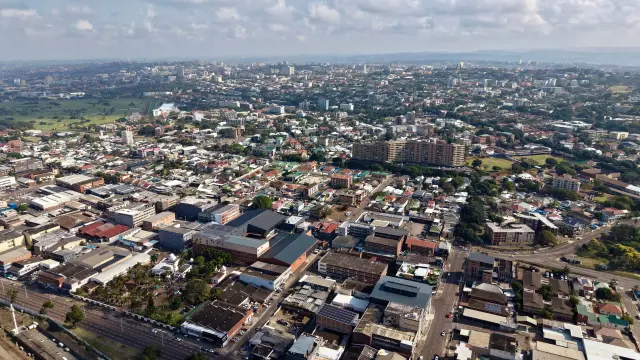
The population in South Africa is ever-growing and urbanizing at a high rate, thereby putting more pressure on already strained housing systems. With an increasing population of people relocating to urban areas in pursuit of jobs, education, and improved access to facilities, there has been a heightened need for affordable and sufficient housing.
 Simultaneously, economic
problems of high unemployment rates, sluggish income increases, and increases
in the cost of living have decreased the housing availability of many
households on the private market. The dynamics have rendered housing a burning
social and developmental concern in the country.
Simultaneously, economic
problems of high unemployment rates, sluggish income increases, and increases
in the cost of living have decreased the housing availability of many
households on the private market. The dynamics have rendered housing a burning
social and developmental concern in the country.
The issue of housing deficit is not new in South Africa. Spatial planning is a process that places the majority of the population in exclusionary land within the urban area, a legacy of the apartheid era that is still evident in the present-day settlement patterns.
Although the government
has been heavily investing in housing since 1994, the difference in housing
supply and demand is enormous. Although historically, a lot of
attention has been paid to homeownership and fully subsidized housing, a new
dimension of housing, which is a vital part in addressing the needs of a
dynamic and increasingly mobile population, is rental housing.
Social housing has been advocated as one of the most important solutions to South Africa's housing problems. Social housing aims to offer affordable, safe, and conveniently located rental housing to low- and middle-income families so that it lies between state-subsidized housing and the unsubsidized rental market.
It is backed by government policy, subsidies
and controlled institutions that are mandated to deliver and manage housing
developments.
Nevertheless, with the ever-growing population of South Africa, one should raise several questions regarding the housing (social) capacity and effectiveness. Is it possible to scale up social housing to match the rising demand? Is it institutionally and financially sustainable? And is it able to serve various needs of households at varying levels of income and geographical settings?
These questions will be discussed in this blog through a
review of the trends in population growth, the purpose of social housing, its
successes and failures, and how it can be used in the long-term housing of
South Africa.
Urbanization and Population Growth and Housing Demand in South Africa.
Although the population of South Africa has grown at a moderate rate compared to other developing nations, its influence on housing demand has been huge as a result of urbanization.
Johannesburg, Cape
Town, Tshwane, and eThekwini cities are still destinations for masses of people
living in rural areas and smaller towns. This exodus of internal migration
is propelled by the fact that economic opportunities, schools, and other
government services are concentrated in urban areas. This has led to an accelerated
urban population compared to the ability of housing supply to match up.
The change of the city environment has redefined the structure of households and housing preferences. The young population, single adults, and small families are opting to rent houses because of their flexibility and reduced initial expense.
But the rental units that are
affordable have failed to keep up with this population change. Most of the new
residential construction projects are geared towards those earning more, and
this leaves low- and middle-income earners with few choices.
Population increase also strains infrastructure and the availability of land. Urban land is limited and is costly in well-placed areas, and therefore affordable housing in large quantities is not easy to develop.
With the growth of cities towards the periphery, low-income families are usually
relocated to low-density zones with minimal employment and facilities. This
geographical incompatibility adds to transportation expenses and strengthens
inequality trends.
One of the most evident effects of housing unmet demand is the development of informal settlements. South Africans do not have access to water, sanitation, and secure tenure in their informal housing, which is home to millions of people.
These informal settlements point out the inability of the formal housing system to accommodate population increase. Informal housing may
be a short-term solution to homelessness, although it is not a place that provides a long-term solution to homelessness.
Economic conditions also affect the housing demand. The level of unemployment and lack of stability in income decreases the capability of the household to obtain housing solutions offered in the market.
Affordability has been a significant obstacle even in cases where rental
units are still available. Housing is proportionately taking a larger
percentage of the income of many households, making them susceptible to both
eviction and poverty.
Such population and urbanization patterns highlight the
magnitude of the housing problem in South Africa. Whether social housing can
effectively respond to such demands, which are growing and complex, must be the
consideration of any evaluation of the social housing.
The Purpose and Design of Social Housing in South Africa
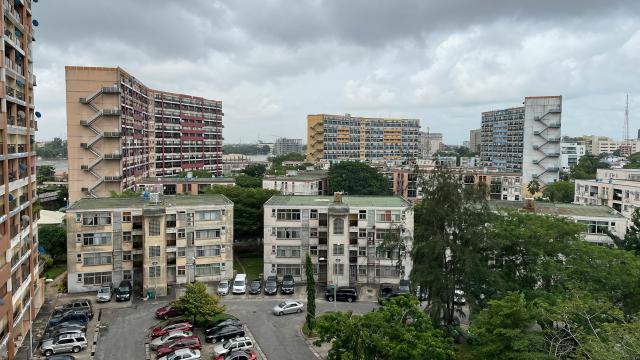
In South Africa, social housing is meant to serve the low- to middle-income households that are locked out of the matters of fully subsidized housing and the market of renting a house altogether.
It is in a
formal legislative and policy framework, with the Social Housing Act of 2008
being the most notable that created the Social Housing Regulatory Authority to
regulate and control the industry.
Affordability is the main intention of social housing. The government subsidies, cost-efficiency, and non-profit models are combined to set the rental rates below the market ones.
This renders social housing to
those households that have higher incomes than would allow them to have
free government housing but less than what would make them afford rentals
privately. Social housing is filling a significant gap in the housing system by
targeting this gap market.
Another peculiarity of social housing is location. The
developments are usually located in urban areas, near job centers,
transport, and social facilities. This strategy will reverse the spatial
exclusion of the past and enhance social and economic incorporation.
Having a good location for housing makes commuting cheaper and enhances the
quality of life for residents.
Social housing is also meant to offer secure tenure
and good living conditions. Units are professionally operated, and there is an
agreement of rental, standards of maintenance, and governance systems. This
stability is opposed to informal housing setups whereby the occupants tend to
experience a feeling of insecurity and unsuitable living standards.
Besides offering shelter, social housing also aims at
assisting social development. Most of the projects incorporate social
amenities, green fields, and social services which promote socialization and
unity within a community. The characteristics are useful in shaping sustainable
neighborhoods as opposed to lone housing blocks.
Although the design and goals of social housing are aligned
to the South African housing needs, their effectiveness depends on the
successful implementation and scale. It is important to know how these
principles are implemented in actual practice in determining whether social
housing is capable of addressing the needs of an increasing population.
Achievements of Social Housing in Addressing Housing Needs
Social housing has since its official arrival, contributed
positively to the housing situation in South Africa. There are now thousands of
rental units developed in major towns where people with low incomes would not
afford to occupy safe houses. Social housing has enhanced access to employment,
education, and other services, among other things, making the tenants more
economically stable.
The contribution of social housing to the regeneration of
urban areas is one of the most prominent accomplishments of social housing.
Intercity social housing has been developed in places like Johannesburg and
Cape Town and has seen old or not well-used buildings being turned into
livelier residential areas. These initiatives have served to rejuvenate
cities, bring about investment and enhance safety and infrastructure.
Professional property management has been proven to be
beneficial to social housing too. Properly controlled developments are usually
safer, cleaner, and more sustainable as compared to informal or uncontrolled
rentals. The management ability assists in safeguarding tenants and housing
property in the long term.
Socially, stable rental housing promotes community
development and family happiness. Housing is secure, thus minimizing stress and
uncertainty so that residents are able to concentrate on education, work, and
self-development. Children who reside in conducive housing conditions have
higher chances of achieving success in education and have improved health
conditions.
Social housing has also helped in the economic development
by creating employment. Development of housing units, repair and running of
these facilities create jobs which in many cases are of advantage to the
immediate society. The effects of social housing are not limited to the housing
sector, with these economic linkages.
This notwithstanding, the scope of social housing is still low compared to the demand. Although it has brought a positive change in housing results to many South Africans, millions of South Africans remain without housing security.
This loophole underscores the importance of
critically analyzing the limitations that restrict the capacity of social
housing to satisfy the needs of the population on a large-scale basis.
Constraints Limiting the Expansion of Social Housing
Funding is one of the greatest limitations that social housing in South Africa has. Social housing depends greatly on government subsidies to be affordable; however, government resources are scarce and have to be spread among numerous competing demands.
Increased cost of construction,
inflation, and the cost of infrastructure further curtail the number of units
that can be delivered using the available funds.
The other significant obstacle is land availability. There
is a lack of prime urban land that is available and affordable to social
housing. Housing projects can be stopped or delayed by competition by
commercial developers and complicated land ownership structures. Social housing
development will not develop effectively without municipal proactive release
and planning of land.
Another impact on scalability of the sector is the
institutional capacity. Although there are well established and functioning
social housing institutions others have challenges concerning skills,
governance and financial management. Housing delivery can be slowed down and
constrained by capacity constraints.
Development can further be slackened by administrative and
regulatory processes. Delays and high costs of projects are caused by long
approval processes, zoning, and coordination challenges among the various
government levels. Such inefficiencies minimize the effectiveness of social
housing programs.
Even in the social housing affordability is an issue. Even
with the subsidized rent, it can still be unaffordable to very low and unstable
income households. This begs the question in terms of how the poorest
households can be accommodated by social housing without any loss in financial
sustainability.
These limitations do not undermine the importance of social
housing, but they point to the limitation of social housing as a solution on
its own. These issues must be tackled in case social housing can have a bigger
role in providing more people with the needs they require.
The Role of Social Housing within a Broader Housing Strategy
The social housing in South Africa needs to be incorporated
in a more diversified and broader-based housing approach to serve the increasing
population in the country. Although social housing is used to cater to a given
income group of the population, other types of housing interventions are needed
to cater to other sections of the population.
Social housing can be supplemented with affordable private
rental housing, which will raise the total supply. Tax benefits or incentives
like inclusionary zoning can be used to attract the building of affordable
rental units, in the hands of the private developers. These are taken to
alleviate pressures in the social housing systems.
Another important element is informal settlement upgrading.
In the nearest future, millions of South Africans will be residing in the
informal houses, so the in-situ upgrading will be the only way to improve the
living conditions and security. Social housing will not be able to absorb the
entire population of people who are living in informal settlements.
Housing affordability is built on economic growth and
creation of jobs. The cheapest housing is not accessible to people without
steady incomes. The policy of housing should therefore be adjusted to the
overall economic and social development strategies.
Partnerships and innovation provide a chance to increase housing delivery. New construction technologies, alternative forms of financing, and public-private projects may decrease the costs and enhance efficiency. But it requires effective regulation in order to make sure that the social objectives and affordability are upheld.
The Future of Social Housing in a Changing Demographic and Economic Landscape
The future of social housing in South Africa will be defined by changing demographic trends, economic demands, and changing urban realities as the population of this country continues to increase and become diversified.
The growth of population is no longer sustained by natural increase but by internal migration, urbanization of young people, and shifting household
structures. These tendencies require a more dynamic and progressive housing
provision, especially concerning the social housing sector.
The increase of younger urban-based households is one of the most important demographic shifts. Most of the young individuals joining the labor market have high unemployment, informal jobs, or irregular incomes and cannot afford house ownership in the short-term and medium-term.
Rental
accommodation, particularly the affordable, well-located ones are thus emerging
as the main housing solution to this group. Social housing needs to evolve
and provide different types of units and rental schemes that represent smaller
families, individual occupants and traveling workers.
The future of social housing will also be determined by economic uncertainty. The low rate of economic growth, increased cost of living and occasional economic shocks put pressure on both the tenants and the housing institutions.
Affordability and financial sustainability will require
social housing providers to be more careful than ever before. This could
involve new rental buildings, cross-subsidization trends, and enhanced
collaboration with financial organizations to provide long-term sustainability.
The future of social housing will revolve around policy development. Policies have to be evidence-based and adaptive to changing housing requirements. This will involve revisiting income levels, subsidies, and regulatory frameworks to make them reflect the realities of the economy today.
The coordination between national, provincial and local government will be
needed so that housing development can be in line with the urban planning,
transportation, and economic strategies.
Conclusively, the future success of social housing will be
determined by how it will adapt. Although it might not be in a position to
fulfill all the housing requirements independently, a more flexible, innovative
and combined social housing sector would be paramount in practicalizing the
long term housing problems of South Africa. Social housing can still be a
useful and effective response to a sophisticated housing environment by being
proactive to demographic and economic change.
Conclusion
Social housing forms a fundamental part of South Africa
addressing housing needs of an increasing population. It offers cheap, safe, and
conveniently situated rental houses to families that are out of the main
housing sector. It is a valuable housing solution as evidenced by its
contribution to the development of cities, social stability, and economic
development.
Nevertheless, because of the magnitude of the South African
population growth rate as well as housing demand, social housing can never be
sufficient to cater to all needs. It is limited in its reach and impact due to
funding constraints, land shortages, institutional capacity, and economic
inequality. Though social housing can play a crucial role in enhancing the
housing outcomes of a number of people, it should be used in a wider and
integrated housing strategy.
Social housing, affordable private rentals, informal settlement upgrading, and economic development programs should be balanced in meeting the needs of the expanding population of South Africa.
Social housing
can still be a significant part of creating inclusive and sustainable
communities, with long-term commitment, creativity, and cooperation across
industries, yet it cannot achieve this on its own.





-3dkuLgKhRD.jpg)
-49HupTvwDD.jpg)







LEAVE A REPLY