

Smart Homes in Nigeria: A New Frontier for Affordable Housing
The housing crisis in Nigeria has been worsening due to the high rate of population growth, urbanization and economic pressures that have surpassed the ability of the conventional systems of housing delivery. Millions of Nigerians face the challenge of safe, decent, and affordable housing due to the estimated housing crisis of more than 20 million units.
 The traditional
methods of housing development have no longer been adequate mainly because of
increased cost of building, poor construction methods, poor access to finance
and poor infrastructure. This has made low- and middle-income households
unable to own houses, especially in fast-growing urban areas.
The traditional
methods of housing development have no longer been adequate mainly because of
increased cost of building, poor construction methods, poor access to finance
and poor infrastructure. This has made low- and middle-income households
unable to own houses, especially in fast-growing urban areas.
In this regard, smart homes are becoming a possible gamechanger in the Nigerian housing industry. Smart homes entail the combination of digital technologies, automation, and data-driven systems to enhance energy efficiency, security, comfort, and resource management.
Although
smart housing is commonly related to the high-end housing projects of developed
economies, recent advances propose that smart technologies might be implemented
in a strategic way to minimize housing costs in the long-term perspective and
enhance affordability.
Smart homes do not just deal with expensive devices or convenience automation. They are basic in nature, and they involve efficient consumption of resources like electricity, water, and maintenance services.
In a
nation where energy prices are high, electricity is not reliable, and the
infrastructure is overloaded, smart technologies can enable households to
better regulate consumption to reduce the costs that keep recurring in the
long run and influence affordability.
In this blog, the author focuses on smart homes as a new prospect of affordable housing in Nigeria. It discusses the notion of smart housing, how it applies to the housing issue in Nigeria, the economic and social advantages of the housing concept, the importance of technology and innovation, the barriers to its adoption, and the policy and investment infrastructure required to help it expand.
Redefining smart homes as efficiency
and inclusion devices instead of luxury items in this discussion, the redefinition
of smart homes as a solution to the housing affordability issue in Nigeria
emerges.
Understanding Smart Homes and Their Core Components
Smart homes are the houses that have been fitted with
networked digital systems that can automatically control and monitor many functions. These functions are normally lighting, energy consumption,
security, water usage, temperature control and the functionality of appliances.
Smart homes enable the people occupying them to control their homestead more
effectively, usually at a distance, through sensors, internet connection, and
data analytics.
The concept of automation is so central in smart homes. Automated lighting channels minimize use of unnecessary energy through switching lights on or off depending on whether people are present or not or depending on the time of the day.
Smart meters monitor the consumption of
electricity and water on a real-time basis, allowing residents to monitor waste
cyclic tendencies and alter behavior. Such systems can substantially save
household expenses in the long term in Nigeria where supply of electricity is
found to be unpredictable and utility costs are increasing.
Energy management is another fundamental feature of smart
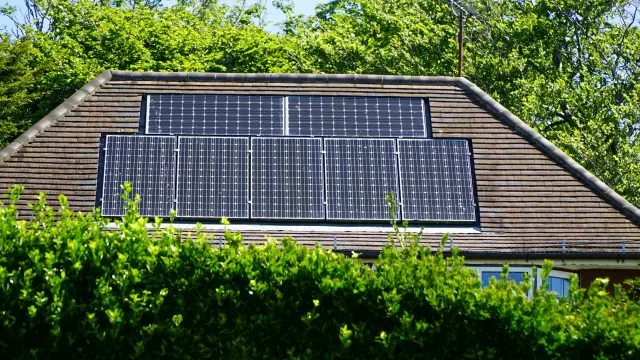
homes. Solar panels and battery storage as well as smart power distribution, is
a common features of smart houses that adopt renewable energy sources. These
systems value the utilization of renewable energy, minimize the reliance on
generators and reduce fuel expenses. Since Nigeria is a country rich in solar
energy and high usage of generators, smart energy systems are of specific
interest in terms of affordability and sustainability.
The major feature is security. The presence of smart locks,
surveillance cameras, and access control systems will enhance safety and lessen
the requirement of having physical security personnel. Higher security in
densely populated urban centers would lead to improved social stability and
saved on money spent on personal security.
Notably, smart homes can be expanded and changed. Smart
features are available as a progression, which means that developers and
homeowners can begin with simple systems and add functionality as time goes on.
This is the accessible aspect of the smart housing since it is accessible to a
broader income bracket and an attempt to combat the sense that smart homes are
costly by nature.
In Nigeria, the concept of smart homes needs to be changed
to focus on efficiency rather than luxury. At least, smart homes are not all
about spending money when designed in a way that will help maximize the limited
resources. This school of thought places smart housing as a viable solution to
the structural problems in the housing and infrastructure systems in Nigeria.
Nigeria’s Housing Affordability Challenge and the Smart Housing Opportunity
The affordability of houses in Nigeria is determined, not
only by the price of home acquisition, but also by the price of a home
maintenance. A significant recurrent cost of electricity, water, maintenance,
and security is a problem to many households. Although housing units may be not
very expensive at first, their, continued expenses may leave the low- and
middle-income families unable to cover them.
Smart homes provide a chance to deal with this aspect of
affordability. Smart housing will reduce the overall cost of homeownership or
leasing in the long-run by decreasing utility use and maintaining expenses. On
a case in point, energy-saving lights and appliances will decrease the electric
bill, and smart water will reduce waste and cut down the water costs. These
savings can be immense over the period of existence of a home.
The unpredictable power supply in Nigeria is also another
point that supports smart housing. Generators used in many households are both
expensive and harmful to the environment. The use of smart energy systems
to reduce the use of generators can be achieved through the integration of solar
energy, energy storage, and smart load control, which will decrease the
expenditure on fuel and enhance the quality of life. In the case of reduced
dependence on generators by lower-income households, this is the direct
translation to better affordability.
Another opportunity is the density of the urban area. Smart
housing solutions are especially useful in multi-unit projects where there is
shared infrastructure and centralized management systems decrease unit-per-unit
costs. Entire housing estates can be served by smart access control, waste
management, and energy systems, which are efficient at scale.
Moreover, intelligent houses assist in the improvement of
urbanism planning. Information gathered through smart systems can be used in
planning infrastructure, utility management, and service delivery. This can be
achieved through such a data-driven approach, which can enhance efficiency at
the city level with indirect benefits being a reduction in housing-related
expenses by residents.
The initial investments of smart technologies can be more
expensive compared to the traditional systems, but the long-term investments
will help to compensate the initial expenditures with the long-term savings and
enhanced efficiency. Smart housing, when properly based on financing models and
policy incentives, can make a viable affordability approach instead of a cost
liability.
Economic and Social Smart Homes Advantages on Affordable Housing
The introduction of smart homes in Nigeria has a lot of
economic advantages at the household and national levels. To families, lower
utility bills and maintenance reduce economic distress and gives them time to
spend on other more essential uses like education, healthcare and
entrepreneurship. This helps in the general economic stability especially among
the low- and middle-income families.
Smart housing is sensitive to energy efficiency and
sustainability at the national level. Reduction will strain the national grid
and also reduce fuel usage by generators. This has a favorable effect on energy
security, environment and health of people. Smart housing is in line with
long-term development objectives as Nigeria aims at diversification of the
economy and fulfilling its climate obligations.
Another economic advantage is job creation. The intelligent
housing system will demand professional workforce in the fields of electrical
engineering, software development, system installation and system maintenance.
This not only generates new jobs but also skills especially by the young
Nigerians.
Smart homes can improve the sense of safety, comfort, and
well-being socially. Enhanced security mechanisms minimize the risk of crime
whereas enhanced environmental controls enhance thermal comfort and indoor air
quality. These aspects have contributed to better life and healthy living
conditions.
Inclusion can also be encouraged through smart housing where
it is incorporated in affordable housing programs. Remote monitoring and
automation can be used to help the elderly and individuals with disabilities to
lead an independent lifestyle, minimizing the care expenses. By so doing, smart
homes are associated with social equity and inclusion.
Notably, social advantages of smart homes do not refer to
isolated families. On large-scale implementation, smart housing can enhance the
management of communities, decrease utility fights, and create more orderly
homes. These benefits favor social accommodation and city stability.
Difficulties and hindrances to the introduction of smart housing in Nigeria
Even with the potential it has, smart housing in Nigeria is
struggling with a number of challenges. Perception is one of the most
important. Smart homes are usually considered as luxury items that can only be
afforded by income earners. This attitude discourages authorities and
architects to think about introducing smart technologies into affordable
housing.
Another obstacle is cost. Even though smart systems have the
ability to save on long-term spending, the initial cost of installation can be
too prohibitive without the aid of financing or economies of scale. The lack of
local manufacture of smart devices makes the projects more dependent on
imports, which are vulnerable to currency changes.
Also a challenge is infrastructural limitations. Many smart
systems require reliable internet connectivity but the availability is uneven
in Nigeria. Also, the problem of power supply may disrupt the performance of
the system, which can be addressed using smart energy solutions.
Lack of regulatory and institutional provisions also impede
adoption. The construction regulations and housing policies do not explicitly
cover the smart technologies, which leaves developers and regulators confused.
Lack of standards may introduce inconsistency in implementation and quality
issues.
The installation and servicing of the smart systems needs
technical skills which are still at a nascent stage in Nigeria. System
reliability and sustainability can be affected negatively without training and
capacity building.
These obstacles can be removed only through a concerted
effort on the part of government, industry and financial institutions. Absent
this kind of coordination, smart housing could be a small-scale solution and
not a feature of an affordability strategy.
Policy, Investment, and Future of Smart Homes in Nigeria.
Policy and investment decisions are of great importance to
the future of smart homes as a means of affordable housing in Nigeria.
Government can play a pivotal role in the provision of enabling environment by
providing clear regulations, incentives as well as incorporation of smart
technologies in housing programs.
Smart building elements can be tax-relieved, renewable
energy systems can be subsidized, and support local manufacturing policy to
make them cheaper and more widely adopted. Inclusion of smart housing standards
in national housing policies would send a message of commitment and steer
its implementation.
Local innovation is also important to invest in.
Subsidizing Nigerian startups and technology companies, which come up with
smart housing options that meet the conditions of the country, can decrease the
subject to imports and decrease expenses. The deployment can also be
hurried through public-private alliances, which involve offering governmental
assistance together with the private sector know-how.
The mechanisms of financing should be changed to appreciate
the long-term worth of smart houses. The housing finance schemes and mortgage
products are supposed to consider lower operation costs in determining the
affordability. This would ensure that smart homes are more affordable to lower
income households.
It should also be educated and created through awareness
campaigns. Showing successful smart affordable housing projects will alter
perceptions and establish a sense of trust among the consumers, developers and
the policymakers.
Smart Homes as a Tool for Long-Term Housing Sustainability in Nigeria
In addition to affordability, smart homes provide a valuable avenue to Nigeria in the long-term sustainability of housing. Sustainability in a housing does not only cover the environmental aspect but also covers the economic sustainability, social sustainability and effective utilization of the infrastructure.
In a nation where fast urbanization causes very huge demands in
terms of public services and natural resources, smart housing is able to offer
solutions to ensure that growth is handled in a more responsible manner and at
the same time remain affordable in the long term.
Efficient use of resources is one of the most important sustainability benefits of smart houses. The smart-energy systems minimize high electricity usage by streamlining the patterns of use, incorporating renewable energy, and minimizing waste.
This will not only reduce the utility costs of
households, but also help ease the overstretched power infrastructure in
Nigeria. With the increase in the number of urban populations, such efficiency
is necessary to ensure reliability of the services without the unsustainable
increase in infrastructure.
Another important aspect of sustainability is water management. The use of smart water meters and leak detect systems can help households to monitor their water consumption and avoid losses.
Such
technologies are also a way of ensuring water security in the long term in most
Nigerian cities where there is a prevalence of water scarcity and
infrastructure leakage. Less water waste will also save household costs and
will contribute to more fair allocation of resources.
Smart homes lower the lifecycle costs in terms of economic sustainability. Although the extra initial construction or installation costs might be slightly higher, maintenance costs might be lower, utility cost might be reduced, and longer durability would show long-term savings.
In the case of
the affordable housing developments, this entails keeping the homes cost
effective to the occupants so that they do not get into a scenario where they
can afford to purchase houses but they find it difficult to maintain them.
Smart housing also facilitates social sustainability.
Healthier communities will be made through better lighting, security systems,
and environmental controls. The use of data-driven estate management systems
creates more opportunities to plan waste disposal and maintenance activities,
as well as shared facilities and creates properly organized and resilient
residential environments.
The city level can use aggregated data in smart housing
developments to aid in the governance of the city. Information on energy
demand, water consumption, and occupancy can be used to inform infrastructure
planning and policy decisions. This evidence-based practice will enable cities
to expand smarter and minimize inefficiencies that tend to drive up prices of
housing.
Conclusion
Smart homes are a new and promising direction of the affordable housing in Nigeria. With its emphasis on efficiency, management of resources and the ability to cut costs in the long term, smart housing breaks the myth that homes with technology are necessarily costly.
By incorporating
smart homes in a considered way, these buildings can reduce the cost of living,
enhance the quality of life, and contribute to sustainable urban planning.
Although the issues of cost, infrastructure, perception, and
regulation are present, they are not impossible to overcome. Smart homes can
evolve beyond the niche projects to mainstream elements of the housing policy
of Nigeria with favorable policies, focus on investment, and partnering with
stakeholders.
To resolve the issue of the housing crisis in Nigeria, one
will need creativity and the desire to find alternative ways of doing things.
When applied in line with the affordability agenda, smart homes provide a
chance of creating more, but more sustainable houses to millions of Nigerians.
Also read: The Role of Technology in Solving Ghana’s Housing Crisis: Smart Homes and Innovative Solutions





-3dkuLgKhRD.jpg)
-49HupTvwDD.jpg)








LEAVE A REPLY