

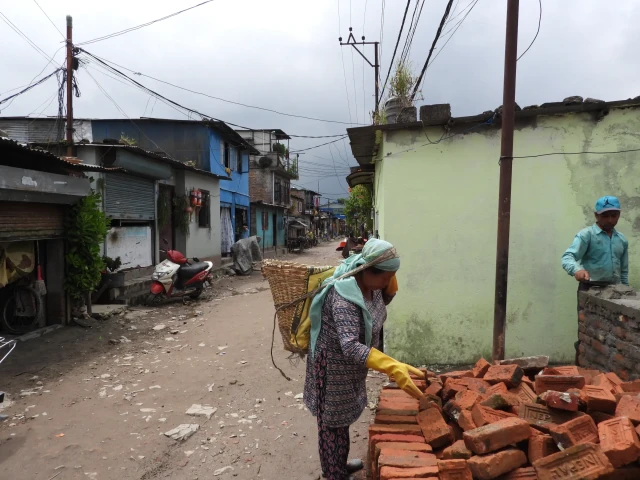
Slums of Nepal
In recent years, many Nepalese have moved from rural to urban areas mainly because they look for employment, better education, and main services. As a result, large cities in Nepal like Kathmandu, Pokhara, and Biratnagar have seen a lot of fast urbanization. At times, Nepal’s urban growth happens without the proper infrastructure and planning, causing the growth of informal settlements or slums. As a result of their efforts to secure better living, thousands of families are now living in crowded, dirty, and unprotected conditions.
Unequal social and economic conditions cause the increase of slums in Nepal. Urban areas attract many migrants who belong to minority, low-caste, and landless groups that were shut out of opportunities in their home communities. After reaching cities, they meet a different set of obstacles. High rent prices, not enough jobs for immigrants, and not being recognized by the law. As a result, people end up building homes on riverbanks, floodplains, on public land, or even in industrial areas despite not being allowed.
The homes found in slums are usually built from materials that can be easily acquired such as tin sheets, wood, plastic, and mud. Often, clean water, electricity, toilets, or waste collection are not available. Because of this, residents are at high risk of getting sick during the monsoon season, when there are many floods and the water is not safe. The use of open flames and poorly secured wiring often leads to fires breaking out.

Urban Migration and the Rise of Slums in Nepal
Local authorities in Nepal have had a hard time dealing with this increasing problem. Cities in Nepal suffer from inefficient governance due to a lack of resources. City officials often do not have the right knowledge, enough money, or support from citizens to fix slum issues. Though the constitution guarantees access to housing, it is not being properly carried out. Commonly, legislation gives priority to eviction over making the living conditions better for those in slums.
Slum life in Nepal does not stay limited to the places where people live. As more people join these communities, city-wide buildings and services, such as water and public transport, feel the effects. Also, because slums do not have formal addresses, people living there struggle to use government offices, vote in elections, and enroll their children into school. It leads to more poverty and social exclusion, which makes it hard to find a way out.
Understanding why slums form in Nepal is important for finding lasting solutions. This should include mentioning that migrants are forced out by landless issues, poor rural living conditions, and strife, and when they come to urban areas, their policies do not include them. Unless we solve these issues, Nepal will not be able to create cities that are open to all and able to meet the needs of every resident.
Day-to-Day Living in Nepal’s Slums
People in Nepal’s slums face hardships, but they also rely on their smartness and determination. In the face of many difficulties, communities in slums still thrive and work closely together to provide for themselves. The local economy in these neighborhoods depends largely on street selling, collecting recyclables, construction, and housekeeping. While most people working in these jobs face low wages, great uncertainties, and few legal safeguards, they rely on them for survival.
In slum areas, women tend to manage and operate most parts of the family business. They choose to run their businesses at home, sell some foods for money, or help clean and maintain the homes of those who have more wealth. Even if these tasks go unpaid or are underpaid, they help support the stability of the community’s economy. In some families, it is frequent for children to start working because their family’s income is limited or because schools are not available to them. It is easy to spot young boys working at tea stalls and girls doing housework instead of being in school.
Health is an important issue faced by many living in slums. When a city is overpopulated and dirty, it sets the stage for the easy spread of communicable diseases. Common diseases found here include infections of the lungs, conditions of the skin, diseases caught from water, and tuberculosis. Most slum residents find it difficult to get healthcare because there are little to no government medical centers located inside slum areas. People living there visit neighborhood chemists, unprofessional healthcare workers, or must go a long way to reach proper care, and it takes a longer time for them to access treatment.
Education presents another significant challenge. Even though there has been progress in getting children into school nationwide, those in slums are still falling behind. When attendance is unpredictable and records are inadequate, along with instances of discrimination, it leads to students dropping out of school. Expectations from society, early marriage, and lacking clean facilities at schools leave girls more at risk. Many slum families see education as the main way their children can get out of poverty and often sacrifice a lot so their children stay in school.
One of the most noticeable traits in slum life is how closely people unite. Commonly, people in these areas team up in groups to handle issues such as getting water and ensuring security. Many of these local groups intervene in disagreements, plan local growth, and push for services from the city. In addition, religious organizations, NGOs, and local leaders are important in helping to keep things calm and offer support even when the government does not.
However, their ability to keep going does not make their future very secure. Many people living in slums do not own the land legally, so they can be kicked out at any moment without getting any money. When there are plans for urban development or construction of public projects, these groups are often the first to be affected. With negligible support or rehabilitation, families who have lost their homes slide further towards poverty.
People living in Nepal’s slums have to deal with difficulties and oppressive conditions every day. Even though these communities are brave, they should not be expected to deal with all their problems by themselves. It is important for the government, civil organizations, and private companies to come together to avoid leaving these people behind.
The Situation of Gender, Children, and Human Rights in Slum Communities
There are many gender and human rights issues in slum areas of Nepal that primarily impose hardships on women and children. Such groups usually end up suffering the greatest consequences of poverty, being excluded, and lousy government decisions. What they go through highlights the injustices in Nepali society that cannot be ignored for true inclusion.
Caring for children, managing houses, and helping earn an income are important roles shouldered by women in slums. Still, they work under minimal aid and in surroundings where a lot of dangers are present. Living in close quarters and dealing with poverty frequently lead to more cases of gender-based violence. Most people refrain from reporting abuse because they are afraid of getting backlash, being labeled, or not believing the police will help. It becomes more difficult to use the law when someone does not have official documents showing their residence.
This lack of reproductive health services in the slums directly affects women, who are now exposed to greater risks during pregnancy and childbirth. Due to lack of nutrition, care before and during pregnancy, and poor hygiene, both mothers and infants are more likely to die. Many times, women do not have a voice in household and community decision-making. If their voices are not included, efforts for development do not focus on their specific problems and needs.
Children living in slums are more at risk than others. In their upbringing, many find themselves dealing with pollution, everyday traffic, dangers, and unhygienic food. Since there aren’t any recreational areas or programs just for them, they often lose out on the main aspects of early childhood development. While students are eager to go to school, families often keep children at home because of financial troubles or because the child needs to help out at home. For girls, they also face bigger difficulties, as being married early or taking on household work is commonly expected of them.
Registrations for slum-born children are very low, making the process much harder. As they do not have a legal identity, they have problems accessing education, health care, and other services offered by the government. Being invisible in administration means they are left out of key programs and paralyzes their ability to break free from poverty. Services may be available, but many children in slums are often stopped from receiving help because of discrimination and stigma.
In spite of all these issues, residents of slum communities have shown great initiative and support for their needs. Local organizations made up of women, youth, and others have helped to improve cleanliness, manage childcare, and ensure safety in their area. When given a chance and resources, people living in communities can create change.
Solving the human rights problems in Nepal’s slums calls for a new way of thinking about and dealing with these areas. They deserve a better life, not only as a solution to a problem, but as someone with rights and abilities. Every urban and development policy should focus on gender equity, child protection, and allowing full legal recognition of everybody. It is only by working for our most underserved people that Nepal will be on the road to true progress for everyone.
Government Policies, City and Regional Planning, and National and International NGOs
Slums in Nepal clearly indicate that there are problems with the country’s and local governments. While cities are growing at a faster rate, the policy-making and planning processes have not kept up. The ways governments have handled slum growth in the past were varied: ignoring the problem one year and forcefully evicting the inhabitants the next, leaving urban inclusion out of the story almost completely. As slum communities are not recognized by the authorities, they are not usually included in city or service planning.
It's clear that the lack of a set national policy for improving slums is an important issue. While the housing and basic needs of Nepali citizens are guaranteed in the constitution, this is not always done where it matters most, on the local level. Information about the size of slum populations is often outdated in many localities, so it’s hard to design effective plans for services or infrastructure. Sometimes, authorities consider slums to stand in the way of progress and prefer focus on appearance or real estate rather than the interests of the needy. It is not unusual for people to be forced out of their homes quickly and without proper preparation or repairs.
Yet, there are new developments happening in the way cities are governed. Some city governments have recently started working closer with peoples living in slums. Here, participatory mapping, set budget for affordable housing, and plan small upgrading projects are positive efforts. Policies including the National Urban Development Strategy (NUDS) have highlighted that communities should be included in city planning. The work itself is not extensive and does not happen in the same way everywhere.
Filling this gap has been made possible largely due to the work of Non-Governmental Organizations (NGOs) and Community-Based Organizations (CBOs). They have also made sure education, healthcare, training, and access to justice are available in the slums. Lumanti and Habitat for Humanity have joined forces with governments and communities to develop cheap housing, deliver clean water, and protect land rights. It is common for people living in slums to join savings groups or cooperatives to improve their housing and ask for better services.
Being Resilient, Adaptable, and Finding a Path Ahead
In spite of all the obstacles, people living in slums in Nepal have remained tough and adaptable. Dealing with terrible conditions, they have learned how to survive and, in some instances, even manage to do well. Helping people envision and live in a city that is both sustainable and inclusive starts with supporting their strength.
Slum areas rely strongly on the strength of the community. Locals work together, help each other, and structure themselves to overcome similar issues. At times of emergency, including the 2015 earthquake and the COVID-19 pandemic, these people acted fast, distributing food, telling others what was happening, and looking out for sick people. The collective response of ordinary people, often quicker than the response from authorities, shows how powerful social networks and unofficial leadership are.
Those living in slums have to adjust their lives often due to economic strains. When work in one industry disappears, many switch to starting mini-businesses, pick up new skills, or work seasonally in other places. The ability to change is essential for their survival and shows just how much potential these communities have. Many of those living in slums could greatly improve their lives if they had credit, training, and formal jobs.
Young people in slums are usually considered troublemakers, but they have great potential as well. If given the right help, they can contribute greatly to new ideas, lead others, and help society. Mentoring, technology training, and programs that teach civic education are yielding positive effects. Such activities help children see more for themselves outside of the slum and equip them to be equal members of the community.
It allows people with disabilities to access more opportunities. By having phones, digital IDs, and using online tools, slum residents can easily access services, register complaints, and be part of local management. Using GPS or drone cameras for mapping areas in slums can make planning and advocacy more accurate. But, we should always make sure these tools are ethical and inclusive, so that they do not only observe people or make them feel bad.
The rising issue of climate change is causing bigger problems for people living in slums. Many slums in Nepal are found in areas that are easily harmed by weather, including near a river, on mountain sides, or near rivers. As things like floods and heat waves increase, these groups will face the worst of it. Therefore, the most vulnerable people should be given top priority in urban adaptation. Improvements for slums must include focus on green infrastructure, climate-proof homes, and helping locals know how to respond to natural disasters.
We need to take a two-pronged approach going forward. Helping slum residents in the short term, as well as making changes in the long run. This means giving settlements legal status, providing services, and ensuring the development of affordable housing. It also requires dealing with important topics, including changes in land, more equal education, and decentralizing how the government works.
Conclusion
Community living in the slums of Nepal is difficult, but it also brings with it great benefits. While they are the outcome of years of unequal treatment and losses in both rural and urban areas, shanty towns are also home to daily life, art, and a strong sense of survival. Those living in those settlements do not accept their situation without trying to do something about it.
They spend their days as workers, mothers, or students, while also trying to improve their lives and the lives of others. The cities of Nepal are facing a major decision. They can keep marginalizing many members of their population or make them equal partners in nation building. The skills and strengths that already exist in slum communities should form the first step in planning inclusive and sustainable cities. When given the right passion and commitment, slums can become centers for innovation and increased opportunities.
Also Read: The State of Asian Cities 2010/11 – a report of UN-Habitat













LEAVE A REPLY