

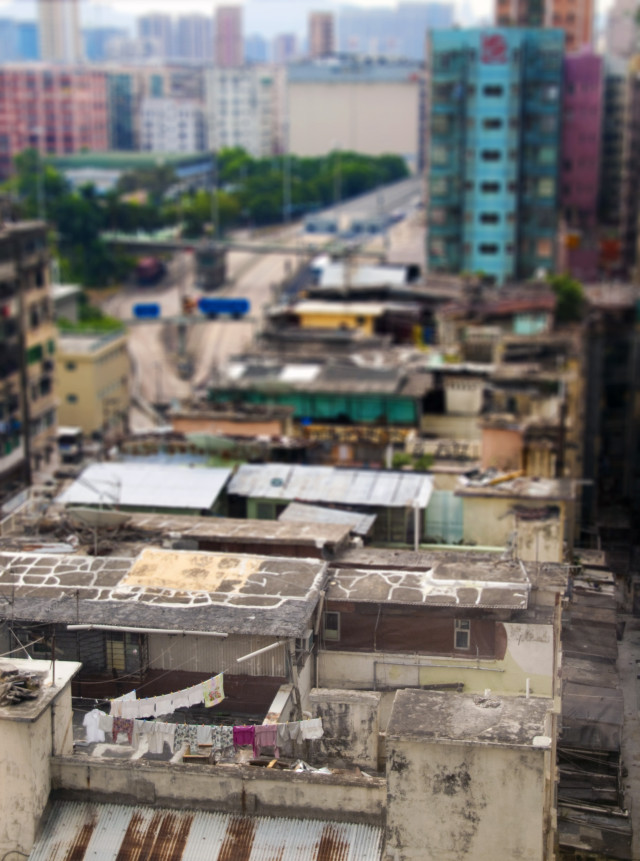
Slums of Hong Kong
Urban poverty and slum-like conditions affect thousands of people in Hong Kong despite its reputation for affluence and luxury. Yet, underneath the city’s gleaming exterior is a conflict that can't be ignored. The wealthiest properties in the world are situated mere steps away from the smallest, most crowded and sometimes unhygienic living spaces. The cramped and impoverished living conditions symbolise a far more urgent issue facing the city: a stark imbalance of wealth, looming capacity concerns, inadequate housing options and fundamental structural problems. Yet, many residents find themselves excluded from the economic prosperity being trumpeted by the government.
They don’t resemble the ramshackle slums you often see in developing nations. They occupy the upper floors or are walled off inside buildings that have fallen into disrepair. They might not share the characteristics of a traditional slum arrangement but the experience of living inside these homes is similar to what people living in slum areas face. The blog dives into the various factors contributing to the existence of poverty within Hong Kong’s economy despite its affluence.

Cage Homes and Coffin Cubicles: This is where many of Hong Kong’s poorest residents live.
Most minds associate slums with temporary shanties, rough terrain and poorly constructed dwellings. In Hong Kong, these tiny living spaces are sequestered within buildings that appear normal to outsiders. The most well-known instances are referred to as “cage homes” and “coffin homes.” Cage home dwellers sleep in bars of wire with cramped living quarters. Each tenant gets a preexisting box, facing whose occupants are separated only by thin walls.
The “coffin homes” are just as appalling as the cage ones. Dark, confined wooden cubicles only a few paces in size. Most such dwellings lack natural light, suffer from moisture and are overrun by insects. They remain due to the ongoing struggle with housing affordability, which began after World War II.
Most of the tenants are elderly people, those without jobs or individuals earning very little. For example, there are janitors, dishwashers and cleaners among those who reside in these Spartan living quarters. One dollar per day is paid by the residents for a habitat so small that only a tiny animal could comfortably inhabit it. Landlords are unscrupulously slicing up apartments and collecting rent per unit of area. A handful of people may use a space designed for two people as if they were living in kennels.
The psychological toll is immense. Many residents experience serious mental health problems, feel lonely and can't improve their situations. Having no privacy or enough room, many individuals prefer to go outdoors to parks or fast-food establishments whenever they get a chance. People’s health is severely compromised due to poor living conditions. This has resulted in significant increases in disorders such as depression, asthma and suicides. This is prevalent and many Hongkongers are facing this problem. Many Hongkongers are experiencing these living conditions. The reality of these people doesn't match Hong Kong’s portrayal as a thriving, advanced and prosperous city.
The Housing Crisis: How Did We Get Here?
Problems with housing in Hong Kong began many years ago. Greater Hong Kong’s population grew markedly following the Second World War, largely due to an influx of people from neighbouring regions. The emergence of slums on the city’s hillsides in the 1950s and 60s led the government to develop programmes to relocate families and construct new developments for them. Still, new residential towers failed to keep up with the influx of people moving to the city. Around 70% of Hong Kong’s population now resides in public housing, pointing to how expensive buying or renting a property elsewhere is.
A major problem is that there is a severe lack of available land. A large share of Hong Kong’s land is earmarked for nature reserves and luxury projects. Only a small amount of land is up for grabs, putting it into fierce competition among property developers. The average cost of buying a home in Hong Kong by the year 2024 was among the highest anywhere on earth. Buying a home is way beyond the reach of most middle- or low-income families. Many people renting the smallest apartments find they're spending their entire income on housing.
Policies implemented over the years haven't focused on helping ordinary resident’s access affordable housing. Policies aimed at encouraging developers have resulted in most buildings being high-end flats and expensive commercial properties. Many people on the waiting list for public housing end up living in subdivided flats, which are often illegal or only semi-legal. Conditions in such subdivided flats are unsafe, unhygienic and offer shared toilets and cooking areas.
City officials have frequently classified shortage of land as the biggest obstacle. Environmental and logistical challenges have prevented plans for constructing man-made islands or developing the New Territories from being realised. Many maintain that providing affordable housing is feasible but unmotivated due to the government’s lack of political will. The reality is that the government places profits over the needs of its citizens when it partners with influential property owners. As long as housing operates on a market basis, the plight of the poor will go unheard.
The Human Cost: Stories from the Margins
Each person living in a coffin home or cage apartment has a unique storey to tell. Real people are struggling under Hong Kong’s housing crisis. Every person in these situations has a unique storey and ambitions. Mrs. Leung, a widow in her late 70s, has spent the last ten years sleeping in a 25-square-foot “coffin home.”
After retiring, her pension was too modest to afford even the most modest high-rise apartment. She’s little more than a narrow bed and a few belongings in her space. The electric fan she uses for cooling is her only comfort during hot months. Her dream, in her words, is a basic one. “To finally have a room of my own with an open window.”
Another person who faces cramped living conditions is Mr. Chan, a 34-year-old restaurant worker who shares his home with five others. Every day, he works for 12 hours washing dishes and returns to a plywood partition barely bigger than a prisoner’s cell. He feels greatest distress not from the difficult conditions he lives in but from the sense of humiliation he experiences daily. He tells me that he can’t admit that he lives in the cramped subdivided apartment he actually occupies. “I never let anyone visit. I’m too embarrassed.”
People living in these conditions are found everywhere in the city. Parents are forced to bring up their kids in cramped spaces that lack fresh air and healthy living conditions. The elderly are forced to ascend six flights of rickety stairs since the elevators in their neighbourhood often break down. Young people abandon hopes for marriage and starting a family as long as they each work shifts for long hours and sleep on top of each other. The living conditions in the slums are fueling despair and leaving everlasting marks on the society.
Government Response: Progress or Posturing?
There has been widespread criticism over what many perceive as the Hong Kong government’s tardy and inadequate efforts to solve the housing crisis. The policies the government has proposed so far have seemed like too little, too late to address critics’ concerns. Although the amount of public housing has grown, getting a chance at an affordable flat remains a long-term aspiration for many in Hong Kong. Apart from these emergency programmes, permanent solutions remain out of reach.
A number of Chief Executives put forward bold proposals in an attempt to tackle the issue. Proposals for massive reclamation projects, constructing settlements in the North and transforming disused factories. Most of these ideas never come to fruition quickly and they often generate much debate and resistance. The environmental impact of land reclamation has raised concerns among many. Some oppose urban development due to its impact on the countryside while others argue that real-estate agreements are kept too secretive. The situation is complicated and inadequate.
A more recent endeavour has been the “Light Public Housing” programme that seeks to offer prefabricated dwellings for people whose situations call for quick solutions. These shelters help some, yet most people would struggle to work in their distant locations. Authorities have tried to tackle the problem of subdivided flats but their actions have mostly led to displacement rather than finding solutions for those living in these units.
Politics plays a crucial role, which deserves consideration. The dominance of the real estate sector in the economy and politics makes transforming the current situation extremely challenging. Large real estate companies resist any regulations that may impact their revenues. Many point to these three factors acting in tandem as the main causes of the crisis. Progress can't occur unless this cycle is broken.
The effect of the pandemic upon the poor was highlighted when the media around the world showed images of individuals confined to tiny spaces as a result of lockdown measures. Still, this never resulted in any meaningful change. There are often signs that the government swings between ignoring the problem and trying to minimise the fallout. Genuine progress on the housing issue will only occur when it's recognised as a fundamental human need rather than a valuable asset.
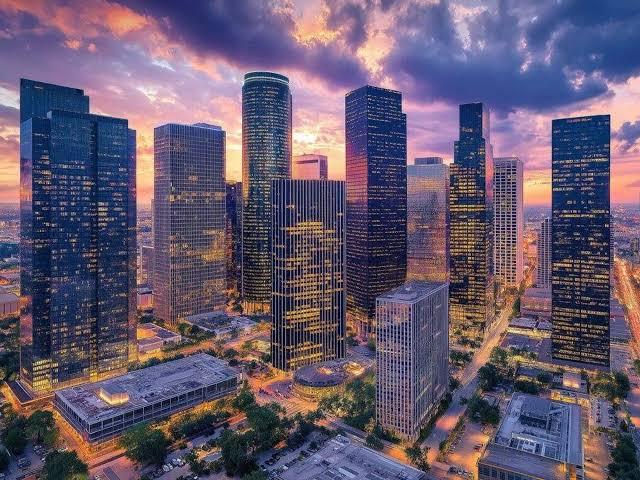
The fact that Hong Kong’s slums are surrounded by opulent neighbourhoods makes this situation especially unjust. Ridiculously expensive penthouses sit right next to the shantytowns of Sham Shui Po and Mong Kok. The gap between rich and poor towers above the skyline. Luxury buildings stand proud against a backdrop of slum housing. This rising inequality affects the very heart and mind of the people. It weighs heavily on the minds of those living in poverty. This drives home the reality that their efforts aren't enough for them to improve their situation. The psychological toll of the housing crisis is the real price people in Hong Kong are paying.
A City of Contrasts: The slums tell us much about the true face of Hong Kong.
Slum conditions in Hong Kong echo much more than a simple lack of adequate housing. This sheds light on a community in which wealth increases but prosperity doesn't, where architectural sophistication favours the wealthy over ordinary residents and urban development privileges corporations over people. Hong Kong presents a sharp divide between the opulent and the poor. High-rise buildings praised by architects and low-income estates where people lack basic privacy.
These contrasts expose a tangle of systemic tensions facing the city. Hong Kong advertises itself as a hub of innovation, wealth and international significance. As a result, not everyone is able to live with the dignity they deserve. Slums expose the flaws of meritocratic ideology and highlight issues of fairness, respect and leadership. Prosperity in a city is hollow if that city fails to offer adequate living spaces to its residents.
Many other cities around the world also face slums but Hong Kong stands out because of its affluence. Hong Kong’s slums are caused not by war or crumbling infrastructure but by government policies and the workings of the free market. Hong Kong has deliberately opted to allow many citizens to live in slum conditions. This only highlights how inexcusable the existence of these slums is.
Residents of the slums prove time and again that they're determined to improve their situation. In these difficult circumstances, people band together and refuse to give up on improving their situation. NGOs, social workers and volunteers are essential because they provide essential services that the government has failed to deliver. Charity alone can't address the root causes of the problem. To claim the title of a world-class city, Hong Kong must take real steps to address its growing slum problem.
Kids in the Shadows: Childhood in the Slums of Hong Kong
Whereas the economic and material struggles of adults in Hong Kong's slums have been well documented, their effect on kids is arguably even more poignant — and considerably longer-lasting. Countless children are growing up in subdivided units, cage homes, and filthy living conditions, their childhoods characterized by deprivation, disenfranchisement, and unrealized potential. For these young residents, life is far removed from the rosy picture of Hong Kong as a city of prosperity and promise.
In most subdivided homes, four or five individuals share a space the size of a typical parking lot. Many children have to share beds with siblings or parents, with little space for personal items or privacy. Space for playing is hard to find, never mind for a desk for studying or a bookshelf. In conditions of this tightness, children are often made to study on their beds next to sleeping siblings or while tuning out the sounds of thin plywood walls. Concentration in school, psychological health, and sleep quality all degrade. Research by social services and NGOs establishes that children raised in those spaces have high rates of stress and poor school performance.
The environment also has its toll. Ineffective ventilation, poor natural light, and mold infestation are prevalent in these apartments, causing heightened respiratory conditions, allergies, and diseases. The children have limited opportunities for outdoor spaces, mostly during periods of bad weather or when exit points of the buildings are unsafe or inaccessible. During COVID-19, most of these children were confined in their homes for months, learning virtually without stable connections or suitable equipment, while their affluent peers excelled in conducive home environments. The learning gap increased — and so did the psychological toll.
Emotionally, Hong Kong's slum children mature quickly. They learn of their parents' financial hardships at a young age. They get part-time jobs as teenagers to help their parents. Others develop an inner sense of shame for their homes. This stigma can socially isolate and restrict their ambitions. While there are school psychological counseling programs, many children never speak up, being afraid of being judged or just thinking that their lives are typical — since everyone else around them also lives in the same conditions.
In spite of all of this, most of these children exhibit resilience. Local charities and community centers offer guidance by providing tutoring in the evenings, mentoring programs, and recreational activities. These community centers act as lifelines, providing relief and hope. Many students are able to overcome the odds, winning scholarships or university places. But for each success, there are far more who are caught up in cycles of poverty, deprived of social capital, stability, and resources necessary for escape. The large number of children in these slums presents starkly the immediacy of the housing shortage.
This is not a matter of real estate or of politics; this is a matter of how we will build the next generation of citizens. A child living in a 50-square-foot apartment is not merely being deprived of space — they are being deprived of dignity, of health, and of opportunity. If a city is measured by how it treats its least powerful, Hong Kong needs to confront the reality that it is letting its children down.
Conclusion
Hong Kong’s slums go beyond being overcrowded and deprived areas. The slums are the results of broad-scale inequalities, inadequate urban planning and warped priorities. They reveal that in a place known for its wealth, everyone doesn't benefit from that abundance. Cage homes and the practise of turning human beings into packing peanuts are the direct result of choices made by those in authority for many years.
Transforming this state of affairs will demand politicians with conviction, new policies and a fundamental redefinition of what housing means. A society that puts its citizens’ needs before corporate interests and considers slums unacceptable in a city will be necessary to resolve this issue. Consequently, as long as inhabitants of Hong Kong’s slums go without fundamental necessities and a fair chance at advancement, the city will bear the blame for allowing such conditions to persist.
Also Read: Top Successful Slum Upgrading Projects



-3dkuLgKhRD.jpg)
-49HupTvwDD.jpg)



LEAVE A REPLY