

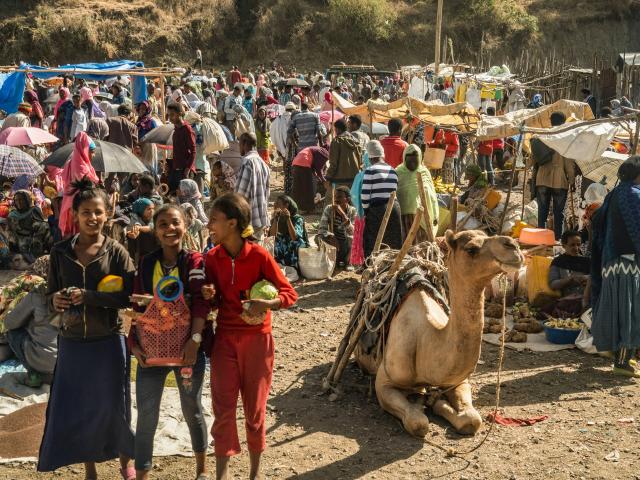
Slums of Ethiopia
People often mention Ethiopia’s long history, colourful culture and unique geography as things worth celebrating. But beyond the impressive scenery and historic sights, many towns in Europe face the issue of urban slums. Growing numbers of people, living in poor conditions, are now found in huge informal settlements across the country, including Addis Ababa. Slum areas are extremely crowded and suffer from not having enough money, suitable infrastructure and easy access to the main services of life. In spite of these problems, they are home to much strength, activity and cultural energy.
The rate at which slums in Ethiopia are developing is due to quick urbanisation, a flow of people from country to city, rising unemployment and a scarce supply of cheap housing. Many people move to cities, hoping for a better life, only to fall into continuous poverty within informal settlements. It provides insight into the daily struggles of those living in Ethiopian slums, the problems facing them, the steps taken by the government and NGOs to improve things and the resolve of the people in those communities.
Life inside the Slums: A Daily Struggle for Survival
People living in the slums in Ethiopia have to struggle every day just to survive. A great number of these families live in improvised houses put together from corrugated iron, mud or other waste materials. They are packed with people and also lack strong construction, leaving little cover from weather conditions. Floods and leakage of water are usual during the rainy season which makes entire neighbourhoods look like swamps. At these times of year, heat and dust make everything dry. Waste collects in heaps close to homes and much of it ends up in nearby rivers.
We are worried about the shortage of water resources. Most people living in slums get their water from public taps or from vendors who frequently charge more than those on decent incomes could afford. It is common for a family to need to spend a lot of their money daily just to get clean drinking water. Sanitation facilities are equally lacking. Many families use just a few pit latrines, as there are not enough for each one. These places are not hygienic and it is unacceptable that women and children lack privacy and safety inside them.
Healthcare access is minimal. Despite government health centres being available, problems such as remoteness, full rooms, lack of healthcare goods and high costs can stop people from getting the treatment they need. A lot of patients choose to follow ancient medical practises or just accept their ailments. Many children suffer from malnutrition because it is so common. Lacking access to healthy food, clean water and healthcare makes it hard for individuals to break out of poverty.
Education is officially free in Ethiopia, but getting it is still a big challenge. It is common for children from slums to have to traverse long distances to overcrowded schools that have little equipment. A few children choose to not continue at school in order to bring money home to their families. Some families lack the resources needed for their children’s education which includes uniforms, additional supplies and various fees. Early marriage or the responsibility of caring for others in the family often leads to girls being taken out of school.
Life in the slums might be tough, but there is still hope and some form of activity. Most neighbourhood inhabitants have created their own jobs through local businesses and services like fixing shoes or sewing clothes. In the alleys, children make up their own games using anything at hand. You can find a true community in the town and many people support and help each other. Gathering for festivals, religious

Causes of Urban Slums in Ethiopia: A Multifaceted Problem
The reason slums are existing and growing in Ethiopia is not by chance. They come about due to a combination of social, economic and political factors that have developed over a long period. Rural-to-urban migration plays an important part in fueling urbanisation. People in rural areas of Ethiopia are forced to move to the cities because farming is no longer as profitable due to drought, soil problems and a lack of investment. What many immigrants discover is that there is not enough work and very little affordable housing.
Urban growth has become faster than the development of the necessary infrastructure. While the population of places like Addis Ababa has increased a lot over the last two decades, necessary services such as housing, water supply, sewage, roads and electricity have not reached the same level. As a consequence, these new arrivals tend to build makeshift housing wherever they are able to such as by the river, on hills or in places owned by no one. They soon turn into crowded and informal areas known as slums.
Even though government housing policies aimed to help, they have sometimes not achieved what was needed by the poor. In an effort to give low-cost housing, many condominium projects in Addis Ababa were built, but housing in these projects is still too expensive for most slum residents. There are times when housing is provided, yet the conditions are not good or the housing is far from where people can work. Furthermore, poor organisation, corrupt officials and no transparency have hurt the success of many housing projects.
The problem is increased by the fact that many people are either unemployed or work in jobs too simple for them. Despite strong economic growth in the recent years, the number of new jobs is less than what is expected with the rising population. A lot of people living in slums work in the informal sector and do not get stability, health care or a guaranteed income. When the income is not stable, the dream of better housing is something that cannot be reached.
A role has been played by political instability and the presence of ethnic conflicts. Due to conflict in Tigray, Oromia and Amhara, thousands of people have been displaced and ended up in urban areas. Because of this displacement, these people often have to live in slums, causing even greater pressure on already scarce resources. Until these root causes are addressed, the expansion of slums is likely to continue with Ethiopia’s urbanisation.
Health and Environmental Crisis in Slum Communities
The problems with the environment and health in Ethiopian slums are very serious and influence all parts of residents’ lives. Waste that build up because collection systems are lacking leads to more pests and the spread of diseases. Although open drains and standing water make it easy for mosquitoes to live in, it also leads to more cases of malaria and other diseases spread by insects. Respiratory problems are made worse by the pollutants given off by cooking fires, factories and dust.
Access to water that is safe to drink is yet another important concern. Because people use contaminated water, there are many cases of cholera, typhoid and diarrhoea which are more common among children. Apart from just a few exceptions, local households are not connected to running water which makes it difficult for families to use reliable and clean sources. Certain communities see family members line up for hours just to get water.
Many children and pregnant women suffer from malnutrition. Lack of enough healthy, affordable food result in less growth, reduced immunity and higher risk of dying. Even though there is food, it often lacks the nutrients needed for good health over a long period. Mental health which people may not notice, is very important to consider. Having to deal with stress from poverty, lack of stability and fear can bring about anxiety disorders and depression. Young people living in slums are turning to drugs and alcohol to escape their regular hardships. Yet, due to the lack of mental health services, most of these issues are not given proper attention.
Along with being a health crisis, environmental issues threaten the balance of nature too. The natural landscape gets damaged due to deforestation, pollution and ineffective ways of dealing with waste. As slums keep expanding, they encroach more on land such as forests, wetlands and farm fields which results in greater environmental problems. In the long run, this affects how sustainable cities are and makes people in slums less safe from the effects of climate change such as floods and droughts.
Government and NGO Interventions: Progress and Pitfalls
During the previous two decades, groups such as the Ethiopian government and international NGOs have tried to tackle the problems faced by slum residents using different approaches. For example, some have transformed communities, while a few have been seen as not being effective, not planned well enough or not suitable for those living in slums.
The Integrated Housing Development Programme, one of the biggest government programmes, aimed to give low-cost condos to people living in urban poor areas. The programme has achieved some results by moving families out of the slums, but it has also faced complaints about expenses, corruption and its exclusion of certain people. Many families who received these homes were in the middle class, unlike those who needed the houses most. Relocation is not without problems, as it can take people far from the jobs they rely on, cost more to commute and lessen their standard of living.
They provide various services such as designing sanitation systems, running clinics for health care, organising education programmes and supporting training and microfinance for women and youth. Water Aid, UN-Habitat and Save the Children have achieved results in improving access to water, health services and education. Nevertheless, these programmes do not reach every resident and a lot of families still lack formal assistance.
Certain slum groups have created their own organisations to address challenges. Members of these groups often open savings cooperatives, work on constructing toilets and request better services from the government. Since they are close to the community, political movements usually match residents’ demands, but they are not always able to grow or have a strong impact on policy. However, the number of slums is still increasing, even with all these efforts.
The huge nature of the problem is a factor, but also because many responses deal with short-term actions, rather than addressing deep-rooted issues. Progress is hindered because government departments, NGOs and communities are not working together effectively. Improving slums needs a complete approach that includes housing, infrastructure, economic development and social services and all should be adapted to specific communities.
How Slum Communities Can Overcome Challenges
Ethiopian slums encounter many obstacles, but they are also filled with outstanding energy, inventiveness and much potential that remains untapped. People living in slums are not limited to being victims of poverty. They keep overcoming difficulties, build their own enterprises and work to make things better for others. Daily life in these communities involves people developing jobs, teaching their kids, helping each other and creating culture and art that adds to the city atmosphere.
Women, more often than not, support the foundation of families and communities. Small business are managed, day-to-day household tasks are handled and mutual aid groups formed by women. Despite having few opportunities available to them, young people are becoming more active in community activities, environmental programmes and peer teaching programmes. Ethiopia will benefit a lot from their commitment to the country. Informal and workable economies also exist in many slum areas. Using just their skills and a few tools, street vendors, tailors, barbers and mechanics create jobs and contribute to their communities. Providing adequate training, credit and legal acceptance could make this informal economy a sturdy basis for improving the city.
Another underappreciated strength is how members of a community stick together. People in the community often help one another during sickness, suffering or trouble with money. In many communities, religious places, counsel for elders and local groups give us strength and possible solutions to normal issues. Putting resources into slum communities allows us to support the talents and ambitions already present there. If these neighbourhoods are engaged with, given equal treatment and support is provided to help them grow, they can turn into pioneering and thriving communities.
Resilience and Community Spirit amid Adversity
Existence in the slums of Ethiopia is tough due to things like poverty, crowding, problems with clean water, inadequate sanitation and unsafe living. Hardships do exist, yet this crisis has brought out amazing courage in people and a continuing spirit within communities. As a result of neglect by their system, residents turn to one another for help. Living in close quarters with extended families, neighbors usually feel like part of the family. Many families join together by having meals together, offering help with raising children or coming together financially to help cover medical costs or school expenses. Ethiopians value helping each other because it reflects their traditional sense of coming together, welcoming guests and living together.
Adapting to daily life depends greatly on informal networks. Many times, women form small groups that act like neighborhood banks, allowing members to borrow money for business or to handle an unexpected situation. It is traditional in many villages for respected members to address disputes, uphold social norms and encourage villagers to join in tasks such as fixing or cleaning public places. Even though the resources are low, the community is full of vibrant and lively energy.
There, people talk, kids play sports with simple balls and the air fills with music during weddings and festivals. Many people unite, feel joy and express their identity through festive traditions and celebrations of diverse traditions. Such events boost the mood and help neighbors stay close, protecting their historically held values.
People also show resilience through their desire to run a business. A number of people in these countries make money through marketplace activities such as selling foods on the streets, repairing electronics, braiding hair or creating handmade goods. Such jobs usually don’t give much income, but they make people feel good and allow them to be independent in places where official jobs are difficult to find. Those living in the slums often prove to be quick adaptors. Because high-quality education is often limited, many turn to local community events, NGO programs or available digital education when they can. Occasionally, care-givers organize community clean-ups, work with kids or use music or poetry to convey what’s important to them.
Conclusion
The slums in Ethiopia are one of the country's biggest and most challenging issues. On the other side of every rusty wall and soiled street lies a tale of hardship and how people overcame it. Despite the poverty, diseases and people’s state of abandonment in them, these slums are also strong, creative and resilient. Solving the problems in slums requires us to think about people, opportunities and their dignity.
To resolve the issue of slums in Ethiopia, coordinated actions involving government departments, external support and most importantly, the communities are required. Short-term solutions should be replaced by strategies for developing cities for all its inhabitants in the long run. Instead of helping the poor simply by relocating them, programs should provide them the means to turn their lives around. If slum dwellers are considered development agents instead of problems, the city transformation of Ethiopia is an assured outcome.
The future of Ethiopian cities will depend on how the country supports and invests in its poorest citizens. Slums grow in conditions of poverty, however, they can lead to improved social equality, vital living spaces and better uniting of different communities.
Also Read: Affordable housing in Ethiopia




-ySWGlp0vgc.jpg)









LEAVE A REPLY