

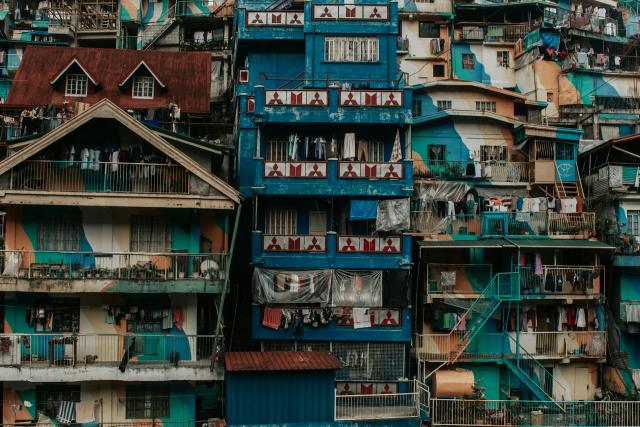
Slums in Philippines
In the last few decades, the number of people living in cities in the Philippines has exploded, like in many similar countries. Places such as Metro Manila, Cebu, and Davao have grown swiftly, giving opportunities for work, education, and a higher standard of living. The positives described here are not a reality for millions who today live in big informal settlements. People in the Philippines sometimes end up living in slums because they are unable to make a living in their rural communities and head for cities instead in search of a way to earn a living. More often, they work for low wages, struggle to use essential services, and must pay too much for housing.
Both economic inequality and poor planning lead to the growing number of slums. Since land and housing are usually expensive, poor families usually live on places that could cause harm, like riversides, landfills, and under bridges. These places have no legal rights, do not provide clean water and access to sanitation, so daily living is very difficult and even dangerous. While the growth in these settlements results in a housing crisis, it also points to underlying reasons: issues with city planning, regular dishonesty, and not having adequate enforcement for housing and urban development rules.
Often, those who migrate from rural areas to cities lack the necessary papers or contacts, so they depend on informal ways to find housing and a job. A lot of them end up taking on jobs as construction workers, food sellers, taxi drivers, or domestic servants—all necessary jobs that are not well-paid or steady. It is nearly impossible to get out of poverty when these things are in the way. It also often seems that the government switches from permitting these settlements to evicting those who live in them, causing further uncertainty.
Poor living conditions in the city’s slums cause pressure on the city’s infrastructure and its surroundings. When too many people crowd together with no proper waste and drainage, the risk of flooding and disease grows. Due to crowded housing and the shortage of public health services, people living in slums are easily susceptible to diseases like dengue, tuberculosis, and COVID-19. There are places where living in these informal settlements has led to more crime and civil unrest, making their situation even more precarious.
Life in Informal Settlements: Struggles, Resilience, and Community
Life in the slums of the Philippines is tough, but the people are really strong and keep going despite all the challenges. Families living in slums often have to squeeze into small homes, sharing just one room made from things like wood, bits of cloth, and metal roofing. Basic services like electricity or running water are often not there or don’t work well. Many communities use water pumps shared by the whole neighborhood and toilets that everyone gets to share, and most homes get their electricity by hooking up hookups without permission, which can be really dangerous. Yet despite these challenges, people in slums often band together, help each other out, and find smart ways to get by.
Children growing up in these places often face different problems like not getting enough to eat, having less access to school, and being around violence. Many kids go to public schools that are too crowded and don't have enough stuff for them. Dropout rates are still very high for teens, because a lot of them have to help out and get jobs to take care of their families.
Still, many parents focus on sending their kids to school because they think getting an education is the only way to have a good life later on. Non-governmental organizations and local volunteers often help out by starting after-school activities, offering tutoring, and teaching people about health, and that makes a big difference even if the state doesn’t have enough resources.
Access to healthcare is also a big problem. Many people living in slums cannot pay for private clinics and it's hard for them to get to public ones because they're far away or don't have enough resources or too many people visiting. Chronic illnesses and infections that go untreated are pretty normal, and mental health is still usually not talked about much. Women, in particular, have to deal with many problems when it comes to their reproductive health, taking care of new moms, and dealing with family violence. In the absence of enough help from the government, community health programs and working with non-government organizations have helped fill in some of these missing health services.
Despite all these daily challenges, people living in slums have come up with their own ways to look out for each other and manage their homes. Barangay captains, community leaders, and religious groups often help solve arguments, handle emergencies, and manage how help is given when disasters happen. These local networks play a big part, especially when there are big emergencies like typhoons, fires, or pandemics. In many cases, they are quicker to respond and people trust them more than the official government organizations.
Most people who work in slums do so in jobs that aren’t official and don’t really have legal status. Residents spend their time selling things on the street, making products locally, searching through trash, and doing other forms of low-paying work.
These livelihoods are not steady and are often seen as illegal by local police, so they can end up getting arrested or have their goods taken away from them. Despite this, people keep coming up with new ways to make money, like starting their own small shops in their houses, giving rides on motorbikes, or working for themselves in different jobs. This informal economy helps a lot of people make a living, but it rarely gets much attention when leaders talk about how to make policies.
Slum life in the Philippines shows just how complicated and tough it is to live with poverty in big cities. It’s not just about missing things but also about working together and making things work even when things are tough. While the conditions are really tough and make life difficult, people still manage to find new ways to survive and get by. Any policy aimed at helping people living in poverty in cities needs to recognize their strength and try to use what they have to make things better, instead of just trying to get rid of the problems.
Gender Issues, Child-related Problems, and Insecurity in Philippines Slums
Slum environments in the Philippines make life even harder for women and children, putting them at higher risk of danger. These groups deal with many similar problems because they often don’t have enough money, don’t get important services, and are left out of a lot of stuff in society. Women in slums often have to take care of their family, work to earn money, and help run things in their community all at the same time.
Despite how important they are, they usually stay out of the picture when it comes to making government decisions. Children, on the other hand, spend their childhood in dangerous places that make it hard for them to learn and not have a good life when they get older. Together, what these people have gone through helps show what some of the big human rights problems are for the poor who live in big cities.
Women living in informal settlements often have to take care of the house, while also working additional low-paying jobs like doing laundry, selling food, or making things from home. These jobs are not often covered by labor laws and usually don’t come with things like health insurance or a stable income. Access to healthcare for women is not always easy to get, and things like prenatal care, birth control, and help in dealing with gender-based violence are often not available. In slums, people don’t report domestic abuse very much because they’re worried about being judged, scared of what might happen to them, or don’t have trusted places to turn to.
Girls have even more problems, as lots of them leave school early because their families can’t afford it, they’re pregnant too soon, or they don’t feel safe on their way to or from school. Sanitation issues, like not having separate bathrooms for women and men, can make kids less likely to go to school and make them feel uncomfortable. Those who decide to stay in school often have to make huge personal and family sacrifices to make it happen. Programs that focus on helping girls go to school and stay safe are important, but they need to be run regularly and with the help of people from the local community.
Children living in slums are usually the ones who are most likely to have a hard time and face problems. Many people are not getting enough food, are not growing as they should, and often get sick from things that are avoidable because they live in unsafe conditions. Without regular access to clean water, shots to boost their immune system, and check-ups to make sure they’re healthy, children can’t grow up as strong or healthy as they should.
Psychologically, growing up in places that are crowded, stressful, or even dangerous, can cause people problems that stick with them for the rest of their lives. Child labor is common in these places, because kids work as trash pickers, help at the market, or try to sell things on the street, which often means they get taken advantage of and aren’t treated well.
Yet within these communities, people are starting their own small projects to make a difference. Women’s groups, youth organizations, and NGOs try to help locals, give them needed support, and speak up for better situations. Safe places for women and children, community health clinics, and teaching programs are slowly helping make a positive difference. These efforts show that when people get the help they need, even those who are most at risk can reform things in their communities and become stronger.

Slum Upgrading, Relocation, and the Challenge of Sustainable Development
The question of how to deal with the rising number of slums is one of the main challenges in urban development in the Philippines. Both approaches have their own positives and negatives. Authorities usually move families into government-provided housing on the edges of cities. Although meant to enhance living standards, such projects do not consider what the residents require. Since most residential areas are distant from employment, education, and transport, many people decide to go back to informal areas.
Many experts and supporters of urban development now agree that improving slums where people live has several benefits. It recognizes the activities and relationships that help support life in slums. Improvements could include paving the roads, adding drainage systems, organizing land ownership, and putting up community facilities. Collaborating with the local community helps ensure that projects succeed and last for a long time.
Efforts under the ‘Balik Probinsya, Bagong Pag-asa’ program seek to reduce traffic and overpopulation in cities by urging people to go back to rural areas. But some people say it does not deal with the primary reasons behind urban migration—a lack of opportunities in rural areas. If rural infrastructure is not improved, such efforts could only be short-lived solutions, rather than creating long-term results.
NGOs and other international groups have significantly contributed to improving slums. Funding from the Asian Development Bank, the World Bank, and local foundations has led to better housing and services in certain parts of the country. However, most cultural interventions are small and require outside support to fund them. A national policy should include housing, transport, employment, and environmental planning all in one place.
The private sector, too, can be a valuable partner. Partnerships between the public and private sectors can make housing and infrastructure projects more innovative and help attract new funding. Still, controls should be put in place to avoid redevelopment from leading to gentrification and displacement. All parts of planning and implementation of policies should involve residents to respect what they need and what is right for them.
A truly sustainable approach to slum development focuses on providing opportunities and dignity, as much as it does on physical aspects. Any successful approach should address the main reasons behind urban poverty and include those suffering the most. Provided the government is committed, gets the funds needed, and partners with the community, slums in the Philippines could be seen as places to support and uplift, instead of just as problems.
Governance, Participation, and the Road Ahead
Unfortunately, people living in urban poor communities have been left out of making important decisions. Corruption, a lot of red tape, and rules that aren't applied the same have held back many housing and building projects. For any solution to work, local governments need to be open about their activities, listen to and involve people living in slums, and pay attention to what the residents need.
One of the most useful ways to create change is for people in a community to get involved and help each other. When residents help point out problems and work together to find answers, programs have a better chance of actually working out. Community maps, getting people together to decide how money will be spent, and planning with the neighborhood have worked well in different parts of the country.
These initiatives help slum residents take action on improving their lives and create better relationships with the people in charge. Decentralization, while making it easier for things to be done more quickly, also creates some problems. Local government units (LGUs) often don’t have enough resources, money, or the drive to put proper housing programs in place. National government agencies need to give simple instructions, offer helpful advice, and provide the stuff needed for schools to help keep them safe
Technology also offers new possibilities. Digital tools can help people collect data, plan cities, and make sure services are delivered. Mobile platforms, retagging, and data shared by lots of people can help slum communities get noticed and get more resources to improve their living situations. However, not everyone has the same chance to use digital technology, so we need to find ways to make sure everyone can get access to it.
Looking ahead, making sure development in cities respects human rights is really important. This means seeing that every person deserves a home, and housing is more than just something that can be bought and sold. It means making sure that people living in slums get things like clean water, health care, a safe place to live, and protection under the law, while also letting them have a say in how their city is run.
The road ahead will be tough, but it also means there are chances for growth and new things to learn. With inclusive governance, people in these communities having more of a say, and ongoing investment, the Philippines can work toward a future where everyone in the city has a chance to do well.
Conclusion
Slums in the Philippines are made up of people who live there because they have nowhere else to go, and they often face a lot of challenges but have managed to stick together and keep going despite everything. They show the weaknesses in the city as well as the strength of the people who try to get by there. Addressing their challenges means we need to look for long-lasting solutions instead of just stopping the symptoms for a little while.
it needs big changes in how things are built, making sure everybody’s ideas are considered, and taking some risks to get it right. With a multi-faceted approach that includes making sure slum areas are managed better, allowing local people to get involved, improving housing and making sure basic needs are met, slums could slowly turn into lively and safe neighborhoods. The future of Philippine cities, and the lives of millions, rests on how this problem gets handled.
Also Read A Strategic Urban Development and Housing Policy for the Philippines











LEAVE A REPLY