

-KtAFPWkhVm.jpg)
Slum Rehabilitation Projects in Karachi & Lahore
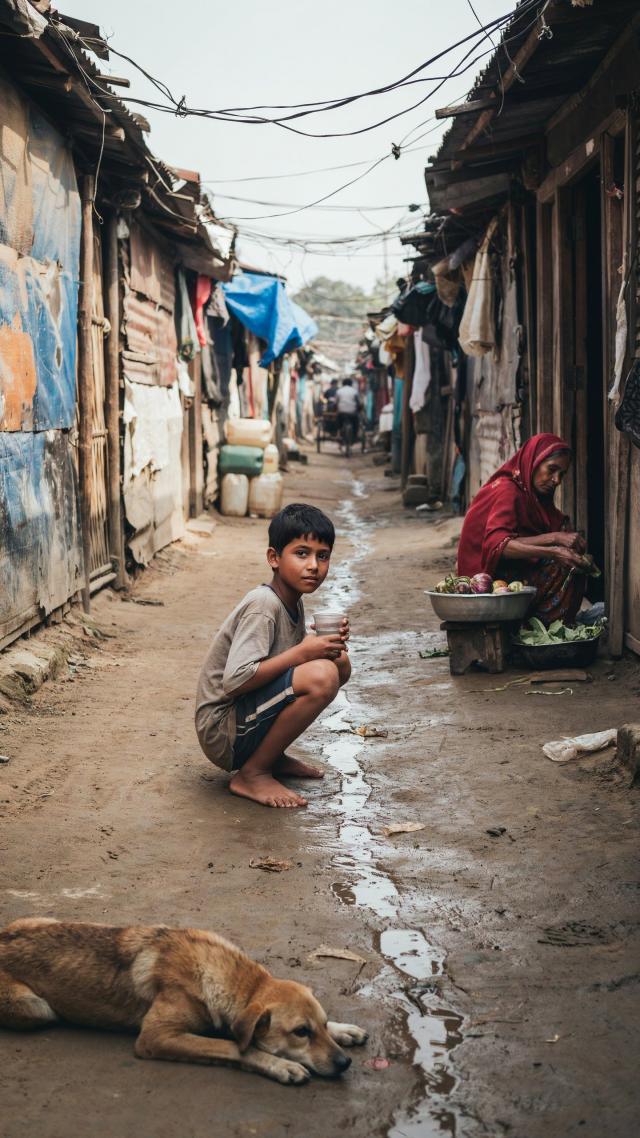
Modern cities have not escaped the harsh evidence of growing social and economic differences which manifest in urban slum communities. The combination of quick urban growth with defective urban planning and expanding rural populations has generated a housing deficit that leads to expanding informal housing communities in Pakistan. Residents of the metropolitan areas Karachi and Lahore number in the millions yet they live in slums and katchi abadis where they face dangerous residential environments.
Understanding the Urban Slum Crisis in Pakistan
Research indicates that informal settlements house more than 40% of Karachi citizens while numerous residents of Lahore’s urban poor also live in these areas. The regions lack essential infrastructure because they experience high population density together with unhygienic conditions and service deficiencies for clean water and electricity, sewerage and healthcare and educational services. Defective shelter structures in these dwellings rely upon salvaged construction waste materials together with wood along with tin sheets and bricks. Apart from the lack of legal home ownership and tenancy entitlements these residents remain exposed to immediate eviction threats.
Slums evolve from dual pressures which include rural poverty combined with natural disasters and minimal options in villages pushing individuals toward cities while urban possibilities such as employment opportunities and improved infrastructure attract them. Populations are growing within these cities but the cities have shown an inability to handle this expansion in a lasting manner. Most lower-income population in urban areas cannot afford existing home prices and thus develop illegal housing settlements.
The slum areas of Orangi Town, Machar Colony and Lyari, Korangi together with Shahdara, Bhatti Gate and Kot Lakhpat demonstrate both unsuccessful urban planning in the past and potential lasting rehabilitation opportunities. The rehabilitation of slums goes beyond demolition or relocation practices because it requires offering residents both social dignity and economic possibilities and urban incorporation.
Rehabilitation Models: From Demolition to Inclusive Development
Both Lahore and Karachi have attempted multiple slum rehabilitation strategies during the past years which have included forced removals and demolitions alongside comprehensive community-oriented slum development initiatives. These various rehabilitation attempts have demonstrated inconsistent outcomes because they lack suitable replacement solutions for displaced vulnerable communities.
The Lyari Expressway project in Karachi became a major point of discussion because it required the movement of thousands of residents living in slums. The project achieved its basic goal of infrastructure development by clearing land but simultaneously caused widespread population displacement as well as insufficient payment and ill-conceived distant relocation settlements surrounding the city. The relocation settlements created more poverty because they failed to provide jobs and proper transportation systems or sufficient education facilities.
The Orangi Pilot Project (OPP) represents a superior humanistic and inclusive approach for development compared to other programs. The project started during the 1980s under the leadership of Akhtar Hameed Khan who established a system to help slum residents better their neighborhoods independently. Opp operated by providing technical assistance for mapping streets, sanitation and housing needs without depending on governmental funding. OPP proved that adequate local guidance combined with citizen participation through budget-friendly methods enables slum transformation into sustainable residential areas.
The city of Lahore has adopted equivalent improvement programs. The Walled City Lahore Authority (WCLA) operates projects which maintain historical sites along with strengthening basic municipal features. The main constraint in Lahore is how to achieve development balance while preserving heritage buildings while avoiding the normal process of neighborhood disgrace through upscale changes. The risk of eviction keeps pressing down on slum residents located in central city districts as urban development spreads into their neighborhoods.
Local slum improvements focusing on existing slum properties without forced relocation have become the subject of recent development plans in these areas. The implementation of this method helps keep social networks active and protects employment opportunities alongside cultural connections. Such development strategy enhances housing quality and road upgrades along with drainage and waste management enhancements as property rights are legalized gradually to attract investment and bolster stability.
Rehabilitation efforts for slums demonstrated worldwide in Brazil (Favela Bairro) and India (Mumbai’s Dharavi project) together with South Africa (Slum Upgrading Programme) prove that the emphasis in slum redevelopment should focus on people rather than physical land ownership. The time has arrived for Pakistan to study other countries' successful slum rehabilitation models while building investment solutions through policy modernization and active private engagement alongside community-driven development.
Role of Government, NGOs, and Private Sector
The comprehensive solution to slum rehabilitation projects in Karachi and Lahore needs collaboration among various stakeholders. The implementation of successful slum rehabilitation programs requires government bodies to create policies and allocate land for tenure registration while funding public infrastructure construction. Low-income urban residents need sustainable housing solutions and this responsibility extends beyond government authorities because NGOs and civil society organizations together with private developers must actively participate in developing these solutions.
The Sindh Katchi Abadi Authority (SKAA) together with the Punjab Urban Unit has the responsibility to detect informal settlements before starting their development planning stages. The slum mapping and legalization activities of these agencies face continuous delays because of bureaucracy alongside political interference and insufficient funding.
The Urban Resource Centre (URC) in Karachi alongside Shelter Associates let citizens gain better rights to their habitat through research and solution designs for slum communities. Through their mission these organizations fulfill the role of connecting the government to communities so residents can gain understanding about rights and take part in urban planning processes.
Under the Public-Private Partnership model developers receive incentives through government support like land grants and tax exemptions which enables them to build affordable housing facilities. Part of the project under this model is reserved exclusively for slum dwellers and developers use remaining units to generate profits for cost-sharing purposes. This model needs strict prevention mechanisms to stop beneficiaries from being taken advantage of in order to function effectively.
Housing microfinance stands as a functional method to solve the housing emergency within poor neighborhoods. The Akhuwat Foundation functions as a key organization which provides interest-free loans to support residential development among families with financial needs. Loans from the organization are distributed step by step to help families construct or renovate their homes by increments. The loan distribution system follows multiple stages which guarantees building stability as well as enables borrowers to maintain property ownership without accruing continuous financial stress. The combination of no-interest loans and responsible lending practices through housing microfinance provides sustainable affordability and dignity to underprivileged rural and urban residents.
Foundation-level capacity-building education that trains slum residents for basic construction skills along with plumbing and sanitation management enables them to play an active role in rehabilitation work. Projects created by community involvement lead to sustainable and conflict-free results. Partnerships which maintain trust together with open communication and mutual accountability serve as fundamental elements for upgrading slum areas into neighborhood communities.

The Road Ahead: Towards Inclusive Urban Futures
Slum rehabilitation projects in Karachi along with Lahore go beyond urban planning requirements since they represent both a crucial social obligation and development necessity. Present choices determine future living arrangements which will affect millions soon after Pakistan develops its urbanization plans. Urban slums should undergo transformation into modern urban neighborhoods because the objective should be creating communities which preserve human dignity while offering meaningful possibilities.
Main urban plans require slum areas as integral components. Zoning reforms enabling mixed-income housing combined with transportation links between slum districts and economic centers makes it possible to provide digital services including health, education and governing access. Land regularization functions as a vital step because verification of homeownership or residence status encourages inhabitants to improve their houses while joining community improvement initiatives.
Information technology serves as an essential component that affects development practices. The combination of digital mapping technology along with drone imaging and Geographical Information System capabilities provides precise methods to locate unregistered settlements for correct rehabilitation plan development. Mobile applications help collect resident feedback then display building quality as well as receive complaints.
The young population of slum areas contains large amounts of untouched human potential. Provide education and vocational programs with digital literacy training to slum residents so they develop into change makers instead of letting circumstances control their lives. The family outcomes see dramatic improvement when slum-based girls and women programs empower them because such women direct more investment towards home wellness and education.
The process of slum rehabilitation must include the construction of climate resilience as an essential element. Many slum communities exist in vulnerable natural habitats that are situated near water channels and drains and hillside slopes. Storm water management and flood-resistant materials combined with green spaces need to be included in slum upgrading efforts to protect the environment.
Slum rehabilitation develops over extended periods because it needs active political commitment together with steady funding along with strong resident involvement. The time for action is now for Karachi and Lahore since delays should not be permitted until after a crisis arises. The cities should actively fund inclusive urban development that encompasses all citizens across economic distinctions and territorial boundaries through proper safe living accommodations.
Challenges Facing Slum Rehabilitation Projects in Pakistan
Although awareness about the problem has increased alongside the implementation of successful models the slum rehabilitation efforts in Karachi and Lahore continue to meet substantial barriers leading to limited progress and long-term sustainability. The main obstacle originates from deficient updated data together with imprecise mapping of informal settlements. Authority agencies struggle to plan infrastructure and provide legal tenure because most katchi abadis operate without documentation. The regular influx of migrant city dwellers produces continuous changes in settlement locations.
The problems regarding land ownership establishment present a major complex barrier. People who live in slums dwell upon properties under government ownership and disputed boundaries where they lack official rights to ownership. Without clear legal guidelines property owners avoid infrastructure investments while remaining ineligible for financial loans including home upgrades. Resident and land owner opposition blocks most regularization and redevelopment attempts because they fear becoming evicted or economically exploited.
Multiple land and housing projects failed to progress because public officials made them victims of corruption and political manipulation. Political organizations maintain slum dwellers as electoral supporters through deceptive promises that lack execution. Thousands of people became homeless after forced evictions because developers wanted the land for strategic purposes including commercial use and construction projects.
Trusting communities remains a major problem in slum rehabilitation efforts. Past condemnations and failed projects make slum residents doubt government plans as well as preventive measures. Successful rehabilitation projects require both open public involvement and honest communication because any absence of these factors leads communities to resist the projects through demonstrations or non-support.
The majority of rehabilitation plans fail to incorporate aspects related to local cultural elements as well as residents' economic stability needs. People who lose their places of employment through change in location and neighborhoods that become torn apart by forced relocation experiences decreased economic prospects together with social breakdown and expanded poverty. The problems requiring resolution go beyond housing since rehabilitation success requires holistic consideration of employment, transport, schools and healthcare.
Rehabilitation projects require a holistic approach that includes diverse perspectives and builds from empathy and not solely from economic perspectives. The first step to design better solutions involves understanding the fundamental challenges which affect these groups of people.
Learning from Global Slum Rehabilitation Success Stories
Pakistan should study worldwide slum rehabilitation models because they offer major advantages for national adaptation. Different countries facing substantial urban poverty have developed inclusive models which led to transformative changes in their informal settlements to become vibrant residential areas.
The Favela Bairro project in Rio de Janeiro Brazil stands as one of the frequently discussed best practice examples. The Brazilian city government and NGOs worked jointly with residents to develop existing housing and create public areas and service extensions and create road access without forcing residents to leave their homes. The model served to protect human dignity through its core focus on social inclusion and urban connection capabilities.
The Slum Rehabilitation Authority (SRA) in Mumbai established plans for slum residents to receive high-rise apartment redevelopment on their original land by granting them commercial rights. The inconsistent performance of this approach verifies the positive impact of unified policy support together with land worth optimization.
The Baan Mankong program by Thailand serves as an excellent illustration of community-driven slum redevelopment. This initiative allowed communities to obtain financial backing and professional help while collectively planning their housing development designs and infrastructure details and expenditure methods. Through this initiative the participants developed ownership together with a feeling of pride which led to sustainable development.
South Africa uses its Slum Upgrading Programme to supply essential services alongside basic utilities since residents want to remain where they are. The program maintains resident stability through conservative changes that substantially advance community standards of living.
Modern developed nations maintain aspects of improving slum areas and building affordable housing complexes. The Singaporean Housing Development Board (HDB) took over low-income squatter communities to create high-rise public housing units that residents could buy through extended subsidized lease arrangements.
Throughout all these models people who require assistance remain the prime focus instead of property alone. When successful the rehabilitation process requires active community involvement alongside clear communication and an awareness of particular conditions and comprehensive social programs which extend to education, health and employment initiatives.
To achieve meaningful development in Karachi and Lahore and other Pakistani cities the country needs to adapt global approaches to fit local requirements through strategies such as OPP along with micro-mortgage financing and land legalization measures. Other valuable roles come from international partnerships and monetary assistance together with knowledge-sharing networks.
Conclusion
Urban centers of Lahore and Karachi in Pakistan face an essential human and social challenge which goes beyond housing provision because it directly affects citizen dignity together with urban inclusion and social equality. The cities face sustained challenges because their housing systems grew at a slower rate compared to informal settlements. Despite large obstacles including property conflicts along with legal complexities and political stagnation combined with monetary limitations the future of progress remains discernible.
The change from bureaucracies which demolish communities without citizen participation to grassroots developments organized by neighbors represents the true path to success. The success of the Orangi Pilot Project demonstrates the power of community empowerment which allows even challenging underserved areas to develop into prosperous neighborhoods. A successful plan for building trust and enduring results requires collaboration between the government as well as NGOs, the private sector along with the direct involvement of residents.
A strategic application of international lessons that matches Pakistani needs while uniting residential developments with essential services including education and healthcare and transportation should trigger fundamental urban progress. Slum rehabilitation needs to transform from a short-lived solution to become an essential element of urban development strategies and national growth.
The destiny of major cities including Karachi and Lahore as well as all Pakistan's major urban centers depends on achieving true inclusivity for every citizen. We must make investments to serve the population that has suffered neglect for an extended period. Pakistan will create improved futures for all residents when it supports informal settlements by unlocking their potential and establishing self-improvement opportunities.
Also Read: A Geographical Analysis Of Slums In The Kolkata Municipal Corporation Area, West Bengal



-pKndpBz2AD.jpg)







LEAVE A REPLY