

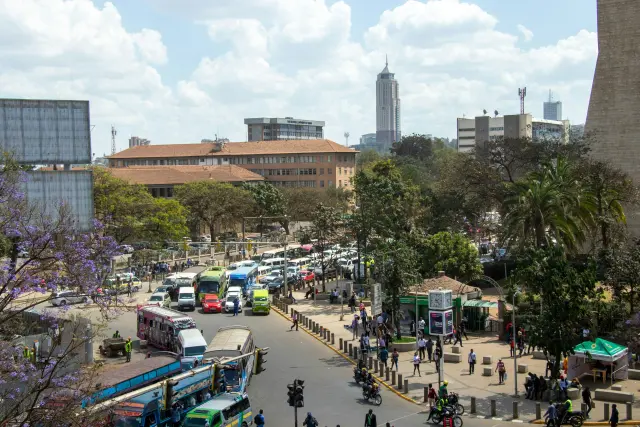
Rural-To-Urban Migration and Its Impact on Nairobi’s Housing Demand
Kenya has witnessed dramatic demographic changes that have been mainly caused by urban migration that has been happening in rural areas in the past few decades. The focus of this transformation is Nairobi, the economic, political, and administrative center of the country. With the prospects in education, employment, healthcare, and business being centralized in cities, thousands of Kenyans are migrating to the city of Nairobi annually in search of improved lives.
 The continuous inflow of population has drastically
transformed the housing pattern in the city, putting pressure on housing
demand and revealing vulnerabilities in the urban planning and housing supply chain.
The continuous inflow of population has drastically
transformed the housing pattern in the city, putting pressure on housing
demand and revealing vulnerabilities in the urban planning and housing supply chain.
The migration process between rural and urban areas is not a specific Kenyan process. Rapid urbanization is taking place in sub-Saharan Africa in a manner that has never been witnessed before. Nairobi, however, is a very interesting example due to the magnitude of its growth and rapidity.
The
city was initially a railroad depot in the late 19 th century, but it has since
grown into a massive city with millions of inhabitants. However, the
development of infrastructure and houses has not been able to keep up with
population growth.
The migration trends of economic disparity between rural and urban regions coupled with climate variability that impacts the agricultural livelihoods and attractiveness of urban ways of life have increased the housing demand in Nairobi.
Regrettably, the demand has been hampered by supply
limitations due to the scarcity of land, high cost of construction,
construction bottlenecks, and unpredictable real estate activities. This has
led to the mushrooming of informal settlements, inflated rent, congestion, and
straining on urban services.
This blog discusses how migration of rural to urban areas
influences the housing demand in Nairobi. It discusses the forces of migration,
the structural strain that is put on the housing market, the emergence of
informal settlements, economics, social effects and possible policy solutions.
This relationship is important in order to come up with sustainable urban
housing solutions that would balance growth, equity and resilience.
The Drivers of Rural-to-Urban Migration to Nairobi
The rural-urban migration to Nairobi is a multi-dimensional process that is dependent on a complex combination of economic, social, environmental, and demographic factors. Economic opportunity is the greatest pull factor. Most of the formal jobs in Kenya, MNCs, state offices, institutions of higher learning and manufacturing centers are found in Nairobi. In comparison to rural counties where subsistence farming is a reliable source of livelihood, Nairobi is an assurance of wage jobs, business opportunities, and financial services.
The highest percentage of migrants is made up of young people. As rural populations have high birth rates and a low level of jobs absorption, young people find migration as the only way to have an upward mobility.
This movement is further strengthened by the access to tertiary
institutions located in or close to Nairobi. After education, the graduates
would continue staying in the city to find a job instead of going to the rural
areas.
Push factors are also substantive. Climate variability,
droughts, land fracturing, and volatile market prices have continued to make
agricultural incomes in most parts of Kenya to be more uncertain. With the
decline in the size of farmland as a result of subdivisions of land by
inheritance, agriculture becomes less profitable. The communities spread their
income streams by dispatching the members to urban areas to receive salaries
and sending them home.
Migration is also triggered by infrastructure
discrimination. In rural regions, there are usually no good healthcare
facilities, electricity, water supply systems, and transport systems. In
comparison, Nairobi has, comparatively, better provision of public services
although they are overstretched. Relocation is a good choice to families that
want to get better education and have access to medical services of better
quality to their children.
The role of social networks is reinforcing. Migration flows
tend to be chain-reactionary: the pioneer migrants settle in Nairobi and
eventually take part in the immigration of close kin or friends. Such networks
offer short term accommodation and employment details alleviating the dangers
of relocating to the city.
Migration is however not necessarily permanent. There are
those migrants who commute on a seasonal basis, who have connections with their
rural homes yet they have a temporary employment in Nairobi. Others are simply
changed into permanent city dwellers. Whatever the length of stay, every
migrant will have an impact on the housing market whether it is by renting a
room, sharing a house or at some point seek his own house.
The net effect of the drivers is a population increase. The
population of Nairobi city is growing every year, which puts pressure on the
demand of the low-cost housing units and cheaper rental properties. In the
absence of a proportional increase in the supply of houses, competition
increases, and prices skyrocket.
Finally, rural to urban migration represents a wider
structural imbalance in the development of regions. Migration flows will
continue to occur as long as the concentration of economic opportunities in
Nairobi continues. The housing business is, thus, a direct reflection of the
uneven development trends in Kenya.
Housing Supply Constraints and Rising Demand Pressures
With population growth rate increasing in Nairobi due to
migration, housing demand has continued to exceed housing supply. This
imbalance is caused by the structural constraint, which restricts the ability
of the city to generate the appropriate number of housing units that are
affordable.
One of the most serious problems is land scarcity. The
geographical boundaries of Nairobi are limited and most of the land that is
found in the city is already developed and allocated to various purposes. The
high prices of land make the housing development very high. Many residential
developers usually focus on the high-end projects which have more returns
leading to shortage of affordable housing.
Limited supply is also born out of construction costs.
Cement, steel, and imported fixtures are among the building materials that are
costly. Regulatory obligations like building approvals, zoning compliance and
environmental assessment may impact on the project timelines and raise costs.
Regulations are necessary due to the safety and planning considerations,
however, inefficiency in the approval procedures will prevent quick growth of
affordable housing.
Holding of lands speculatively also limits availability.
Sometimes investors can buy the land hoping that the value will increase later
and not that the development will commence. The practice will decrease the
scale of land used in the active development of housing, exacerbating the
supply and demand ratio.
Rental accommodation is in most cases the only available
housing options to migrants. Most people have been unable to own homes because
of property prices and the fact that they are not easily able to access
mortgage funds. As a result, the migration-related demand is consumed by the
rental market to a large extent. In response landlords subdivide, raise rents
or turn single family houses into multi-tenant houses.
The outcome is a heightened competition of low-priced rental
houses. Areas that have comparatively lower rent are densified very fast.
Over-population sets in where households occupy tiny areas to save on the
expenses. The basic infrastructure water, sanitation system, garbage clearing,
etc. can barely meet population density growth.
The level of housing shortages is growing every year. It has
been estimated that tens of thousands of new housing units are needed in
Nairobi annually to meet the population growth, but the reality is much lower.
Such constant disparity contributes to the price boom and decreases the
affordability of homes to low- and middle-income locals.
Seemingly, migration increases structural loopholes that
exist in the housing supply system in Nairobi. The unbalanced supply and demand
in the housing situation will keep increasing unless there is a coordinated
strategy and targeted measures to address the issue.
The Expansion of Informal Settlements
Among the most evident effects of rural-to-urban migration
on the housing demand in Nairobi, the growth of informal settlements should be
mentioned. Such places as Kibera, Mathare and Mukuru have expanded considerably
as migrants find cheap housing near to sources of employment.
The Informal settlements also offer relatively cheap housing
facilities who may be in units of single rooms made out of temporary materials.
Although rents are lower than those in formal neighborhoods, living standards
are often typified by crowding, poor hygiene, lack of security of tenure and
exposure to environmental risks.
Informal settlements are entry points into the city to many
migrants. They provide access to industrial areas and commercial hubs of
informal work. These communities have social networks that offer social support
systems that facilitate adaptation in the urban setting.
Nonetheless, systemic housing failures are manifested
through the development of informal settlements. Poor access to formal housing
compels migrants to uncontrolled areas. The infrastructure development is
usually underdeveloped as compared to the population growth and thus the
population lacks sufficient water supply, drainage, and waste disposal
infrastructure.
There is also tenure insecurity in informal settlements. The
owners might not be in possession of any kind of legal documents and hence can
be evicted. Such insecurity discourages investment in housing improvements and continues
with the poor living conditions.
This growth of these settlements points to the pressing
necessity of comprehensive city planning. Instead of perceiving informal
settlements as mere problems, policymakers should appreciate that they help to
absorb the migration-induced demand. The programs, secure tenure programs, and
infrastructure investment can upgrade the living conditions and remain
affordable.
Urban Planning,
Infrastructure Strain, and the Future of Nairobi’s Housing Landscape
With the rural-to-urban migration processes that have been
transforming Nairobi, this place of strain on urban planning system and
infrastructure has become more pronounced. There is no such thing as housing
demand, as it is closely interconnected with transportation networks, water and
sanitation systems, electricity, educational establishments, healthcare
facilities, and the urban environment. The effects of population growth caused
by migration surpassing the influence of coordinated planning extend far beyond
the housing industry to impact the livability and sustainability of the city in
general.
Congestion is one of the most evident forms of fast urbanization. Over time, residential areas are becoming increasingly crowded into Nairobi as more and more people immigrate to the city to seek jobs and opportunity (usually informally and without infrastructure improvements).
Road
systems which were built many decades ago to meet the needs of a small
population cater to the needs of millions of commuters. The transport systems
are overloaded and commuting time turns out to be a normal aspect of urban life.
The cost of transportation is a major source of income to low-income migrants
who move long distances to central employment centers because of the high
rental price, which further complicates the affordability of housing.
Similar pressures are experienced on water and sanitation systems. The informal settlements and the rapidly populated estates usually have poor drainage systems, sewerage systems, and access to water supply. Congested infrastructure and infrastructure result in discontinuous services, health hazards to the population, and environmental hazards.
As the housing
demand drives development into undeveloped and eco sensitive regions, there is
the exposure to more risks in terms of floods and natural calamities due to the
lack of proactive planning. Migration, housing demand, and climate resilience
are converging issues becoming an urgent policy concern.
The Nairobi urban planning systems have in the past failed to project the rate of demographic growth. Zoning laws, land-use plans and development controls often trail behind realities that occur on the ground.
Although master plans might be in existence, they are not effective because of
the gaps in their implementation. Unplanned, speedy house development of houses
especially in the peri-urban areas results in the formation of fragmented
neighborhoods with little access to basic amenities. In the long run, it is
much more costly to upgrade such regions rather than planning ahead.
Meanwhile, the opportunities offered by the migration-driven growth are available. An increasing flow of people into cities can support the existence of mass transportation, the development of high-density residential zones, and the phenomenon of mixed-use cities. When wisely handled, densification can help achieve more efficient service delivery, as well as curb urban sprawl.
An example may be transit-oriented development which would help
combine the affordable housing with the quality public transportation to reduce
commute time and decrease household costs.
Finally, it is true that the housing situation in Nairobi will rely on integrated urban governance in the future. The policies on housing should be in line with the transportation planning policies, the policies in environmental management, and the economic development policies.
The process of
migration is not expected to reduce much in the coming years, considering the
fact that there are unresolved regional inequalities in addition to the
existing demographic trends. Hence, it is not about the city of Nairobi whether
it will grow or not, but how it will handle this growth.
Economic Implications of Migration-Driven Housing Demand
There are strong economic impacts of migration induced house
demand in Nairobi. On the one hand, it boosts construction business, renting,
and real estate investment. On the other hand, it increases the cost of living
and promotes inequality.
The demand of housing is high, which boosts the renting
revenues of landlords and real estate developers. Construction works create
jobs and boost the economy. Nevertheless, an increase in rents decreases the
disposable income of low-income earners who can no longer invest in education,
health or enterprises.
The issue of affordability of housing also affects labor
markets. When affordable housing is provided near working places, workers can
resign to having lower wages. On the other hand, the high rents compel
employees to reside further to the work centers hence driving the cost of
commuting up and lowering the productivity.
The urban inequality aggravates further with the richer
population members enjoying official housing in the planned urban neighborhoods
as the low-income migrants remain in the informal quarters. The spatial
segregation supports inequality in service and opportunity access. Migration,
then, not only determines the housing demand but also affects the economy in
larger scale in Nairobi.
Conclusion
The process of rural-urban migration has continued to influence the housing and demographics of Nairobi. Motivated by economic opportunities, social mobility needs and city challenges in the rural areas, the migrants are the ones who participate in the long-term population growth in the city. The problem of housing supply, land scarcity and inefficiency of regulation have however made it hard to cope with the increased demand.
The growth of informal settlements and the rising rental
prices, as well as urban inequality, highlight the issue of a major housing
reform. The solutions to sustainability would involve integrated planning of
the city, low-cost housing investment, and equitable development of the area. With
the ongoing expansion of Nairobi, how to handle the migration-related increase
in housing demand will form part of the inclusive, resilient, and equitable
urban development.
By enhancing migration as an engine of innovation and prosperity, the city can achieve this by prioritizing coordinated investment in infrastructure, inclusive zoning, and affordable housing growth by policymakers.
Without further improvements in planning keeping pace with
demographic realities, though, there will be increasingly severe infrastructure
pressure and a lack of housing. Whichever direction Nairobi takes will be the one
that will define not only its skyline, but also the quality of life of the millions
of people who make the city their home.




-3dkuLgKhRD.jpg)
-49HupTvwDD.jpg)








LEAVE A REPLY