

-df73q18Ek3.jpg)
The Role of State Grants in Solving Urban Housing Shortages
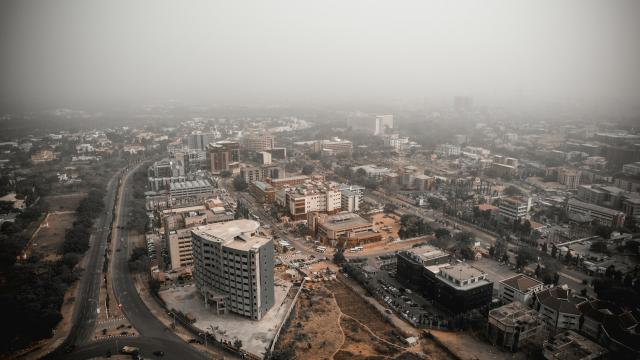
Shortages in urban housing has been one of the key issues of the 21st century especially in fast urbanizing countries such as Pakistan, India, Bangladesh, and most the African and Latin American countries. People are migrating to urban areas at an unfamiliar scale either due to pursuit of economic opportunities, improved services and social elevation. However, the cities have not been able to cope with the upsurge in buildings thus falling short when it pertains to one of the fundamental rights of shelter.
This creates a bulging demand-supply deviation in the cheaper houses with millions of households living in informal settlements, overpopulated slums or insecure tenancies. In this picture, state grants come as a very important tool of filling that gap.
As compared to their market counterparts whose application in most economies tend to ignore the low-end markets since they are not profitable, state grants are a purposely redistributive mechanism where the government transfers funds to enable economic affordability and sustainability of housing.
These grants may be used either directly in construction or subsidize the land, lower interest rates, encourage participation in the private sector or may be used in upgrading informal housing inventory. As people continue arguing on their efficacy, abuse, and sustainability, the world is increasingly becoming united in the view that the financial resources extended in the form of grants by the state itself, will be the only means through which the housing needs of the most vulnerable segment of the urban population is addressed.
This blog considers the operation and potential effect of state grants, successful and unsuccessful examples of their implementations in the real life, and the design features which make these programs most successful. We shall be able to evaluate them in the perspective of cost-effectiveness, equity, integration in urban planning, market vitality, and longer-term stability. With this analysis basing itself on theory and empirical data, we want to know how state grants, when properly conceived, can play; not only with subsidy, but strategic mechanisms in transforming futures of urban housing.
Direct Subsidies as a Way of Addressing Affordability
State grants are very important in ensuring that housing is affordable to the low-income earners in the urban area and who would have otherwise remained in a locked out position in the formal markets. The direct approach that governments use to do this is through certain grants that offset the construction cost or down payment on houses on families that are in the right position to receive this grant.
These subsidies ease the entry becoming a homeowner or renter by bypassing the initial financial obstacle. Families can, therefore, move out of the informal housing patterns to more formal ones. Under the PMAY scheme in India, the central government subsidises interest rates on home loans by offering a subsidy on interest on loans given in form of credit linked to income groups. In the U.S., Section 8 housing vouchers follow a voucher rental subsidy approach in which the participating tenants are expected to make a constant percentage of their income with the government making the rest to landlords.
The introduction of such initiatives increases the affordability by not affecting the quality of what is done as there are compliance and inspection aspects associated with such introductions. The issue however is how to design an eligibility criterion that is both inclusive and focused at the same time. Most of the state grant schemes are either leaking, meaning that subsidies pay households, which do not need them, or excluding, with the poorest lacking documentation or access to the banking system to receive the grants. The design of such grants, the modes of such disbursement and the tenureship over them become decisive. In addition, the question of sustainability will also have to be connected with the issue of affordability.
Subsidies that facilitate occupation of badly constructed or distant houses end up causing more financial stress to the family by closing up the houses or paying transport costs. Therefore, affordability will not only be through lower access points, but also a complete relief to the whole housing lifecycle. In order to effectively resolve the issue of affordability, state grants should be granted as part of a broader policy on housing, which should also factor the land, infrastructures and services.
They should be accompanied with non-monetary services such as legal services, technical services, and community engagements to make them adopted. Rightfully done, the direct subsidy in the form of state-based grants can be a great instrument to stop the chain of poverty and exclusion by providing a real prospect of breaking the chain of poverty and lack of housing security and asset building.
Unlocking Urban Land through State-Supported Mechanisms
Cost and availability of land is one of the biggest impediments of affordable housing in the urban locations. The situation in cities is more complicated by the fact that though there can be idle land, it is usually speculative, zoned somewhere out of context or legal tussle free. In this situation, state grants dedicated to land accumulation, clearing, or reconstruction turn out to be a critical instrument of freeing space to construct housing.
The grants are designed to help governments purchase unused land that they could then redevelop as housing and offer it on subsidized terms to non-profits, cooperatives, or to private developers. Such an approach is not only able to increase the amount of land available to build on, but they also have effects on spatial equity in the sense that they cause the development to focus on underutilized or strategically lying areas.
As an illustration, the model has been employed in such countries as Brazil where the state has acquired land on behalf of the state funds and on favorable terms to associations within the society to conduct bulk social housing. Programs to subsidize housing, such as the Naya Pakistan Housing Program in Pakistan, have tried to package land with subsidies, but have been criticized as not being transparent in their implementation.
Such use of state grants enables governments to correct the distorted land markets where speculation frequently increases the prices above the affordability limits. These grants are also capable of financing land regularization and formalisation of tenure in informal settlements. Governments can transform slums into proper communities worthy of being catered and subsequently developed by providing funds to cover legal titling, cadastral surveys, and documentation to legalize slums into neighborhoods. But this role of state grant requires robust regulatory systems to avert the land seizure by the elites or politically affiliated developers.
In making sure that grants are presented in the interest of the population, transparent land banks, audits of land, and land management systems developed with the aid of GIS are necessary. State grants on land can be an extraordinary instrument: designed well, it can be a catalytic investment: reshaping the urban environment, convening appropriate densification and making the invisible visible: they involve formally joining the poor to the city. This is not only physical inclusion, it is economic and social integration by means of specific public investments.

Promoting Private Sector investment on Low-Income Housing
Although funding and regulation have a central role to play by governments, there is also a lack of implementation capacity by the governments to address the housing needs of the cities on a large scale. This is where the state grants will be in a doubly useful role namely, helping not only the families but also encouraging private sector players in the low-income housing. Grants may be designed in the form of viability gap funding, tax credits or capital subsidy that render the affordable housing with the enticing financial quality to the developers who would otherwise concentrate on the higher-income markets.
In South Africa the developers are given capital subsidies by the government when they build social housing units to be rented. In the U.S., the Low Income Housing Tax Credit program (LIHTC) relieves the specifically tax-credited private developers in an endeavor to uphold the levels of affordability.
Such programs balance between the business and the public interests, making it a win-win model. However, in Pakistan, this is not the case, in that the models are not very well developed, mostly because the regulations are not predictable and the relationship between the public and the private is based on distrust. To mobilize the private sector successfully through state grants, a predetermined number of conditions have to be fulfilled.
Through the clear eligibility and process, there must be clarity. The developers should have knowledge on the terms of engagement, schedules and returns. Second, investors will require risk protection tools such as partial credit guarantees, insurance against policy variations, or dispute settlement tools to be constructed into the system to allay their fears.
Third, the incentives should have some strings attached by the authorities; builders must not compromise the quality of construction, must be affordable on specific timeframe, and practice inclusiveness. Given the wrong design, the grants might pave the way to gentrification or mushrooming of low-quality housing in the name of affordability. In that way the management of grants is as important as access to grants. When done right, state grants can be used as instruments of crowding-in capital, innovation, and scale to affordable housing without letting profit take precedence over social utility.
Upgrading Informal Settlements through Public Grant Programs
In the Global South, a large amount of the existing urban housing is considered informal, part of organically grown settlements created because of a lack of housing. These regions are usually characterized by minimum infrastructures, legal ambiguity and they are frowned upon by planners.
A humane, economically viable, and socially appealing solution to mitigating housing shortage without the displacement of masses will be provided through state grants targeting in-situ up-gradation of such settlements. Grants can be used to upgrade such elements as funding of roads, sanitation, water supply, drainage, electrification, community centers, and even structural reinforcement of houses. Cities in Latin America, such as Medellin and Lima, have claimed informal areas using government money to regularize and improve them into functioning and beautiful communities.
Such grants are usually participatory wherein the residents are involved in planning and implementation thereby enhancing the community cohesion and takeover. As shown in Orangi Pilot Project in Pakistan, in a situation, where even a very small amount of state or donor financing is coupled with the community mobilization, sustainable upgrading is possible.
But the key to the success of this type of initiatives lies in their continuity, support in legislation and incorporation in the city plans in general. Ill done upgrading programs may lead to elite capture or failure to take care of those in greatest need, or to haphazard urban development. State grants should thus be made to be flexible in the sense that they should be adaptable and contextual in nature and at the same time want to implement fundamental standards.
Formalization of grants is not supposed to be a physical modernization, but must also entail legal stability, service entitlement and county statehood in municipal governance. With time, the enhanced resettlements can act as centers of economy, heritage and innovation where the discourse changes the declaration of slums as issues to a region with prospects. Governments can enable communities of the urban poor through the appropriate grant mechanisms to attempt to up-grade the situation they find themselves in so that neither societal nor economic trauma is experienced by being displaced to elsewhere.
Building Resilience and Climate Adaptation into Housing Grants
Housing and climate change are the twin crises that cities are experiencing as well as the state grants need to be modified to incorporate a climate resilience component as an inbuilt criterion. Due to the spots where they are located and types of construction, the urban poor communities largely face the urban floods, heat waves, landslides, and air pollution at disproportionate rates. The addiction to resilience is an opportunity for grants to reverse the trend since they can collate funding based on resilience. Governments could make it mandatory that all houses being constructed using grant money must feature such features as elevated plinth, good drainage, passive cooling and solar light and material that is not poisonous.
Green building certification in certain countries has been associated with funds release and adoption of long-term perspective. As an example, the government of Bangladesh, together with climate funds, has undertaken a pilot program of cyclone-proof houses of coastal population with direct grants.
The post-flood reconstruction activity in 2022 in Pakistan had a large number of NGOs offer resilient, modular housing through state or donor grants. Nonetheless, to scale this strategy, this will not only be done on the technical design level but also needs the incorporation of assessments of climate risks in planning, capacity building of construction workers and officials, and citizen education. Other types of state grant should promote innovations like off-grid sanitation, water harvesting or reflective roofing in the high-rise cities. Incorporating resilience into grant requirements, governments are indicating interest in going beyond a reactive housing policy to a broadly preventive one, one that recognizes that the future exists and plans to create it.
Conclusion
Grants are much more than financial handouts provided by states, but, given an adequate design and implementation through transparency, they can become vehicles of change. In their application to the situation of housing shortages in cities, they may concern affordability, release urban land, encourage the participation of the private sector, renew current settlements, develop climate resistance to the urban structure.
But their success is not entirely based on the level of money to be invested but how that money is framed, regulated, linked with the overall planning intentions. In countries such as Pakistan, where the national slum shortage is immense and multifaceted, grants should be laying down the basis of the gradual metamorphosis of the narrow sided subsidies to the systemic instrument of the national housing policy.
The process of designing such grant-based systems involves inter-ministry coordination, co-ordination with land use and transportation planning and development of monitoring systems that do not only measure outputs but also assess outcomes, including the quality of life, the security of tenure, climate preparedness and social equity.
With its transformative potential to strip housing of the market-based commodity status and ascribe it to the nature of a basic human need, state grants offer a solution to the housing problem. Through this, they provide a strong alternative to the models of profits driven development particularly in highly urbanizing settings where exclusion and inequality is widely stuck. Governments can use these grants in addressing resources to the most vulnerable to close access and equity barriers that the private sector tends to be blinded to. Since urban areas are growing and developing, state grants should not only be preserved but also increased and refined strategically as well.
They ought to be perceived as the instruments of justice, resilience, and mutual empowerment- they can make cities that focus on dignity rather than speculation and inclusivity rather than marginalization. Instead of a grant being perceived as a short term relief or charity, it must become a permanent tool of social fairness and sustainable progress. In such a manner, they will be able to pin the vision of equitable, inclusive and sustainable city futures of everyone.
Also Read: 9 Reasons To Follow Urban Housing Dynamics And The Impact Of Planning Policies




-ySWGlp0vgc.jpg)










LEAVE A REPLY