


The Role of Regulators: SECP’s Rs 2 B Minimum & 20% Sponsor Rule
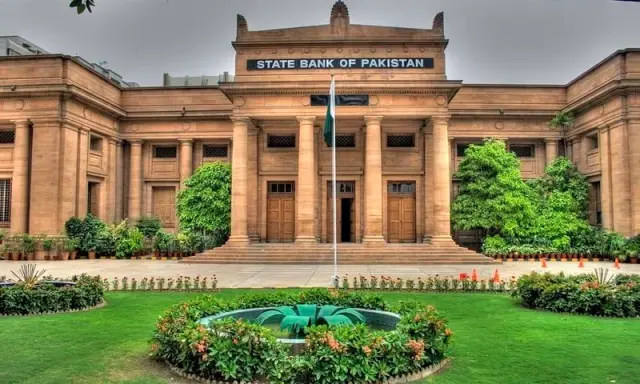
Regulatory reforms, particularly the reforms to the real estate investment sector effected by the Securities and Exchange Commission of Pakistan (SECP) have had an important role in the evolution of the sector in Pakistan. In view of its critical role as the regulator of the capital markets, MFs, and regulatory corporate governance in the country, SECP has been instrumental to the shaping up of the structure and growth curve of Real Estate Investment Trusts (REITs), in the country.
The inception of laws like the minimum capital requirement of Rs 2bn and the 20 guarantee sponsor requirement has revolutionized investment environment, which makes the investment environment not only transparent and guarantees protection of the investors but also allows the establishment of investment with long term viability as well as large projects that have the capacity to attract domestic as well as international funds.
These business changes in regulations have arrived as the real estate sector of Pakistan is witnessing a major change. The long established property market that has long been accused of inadequate formalization, transparency and speculation has slowly been moving towards well-structured investment vehicles such as REITs. This is because SECP has also put in place strict regulations to safeguard investors and at the same time ensure that sponsors, who are the developers and the major stakeholders in REIT succeed, own relevant interests in REIT programs they are handling. That is the two pronged approach of protecting investors but also keeping the sponsors on their toes which has already become the standard of real estate investments in Pakistan.
REITs proved to be an effective strategy in mobilizing retail and institutional investors to invest in real estate projects without difficulties of direct ownership across the world. Although the REIT market has a rather short history in Pakistan it has begun to establish positive signs of maturity with such projects as Dolmen City REIT and Globe Residency REIT. Minimal capital requirement of Rs 2 billion and requirement of a sponsor of 20 percent are significant factors in making sure that finances to such projects are supported by sponsors with tight cash flows and with sound balance sheets.
This blog post will discuss how SECP has played such a critical role in developing REIT market in Pakistan, the consequences of the Rs 2 billion minimum capital requirement, what the 20 percent sponsor rule means, the challenges and opportunities that arise and what the direction of the future of real estate investment in Pakistan will be based on this emerging regulatory environment.
The Role Played by SECP in Transforming REIT Scenario
Securities and Exchange Commission of Pakistan has been on the frontline introducing modern financial structures in the country and REITs turn out to be one of the main intercessions by the commission on real estates. The aim of the SECP has been two pronged, one to regularize an industry that has long been allowed to do its business more or less with little or no regulation and the other to open up the the real estate investment to the general population and make it more open and transparent. The introduction of regulations on REIT with improvement over the years has provided a well-built compliant and investor-friendly market by SECP.
The adoption of Rs 2 billion minimum requirement was a historical step. It was an indication that SECP is determined to make sure that only sound and financially stable sponsors are able to introduce REITs. With this minimum threshold in place, SECP hopes to clear this undercapitalized projects that can cause risks to the investors. Moreover, the 20 percent sponsor rule mandates the sponsors to maintain a significant portion of equity interest in the REIT, which drives the interest of the sponsors in line with the one of the investors. The sponsors will feel continuously engaged in making the project successful since there is sharing of risks and rewards alongside other stakeholders owing to this rule.
The method of regulation adopted by SECP also aims at building the confidence of investors through high disclosure and reporting requirements. The REIT managers and sponsors needed to regularly release digest of financial performance, occupancy and rental yield. This openness to transparency will also be important in terms of appealing to both local ownerships and even the overseas Pakistanis, who might have been stuck investing in Pakistani real estate market in the past because they feared fraud or even mismanagement.
Besides regulating control, SECP is also trying to raise awareness regarding the REITs being a valid yet gainful place of investment. This payback comes in the form of SECP encouraging the joint formation of REITs that diversify in the areas of investing such as investing in commercial properties, residential projects, among others. REITs have also been more attractive investments to ethically and faith-based investors due to its emphasis in making appropriate Shariah-compliant structures.
The Minimum Requirement (of Rs 2Billion)
Minimum capital of Rs 2 billion needed according to SECP is meant to bring in an element of credibility and financial discipline into Pakistani REIT market. SECP minimizes the chances of undertaking underfunded projects that have the likelihood of not giving returns by ensuring that all the REITs begin with a large capital base. This set point does not only increase the quality of the offerings of REITs, but it also gives investors a strong message not to enter unless you are serious and well-capitalized.
On the part of sponsors, accomplishing this minimum specification implies displaying financial vitality as well as a long-run devotion to the prosperity of the project. It is not just a compliance requirement, rather it is a measure of quality that is capable of sustaining the REIT to take up large doable projects with high values that can deliver sustainability in terms of rental income and growth. Such rules are very important in ensuring that the integrity of the system is not compromised especially in markets where the investor confidence is often shaky.
The institutional participation is also promoted by the Rs 2,000 billion requirement. Large financial institutions such as banks, insurance companies, among others have higher tendencies of investing in the REITs which are highly capitalized and heavily sponsored. This increases liquidity, in its turn, and guarantees that REIT units can be traded actively, just like stocks traded on the stock exchange.
In addition, the regulation conforms to the best laid rules the world over. The REITs in other countries such as the United States and Singapore must also satisfy large capital requirements so that they are able to give the consistent delivery. The fact that Pakistan has fully moved to the same trend shows that it is ready to modernize its real estate investment set-ups, in accordance with the global trend.
The 20% Sponsor Rule and Its Impact
The sponsor of a REIT must hold to at least 20% of the aggregate number of units of the TRUST as specified in the 20% sponsor rule. This regulation is critical in that, it leads to vested interest by the sponsors in the success of the REIT given that these parties will make or lose money together with other investors. This is done by requiring a substantial stake in sponsors, so that project developers cannot shift the risks by transferring it to the retail investors and abandon the project. Rather, they have to endure long-term participation and responsibility.
This is a rule to align the interest of the sponsors to the interest of the unit holders. Sponsors with their invested money are more willing to pay attention to keeping high standards in property management, relations with tenants, and performance of other projects in general.
Such risk-reward relationship builds trust with investors who can be assured that sponsors are every bit as invested in gain or loss as they are. In general terms, there is the 20% sponsor rule that helps stabilize the market too. It avoids speculation by making sure that there is a lot of risk exposure by the sponsors. Such commitment makes maladministration less possible and strengthens the idea that REITs are long-term investments, but not short shots.
At the international level, there are similar regulations used to bring sponsors to alignment. Such as the case in the UAE and Singapore, regulation entails requiring the sponsors of REITs to hold a minimum ownership in the REITs they float. Pakistan adopting the implementation of the 20% rule indicates that it shares similarities with such practices in the world, which further makes its REIT market an acceptable issue to the foreign investors.
Issues and Prospects in Regulatory Environment
Although the Rs 2 billion threshold and 20 percent sponsor-based regulation of SECP has brought sanity into the Pakistan REIT market, there are some problems with it. Achieving the Rs2 billion target may become a big barrier to smaller developers. That can further restrict the capacity of new market entries, which slows down the diversification of the REIT projects offered. On the same note, the sponsor rule of 20 percent also holds that the sponsors have to block significant amounts of capital which in an economy where liquidity problems are the order of the day, then this may become difficult.
But these difficulties also happen to be the opportunities. Developers and investors are now being projected to join forces in making joint ventures and sharing their resources to achieve the necessary levels. This promotes the professionalism and cooperation culture that is finally beneficial to the whole real estate ecosystem. Furthermore, the Pakistani REITs are also more appealing to foreign investors with their high standards established by SECP and reliable regulations and control.
This can be coupled with digital technologies like blockchain and tokenization that would allow more participants and liquidity of investors and still provide a strong ecosystem created by SECP. It is possible that further standardisation of the regulatory framework will be possible in the future, as the market matures, including the tiering of the minimum requirements to the various types of REITs or perhaps incentives on smaller, more innovative schemes.

Foreign & NRP Capital: Why the Rs 2 B Minimum and 20% Sponsor Rule Inspire Cross‑Border Confidence
Among the least recognized yet most significant impacts of the Rs 2 billion minimum capitalization and 20 per cent sponsor retention requirements under SECP rule: they will liberate an immense quantity of funds that currently lie inert in the possession of investors who operate entirely outside of Pakistan day-to-day property business: global institutions, regional funds and millions of Non-Resident Pakistanis (NRPs) with savings in the Gulf, Europe and North America.
Pakistan has a history of attracting these investors to its real estate potential but traditionally withdraw because of the uncertainty of title rectitude, adversity to ruling, and the peril of central flight. Compulsory initial capital (Rs 2 billion) and auditable sponsor alignment (minimum 20 percent skin-in-the-game) addresses those issues in terms the world of professional allocators can comprehend.
First are issues of scale. A Rs2 billion floor screens under capitalised businesses which cannot survive construction delays, tenant rotation, macro events or currency fluctuations. Scale matters to the offshore investor as an institutional indicator: audited accounts, banked revenues, viable insurance cover and debt facilities. It suggests an operational leverage, as well, measured in gross asset value, able to support professional property management systems, ESG reporting, and Shariah review where local to it, all becoming more and more a requirement of sovereign funds as well as diaspora family offices.
Predominance of alignment is equally important. The 20% rule of sponsor transforms the marketing rhetoric into results that can be measured. The capital locked along with investor money motivates developers with the fervor on occupancy, maintenance cleanliness, refinance discipline, and disclosure. The NRPs that do not have access to physically monitor projects confirm that the balance sheet of the sponsor is open to the same rental cycles and valuation marks that would make their distributions.
This is also the case with these two requirements says due diligence. It is possible to construct screening templates by international allocators: verify capitalization threshold; compliance on locked sponsor tranche; distribution history; strength intensity on coverage ratios. Similar information in the various compliant REITs reduces the friction level of entry into Pakistan, which is essential in competing with other yield prospects in emerging markets.
Throw in digital banking rails (Roshan Digital Accounts), the dynamically changing custodian connectivity, and the possibility of tokenized or exchange-traded REIT units, and Pakistan will have an investable, monitor able, exit-enabled real estate universe to offer. This regulatory scaffold that SECP has built Minimum Scale plus built-in Sponsor Alignment can be considered as the trust backbone on which safe expansion of cross border capital flows can be sustained.
Building Long-Term Investor Trust through Transparency and Governance
Minimum capitalization of SECP Rs 2 billion and allotment of a sponsor or 20 per cent is not merely a regulatory requirement but also confidence building measures in itself where investors build long-term confidence. The real estate markets operate on the principle of credibility, and these regulations will make it certain to maintain the levels of the globally accepted principles of transparency and corporate governance in all REITs launched in Pakistan. Through their stringent financial requirement, SECP ensures that REIT sponsors are capable and have the motivation to implement high quality projects that have sustainable returns.
The REIT model is based on transparency. Under these rules it will be forced that a sponsor show the full amount of financial information, evaluation of properties, sources of rental income, and development plans going forward. Such a degree of transparency gives local and international investors an opportunity to make informed decisions. It means that the ones that used to be afraid of investing due to obscurity of the property market, Non-Resident Pakistanis (NRPs) can now have a higher confidence to invest remotely with the assurances that their funds are safe in the clarity of the regulations.
Investor trust is also an important role of corporate governance. The 20 % sponsor rule in addition delays sponsors responsible to the performance of the REIT. Sponsors are encouraged to conduct asset management activities diligently and with integrity when a substantial amount of their personal capital is put into the assets. This will help discourage carelessness in their decision, and will make their financial interest in line with that of the entire unit holders.
Further, these regulations promote application of independent auditors, lawyers, and money managers, and this increases accountability. Through the close supervision, shareholders are likely to receive dividends in time, proper reporting on the value of the properties, and perform on the risk management procedures. The result of this is that REITs are a favorite investment vehicle and better investment vehicle than the unstructured speculative property investments which have no checks and balances regulatory.
Conclusion
One cannot overestimate the role of SECP in finding the minimum Rs 2 billion and the 20% sponsor rule. Such rules have enabled an environment of credible, open and investor friendly REIT market in Pakistan. With SECP stipulating that it only allows financially sound and dedicated sponsors to enter the market with REITs, it has created the situation whereby investors are assured that they can invest in large scale real estate ventures without having to fear.
The regulations are a thorn on the side of smaller developers, though, they make up the crux of a healthy and sustainable real estate investment ecosystem. Pakistan real estate market will keep encouraging local and international investors as more REITs, such as Dolmen City and Globe Residency, raise the bar to achieve success. The future seems to be in the further development of the given model, its combination with digital innovations, and let the advantages of the organized real estate investment become available to an extended population layer.
Also Read: SECP’s Prudential Regulations for Non-Banking Finance Companies (NBFCS)



-ySWGlp0vgc.jpg)









LEAVE A REPLY