

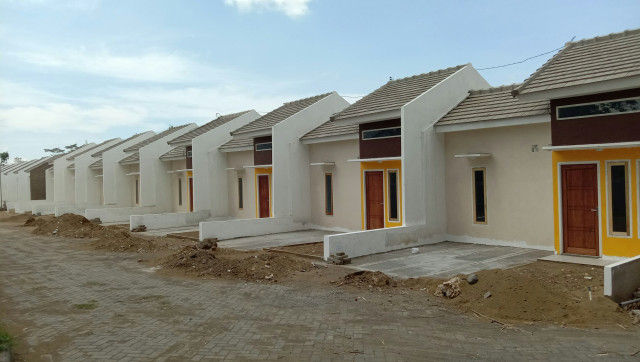
The Rise of Accessory Dwelling Units (ADUs) in Urban Planning
Housing crisis is becoming a pressing problem in the cities across the globe. Inexpensive housing and a higher population with less land have compelled policy makers, planners and citizens to think outside the box on how to address the demand without sacrificing the quality of living. Among the most important solutions that appeared following this problem is the emergence of Accessory Dwelling Units (ADUs).
Accessory Dwelling Units (ADUs) sometimes referred to as granny flats, in law units, backyard cottages, are small, self-contained dwellings constructed on the same piece of property as a pre-existing single-family dwelling. Though not so big in dimensions, their social and economical implications are extended. They offer housing at lower cost, they give flexibility to families, and they shape the thinking of the communities regarding the density.
This blog explores the presence of the Accessory Dwelling Units in the sphere of urban planning, analyzing their nature as economic, social, and step in improving the situation as well as the areas of its implementation and cultural acceptance, the possible future of the Accessory Dwelling Units, and housing shortages.
Economies of Accessory Dwelling Units (ADUs) in Housing Markets
The housing affordability crisis has led to the need to investigate options other than mega-developments and high-rise towering apartment buildings by governments and societies. The Accessory Dwelling Units are a low-cost incremental tool to this issue. Economically, they are also probably among the most effective mechanisms of increasing the housing stock without having to acquire either new land or the complicated infrastructure systems or at high costs of construction. To house owners, Accessory Dwelling Units may potentially lead to additional cash flow by offering long-term or short-term lease. This secondary cash flow not only renders homeownership more sustainable, but can keep neighborhoods stable by forestalling foreclosures or property abandonment
In the city markets where housing prices are soaring, Accessory Dwelling Units offer relatively low rental units as opposed to the normal apartment. Their smaller dimensions are inherent to drive down the prices of rent. This makes it accessible to people of low-income and middle-income. They can also fit certain people especially well: retirees seeking to downsize, students that must reside in a low -rent housing, or single professionals who value location over square footage. Due to the ability to be flexibly used, Accessory Dwelling Units can become a source of diversification in the housing stock so that the market will be resistant to changes in demand.
Municipalities are also benefited unlike other large developments where substantial public investment is necessary in the form of roads, utility development, and school, Accessory Dwelling Units take advantage of existing infrastructure. Cities are therefore able to increase their housing stock in a cost effective way. In addition, Accessory Dwelling Units raise property values in a manner that widens the tax base, thus becoming a source of fiscal gain and does not affect the character of neighborhoods extensively. Accessory Dwelling Units are uniquely equivalent economically: a bottom-up, owner-centered approach to a consequential system-wide issue: the mismatch between escalating housing demand and stagnant wages.

Social and Community Advantages of ADUs
Although they make an important economic contribution, it is possible that the social effect of ADUs could be even more life changing. Adaptable Dwelling Units (ADUs) introduce multigenerational living prospects that cater to the necessities of all the different family setups. A particular consideration is an elderly parent living in a unit that is detached on the property of the adult child and encourages independence but still is located in proximity to the caregiver.
On the other hand, young adults are left with another alternative, which is to live in Accessory Dwelling Units as they save so that they can afford houses of their own and still be part of the support system of their families. This flexibility enhances a better connection across generations and decreases pressure on the alternative accommodation facilities, i.e., nursing homes or student dormitories.
DUs have also added communities, which are inclusive. They bring in new residents to those community settings that have been accustomed to single-family homes only creating more diversity in terms of socioeconomic and cultural patterns. This diversity bonds the community and leads to tolerance and makes exclusivity permeable especially with zoning laws supporting it. ADUs include renters in established communities, eliminating any stigma that may be attached to affordable housing and presenting it as a logical extension of family and neighborhood livelihood.
In addition, Accessory Dwelling Units have the potential to resolve some social problems including homelessness. A great number of municipalities have started to experiment with the programs that promise an opportunity to the homeowners to rent Accessory Dwelling Units by offering them to individuals or families coming out of homelessness at a lower rate. Not only does this model offer stable housing but it does it in a setting that is not isolated within a community setting. Accessory Dwelling Units, through their low costs, open-mindedness, and integration into communities, demonstrate the promise of small-scale housing innovations to produce disproportionate societal impact.
Concerns and Obstacles to Dissemination
Although promising, Accessory Dwelling Units are affected by various issues that hinder the realization of their development. The greatest impediment is regulatory the zoning policies in most urban areas are very much entrenched in the exclusiveness of policies that favor single-family structures. These prohibitions or restrictions frequently reduce density, prohibit or limit secondary residences, or a have requirements such as minimum lot sizes, parking requirements, and setbacks that effectively make it cost-prohibitive to construct ADU. Although these restrictions have been starting to be eliminated through progressive reform, neighborhood resistance and regulation inertia still present an insurmountable challenge.
There are also obstacles to ADU in the form of financial obstacles though more affordable than building a new house, building an ADU is a time- and money-consuming endeavor. Most house owners do not have access to lending sources that are specialized in financing of small-scale construction projects. The old lenders potentially do not see Accessory Dwelling Units as a meaningful addition to collateral, and the publicly-funded development initiatives are in most cases aimed toward larger, multifamily projects. This funding gap is causing delayed adoption and giving the advantage to higher wealth homeowners who are able to develop ADUs privately.
Cultural resistance also is at play in most neighborhoods, residents are worried that Accessory Dwelling Units will make the place jam-packed, congested or cranky with the parking problems or the character of their neighborhood. This opposition can frequently be rendered in the form of political opposition to reforms that would legalize, or at least incentivize, Accessory Dwelling Units. Also, not all homeowners are keen to assume the role of landlord, which is accompanied with the responsibility to maintain and manage the tenants of the property. These obstacles point to the fact that although ADUs have huge potential, expanding them will need systematic changes, innovative funding, and cultural adjustments in the way the population thinks about growth.
Changes in The Culture and adoption of ADUs
The increasing number of ADUs is a real transformation of neighborhoods as well as a cultural shift that alters how people think about housing and community. Sprawling single-family housing has been the dominant ideal of American and Australian cities, where privately owned large subdivisions have been treated as an indicator of privacy, independence, and presumably prosperity. But values are changing through urbanization, environmental stresses, and economic inequality. The younger generations, especially, do not put such a stress on size as they emphasize flexibility, affordability, and sustainability. ADUs are consistent with these priorities, as they offer compact living units to fit the preferences of the modern world.
There have also been made media representations and discourse that makes ADUs to be envisioned as something desirable to be used as a housing option. Cultural acceptance Television shows about tiny homes and minimalist lifestyles is part of a movement towards a shift in cultural acceptance, with an emphasis on smaller living that is more sustainable.
Meanwhile, the world is increasingly talking about climate change, and with the insight that the traditional sprawl is not only inefficient but morally irresponsible, compact housing solutions are seen as an opportunity to not only take care of our carbon footprint but also ultimately, morally. Accessory Dwelling Units, therefore, echo a more general shift in culture in the direction of efficiency, community, and sustainability.
This acceptance is generational as well with older homeowners looking to retain their independence as they age but with the need to do so in place, Accessory Dwelling Units (ADUs) rise as a viable option. Younger owners, on the contrary, see Accessory Dwelling Units as a way to get as much out of the property and increase the source of revenue. These two worldviews respond to an increasingly apparent reality that flexible, expansive housing models will be required to adapt to life based on its different turns of events. The fact that ADUs have been culturally accepted denotes a shift in housing values based on certain ideals to one that is more flexible and accommodative in urban living.
Future Prospects and Policy Innovation
The history of ADUs in planning indicates that their future place will become even more prominent as cities adapt to the needs of the 21st century in housing. Policymakers are also waking up to their possibilities, as cities like Portland, Los Angeles, and Vancouver are points of reference of a changed approach. These cities have simplified the permitting process, lowered fees, and lightened up regulations with easier zoning to get ADU building. In most of the cases, Accessory Dwelling Units are even being planned into the scope of larger affordable housing plans, thus proving discovers its feasibility when it comes to systemic changes.
Innovation in the future is highly expected to revolve around how ADUs can be incorporated into the concept of sustainability. Such modular and prefabricated Accessory Dwelling Units, as an example, can be built much faster, and with the reduced environmental footprint. It is possible to achieve long-term savings on tenants in the form of energy-efficient design, and fit in the climate goals. Their practicality can be increased by technologically innovative features (smart home systems), and shared infrastructure. Finally, specialized and unique financial instruments to financing ADUs (i.e., special loans, grants, shared equity) will play a pivotal role in making ADUs available to people beyond high-income homeownership.
Accessory Dwelling Units (ADUs) have a long term vision that goes beyond supply of housing. They are paradigm shifters in the realm of city planning as cities consider gradual, community-oriented solutions to large-scale, disruptive projects. By implementing affordability, sustainability, and inclusivity in the neighborhood, ADUs can disrupt the history of redlining and exclusionary zoning to build an equitable method of city growth. When backed by progressive policies, cultural acceptance and financial innovation, Accessory Dwelling Units will find a place that will define the cities of the future.
Environmental Sustainability and the Green Potential of ADUs
Accessory Dwelling Unit is one of the greatest additions in sustainability terms to the environment that no one discusses. Considering current world debates on climate change and ecological resilience, ADUs are already more conducive ways of expanding cities than new housing development. ADUs can add density to existing housing stock without sprawling into new land and without the large infrastructure investments and high per capita carbon emissions that sprawling development is associated with. They utilize better what land and resources currently present can offer, making cities expand vertically, rather than horizontally.
The reduced size of ADUs has direct proportions to the amount of energy that it consumes. It takes a fraction of resources to heat, cool and habitable compact spaces than needed by a typical single-family home. By being designed with sustainability in mind, ADUs cannot only utilize sustainable building routines, but also install energy efficient technology like solar panels, heat pumps, and advanced insulation that can further minimize the environmental impact of its construction.
Green building standards and ADU policies are a new synergy that is being acknowledged by many jurisdictions today. E.g., In certain local governments, ADUs can be expedited in terms of processing of permits or their reduced costs in case they reach an energy-efficiency standard. Within this context, ADUs can serve as remedies that not only supplement current housing demands, but also are in line with climate goals, hence twofold beneficial.
One more benefit on the environment involves transportation. DUs tend to be located in existing neighborhoods and have well developed systems of transport, schools and services. ADUs offer housing density to areas that are currently dominated by automobile use and encourage sustaining a more pedestrian friendly and transit-oriented community. This is compared to the suburban sprawl which is almost ever unavoidable. The overtime effects of adding ADUs into transit-oriented communities will help to reduce green house gas emissions and support more sustainable mobility urban patterns.
Material-wise, ADUs are also adaptable towards such constructional processes as modular building and pre-fabrication. These practices curb the level of waste reduction, speed up the process of construction and have low environmental impact. Other experimental models have gone so far as to create an upcycled shipping container ADU or repurpose wood left over in a warehouse to achieve an environmentally-friendly housing solution, showing the merge between the ideology of an ADU and the circular economy. With increasing material costs and sustainability demands, ADUs are stepping into a position to become champions of how homes can be sustainable and affordable.
Another aspect through which ADUs can be excellent is by just conserving water. Smaller homes consume less water by virtue of being smaller, and newer types of ADUs can also include low-flow toilet systems, rainwater collection, and water recycling out of greywater. These innovations can also come in handy in drought-prone areas since they are not only green but may very soon turn into regulatory necessities. The national cities that are facing water scarcity can, therefore, facilitate development of ADUs in their wider resilience plans.
More importantly, environmental potential of ADUs is not limited to the units itself; in fact, it has impacts on broader urban systems. ADUs conserve natural areas, farmland, and others, preserving natural habitats, ecosystems, and water. They represent the philosophy of doing more with less--adapting to increased growth without compromising environmental integrity. Thereby, ADUs reflect a combination of the priorities of housing and ecology policies because solutions to human needs and nature sustainability go hand in hand.
In their effort to find solutions that tick the double boxes of housing and climate, ADUs have become an elegant one. They are not only economically and socially important but also environmentally strategic because they represent one of the sustainable urban living ways as it respects the way of our planet, its borders.
Conclusion
It is not only a fad in architecture or real estate, but rather a revolution in society as to how it is handling the acute shortage of housing. DUs are a special balance of economic sustainability, societal inclusivity, and cultural flexibility. They enable homeowners, offer affordable housing to renters and they increase community resilience. However, to achieve their full potential, they have to overcome regulatory factors, extend financial inclusion, and destabilize cultural opposition.
Urban planning has always been concerned with the ability to meet individual goals within the confines of group necessities and ADUs are an ideal embodiment of this. They enable homeowners to simply modify their homes and provide to larger housing remedies. They break generational borders, create inclusivity, and prefer to be in line with sustainability objectives. By doing so they provide more than shelter they provide a view of more interconnected, equal and flexible urban centers. With challenges of housing affordability and urban dispatch on the rise, ADUs may turn into some of the most effective tools of building resilient communities that will be capable of surviving any changes.
Also Read: Housing Activities in Contemporary Indonesian dwellings



-shtTqaPktk.jfif)









LEAVE A REPLY