

Retrofitting of the already existing housing is an
increasingly critical strategy of living conditions, environmental impacts, and
supporting the increased demand of affordable houses in Africa. As the cities
in Africa are rapidly urbanizing and populating, the gap between the available
housing and the number of households requiring housing is increasing. The
solution to this gap cannot be through building new houses, but rather through
renovation of the current ones in order to attain inclusive and sustainable
development. Retrofitting is a low cost mechanism to improve safety, comfort,
and energy efficiency and improve the life expectancy of old housing stock. It also
assists in maintaining the community connection as residents would not have to
move to new developments to stay in their own neighborhoods.
Informal settlements in most African countries, as well as
old structures, are inhabited by large numbers of the population that are not
properly infrastructure, insulated, sanitized, or structurally sound. These
factors cause health hazards, environmental erosion and poor economic
prospects. A viable and scalable solution to such challenges is retrofitting.
Through upgrading the existing houses, governments and other individuals can
enable climate withstand, decrease carbon footprint, and enhance living conditions
at low financial cost compared to complete demolition. This blog discusses the
opportunities, challenges, and social effects of retrofitting housing in Africa
and how it can be used as a radical means of developing the urban future of the
continent.
Increasing
Retrofitting of African Urban and Rural Housing.
Demand to retrofit the current housing stock in Africa has
increased with the pressure that is mounting on the infrastructure and living
conditions of the urban and rural people. The rate of urbanization keeps
surpassing the capability of the governments and real estate developers to
generate new housing and leave millions of people living in overcrowded or poor
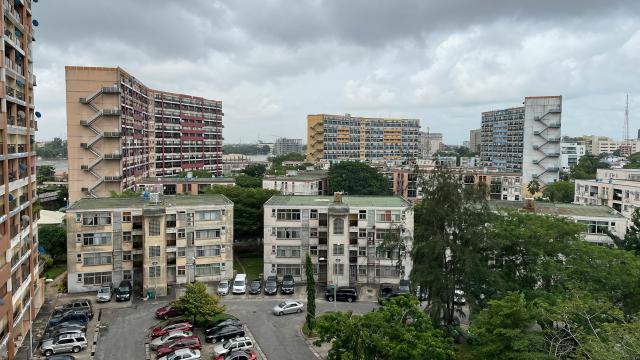
housing. Informal settlements cover a substantial part of the residential
landscape in most cities and the structures are built gradually over time with
very cheap materials and minimal planning. Climate effects usually affect these
homes, including floods, heat waves, and strong winds and therefore
retrofitting is a decisive approach to increasing the resilience of these
homes.
Another problem in rural areas is also the issue regarding
the old buildings, inaccessibility of contemporary building materials, and lack
of utilities. The retrofitting of these areas can offer safer and more
comfortable homes which minimize the use of ineffective traditional methods of
building. Retrofitting is becoming an effective solution to the housing
shortage across the continent since it will enable the expected improvements to
be made at considerably low costs not compared to complete reconstruction. It
also reduces the level of displacement and allows communities to sustain their
social networks. Retrofitting is now coming to take centre stage in inclusive
urban growth, sustainable development and long-term housing stability in Africa
as policymakers and development agencies realise the need to upgrade existing
housing.
Retrofitting Economic
benefits to home owners and communities.
There are many economic benefits of retrofitting old houses
to the individual owners, local communities, and the economy of nations. To
individual households, home improvements would add a lot of market value to the
house, enhance energy efficiency, reduce the utility bills, and provide a
healthier environment. Such enhancements enable families to spend less in the
long-term and accumulate the assets that increase with time. Simple
improvements, like insulation, structural repairs, installing efficient appliances,
etc. can have good payoffs.
Retrofitting can also encourage the formation of jobs at the
community level in the areas of construction, materials and energy. It means
that the local artisans, contractors and supply chains are under the continuous
demand of skilled labor and building materials. The local workers are regularly
hired on retrofitting projects, which contributes to the dissemination of
income in communities and supplements small businesses. Moreover, home upgrades
could also be popularized, which will ease the burden on local infrastructure,
and have a positive effect throughout the neighborhood.
To governments, retrofitting is less expensive as compared
to massive new construction. With the means of upgrades instead of complete
demolition, the public money can be stretched much longer and provide immediate
positive effects on the standards of life. Retrofitting is another aspect that
helps in achieving climate objectives as it conserves energy and prevents the
destruction of the environment due to inefficient constructions. On the whole,
it is a long-term and financially viable solution to the housing conditions in
Africa.
Structural Integrity
and Safety: Affordable Upgrades.
One of the most critical parts of retrofitting in Africa is
to guarantee the structural integrity and safety of the existing houses. Most
of the old or patchwork built houses have weak foundations, roofs, or wall
reinforcements and therefore can easily collapse especially during extreme
weather conditions. Low-cost upgrades are capable of being very beneficial in
enhancing the safety of the structure through strengthening the walls,
stabilizing the foundations, mending the roofs, and replacing damaged materials.
Such interventions assist in securing the households against dangers like
storms, fires, or earthquakes, which have disproportionately impacted the
low-income neighborhoods.
Reconstruction is not necessarily a complete way to enhance
structural safety. Adding steel support, cement stabilization and proof roofing
materials are cost effective methods that can significantly increase the
lifespan of a building. When people are living in informal settlements, where
the constructions are usually made with few materials, retrofitting may convert
hazardous homes into strong and steady living environments.
Physical security is not the only benefit of structural
upgrades, as they also enhance the feeling of safety and health of residents.
Families in safer homes have fewer disruptions, health hazards, and monetary
expenses incurred in repairing or disaster recovery. Structural retrofits
conducted on a community-wide basis can also enhance the resilience of urban
areas because they will mitigate the extent of damage in case of
climate-related incidents. Structural safety should be a priority of the form
of affordable upgrades which would make sure that the retrofitting process
provides sustainable value and help build healthier and safer communities in
Africa.
Strengthening
Retrofitted Homes against the Energy Crisis and Climate Change
The need to have energy efficiency and climate resilience is
a growing concern in the retrofitting of African housing. Most of the current
houses are poorly insulated, ventilated and their appliances are old and
inefficient so that they consume more power and do not save it properly.
Retrofitting is the way to implement energy-saving options, including the
implementation of insulated roof, air sealing, window upgrading, and the use of
efficient lighting or solar systems. Not only do these enhancements save on the
household costs but also minimize the strain on the power grids of countries,
which are usually strained.
There is also a need to be climate resilient as extreme
weather occurrences become common in Africa. Retrofitting consists of solutions
to protect homes against heat waves, heavy rains, and flooding by including
such features as better drainage, reflective material, and raised foundations.
The houses in the flood and coastal areas can be strengthened to avoid water
and erosion. Climate-resilient and energy-efficient retrofits are aligned with
the global sustainability aims by minimizing the emissions, saving resources,
and improving the environmental performance.
Such improvements are specifically effective in the informal
settlements where houses are usually constructed using materials that have
minimal resistance to weather extremes. Retrofitting will be significant in
constructing resilient housing, both urban and rural as African nations
struggle to withstand the climate-related challenges.
Retrofitting Informal
Settlements without Displacing Residents
The retrofitting of informal settlements is one of the most
urgent housing problems in Africa, yet it is also an opportunity to make the
lives of residents of informal settlements better and not to relocate them.
Living close to employment opportunities and social contacts, millions of
people live in informal settlements, which are often dense, improvised, and
have few or no access to basic facilities. The conventional methods of
re-development through destruction and eviction normally destabilize livelihoods
and create a lack of unity. However, retrofitting can help to make in-situ
improvements in order to maintain these valuable social structures.
Sanitation, drainage, structural stability, and
accessibility to utilities can be affordable restructured using retrofitting
plans without altering the current community trends. The installation of proper
toilets, water and electricity lines and drainage facilities can make a
significant change in health and hygiene. Renovation of houses over time- also
known as site-and-service improvements allows the families to stay in their
houses and improve safety and quality of living.
Informal settlements require community participation in
accomplishing retrofitting. This is because when locals are consulted, the
upgrades incorporate local requirements, culture and priorities. This
participatory methodology enhances trust, better project results and reduce
conflict. Urban development in Africa should be done in a manner which fosters
equitable development of urban centers without displacing the people living in
the informal settlements since this will enhance social stability, lessen poverty,
and create equitable urban development through retrofitting of informal
settlements.
Funding Models That
Have Advanced Retrofits of Affordable Housing
Funding is also one of the greatest impediments to
retrofitting the African housing. Most families are unable to cover initial
renovation expenses even in cases where remodeling has financial long-term
gains. Consequently, new financing frameworks are also necessary to make
retrofitting wide-spread. The microfinance, savings cooperatives, and community
lending groups are also very important as they provide small loan facilities
with relaxed terms of repayment, to the low-income household. These systems enable
families to do gradual upgrades without incurring excessive financial pressure.
Retrofitting can also be encouraged by the use of
public-sector support, including subsidies, grants and low-interest loan
programs. Governments can also collaborate with development finance
institutions, where they develop financing programmes that aim at climate
resilience, energy efficiency, or safety upgrades. Pay-as-you-go financing
which is usually applied in the solar system can be scaled to home renovations
where the residents are given an opportunity to pay off over time at manageable
payments.
The private investors and banks are also looking at the
green financing which is the option where a retrofitting project that enhances
the performance of the energy can be offered preferential rates. Blended
finance, which incorporates funds by government, corporations, and donors, has
been successful in scaling up programs of affordable retrofitting. Using varied
funding structures, African nations can increase their ability to access
affordable housing upgrades, giving the community the power to make quality
improvements on how they live their lives in a sustainable and fair manner.
Community involvement
and the social impacts of retrofitting Programs
Retrofitting programs in Africa need to be evaluated based
on community participation. The upgrades will be more culturally and
need-oriented when residents take part in the process of planning, decision
making and implementation. Good involvement builds loyalty, a sense of
ownership and makes the improvements to be long run. Community-based
retrofitting projects are usually better maintained and accept new
infrastructure or technologies more readily.
Physical upgrades are only the tip of the social iceberg
regarding the social implications of retrofitting. The housing conditions are
also better, which leads to health outcomes by minimizing the risk of exposure
to hazards, including poor ventilation, mold, and contaminated water. The
improved homes also improve the security, privacy and general well-being of the
families, and the families are able to socialize and economically prosper.
Retrofitting the neighborhoods on a community-wide level can revitalize the
neighborhood, foster local pride, and enhance social cohesion.
The Role of
Technology, Innovation, and Local Materials in Retrofitting
The future of housing retrofit in Africa is increasingly
becoming technology and innovation-driven. Digital devices, including mobile
applications, mapping technologies, and remote sensing help governments and
developers to determine the quality of structures, track projects, and allocate
more attention to areas that require upgrades the most. These technologies are
efficient and cost-effective since they make the planning and implementation
easier. Methods such as prefabricated construction parts, modular additions,
and cheap insulators, among others, are good remedies in the construction
industry as they provide quick and cheap ways of retrofitting houses.
Materials available locally are also significant. African
countries have strong traditions of clay, stone, bamboo or compressed earth
block construction. These materials are eco-friendly, climate-friendly, and
economical when employed to the contemporary reinforcement techniques. The use
of retrofitting strategies which utilize local materials lowers the use of
imports which are costly and they favor local industries.
Technology also boosts the energy efficiency by use of solar
panels, smart meters and better ventilation systems. These innovations, when
used together with the community-based building practices, develop lasting,
cost-effective, and ecological solutions. The adoption of technology and local
resources means that retrofitting initiatives are locally relevant,
economically viable, and expandable - assisting African countries in
retrofitting their housing stock in a sustainable manner given the fast urbanization
and climate change.
Policy Frameworks and
Partnerships Supporting Large-Scale Retrofitting
Scaling retrofitting throughout Africa requires effective
policy structures. To make sure that the retrofitting projects comply with the
quality requirements, governments have to set clear standards on building
quality, land tenure, and safety standards, and energy efficiency. Approval
processes can be expedited by simplification of regulations and minimizing
bureaucratic obstacles and make retrofitting more affordable and available to
homeowners and developers. Policies to provide tax relief, subsidies or grants
promote the upgrade, privately, at affordable costs.
Government-development agency, NGO and government- private
sector partnerships are also important. The mobilization of resources,
technical skills, and innovations in large-scale retrofitting efforts through
public- private partnerships can be achieved. The financing of the project can
be provided by international donors and climate funds to support the projects
that are concerned with resilience, and sustainability. Local governments are
at the center stage since they coordinate community activities, infrastructure
improvements and surveillance.
Retrofitting can also be supported in educational
institutions and other training centers through skills development programs to
the construction workers, engineers and technicians. An integrated,
multi-stakeholder model will see to it that retrofitting is a national agenda
and not a few small scale initiatives. African countries can use powerful
policies and collaborations to convert their current housing stock into safe,
healthy, and future-proof houses to millions of people.
Conclusion
The retrofitting of the current housing stock is a critical
avenue towards enhancing the living conditions, broadening the affordability
and ensuring sustainability in Africa. The continent will not sustain the
changing housing demands with the rapid urbanization, increasing populations,
and informal settlements. Retrofitting is a cost-efficient, scalable, and
socially inclusive method, thanks to which the safety, energy efficiency, and
comfort can be improved, and community networks can be maintained.
The positive impacts of retrofitting are not limited to just
a single home, communities are made stronger and more resilient, local
economies are helped by the creation of employment, and national climate
targets become more achievable. The success is based on the encouraging
policies, new models of financing, technologies, and effective cooperation with
the communities. When these factors come into play, retrofitting will be an
effective instrument that will transform the urban and rural environment in Africa.
Governments and stakeholders can realize the potential of
the existing housing stock and create a base to have healthier, more equitable,
and more resilient communities by dedicating resources to affordable retrofits
and making investments in sustainable improvements. Retrofitting is not only an
approach to the housing, but also an essential part of the future development
of Africa and the factor promoting inclusive development of the continent.











LEAVE A REPLY