

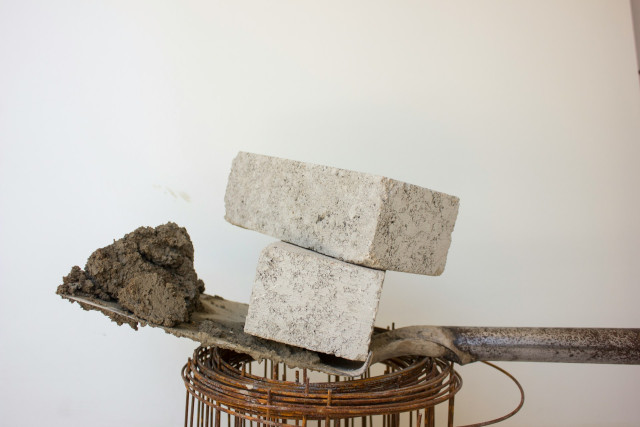
Reducing Cement Use Without Losing Strength: Mix Optimization Basics
The most important constituent of concrete is cement, which
makes it strong and durable, yet its manufacturing contributes to the overall
global CO 2 emission significantly. As sustainability continues to be a very
important issue in construction, engineers seek alternatives to ensure that
they use less concrete without affecting performance. The most efficient approach
is the so-called mix optimization, where concrete ratios between cement, water,
aggregates, and additives are changed to produce the highest efficiency.
Mix optimization is utilized to trade-off among strength,
workability, and durability and may call upon the services of supplementary
cementitious materials (SCMs), including fly ash, slag, or silica fume, to
partially substitute concrete. High-performance, low-cement concrete requires
proper water- concrete ratio control, particle packing, chemical admixtures and
curing practices. Knowing these principles will guide the construction
professionals to create eco-friendly concrete that will satisfy the strength demands
and also limit the costs. This blog examines the principles of mix
optimization, implementation strategies and new trends in concrete sustainable
design.
The contribution of Cement to Concrete.
Cement is the binding component of concrete and by giving it
hydration, it enables cohesion and place the concrete in place to offer strength
to the concrete. When the concrete is hydrated, the cement reacts with water to
produce calcium silicate hydrate (C-S-H), the primary strength providing
substance. The quantity and form of cement affect workability, gain in strength
and durability.
To decrease concrete content and maintain strength it is
necessary to know how cement combines with other mix ingredients. The
water-cement ratio (w/c) has a major influence on the strength namely low
water-cement ratio result in higher strength and less workability whereas high
water-cement ratio result in less flow and more strength. The combination of
the type of cement and particle size with optimized aggregates, and admixtures
enables the concrete designers to achieve performance at reduced cement content.
This balance is critical towards sustainable mix design.
Water-Cement Ratio Optimization
The most important aspect in determining concrete strength
is the water- cement ratio. Reduction in ratio enhances strength and decreases
porosity but too much reduction may affect workability. Water-reducing and
super plasticizers assist in keeping the flow constant and reducing the w/c
ratio enabling the use of less cement without compromising on the strength.
Determinate measurements and controlled mixing are vital to
avoid the excessive addition of water which will result in weak porous
concrete. Also, to achieve full hydration, appropriate curing is necessary
especially in the low-cement mixes. Pre-wetting aggregates, high quality of
water and batching are also techniques that increase strength. Sustainable
high-strength concrete can be manufactured using reduced cement by means of
conditioning the water-cement ratio.
Supplementary Cementitous Materials (SCMs)
Fly ash, silica fume, metakaolin and slag are selected as
some of the frequently used SCMs which partially substitute cement in concrete.
They lower cement level, increase strength as well as tend to raise long-term
strength.
The calcium hydroxide reacts with fly ash to produce more
C-S-H, which enhances strength and workability. Slag strengthens chemical
resistance and lowers heat of hydration and silica fume escalates strength and
lowers permeability. SCM proportions should be selectively made to sustain
performance. In normal-strengths concrete, 20-50 per cent concrete replacement is
normally achievable. SCMs make it possible to use sustainable, high-performance
concrete and reduce carbon footprint and costs, thus, becoming an important
instrument in mix optimization.
Aggregate Optimization
Concrete consists of aggregates that affect the workability
and strength to a large extent. Maximization of size, shape, and grading
minimizes the void and cement paste requirements. Grades of the aggregates
enhance packing of the particles, increase strength and lessen concrete requirement.
Angular or crushed aggregates enhance mechanical
interlocking and strength whereas rounded aggregates enhance flow and demand
greater paste. Aggregate size and grading have a maximum effect on the volume
of the paste and mixing different sizes leads to dense mixes. Recycled
aggregates can also minimize the environmental impact provided that the
absorption and quality problems are dealt with. The most effective approach to
minimizing cement content in concrete and at the same time maintaining the
characteristics of concrete is proper aggregate optimization, which is
cost-effective and sustainable.
Cement Reduction Chemical Admixtures
Super plasticizers, water reducers, accelerators, and
retarders are chemical admixtures that enhance the concrete properties and concrete minimization is possible. Workability is enhanced in low w/c mixes by
super plasticizers and retarders are used to prolong the setting time in hot
mixes. Accelerators increase the early strength, and less cement is used.
It is important that dosing is accurate, concrete and SCMs are
compatible. The wrong application can cause segregation, retarded strength or
strength durability. Admixtures can be used when well to provide low-cement,
high-strength concrete that is cost-effective and environmentally friendly to
supplement other mix optimization strategies.
Particle Packing and Microstructure Control
Packing of the particles affects the concrete strength
because it determines the voids and the demand of the paste. The size
distribution of concrete, fine aggregates and coarse aggregates should be
optimized to maximise the packing density, minimum voids and decrease cement
demand.
Packing and microstructure can also be improved through fine
fillers such as limestone powder that would add strength and durability. More
advanced models like the Andreasen and Andersen equation are used to predict
optimal distribution of particles, which enables designers to reduce concrete,
but this does not affect the performance of that cement. Compact concrete is
also hard to crack and permeable which enhances long life durability without
compromising strength.
Composite Techniques of Curing Optimized Mixes
Low-cement concrete requires proper curing. The concrete content is lower hence the natural moisture is lower thus the controlled curing
is necessary to build strength. Water curing, wet coverings, curing compounds
and steam curing keep water hydrated and avoid shrinkage.
Care should be taken in the monitoring of temperature,
humidity and duration. Curing also makes low-concrete mixes as strong as
traditional concrete. Optimized mix design combined with proper curing will
lead to sustainable high-strength concrete that is in line with performance and
durability requirements.
Case Study and Practical Applications
A lot of projects have managed to minimize cement content by
optimization of their mix. Replacing cement with fly ash or slag, optimized
aggregates, and chemical admixtures have all allowed the replacement of concrete by 2040 percent, with the structural and durability needs being satisfied.
These strategies have been useful in high-rise buildings,
bridges and mass concrete structures and have proved to be more cost-saving,
reduced environmental impact, and equally strong. The mix optimization
principles are tested in reality, and it is proven that sustainable concrete
can be both feasible and practical.
Future Trends in Sustainable Mix Design
The design of the future concrete construction aims at
minimizing concrete by using advanced materials, nanotechnology, and AI
optimization. The alternative SCMs, recycled materials, and performance-based
methods permit ultra-low cement mixes.
The digital tools and machine learning are used to predict
the best mixes of strength, workability, and durability to reduce trial and
error and waste materials. More and more sustainable concrete will use these
innovations and balance performance, cost, and environmental impact. The mix
optimization, technology, and material science combination allude to a more
green and strong future in construction.
Blended High-Performance Concrete with Cement Reduction.
High-performance concrete (HPC) is meant to be stronger,
more durable and workable than the ordinary concrete. In order to minimize
cement in HPC, it is essential to have a thorough understanding of material
interactions and mix proportions optimization. The primary ones are the
incorporation of supplementary cementitious materials (SCMs), the optimisation
of the water-concrete ratio, and the employment of chemical admixtures.
SCMs such as fly ash, silica fume as well as slag do not
only substitute cement to some degree but also make long-run strength stronger
due to pozzolanic reactions. In certain cases, especially silica fume, occupies
the micro voids in the concrete matrix to form a denser, stronger material. HPC
mixes with super plasticizers are able to have a high flow ability even with
low ratios of water-cement without affecting the mix performance.
HPC design is also dependent on particle packing. Using a
well-graded aggregate combination, with the incorporation of micro-fillers,
engineers are in a position to cut the level of concrete paste that is required,
and still achieve the highest strength and fewest shrinkages. The increased
microstructure enhances resistance to chemical assault, freezing-thawing, as
well as abrasion.
Other than the choice of the material, the curing habits are
also important. The right curing is the means of ensuring that the reduced concrete content is fully hydrated such that HPC attains the intended strength.
They are kept in steam curing, water curing, and protective coverings applied
in order to ensure the best moisture and temperature levels.
Through a combination of these methods, HPC is able to attain the structural and durability needs using significantly low cement. Not only does this save on costs, but it also saves the amount of carbon footprint of the construction projects. Increasing urban infrastructure needs have created a need to use HPC concrete with optimized cement content as a sustainable solution to create a balance between environmental responsibility and structural performance.

Use of Nano materials in the reduction of Cement.
Nanotechnology is also becoming a potent technology that can
be used to minimize concrete usage and simultaneously enhance concrete behavior.
Nanosilica, carbon nanotubes and nano-clays are examples of nanomaterials that
are capable of significantly increasing microstructure and mechanical
properties of concrete to enable the decrease in cement content without
affecting the strength.
An example is nanosilica, which is a micro-filler, which
occupies the smallest spaces between concrete particles and aggregates. It also
promotes hydration which enhances early strength and better durability.
Additives based on carbon nanotubes and graphene improve tensile properties and
crack resistance, so that concrete does not rely heavily on the concrete
content levels to provide structural functionality.
Nano materials can be added enabling engineers to build
ultra-dense concrete matrices with lower porosity. This not only enhances
strength but also increases culmination to chemical attack, carbonation and
chloride intrusion. Consequently, lower cement blends are able to attain the
durability levels that are normally linked with higher percentages of concrete.
Practically, nano materials require cautious dosage and
homogenous distribution to prevent agglomeration which may impact adversely on
the workability and performance. To achieve the adequate distribution,
laboratory tests and sophisticated mixing methods (ultrasonic dispersion, etc.)
are frequently used.
As the research advances, nanotechnology will have a more
prominent place in sustainable construction. Nano materials help to develop
greener solutions to concrete, as they allow reducing the consumption of concrete without compromising performance. They provide an encouraging line of research
on integrating environmental friendliness with high strength and high
durability infrastructure that can meet the requirements of modern day
engineering.
The Use of Recycled Materials and Wastes.
Recycled materials should also be included in the concrete
mixes as one of the strategies that can be used to minimize the use of concrete and enhance sustainability. Partly, recycled aggregates, industrial byproducts,
and construction waste can substitute cement or conventional aggregates and
decrease the ecological footprint of the concrete production.
The classic examples of industrial byproducts as
supplementary cementitious materials (SCMs) are fly ash, slag, and silica fume.
They not only substitute concrete, but also increase long-term strength, decrease
permeability, and increase durability. Utilizing these materials will not only
prevent the landfills but also will help lower CO 2 levels in the manufacture
of cement.
In the case of non-structural and even structural
construction, recycled aggregates, which are made out of crushed concrete or
demolition debris, can be used instead of natural aggregates. Even though they
tend to be more frequently absorbed and less resistant as compared to virgin
aggregates, proper mix design by the addition of water content variants and
admixtures can overcome the problem and produce high quality concrete with
reduced concrete.
Rice husk ash, glass powder and waste ceramics are other
waste material that has shown promising pozzolanic activity, which helps in the
formation of strength and also lessening concrete requirements. The addition of
these materials to concrete does not only reduce costs but also promotes a
circular economy in the field of construction.
Using strategic recycled materials, engineers are able to
create concrete mixes that retain and/or increase the strength with
considerable reduction of cement content. Such strategy is in line with
international sustainability targets, which offers a feasible solution towards
building environmentally friendly structures. With the advancement of recycling
technologies and the increase of material supply, the prospects of the
low-concrete, high-performance concrete are going to be broadened.
Quality Assurance and Performance Checking.
The optimization of mixes should be made under strict
quality control and monitoring performance. The minimization of concrete content
without reduction in the strength is based on the uniform material property,
accurate proportioning, and ongoing assessment in production as well as in the
curing.
Some of the important points are proper measurement of
cement, aggregates, water and admixtures. Differences in material moisture
content, particle size or chemical composition may have a dramatic influence on
workability and strength, especially in low-concrete mixes. A regular sampling,
laboratory testing and automated batching systems enable the consistency in the
mix quality.
Compressive strength, flexural strength, permeability and
shrinkage measurements under strength and durability testing are important
indicators of mix performance. Any deficiencies can be detected early on to
make amendments to the mix design, the curing process or the material used, and
hence optimized mixes are produced to fulfill the structural requirements.
Observation is also applied to the environment. Hydration is
affected by temperature, humidity and the time taken to cure, especially where
there is less concrete content in the mix. It can be enhanced with the
implementation of on-site sensors and data logging that can help to understand
concrete performance and implement the adjustments in real-time.
Through a combination of rigid quality control and
systematic performance monitoring, the construction teams can safely limit the
amount of cement used and at the same time, concrete can be used to meet all
design requirements. The method reduces the risk of low-mixes of concrete and
ensures durability and maximizing the value of sustainable, high-performance
concrete.
Conclusion
It is possible to reduce concrete consumption without
compromising its strength by optimizing the mix. The use of water-concrete ratio,
SCM, aggregates, chemical admixtures, and better packing of the particles, and
appropriate curing is used to achieve high-strength and durable concrete with
reduced concrete content.
These are the strategies which not only minimise the carbon
footprint and expenses, but also increase the performance of the business in
the long term. Practical real-world projects and emerging technologies attest
to the fact that there is a tool that is practiceable and effective, i.e.
sustainable, high-performance concrete. The construction industry can satisfy
the structural demands and help in enhancing the sustainability of the
environment, economy, and development of infrastructure that is resilient by
adopting mix optimization.

-5yCS4OoVBg.jpg)










LEAVE A REPLY