

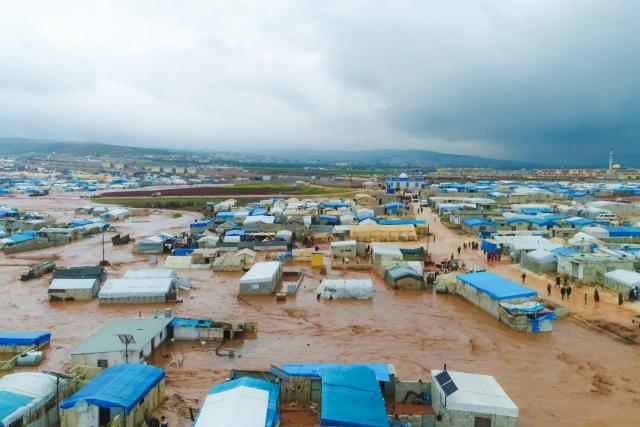
Rebuilding after Disasters: NGOs Helping Flood-Affected Families
Floods are one of the most catastrophic natural disasters. They often happen without prior notice, leading to severe destruction. Infrastructure, households, livestock, and livelihood resources are washed away within hours inundating families and entire communities. The attempts to rebuild under such catastrophic conditions is often excruciating and monumental. Governments have to play an important role in the management of the disaster, but the role of non-governmental organizations brings a different perspective which is of extreme importance. NGOs have always been on the frontline, offering swift immediate relief during crises and providing long-term rebuilding aid. Often, their responsiveness and focus on the grassroots-level ensures that they reach the people and areas that are neglected by larger systems bound in bureaucracies.
In this blog focus will be on how NGOs help the families to reconstruct their normalcy after floods, and more significantly, how they rebuild after the floods. We begin exploring the intricate intricacies and multi-layered aspects that these organizations address through from emergency response to long-term recovery. Their work in contrast to the frequent and more severe floods caused by climatic changes needs utmost support and understanding.
Relief from Natural Hazards and Prompt Action through NGOs
Non-Governmental Organizations assist with immediate aid on the ground while government aid is still in the process of mobilizing after a flood. NGOs arrive onto the scene with food and other necessities because they have already established a network within the stricken community and are able to act promptly. Their relief packages include food and water, hygiene products, shelter, medicine, and basic medical treatment. NGOs set up camp or response centers to help streamline aid in conjunction with local government bodies and international aid organizations.
Médecins Sans Frontières and International Federation of Red Cross and Red Crescent Societies are examples of NGOs that provide mobile healthcare in mid disaster areas. The mid disaster clinics serve as a treatment hub for displaced individuals who suffer from post-flood infections, injuries, and certain diseases like cholera and malaria. Others aid with post psychological illnesses that arise from losing family members, homes, and life as one knows it.
Another important feature of the primary response is coordination and logistics. After a major flood, NGOs bring in consultants who specialize in disaster logistics because the accompanying shatter is infrastructure on the stranded road creates major hindrances complex. They work with local volunteers who use boats, trucks, and even helicopters to get to the people who are stuck. Similarly, NGOs use technology to map the areas influenced by flood, the most vulnerable population, zone conflicts of other activities, and ensure there is no duplication of aid provided by other actors.
These international donors and partner organizations provide them with the ability to quickly mobilize resources, which in turn allows for easy scaling of relief operations. For a lot of families, these rapid responses are a life and death matter. During this phase, NGOs tend to advocate for funding and support which causes escalated attention focused on the magnitude of the disaster. This ability to communicate the urgency of the situation enables the achievement of sufficient resources required for further and more widespread assistance.
Repair of Shelter and Other Infrastructure
Efforts to give the people temporary security, dignified shelter, and an easier living condition follows restoring the order. Strikes such as floods may completely wipe out homes or make them inhabitable. At this stage, NGOs either provide temporary shelters or help build permanent structures. These can be in the form of tents or pre-made units which are self-sustained through the aid of solar panels, water filters, and sanitation amenities.
NGOs such as Habitat for Humanity assist afflicted communities in constructing their homes and other supportive infrastructure trying to increase the sustainability and reducing the impact of future floods. They collaborate with local builders and teach affected households safe building techniques. Empowering members depleted socially, which make sure the homes are culturally relevant eco-friendly. NGOs also conduct community participatory design where people take part in designing their new homes and whole neighborhoods, thus fostering strong attachment and increased satisfaction leading to a positive outcome.
In addition to constructing homes, restoring infrastructure like roads, bridges, water supply, and electricity systems is also fundamental for the recovery of a community. NGOs partner with engineers, architects, and urban planners to evaluate the damage and restore infrastructure. Agricultural NGOs assist in restoring eroded farmlands and irrigation channels in rural regions. In urban areas, public transport routes and flood water drainage systems are restored to enable the resumption of normalcy.
For these Reconstruction projects, NGOs have the freedom to implement new ideas funded by international development organizations using green infrastructure and eco-friendly materials that serve the purpose of rebuilding and protecting the environment. Constructing resilient buildings encourages the use of flood resistant materials and Design such as raised homes or stilt houses in areas that are prone to flooding. Locally, authorities are engaged in the devising of maps that clearly mark flood hazard zones and strategic urban planning that mitigate the possibility of risks in the future.
Because of the participatory framework many NGOs embrace, even the most marginalized individuals, including women, ethnic minorities, old individuals and disabled persons are not left out of the reconstruction process. These strategies rely heavily on communities, making the structures that; the environment has to offer stronger, safer and more inclusive.

Ensuring Food Security and Livelihood Restoration
The loss of sustenance often results as one of the most damaging problems of flooding. Crops and livestock are lost to farmers, vendors have their shops submerged, and wage workers are frequently left jobless due to industries closing down either temporarily or permanently. In these cases, NGOs are very helpful when it comes to supporting families regain their economic productivity. They tackle the issue from both ends by providing immediate food assistance while also ensuring long-term strategies are in place.
In response to the disaster, NGOs turn to food distribution or community kitchens to guarantee that no family faces hunger. They contract with farmers, cooperatives, food suppliers at different levels, and even local suppliers to obtain grains, vegetables, and proteins. Children, pregnant women, and the elderly are also targeted because of their susceptibility to malnutrition. They also offer cash-for-work or food-for-work programs, where locals are compensated with cash or food for participating in the clean-up and restoration work. These actions aid in providing food, but more so help reclaim personal self-worth.
As we enter the recovery phase, the emphasis moves to restoring people’s lives. Agricultural aid NGOs furnish farmers with seeds, implements, fertilizers, and livestock. They teach farmers climate-resilient farming techniques and encourage farmers to diversify their crops to lessen exposure. Small business owners are assisted with microloans, business development training, and rebuilding their shops or stalls. Additionally, vocational training is offered to those who became unemployed as a result of the flood.
Women’s empowerment receives considerable attention during this phase. NGOs form women’s cooperatives or self-help groups where women learn skills such as tailoring, food processing, and making crafts. These groups often develop into steady income sources and enhance community resilience. To assist individuals recovering from the impact of the disaster, some NGOs partner with local banks and microfinance institutions to develop subsidized loans.
Livelihood restoration is accompanied by technology. Agricultural aid NGOs implement mobile payment systems, agricultural advice services, and weather forecast subscriptions. They establish online markets for farmers and artisans to sell their products, broadening their market access and increasing their income. We do not solely aim to recover the assets which have been lost, but rather aim to create multi-faceted, stronger, and more resilient economies which can withstand future shocks and stresses.
Health and Sanitation Services in Post-Flood Areas
In overpopulated and developing regions, flooding is perhaps one of the most concerning multimodal outcomes, with a possible health crisis being one of the primary issues. Contaminated water, sanitation system disruptions, as well as stagnant flood waters are catalysts to illnesses such as cholera, typhoid, dengue, and malaria. To avert catastrophic health failures, NGOs mobilize and set up medical camps, clinics, and start the distribution of hygiene kits containing soap, disinfectant, sanitary pads, and water purification tablets.
Medical NGOs work with local health authorities to conduct immunization and disease surveillance programs. These NGOs control and report outbreaks to avert a health crisis. Such interventions allow them to respond more readily to outbreaks, particularly in remote or marginalized communities at the tail end of systematic state healthcare. Mental health requires escalating focus after a disaster, given that people become susceptible to post traumatic stress, anxiety, and depression. Counselors, group therapy providers, and other mental healthcare professionals implement referral systems to help patients better cope with the aftermath.
Sanitation remains yet another focal problem. With sewer systems frequently in ruins, NGOs build makeshift toilets and waste disposal systems to lower the incidence of open defecation and contamination. They also instruct local volunteers on how to teach community hygiene, including hand washing, safe water storage, and menstrual hygiene management.
Water treatment is a requirement in all severely flooded regions. NGOs equip these camps and communities with water treatment facilities and portable filters. They also install or restore water and sanitation facilities in schools and health centers to provide the children and patients with clean water and toilets.
These initiatives are complemented with long-term health interventions once the communities start stabilizing. This includes setting up the maternal and child health services, providing nutritional aid for children suffering from acute malnutrition, and improving the level of local health services. In addition, NGOs promote comprehensive health policies which will make care accessible to survivors of floods without charge or at a nominal fee. By combining preventive and curative approaches, NGOs help these communities to become healthier and more resilient.
Social Participation and Its Impact on Coping Strategies
Socials disruptions, such as natural disasters and floods, have physical and psychological effects. They result in the destruction of property and displacement of people, affecting entire families and communities. Moreover, finding new jobs and resettling creates additional uncertainty and long-lasting psychosocial problems. Psychosocial support and community resilience approaches by non-profit organizations are essential for mental well-being.
Community engagement revolves around listening to the affected people. Understanding their experiences, fears, and concerns gives them a sense of belonging. To capture insights and build trust, NGOs conduct listening sessions, community meetings, and focus group discussions. This helps build trust and ensures that the programs are relevant to meet the local community’s needs. Strengthening of social networks, such as with community teachers, religious leaders, and youth groups enables the bulk of the community to participate in the decision-making process. This fosters collective action, improves the local psychosocial landscape, and enables cooperation to foster deeper social connections.
Diverse forms of psychological assistance often pedagogy art, group, or play therapy. In many of these flood-affected areas, schools are transformed into both primary level and secondary level educational facilities which allows children to access learning materials and structured activities. This normalizes their daily routine which instils a sense of normality and normalizes their socio-perceptive framework. Adults are offered support groups as a safe space to talk traumatizing experiences, talk shaping them into guides, and enabling them to socialize and rebuild their community relations.
Local volunteers receive education in psychological first aid and community-based support from NGOs, which helps build a self-supporting system. They function as peer counselors who provide supportive listening and make referrals for advanced help to trained professionals. In some instances, NGOs work with other mental health professionals to offer clinical therapy to patients with severe trauma or loss. NGOs also incorporate cultural and faith-based methods into the healing process. They are respectful of local practices and engage faith leaders in the healing processes like community healing sessions, ceremonies, or rituals. Such culturally appropriate these methods without a doubt yield better outcomes than clinical treatment alone, especially in tight-knit rural or indigenous populations.
Developing psychological resilience is a long-term endeavor. Even after the first recovery phase, NGOs remain active in the community, offering workshops in stress management, resilience, and community leadership. By nurturing these families and communities enables them to rise up while infusing positive notions of emerging strong from disasters.
Advocacy, Policy Influence, and Long-Term Development
Apart from the above direct action, NGOs have been effective at advocating and influencing policies toward more effective preparedness and recovery systems. Because they are on-the-ground, NGOs understand the existing systems’ gaps, weaknesses, and failures, and thus have the power to influence policies at the local, national, and global levels. NGOs also advocate for climate-resilient development and more strict zoning laws as well as improvement in urban planning and early warning systems. They provide data-driven recommendations by publishing reports and organizing forums, as well as working with academic institutions. While serving in national disaster management councils or participating in global climate conferences, they work to make sure that communities affected by floods are not ignored.
Another major area of influence is the integration of responsiveness and equality in the disaster response plans. In collaboration with governments, NGOs advocate for policies that are sensitive to gender and children-friendly, leaving no one behind. These policies include social protections, disaster insurance, emergency cash transfer programs, and food security initiatives that can be rapidly implemented during an emergency.
Furthermore, NGOs catalyze long-term development by promoting education, infrastructure, and community strengthening. This involves training of local leaders, assisting with local governance, and developing synergies between the population and authorities at the local level. This adaptation helps make sure recovery is not simply a return to an equilibrium state but rather a restorative transition toward enhanced social justice and sustainability.
In the case of NGOs, their role combines the functions of a watchdog, partner, and even an innovator, enabling them to create a strategic policy focused on resilience and equity. The work they do in this regard ensures that the next flood disaster is met with adequate pre-disaster preparedness, minimal impact, and prompt, inclusive recovery.
Conclusion
While floods can be classified under natural disasters, the extent of damage as a consequence of unpreparedness, social disparity, and lack of infrastructure exacerbates the problem. Combined with the support of the necessary systems, material aid, and emotional and psychological support, recovery is a long insulated road. Time and again throughout history has proven non-governmental organizations to be omnipresent actors on this road. Providing relief of all types strengthens, fostering community with innovative solutions transforms the NGOs’ role into community builders while post-disaster, enabling them to rebuild communities and the world around us in a safer, sustainable manner.
With the deepening of climate change, inflicting more natural phenomena, the importance of NGOs is heightened. Contributing to their efforts—via financial contributions, voluntary activities, activism, or through collaborations—strengthens the effort to establish a kinder, resilient world. We must foster a world where we strive to do more than survive. Recovery is not only the rehabilitation of what has been lost, but the complete restoration that needs work so it can flourish.



-3dkuLgKhRD.jpg)
-49HupTvwDD.jpg)


LEAVE A REPLY