

Rajasthan's Affordable Housing Projects: Meeting the Growing Demand
The rapid growth of urban areas in India and their peripheries has prompted the acute issue of affordable housing and the forthcoming of new opportunities. As urban India starts its relentless and agitated climb towards the skies, the need for low-cost and dignified housing options is dramatically increasing. ‘The ‘Land of Kings’ is the largest state in India, and like the rest of the country, is undergoing massive progressive rural to urban development. The development of Industry, Tourism, and Infrastructure has spurred opportunities, but in turn has intensified the housing problem for the low and middle-income strata."
"The Government of Rajasthan backed by central governmental measures such as the Pradhan Mantri Awas Yojana (PMAY), is executing Smarter City Mission aiming to fill the acute housing shortage in urban areas. The projects do not just aim to provide housing, but transform the urban experience by building townships with water, sanitation, and transmission infrastructure. The goal is to build homes as sustainable communities, not just lifeless and flat structures.”
This blog also delves into the affordable housing projects in Rajasthan, looking at the history behind them, the policies guiding them, their implementation, the social and economic impacts, the challenges and the opportunities for inclusive growth that they present. It demonstrates how a Rajasthan aims to be a role model in addressing traditional and modern development needs and housing equity for its people.
Historical Context of Housing in Rajasthan
The housing demands that the state of Rajasthan has to meet are a function of its distinct physical location, history and the woven cultural aspects of the region. Extreme physical conditions, which include the scorching summer over the Thar Desert and the cold winter peculiar to the Aravalli ranges, describe the state of Rajasthan.
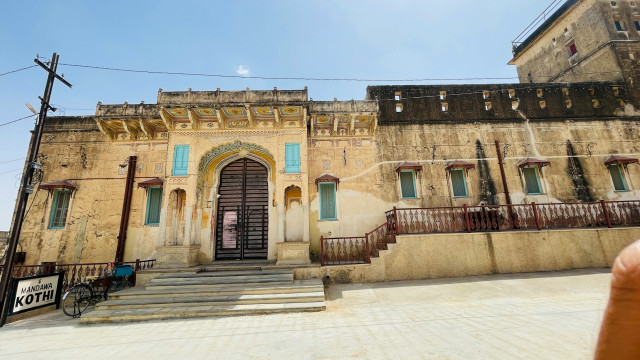
Traditional housing in Rajasthan evolved to cater for these extremes of climatic conditions. The houses built during this time had thick walls, small windows, and courtyards to ventilate and resist heat. There once were havelis, step wells and even mud houses which were a common feature in the state. These structures were an example of the people’s ability to adapt to the climate and the socio-cultural aspects of their way of living.
Post-independence, these traditional housing practices were greatly disturbed due to the rapid urbanization that took place during this time. The growth of industries in the cities of Jaipur, Jodhpur, Udaipur and even Kota triggered rural-urban migration. Towns and cities became over populated, and informal housing settlements emerged that were poorly developed. There was also an increased in the number of people with modern aspirations and nuclear families which led to a increased demand for housing.
Like many other places in India, Rajasthan also experienced slum developments along with rapid urbanization, and with that arose the need for low income housing, which, by the start of the 21 century, became an alarming issue for the state of Rajasthan, and, in specific, the Economically Weaker Sections, also referred to as the EWS. In urban areas, social and economic disparities surfaced in the form of slums due to the difficulties in finding adequate housing. The dismal situation of many EWS motivated the central and state governments to actively participate in launching subsidized housing projects to counteract the situation.
The need for affordable housing in Rajasthan arises due to the dire conditions the people suffer from, and the positive outcome that can stem from proper urbanization and development in the state. The housing projects being carried out need to be implemented in the right way in order for implemented urbanization to bring forth positive growth.
Policy Framework and Government Initiatives
The central and state policies direct the attempts for affordable housing in Rajasthan. The 2015 ‘Pradhan Mantri Awas Yojana (PMAY-Urban)’ offered to the nation is a policy of immense importance on an urban scale. The Awas Yojana proposes the goal “Housing for All” in the year 2022, which is to be achieved by the four key verticals: Redevelopment of slums, a credit-linked subsidy (CLSS) on affordable housing, economical house construction funded by the beneficiary, and associated funding with individual house construction (BLC). Rajasthan has showed very positive response towards the PMAY-Urban policy, which is evident from the fast paced developments of urbanization in the state.
In 2009, the Rajasthan Government complemented the government's PMAY goal with the adoption of the Affordable Housing Policy. The Rajasthan Government pays attention to:
- The encouragement of public-private partnerships (PPP) with developers.
- Provision of incentives, e.g., subsidized land, enhancement of floor area ratio (FAR), and tax holidays.
- Ethical allocation of housing to economically weaker sections (EWS) and low-income groups (LIG).
- Affordable housing integrated with service provision roads, water, electricity, and waste.
The Rajasthan Housing Board (RHB) is to an extent responsible for the fore mentioned as the region's and state's housing projects. The scale of the commitment is evidenced by the housing board's success in the large scale housing colony projects in Jaipur and the modest sized projects in neighboring urbanized towns.
The initiatives are complemented with financial mechanisms. Under CLSS, subsidies are provided to reduce the financial burden of low-income families by subsidizing home loan interest rates. The lowered purchased manage land banks, and urban Land Bodies earmarked for development projects, which the local bodies provide at reduced rates. There is a combination of policy vehicles which create the propitious environment for the development of affordable housing. Rajasthan's fusion of central and state-level schemes mirrors a robust institutional framework.
Implementation Strategies and Models
The essence of affordable housing is not just policy but implementation as well. Rajasthan has taken to implementing multiple strategies to fulfil the ever growing demand which is as a result of the unique approach of combining the public and private sectors followed by the state.
One flagship model is the public private partnership (PPP) model. Here, the state works with private developers and pools private funding, skill, and efficiency, while ensuring that the housing is affordable. In return, developers are given incentives like additional FAR and subsidised charges, making it possible to recover project costs while servicing low income borrowers.
In-situ slum redevelopment is another important strategy. Instead of relocating slum dwellers to far-off sites, the state transforms slum areas to formal housing complexes. The target population is relocated back to the same land and provided with permanent dwellings, ensuring that they retain their economic and socio-cultural ties. This strategy has been useful in the city of Jaipur and similar urban centers with a large slum population.
The Affordable Housing model permits the state to engage in a partnership with private builders, non-state actors, or other agencies for the implementation of large-scale housing projects. This synergy taps into the skills, competencies, and resources of the various stakeholders.
You can also include innovation, consider the use of pre-constructed or green building methods. Adoption of such NCCTs class lowers the overall cost of construction, reduces the time of construction, and enhances the quality of the end product. Digital Platforms for seamless identification of beneficiaries, application processing, subsidy allocation, and disbursements ensures transparency of the overall process.
In Rajasthan, the affordable housing projects focus on integration with supporting infrastructure. Housing colonies, for example, have been designed with the provision of access roads, water supply, drains for sewage and silage, and electrical connectivity. The addition of schools, health facilities, and community centres also helps in making these colonies functional, integrated and self-reliant rather than just stagnant and isolated housing estates.
Overall, the various methods being used in the state of Rajasthan showcase effectiveness in implementation, as well as flexibility to appropriate a variety of diverse methods. Rajasthan a state, aims to break the barriers of innovation by also including the blocks of social inclusiveness in elegance, thus aims for building communities, and not just mere housing facilities.

Social and Economic Impacts
The ethos of the affordable housing projects in the Rajasthan state is not limited to the provision of mere shelter and has succeeded in transforming the socio-economic structure of the state. The projects elevate the standard of living for numerous families by granting them access to safe and secure housing. Permanent housing provides a sense of dignity instead of the unstable conditions that come with informal settlements. The improved living conditions even promote a child’s health, education, and other aspects of their life. Women, who are most affected by shoddy housing, acquire a greater sense of security and social engagement.
The economic impact of housing is the multiplier effect. Construction projects stimulate the economy by creating jobs for both skilled and unskilled workers and providing employment throughout the supply chain. The purchases of construction materials, services, and related infrastructure benefit local economies. Affordable housing improves the productivity of the workforce by allowing them permanent housing near urban employment centers.
The sheltered credit subsidy scheme is one of the ways affordable housing ensures financial inclusion. With this scheme, low income families are able to access formal financial systems, allowing them to build credit and assets. This has the ability to create intergenerational wealth and financial security through homeownership.
The construction of housing projects promotes increased investment and results in the expansion of towns and cities. Cities with well-developed positively designed housing units are more likely to receive investments which in turn results in the establishment of businesses. This also aligns with the goal of making Rajasthan a hub for industry, tourism, and innovation.
As outlined in the paper, spending in housing for the disadvantaged slum families, low-income residents, and migrant workers in the state of Rajasthan serves as a means to alleviate urban social inequities. The surplus of social and economic values generated from such investment demonstrates the potential of social and economic development approach to enhance social cohesion and peace, which is vital for sustainable development. Provision of such type of social housing is not merely a matter of meeting the shelter needs of the people; it is a matter of social justice and empowerment.
Demand Challenges
Rajasthan still has a long way to go in regards to providing affordable housing in the region, despite the progress which has been made.
Land availability and cost are the most significant issues. Urban land in Jaipur, Jodhpur, and Udaipur is a commodity and is extremely expensive which makes it hard to devote adequate space to affordable housing. Although land equity is beneficial, the demand for commercial space frequently overshadows the need for housing.
Another concern is financing. As we know there are various mechanisms for financing affordable housing, but in the case of subsidized housing, the low income families are the ones who can’t pay the loans the most. These families are unable to pay back loans especially in the case of housing because they do not possess tangible items which can be used as collateral.
Furthermore, the most commonly held forms of informal employment are unregistered in nature and therefore workers do not earn a guaranteed flow of income. It is not uncommon for banks and housing institutions in finance to be unwilling in providing loans to the lower class. Access to credit is extremely limited for the lower class as financing institutions are reluctant to interface with this group.
Construction Quality. The process of attempting to meet deadlines often leads to deficiencies in construction quality. On the other hand, in the absence of thorough supervision, there lies a possibility of erecting structures set to collapse within a short time period, which goes against the notion of economical construction.
There are still social problems that need to be addressed. In certain instances, the individuals benefitting from the schemes are averse to the idea of relocating to social housing set a considerable distance away from employment, education, and healthcare. This shows that many social housing schemes lack the coordination required to provide adequate supporting services.
Furthermore, each set of conditions imposes housing problems of its own. For instance, sustainable housing design is especially important in Rajasthan due to the arid conditions and scarcity of water. In the absence of systems for water and energy management, newly developed housing estates are bound to collapse.
Finally, housing that is affordable is a complex process requiring the collaboration of several areas: state city-planning agencies, social and economic city-planning subdivisions, private developers, and banks, which leads to the disproportional level of interaction that exists. The level of interaction, responsibility, and honesty that should be present is often a difficult target to achieve but is needed in this case.
Innovations in policymaking, as well as the improvement of state organizational structures and the political will to collapse these structures, are the answers to these problems. This is especially relevant in case of Rajasthan — the state is yet to meet the high expectations of housing that is affordable.
Opportunities for inclusive and sustainable economic growth
Like any other state, Rajasthan also faces challenges, but whether it be the economic, social, or environmental challenges, each of them provides an opportunity to work in an inclusive sustainable development framework. Focusing on innovative and integrated development, the state could turn housing into an asset for sustained growth.
One of the opportunity areas is housing. The design and construction of homes is sustainable if the use of renewable or recycled construction materials, rainwater harvesting, solar energy, and energy-efficient construction methods are employed. Such homes are better suited to the harsh climate of Rajasthan. Not only that, but green housing also lessens the utility expenses for the occupants of the house and is an economical approach to environmental conservation.
Digital technologies also provide abundant opportunities. Registration of beneficiaries through on-line platforms, subsidy tracking, and grievance redressed makes the process more transparent and less cumbersome. GIS based planning tools can more efficiently allocate and organize resource to create more valuable land parcels.
With the tools in hand, Rajasthan can use affordable housing as an instrument of urban renewal. The revitalization of interstitial areas or the retrofitting of slum areas, along with the provision of affordable housing in Smart City initiatives, makes urban centers more inclusive.
Partnerships are also an opportunity. South East Asia has seen a number of innovative and new frameworks for funding, construction and management, and instituting community-driven models that use collaborative planning and management to foster greater ownership and sustainability. Working with local community organizations, international organizations and private developers can also help with greater innovation and funding, and strengthen community ownership.
Conclusion
Rajasthan's affordable housing projects are an integral element in tackling the most urgent issues brought about by urbanisation—lack of permanent and affordable housing which is urbanised and ecologically sustainable. The proactive policy combinations, pioneering implementation models, and robust institutional support received by the state have all greatly helped in making advancements towards closing the housing gap.
The programs target the community and the state, rather than the financial burden which most people argue the projects are. They attempt to social justice, construct new and improve existing infrastructures, and reinvigorate the economy, and all the while protect and enhance the natural resources.
Undoubtedly, the most challenging aspect for these projects is the diverse set of constraints—land scarcity, financing, and construction quality and sustainability. Political will, creative solutions, and true collaboration can and will resolve these issues. The experience gained in the affordable housing projects in Rajasthan, will help guide other states and countries in the world facing similar challenges.
Certainly, the success of these projects would depend on the ability of these projects to combine tradition and modernity, equity and efficiency and sustainable growth with minimal environmental footprints. In this manner, Rajasthan would not only respond to the unmet demand for affordable housing, but would also create the basis for a more inclusive, and hence, more prosperous future.
Also Read: Rural Affordable Housing Project, USA



-3dkuLgKhRD.jpg)
-49HupTvwDD.jpg)






LEAVE A REPLY