


Is PropTech the Key to Solving Sri Lanka’s Urban Housing Puzzle?
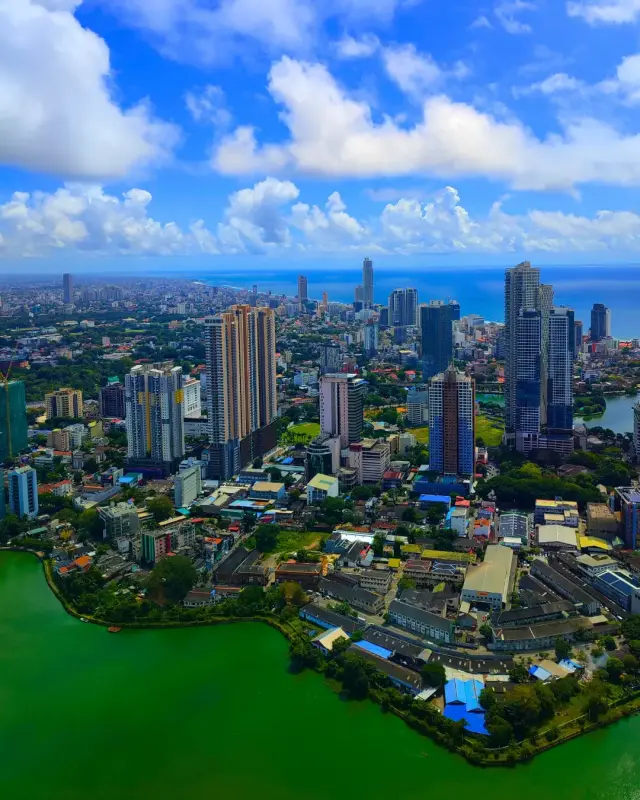
The urban housing problem suffered by Sri Lanka can be ascribed to a set of the circumstances, caused by various processes that have evolved throughout decades. The speed with which cities have been urbanized and growing population coupled with the increasing land prices and the haphazard nature of the overall policy structures has contributed to a scenario where demand significantly exceeds supply- especially that which is affordable, livable and well located. This imbalance can be observed more and more each year in a city like Colombo where low- and middle-income families cannot afford to live in safe and properly connected locations.
The urban housing market, historically, has served the upper-middle and the luxury market entirely and a big part of the population is unserved. In the meantime, other settlements, the slums and other informal settlements also arise in parallel, with or without effective sanitation, infrastructure or legal land titles. The transportation systems have been extended, commutes extended and more pressure exerted on key services through sprawl. The divide between access to housing and affordability is increasing and conventional methods of remedying the situation are failing to decrease.
Bureaucratic slowdown of public housing projects, inadequate funding and the so-called one-size-fits-all approach has struggled with diverse urban residents with different needs have limited success. Profit seeking developers will feel naturally attracted towards the better markets which are the upscale markets. This leads to the fact that low-income and medium-income housing constructions are disperse, underfunded, or mismanaged.
Also, the property transactions are not transparent, there is inappropriate access to the credible information and complicated documentation involved in setting up housing which scares the potential buyers and investors to come into the housing market. The lack of digitization in the workings of the real estate contributes to the inefficiency and it becomes hard to feel comfortable when it comes to planning, investing, or constructing.
In that regard it is apparent that the housing puzzle in Sri Lanka is not only related to constructing more houses but houses of the right kind, put in the right location, at the right price, and in the most cost-efficient, cost-effective and environmentally sustainable manner. The crisis requires new tools and strategies, the ones that are not about traditional construction or urban planning.
Here is where PropTech or property technology starts gaining its relevancy. PropTech has the potential to unleash efficiencies, lower costs, enhance planning and empower consumers by transforming the property and real estate with the application of digital solutions. It is projected to make obsolete systems more efficient, and eliminate most of the friction points that drive the pace of housing development and accessibility down. However, the question would be how scalable is it? Does it fit the social, economic and regulatory environment of Sri Lanka? And more to the point, is it able to reach the strata of the population who are in need of it?
In an attempt to determine the responses to such questions, we have to investigate how the PropTech operates, what is its value proposition and how it can be turned into a bigger game plan to address the Sri Lankan dilemma of housing in urban areas.
The Role of PropTech in Planning and Development
Intelligence in planning and development is one of the best changes that PropTech can bring to the urban housing sector of Sri Lanka. As it is, existing real estate development tends to commence with dysfunctional information, disparate zoning regulations and an inability to have an understanding of the real housing demand. However, PropTech tools have the capability to incorporate data analytics, mapping technologies, and eventual modeling to give more understanding to the developers and planners about what and where to create.
An example is digital mapping and Geographic Information System (GIS) that are capable of providing accurate data on land use, transportation connections and infrastructure access. Combined with the demand forecasting applications driven by the AI technology, developers will be able to determine the best place to start a new housing project using the information about population trends, incomes, and commuting patterns. This does not only help to cut down the chances of making improper investment choices, but also helps to streamline ends with the real needs of the urban citizens.
In addition to the site selection, PropTech tools can be used in design optimization. Through Building Information Modeling (BIM), architects and engineers are able to create new housing developments before putting one brick in place. BIM assists in the minimization of the waste, controlling schedules and developing more sustainable building designs because it allows us to visualize the way that a building will operate within that environment. It also enhances the cooperation between different parties in development, architect, engineers, and contractors as a single digital interface.
PropTech platforms can also simplify the regulatory compliance in the pre-construction stage. Rather than spending hours filling out forms and obtaining clearances from various government agencies, the e-platforms would ease the auto-validation identically to zoning regulations, building codes, and other green and environmental guidelines. An approval portal which is centrally located would reduce the processing time by a big margin and make it possible to bring affordable housing projects to concept to construction stage with ease.
Besides, urban planning can better involve the community through PropTech. Such tools as virtual reality and interactive design enable the visualization of the proposed advancements to residents and local stakeholders and get their feedback on the proposed developments prior to the commencement of the building process. That way, new constructions meet the needs of communities and minimizes the chance of opposition or displacement, especially in sensitive city locations.
In Sri Lanka, where informal settlements are not usually a part of the official planning procedure, PropTech can be the solution since satellite information and mobile surveys can be deployed to take such communities into account and incorporate them into the development plans of the future. It is also able to report on sources of urban sprawl, areas of unused land to be used, methods of infrastructure deficit, information that is vital in establishing inclusive housing plans.
There is a difference between making the ancient process just digital and changing it. That is what PropTech can do when accepted strategically. It can also make urban development quicker, more affordable, and equitable by enhancing the use of data-driven decision-making models and mitigating delays. These efficiencies may well determine how successful policy experiments become actual change-making tools within a nation where housing is perennially scarce.
Streamlining Property Transactions and Ownership
The current process of transferring property in Sri Lanka is normally lengthy, opaque and full of paper procedures. This is not only detouring first-time homebuyers but also leads to inefficiencies that propagate in the housing market. PropTech has the power to solve most of these bottlenecks by providing more transparent, quicker, and more compact transactions that are also more accessible by the population segments who usually have no access to the formal real estate.
The second challenge that property buyers have to face is information. Most people have to depend on the word of mouth, local brokers or the old manner of listing properties. Buyers can have greater clarity and control by having verified property listings aggregated on PropTech with digital maps, photos, 3D walkthroughs, and pricing history. These websites also allow to make price comparison, cost calculators and online consultations, which makes search process much more convenient and quick.
PropTech enhances the access to marketing among developers and sellers and minimizes the need to have physical offices or showrooms. The internet opportunity allows targeting a broader base of people including young professionals in Colombo, to those expatriates based outside who want to make an investment. The conventional visit to the site can be substituted with drone videos, virtual tours, and chatbots served by AI technology and save the time of both sides.
Once we refer to the very transaction, PropTech brings the element of automation that can solve many of the delays a transaction could face. Verification of documents using digital signatures and digital verification of documents, secure gateway payment, can save a lot of time in closing a deal. Contracts will allow remote signatures and review, the payments can be monitored, and title can be turned in days as opposed to months and all because it is housed in a completely digital platform.
One more promise of PropTech is the field of land registration and title check. The issue of land ownership and indistinct title documents is a usual challenge in development in Sri Lanka. Ownership history Digital registries that are supported by blockchain technology are capable of producing tamper-resistant entries of ownership, which enhance the trust and minimize the fraud. Although it would have to be adopted by the government, some digitization of records would help a great deal to ease according to the law due diligence.
The second important aspect in housing is the availability of finance. PropTech can also enable online mortgage application, credit scoring, and pre-approval functions, which are of considerable value to informal laborers or gig workers who have an issue with the existing process in banks. PropTech platforms can become integrated to banks and credit bureaus to provide customizable lending products and eliminate the documentation required of the borrower.
All this enhancement enhances the process of the real estate transaction process to be less exclusive and more efficient. This implies that in the case of urban housing crisis in Sri Lanka, more people will be able to enter the housing market without having many barriers. Making property accessible democratically, via technology is what can liberate pent-up demand, and stimulate wider take-up of formal housing, step-by-step.

PropTech’s Potential in Rental Housing and Property Management
Although rental housing is not a major topic of discussion around housing, it is very important that the economics around housing should not just focus on ownership but must also take into account rental housing that has gone up substantially in recent years in Colombo and other business centres in Sri Lanka. Because land prices are increasing and wages are not keeping pace, renting is proving to be the choice of many young professionals, students, and low-to-middle income-level families. However, the status of the rental housing market is still informal, inefficient and pretty unregulated. This is one of the areas that PropTech can have a transformative effect in
Rental in Sri Lanka is most of the time in an informal agreement which does not protect either party. There is no centralized place to view property listings which are all over the place and out of date, there is no visibility on price, tenant screening and who cleans and maintains the rooms. Such chaos can be organized using PropTech platforms. These sites can provide a more secure and convenient process by concentrating rental advertisement with the identity of the landlords confirmed, managed lease documents, and communication mediums with payment options online.
Digital platforms render searching by tenants more convenient to find their place within their means, and according to location preferences. The AI-based filters will assist in aligning the users with the properties that are available according to their needs including commute time, amenities, or neighborhood profile. Renters may even arrange virtual visits, submit documentation and sign the leasing agreements on-line and the whole process is faster and less burdensome.
As a landlord, PropTech will make your life easy in terms of onboarding tenants, collecting rent, and so on. Automated payment systems help to minimize the necessity of physical transactions and make tracking of income more visible. Maintenance management software enables tenants to submit repair requests through the internet, followed by the landlord to choose a service provider and track progress using the same dashboard.
In the case of major property owners, PropTech allows them to manage their assets more effectively, especially when they operate as developers who are keeping a building under occupation to generate rental revenue. Smart buildings are able to monitor utility consumption, know which units are occupied, and automate regular tasks like invoicing or security. This enhances a higher level of efficiency in its operations thus lowering costs making rental housing a better investment.
Furthermore, PropTech introduces such a variety of rental approaches as co-living, short-term leases, or rent-to-own. Along with the ever-increasing need to accommodate the flexibility and mobility of people in an economy, these models can be used to service such demands in addition to generating new sources of income to landlords. Technology makes such complex structures to be handled easily with both renters and landlords having the confidence to give new strategies a go.
Rental housing can also benefit through PropTech integration because it can aid in the improved enforcement of a policy. With electronic records of rental, governments will have an easier time regulating safety standards, taxes, and tenant rights, something that is very hard to control in an informal market. Eventually, this information can trickle even into the national housing policy to give planners a clear picture of the supply and demand pattern in the rental sector.
PropTech in general is not only selling houses, it is about better management of houses. This will help to make urban housing more accessible, more livable and more sustainable in Sri Lanka since it will bring order and efficiency to the rental segment.
Conclusion
PropTech has a potential opportunity of being a game changer in the current predicament facing Sri Lanka to resolve its urban housing Riddle. With rising population and the pressure on housing, the traditional, manual and in many cases non-transparent systems in the property development and management are no longer adequate to meet this demand as cities expand. What is required is a jump- one which can utilize the technology to close the planning, transparency, affordability and efficiency gap.
Through making all processes of the housing operation, including identifying the right land, predicting demand, simplifying transactions, optimizing the rental system, and managing houses, PropTech can streamline most of the structural inefficiencies that have made affordable housing prohibitive to many Sri Lankans. It presents a way of smarter development not only quicker, but more fair and being closer to the requirements of modern city life.
Nevertheless, the housing crisis cannot be solved with technologies. To extend its so-called potential, PropTech should have facilitating laws, digital infrastructures, inclusive design, and a culture open to change. The government, communities, and the private sector will have to collaborate to make such digital tools available, secure, and utilize them to create a housing ecosystem that will benefit everybody rather than the digitally connected or economically less fortunate.
Finally, PropTech is not the silver bullet, but it may be the puzzle piece one - a driver that incorporated into the overall strategy wisely would assist in opening new opportunities within urban life in Sri Lanka. This could be the missing piece that the nation could use to come up with more than just homes, but brighter futures as well in solving the housing puzzle.
Also read: Why Sri Lanka Needs to Combine Land Reforms and Welfare to Solve Its Housing Deficit















LEAVE A REPLY