

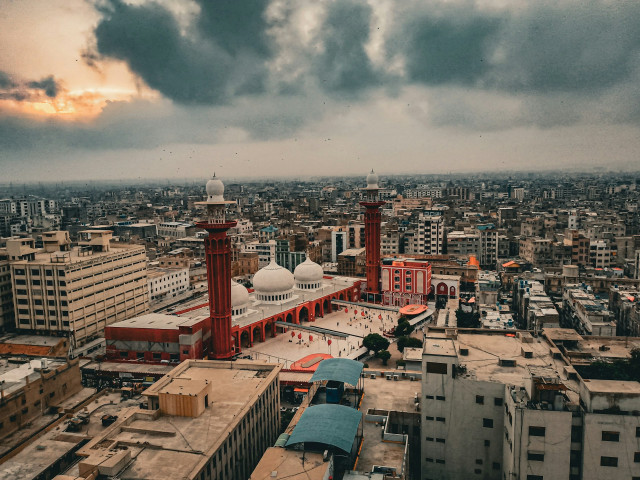
What If Every Pakistani City Built 100,000 Affordable Units a Year? Modelling the Impact on the Economy, Society & Land Markets
Suppose all the big Pakistani cities Karachi, Lahore, Islamabad, Faisalabad, Peshawar, Multan, Quetta, all made the commitment of construction of 100,000 affordable units of housing in a year. The figure is appalling: over a million new cheap homes every year throughout the cityscape. It would be the biggest organized urban-development in the history of South Asia that would surpass most of the infrastructure projects and will transform the economy, labour market and social life of the country.
The housing shortage in Pakistan is estimated to have more than 10 million units and this number is increasing day by day because cities absorb the rural migrants and new families are being created by young couples. Construction is still disjointed, hypothetical and skewed too strongly in the luxury or high-end middle-class direction. The outcome is a contradiction: huge areas of empty luxury apartments and large informal slums inhabited by millions of people without sewage, land ownership, and financial resources. The existing system is not only unsatisfactory but also not helpful in achieving stability in the long run.
But what then would the opposite of that play entail, the opposite in that Pakistan does not see affordable housing as a welfare feature but as a national economic driver? Constructing 100000 affordable units per city per year would not only close the housing gap, but could drive unprecedented job creation, domestic industry (cement and steel), increase in the tax base, and the inclusive urbanization. It would involve risky coordination between the federal, provincial and municipal governments, but its effects would be felt in all corners of the economy and the society.
This is not a fantasy in a thought experiment. A series of low-cost-housing initiatives, practiced over the long term, have demonstrated across countries in Turkey to Vietnam that both development and inequality can be driven by such initiatives. In the case of Pakistan, it is not whether such a goal can be achieved, but what its effects, both intended and unintended, may be. The six lenses discussed below explore how it can be made to work through the economic effect, social change, labour market and skill, environmental effects, effects on land and finance, and governance frameworks required to achieve the objective.
Large-Scale Affordable Housing Construction Economic Ripple Effects.
One of the strongest stimulants of any economy is housing construction. Every single unit manufactured triggers a complicated chain of supply, which includes architects and engineers, brick kiln, plumbers, electricians, furniture makers, and transporters. According to estimates by economists, each direct job that is generated in the construction sector corresponds to the creation of three indirect jobs in the related sectors. Assuming that all cities of Pakistan constructions have 100,000 units every year, the national output may increase by several percentage points every year.
The direct beneficiary would be domestic materials industry. Pakistan already has large volumes of cement, steel and ceramics production with a lot of capacity under-utilized due to cyclical demand. A stable housing pipeline that could be predicted over several years would stabilize the production, promote modernization, and bring in new investment. Small and medium sized enterprises which provide fixtures, paints and fittings would thrive. This foreseeable demand may even warrant the introduction of local prefabrication plants and green-building materials, which would help save money in the long run.
On the fiscal front, a big construction project will produce tax revenues in terms of sales taxes imposed on the materials, registration fees, and property taxes when the occupancy of the units. Informal or speculative housing today is likely to evade the tax net. An official, low-cost, housing initiative based on open registries would create a vast increase in municipal and provincial revenue. The revenues would, in their turn, fund urban infrastructure, roads, transport, water systems, which increase the benefits of the program several times.
Macro-stability is another economic impact that is not well considered. Housing investment bases domestic savings on real value property as opposed to unstable speculation. The payments made by families when purchasing affordable houses under the monitored mortgage programs circulate in the formal banking system. This enhances the capital markets as they offer banks a secure and long-term asset base. In such economies as the Malaysian and Moroccan ones, enduring affordable-housing impetuses have contributed to formalization of finance as well as minimization of shadow-market banking.
Critics can say that this huge expenditure can overheat the economy or cause inflation of the prices of materials. However, the program could be balanced with proper timing, sourcing at home, and anti-speculation efforts. In addition to this, the multiplier effect is enormous: each rupee that is spent on the housing construction commonly produces close to two rupees in the GDP effect. That is millions of jobs, more powerful domestic industries, and an expanded tax base--the rare policy in which social welfare and growth go together.
Social Transformation through Housing Security
Social impact of affordable housing to everyone is extensive- it has an impact on health, education, gender equality and even political stability. In Pakistan, where tens of millions of people either reside in informal settlements or live in crowded rentals, the insecurity of tenure determines all the spheres of life. A family that would relocate to a clean, serviced, and legally owned home would not only get shelter but also dignity, predictability and hope.
The stable house will ensure that children remain in school as opposed to moving after every few months. Teachers are aware of where their students will be in the next term, and the relationships between communities strengthen. Studies done in Latin America and East Asia indicate that education increases tremendously with the families shifting to cheaper yet permanent residence. That may represent a generation that is more knowledge economy prepared in Pakistan.
There would also be improved health outcomes. The informal settlements are not usually sanitized or supplied with clean water; the inhabitants on these settlements are afflicted with chronic respiratory and gastrointestinal illnesses. Simple units with minimal infrastructure, which are specifically designed to reduce such illnesses could reduce them drastically. Most of the investment would be justified by the decrease in health-care expenses and in lost productivity alone. Medical debt would be reduced among fewer families; hospitals would have the opportunity to concentrate on prevention, and not crisis.
The impact of affordable housing on the empowerment of the women is also rather silent but substantial. Small home-based businesses in Pakistani low-income families are operated by women tailoring, tutoring, preparing food, etc. although they operate in crowded or unsafe areas. A serviced home, which is a legal one, turns into a micro-enterprise platform. Women are able to access credit, insurance and formal markets when they can launch businesses at a permanent address. Secure tenure is also devoted to widows and single motherhood that are frequently evicted upon a death of a male relative.
Another probable result is community cohesion. With proper planning and mixed-income/mixed-use concepts, the artificial division between the elite enclaves and the informal settlements can be erased by extensive development of affordable housing in large-scale projects. The tolerance and civic pride are created by the shared of the public parks, schools, and markets by different residents. One of the most long-lasting legacies of such a national program might be the symbolic shift, the exclusion to inclusion.
Economic growth in turn is fed off by social stability. Citizens commitment to their neighborhoods leads to a reduction in crime rates and moderately but sustainably increase the property value. Informal forms of governance are replaced by elected residents associations that require improved services in the municipal establishments. Succinctly, home becomes what citizenship is based on.

Employment High, Skills, and Construction Workforce.
Such a large-scale nationwide affordable-housing program would become the biggest job creator in the Pakistani history. Construction is a labour-intensive industry and each 100,000 units constructed have tens of thousands of direct and many thousands of indirect jobs in supply chain. The tough part would be to ensure that the government can utilize this opportunity not as a boom but as a strategy of developing skills on a long term basis.
The construction sector in Pakistan is predominantly informal day workers who are employed by contractors and never get training, safety equipment, or social insurance. This sector could be formalised through a planned housing push. Employees might be enrolled, educated and covered. Modern masonry, plumbing, electrical installation, and green-building would be taught to the apprenticeship programs associated with technical institutes. This would increase the productivity and wage at the same time.
Technological upgrading would also be initiated by the need to have skilled labour. Economies of scale would emerge making prefabrication, modular construction and digital project-management tools feasible. Production of the doors, tiles, and fixtures will be done locally increasing consistent industrial jobs. The young engineers, architects, and planners would have rewarding careers in a direction where informality was used.
Freedom of movement of labour might be better regulated as well. In the current times, the migrations of seasonal workers do not occur in any organized order among the provinces, where they seek temporary work. A regular supply of low-cost housing initiatives in all cities would enable a forecasted allocation of labour, which would ease the social burden in cities. Employees were able to establish their homes around workplaces with their families and attend schools and clinics instead of having to reside in temporary work camps. The building boom was therefore able to humanize and work.
The number of women employed may also increase as the program takes an active interest in ladies. In others, such as Indonesia, Kenya, women have been qualified to be masons, painters and site supervisors in public-housing projects, where they had not been before. In Pakistan, women can be trained on finishing and quality-control jobs, which has the potential to increase the labour force as well as break gender stereotypes.
The financial gain would be massive. Formalized employment involves collection of income-tax, pensions and expansion of the social-security. With a selected half of the new construction workforce incorporated into the formal net, the tax-to-GDP ratio of Pakistan would go up massively, which allowed governments to fund the infrastructure and services.
There is the economic calculus and there is a human one. Young men who have been exposed to under-employment and frustration would be utilized in stable jobs in construction. Pride is created through work that leads to the creation of concrete community property such as a home, a street, a playground. Housing projects could have vocational training centers that could also serve as a center of literacy and civic education. The program would not only construct homes; it would construct a proficient, self-assured citizenship.
Environmental and Infrastructure Implications
Building 100,000 low-cost units per city every year would change the cityscape of Pakistan both positively and negatively. On the one hand, well-considered housing will help to decrease informal sprawl, increase sanitary standards, and accessibility of public facilities. Conversely, a high growth rate poses a threat of overloading infrastructure, eating up green areas, and increasing strains on resources in case it is not effectively controlled.
Mitigation of informal settlements is one of the short-term advantages. At present there are millions of Pakistanis residing in colonies without roads, sewage or electricity. These regions could be transformed into organized designs as formal housing program would decrease risks to human health and provide opportunities to deliver clean water, garbage collection, and electric power. Better drainage and storm water would also reduce flooding, which has been a frequent issue in the urban areas such as Karachi and Lahore.
At scale, energy efficiency is a significant issue. A million plus units of construction every year require materials, energy and water in the country. But the environmental impact can be alleviated by incorporation of the green-building principles which include solar panels, water recycling, energy-saving appliances. Prefabrication and modular construction, minimize waste of materials and is also quicker and less hazardous to construct. The Malaysian and Chinese experience demonstrate that sustainable design on the scale is economically viable and possible.
Infrastructure in transport is also to be considered. The tens of thousands of families added to the cities in terms of population boost the pressure on infrastructure, streets, and transportation. Planning in a coordinated manner would help promote mixed-use designs in which workplace, school and market are in places that can be accessed by walking. This will cut on traffic jam, decrease carbon emission and enhance the quality of life. The housing expansion could include cities having bus rapid transit systems, bicycle lanes, and walkways that are conducive to individuals.
Land, Finance, and Market Dynamics
Such a massive program would be a fundamental change to the land and real-estate market of Pakistan. Urban prices are now driven by land speculation, and the families with low and middle incomes can hardly afford to buy houses today. The substantial affordable massive construction can stabilize the land value by raising the supply and developing regular patterns of development.
The government would be forced to acquire large parcels of land within or around the urban centers. Partnerships between the government and the private sector may become central, and the cities can provide land as a trade of affordable apartments. Community land trusts may make homes affordable over the long-term, and help them not to be resold to expensive markets. These mechanisms would guard against rapid gentrification and flipping.
Monetary innovation is important. The current situation is that mortgages can be obtained by only a very small percentage of Pakistanis. The affordable-housing programs should also incorporate low-interest and long-term mortgage facilities to the buyers. Sharia compliant models could be offered by microfinance institutions and Islamic banking which would increase access without engaging in predatory lending. The installment collection could be performed with the use of digital payment systems and would allow even the families with low income to own houses.
Even the construction boom would impact on material cost and supply chains. The price of cement, steel and timber might turn out to be increased, at least temporarily, unless the production is increased quickly. Available cost inflation would be avoided by strategic investment in manufacturing within the country, regulation of imports, and bulk procurement to make it affordable. This would eventually lead to lower unit cost due to economies of scale to the good of the program and the individual developers.
In the rental industry, large-scale affordable housing would help to ease the burden on rents in the city. Competition will lower rental rates due to a million new units/year, and this would make cities more inclusive. The policymakers should however be careful of unintended consequences. In the absence of the tenant protection policy, landlords could transform affordable housing into high-priced housing. Affordability would be maintained by good regulation, rent caps and systems of registration.
Conclusion
Constructing 100,000 affordable housing units annually per city will be a radical jump in the life of Pakistan, redefining its economy, society, and cityscape. In addition to shelter, a program like that would create millions of jobs, formalize the construction industry, stabilize land and rental markets and enhance financial systems. It would enhance better social results such as tenure base, education and health, and power to the marginalized groups and women. It would provide a rare chance to plan more environmentally-friendly and sustainable cities infrastructural.
Nevertheless, it requires good governance, open land zoning, good funding and good tenant rights to be successful. In the absence of these protection mechanisms, even the large-scale construction might contribute to inequality or speculation. A multi-layered, multi-year commitment would transform the urban housing crisis into the engine of inclusive development, social integration and economic sustainability in Pakistan, and show that when housing is a national priority, every city could succeed.
Also Read: Affordable-Housing-Finance-in-Pakistan
-5yCS4OoVBg.jpg)





LEAVE A REPLY