

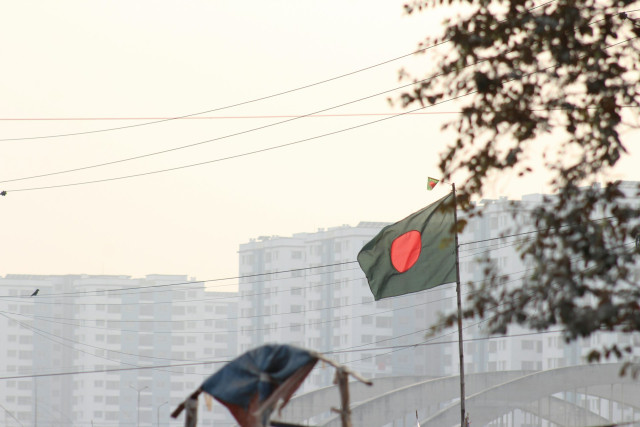
Why Only 8% of Dhaka’s 100K+ Annual Housing Need Is Being Met
The Bangladesh capital of Dhaka is one of the most populated cities of the world. Over 100,000 additional housing units are required every year to meet with the increasing population who are migrating to this region in search of employment opportunities, education and good living standards. However, formal housing developers are only meeting the demand, which accounts to less than 8 percent of the yearly demand. This gaping deficit has culminated in mounting land values, congested slums, increased inequality and a spiral out of control housing crisis which has now started to compromise the livability of the city, its economic prospects and long term growth patterns.
It is not only a numerical crisis, it is a crisis of systems that express more fundamental, structural problems of urban governance, land use, housing finance, and social policy. In a city where most of the population cannot afford good housing, and yet, where glossy brochures featuring tower blocks and gated communities are touted by real estate agents, there is indeed a housing crisis facing Dhaka. The working populace, the low income families and the middle level earners are finding the city unaffordable and inaccessible.
Housing gap is not only unsustainable, it is unfair. The consequences are enormous. Once the percentage of the required housing need is met, millions fall into the trap of informal settlements, non-regulated renting markets, and hazardous places. This in turn contributes to social marginalization, low productivity and contributes to the cycle of poverty.
To comprehend the cause of failure in matching the provision of formal housing in Dhaka, we need further examination of this reality. The subsequent sections examine the most important drivers of this shortage and the pressing measures that are required to establish a more inclusive city future.
High Land Prices and Unequal Access to Urban Space
Things that make entry into the Urban Space very difficult would include: High Prices of Land or unequal access to Urban Space. The land is the most crucial part of Dhaka housing crisis. The central parts of the city have turned out one of the costliest in South Asia and the land prices have grown exponentially during the last twenty years.
This sharp rise in prices is as a result of speedy urbanization, speculative investment and ill management of the real estate market. With the desire to have and own more land, land appreciation is turned over to the walk of money where the wealthy, socially boasting, and politically established groups and people hoard it without building housing on them.
What happens is that urban geography is distorted and only the wealthy survive by paying house rents in the designed residential areas with the poor being shoved to the fringes or into slums that are in shambles. The middle- and low-income households that constitute majority of the workforce in Dhaka can never survive in this market. In the satellite regions even small plots are much more expensive than the average family can afford without having financing available- a mechanism which most people do not have ready access to in the first place.
In addition, most of the land in Dhaka is either in litigation or bad title or under the claims of succession that takes several years and this aspect causes unreliability of land claims in Dhaka. The developers do not want to work with such parcels because of the risks. Government land, which can be used to put up affordable low income housing is generally misused or has been used ineffectively generally because either of bureaucratic inefficiency or vested interests.
This is complicated by the fact that the city has no substantive city wide zoning, coupled with the ineffective land use policies in place. The ability to build vertically thus supporting more people on the same land is restricted in most regions by having a low Floor Area Ratio (FAR) and strict building codes. Because of this, precious city space is not utilized wisely.
The housing supply gap in Dhaka cannot be resolved as long as land allocation and regulations in Dhaka are not fixed in a socially responsible manner (in the way space is planned, priced and distributed). Land reforms, computerized land titles, and zoning inclusive of all are not then luxuries but are requirements of a livable and equal city.
Private Developers Are Building for the Rich, Not the Majority
The inability to meet housing demand in Dhaka because of a mismatch between the housing provision of the privately-led developers and what the majority of the population can afford is another important reason. The luxury and upper-middle-class housing have been a priority to the formal real estate sector of Bangladesh since they attract maximum returns and are less risk prone. Fancy apartments in Gulshan and Banani to high-rise towers in Uttara and Bashundhara, the city is full of houses that can cost the common Dhaka people many times of their amount.
It is not always the fault of the private developers, they work in a model where profit means more than inclusion. There are excessive land purchase costs, cumbersome regulatory charges and cost of inflation in constructions which makes developers inclination naturally in high-end markets to remain profitable. This emphasis hides a basic discrepancy between provision and demand. Government workers, garment workers, service industry workers and small business owners, which comprise largely of the population of Dhaka, are left out.
The developers have an uphill task even in instances when they are interested in affordable housing. There is scarcity in financing projects towards affordable housing, the land is uneconomical or it is located very far to transport hubs and there is the lack of government support. Nobody is willing to invest in building modest houses, or rental flats that would cater to lower end of the economic ladder. The low-cost housing is still regarded as a social responsibility but not as potential business.
This distorted model of production leads to excess of housing among the rich and shortage of the others. There are thousands of unoccupied luxury flats and the slums are increasingly crowded and much riskier. Even more than inefficient, the failure to differentiate the supply of housing by levels of real income is socially corrosive.
They will have to work on the purification of this problem with structural change. The government should bring in incentives to offer like land grants, tax breaks and the fast-track approvals on affordable projects. Developers, in their turn, require having new business models taking into account social consideration in addition to financial payback. Unless it introduces some market reset considering the demands of the greatest number, Dhaka will keep constructing residential buildings that are far beyond the reach of many people.
Poor financing of housing loans and mortgage availability
The major impediment in many urban dwellers of Dhaka to purchasing homes is not the want but the finance. The formal sector of housing finance is very shallow. Mortgage loans are made accessible to less than 5 percent of the population and most of the business is to the high income earner. Purchasing a home without any kind of financial assistance is, in fact, an impossibility to most of the working- and middle-class citizens.
Financial institutions and banks are risk averse. They demand formal employment history, high credit scores and large down payments conditions that put many people out of the market: people out of the informal labor sector, people living paycheck to paycheck. Women, freelancers, small entrepreneurs and even most salaried employees find it hard to muster these needs.
Although the interest rates are comparatively low during the past years, they still make the long-term mortgage commitments less cost-effective or affordable to low-income families. In addition to that, Bangladesh does not have an efficient secondary mortgage market where finance providers can access liquidity in order to cut the borrowing costs. Even the sector of micro finance that is very active in Bangladesh also lacks appropriate long term housing products. Micro-loans are normally pay back able within a short time and high rate or interest and availed to generate working capital as opposed to acquisition of large investments such as property.
In this finance vacuum, families are left with little options. They either spend years in saving without a clue of success, or resort to an informal smaller and usually predatory lenders. This is not conducive as well to the introduction of housing projects in the mass market as developers are aware of their potential clientele who are not in a position to buy their houses.
It is crucial to fill this financing gap. The government must consider initiating a mortgage guarantees scheme, interest subsidy on mortgages of low income earners, and online facilities that can enable a more accurate credit rating on alternative data. Cutting the cost of housing finance is not all about economic policy, it is about social justice. Housing will never become a right until there are inclusive financing.

Bottlenecks in Regulation and Poor Coordination Institutions
Dhaka housing sector is also marred by numerous regulatory inefficiencies and bureaucracies that render development to be expensive, tedious, and typically uncertain. It takes a developer through the red tape whether in obtaining permits, title clearance of land, utility connections, and zoning approvals just to mention a few. These may be the make or break problems of smaller developers or more socially concerned developers.
Fragmentation is one of the important concerns. There are various agencies that work in silos i.e. RAJUK, Dhaka North and South City Corporations, Ministry of Housing and Public Works, WASA, DESCO. No central body exists and no central digital platform exists, which provides a smooth process in the name of project approvals. Developers have to go back and forth offices wasting their time and energy.
This decentralised mechanism is not only procrastinator to construction, but it also provides an avenue to corruption and informal facilitation payments. The fundraising process for housing building is not transparent thereby being costly and unpredictable thus repelling new players into the market, in particular those willing to pursue affordable housing.
Another sphere that requires an immediate change is urban planning. The Detailed Area Plans (DAPs) in Dhaka are old fashioned, inflexible and weakly implemented even though the city is evolving fast. There are unlawful built-ups that are rampant and formal developments have too much to comply with. The regulatory frameworks are not friendly towards mixed-use or mixed-income housing in the form of housing strategies that would make more inclusive neighborhoods. Equally, negligent application of building codes and environmental standards renders most of the newly constructed buildings unsound or unsustainable. This ultimately affects the quality of life of the residents, as well as the stability of the city in the long-term perspective.
The solution to this dysfunctional regulatory structure will involve digitizing the system, reforming the institutions and the improved coordination of the stakeholders. Easy approvals, intelligent zoning, and one window approach toward developers would do much to cut down the costs and drill more business on undeveloped housing segments.
Informality, Slum Proliferation, and the Human Cost of Inaction
Formal housing supply is grossly insufficient vis-a-vis demand and this has led the urban poor of Dhaka to fashion their own solutions to solving their housing problems-and this most definitely includes informal settlements, as well as slums. In modern times almost 40 percent of the urban population is residing in informal form of housing. Such neighborhoods might not be entitled to any ownership, but they form crucial places of residence of the rickshaw pullers, garment workers, domestic helpers and a myriad of other human beings who thrives the economy of Dhaka.
The price of this informality is however enormous. In most cases, these settlements are overcrowded, easily affected by fire and floods, not well served in terms of public facilities such as sanitation, water, electricity, and sanitation. The situation with health outcomes in these regions is desperate, there are more cases of disease, malnutrition, and child death.
Slums, although they are both large and permanent, are not usually incorporated in formal planning procedures. The tenants are in a continuous risk of being thrown out of their homes, and there are little to no laws that would protect them. This relocation has been characterized by poor designs, failure to consult the communities, and proximity to workplaces resulting in frequent failure to undertake the relocations. Social fragmentation is also brought about by informality. Excluding such big percentage of the population into the legal housing solution and into the general system of the state services develops a lack of faith in institutions, damages the social solidarity, and causes crime and exploitation.
It is important to note that slums are not only a symptom but they are reaction to overall lock out of the formal housing system. Addressing the problem of this nature is not just about eviction or moving. It involves upgrading of slums, tenure recognition, service delivery and planning which involves everyone as a fully-fledged citizen.
This fact cannot be neglected anymore. Indefiniteness of not doing is much deeper than poverty, it also endangers the existence of the city itself. In case of a persistent unaddressed housing crisis, inequality wades deeper and a gap between various socioeconomic sectors will increase. This does not only marginalize the urban poor but also compromises the overall functionality, stability and resiliency of the city. Critical systems like public health, transport, education and jobs are very much burdened with the uncontrolled growth and congested settlements. Informal housing keeps growing, whereas formal development remains out of the reach of most. Subsequently, this is likely to make Dhaka a city of exclusion and not of opportunity.
The opportunity cost of doing nothing is not hypothetical i.e. it is evident in the increasing population of people living in the slums, the deterioration of the state of services of the population, deterioration of the quality of life of all inhabitants. The housing deficiency cannot be addressed like a choice; it has to be addressed off necessity to reap equity, sustainability and viability of cities in the long run.
Recommendation: Repairing a Broken System to Develop a Dhaka Inclusive City
The scenario of fulfilling the housing needs of 100,000+ individuals a year in the city of Dhaka undergoing massive construction work, especially with the formulation of Dhaka master plan was only an 8% was not only a planning failure but was also socially unjust. It is an image of a city that serves a selected few and serves many in a bad way. Unless immediate and coordinated response is taken, Dhaka may emerge as an unequal, exclusionary and unsustainable city.
The full housing need cannot be met by construction alone, though, but fixing the broken systems that have caused this crisis in order to satisfy the full housing need. It implies the reform of land use, the efficiency of regulations, housing finance expansion and the encouragement of all-inclusive development. It is also making people in-the-know realise that the people living in informal areas are also human beings and they should be included in the future of the city.
Dhaka has two options open to it. It can maintain its present path, i.e., of constructing too little, and construction of too little space, i.e., of creating too little housing that is affordable at too little. Or it can have the vision of a city where everyone will have and live in secure and accessible housings. The stakes are very high. However, the housing crisis can be used as a transformative opportunity by having a change in leadership, in policies and in dedication to social equality.
Also Read: Tackling_Dhaka_s_Planning_Issues_Philoso



-3dkuLgKhRD.jpg)
-49HupTvwDD.jpg)







LEAVE A REPLY