

Odisha's Slum Relocation Plan: Balancing Development and Displacement
The phenomena of urbanization has brought both positive and negative impacts on the emerging regions. Globalization has resulted in an increase in the metropolitan regions which in turn has created new and modern opportunities in the form of infrastructure and jobs which also have resulted in the increase in living standards.
However, at the same time, it has led to phenomena of urban squalor in the form of slums also resulting in the issues of population density, pollution, and lack of housing in such regions. Such phenomena is clearly visible in the slum settlements that have recently emerged in the blue cities. To address such issues in the state of Odisha, the eastern state of India, the government has taken slums as the basis to work on in the form of the Slum Relocation Plan.
The plan develops the ambition of the state by slum reclamation and relocation simultaneously enhancing the development agenda of the state and transforming urban spaces. It aims at the formal housing settlement of the slum dwellers while restoring urban territory to slum dwellers and residing within the city and resolving the housing deficit slum dwellers and residing within the city and resolving the housing deficit.
The newly proposed urban infrastructure would greatly improve the social and economic networks for the potential urban dwellers, while slum reclamation would cater to the basic housing needs of the slum dwellers at the periphery of the city. It raises the philosophical question of the essence of development without displacement. The strategy of development not at the cost of displacement is what Odisha chooses. Reaching a development that's in the social interest of India and also in the interest of the development of urban, world class cities is the balancing act that this state model aims to achieve.
This blog attempts to provide some clarity to the confounding elements of the slum relocation plan through analyzing the design, impacts, changes, and urban development in relation to the displacement issue that the more simplistic urban analysis overlooks.
The Context of Slums in Odisha
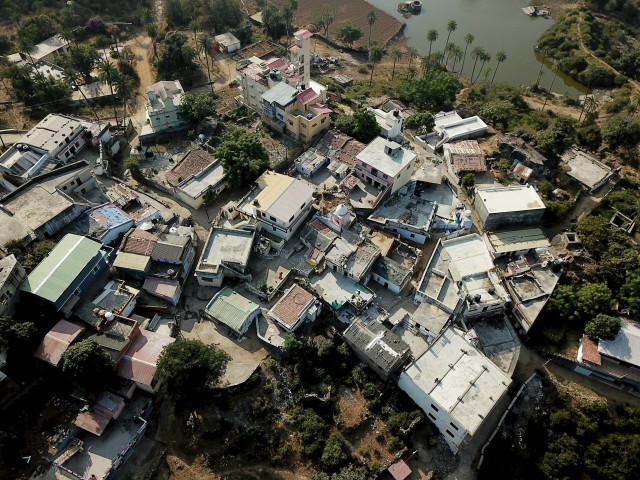
In order to grasp the finer intricacies of Odisha’s relocation plan, an examination of slums in the cities of the state is imperative. Urbanization, which is rampant in many parts of India, is similarly evident in Odisha, prompting the proliferation of slums. Areas like Bhubaneswar, Cuttack, and Puri are strongly affected by rural to urban migration, as individuals seek employment opportunities. As a result of a lack of formal housing, these individuals are relegated to slums, or settlements suffering from overcrowding, poor sanitation, and inadequate housing, among other things.
Odisha is home to a plethora of slums, none of which are uniformly constructed. They are made up of varying amounts of dispersed, disorganized shelters or entire neighborhoods with hundreds of dwellings. The slums are devoid of any legal, formal recognition and as a result, the residents are victim to a lack of land titles or property rights. Because of this, they are vulnerable to constant threats of eviction or demolition due to claims of urban renewal or renewal development.
Far from passive victims, these people and places are energetic and essential parts of the city’s developing informal economy. Such city dwellers are employed as domestic workers, street vendors, construction workers, and rickshaw pullers, which greatly contributes to the economy. For this reason, slums are a necessary and crucial component to the overall structure of a city as they offer abundant potential to an ever-growing, urban society.
Understanding the state's drive for economic change alongside social concerns, the government of Odisha didn’t see the slums as a phenomenon to be eradicated, but rather as a problem that needed solving by way of enabling slum dwellers to access formal tenure housing. This gave birth to the Slum Relocation Plan, which seeks to improve the standard of living while reconfiguring urban terrain.
The Vision of the Slum Relocation Plan
Fundamentally, Odisha’s Slum Relocation Plan seeks to integrate urbanization with social equity, which appear to be paradoxical in nature. Unlike conventional slum eviction models, which have invariably been met with some form of resistance while deepening impoverishment, the approach the state has taken rests on the foundation of rehabilitation.
The objective is to provide slum dwellers with housing that is incrementally affordable, as well as other basic services such as access to clean water, adequate sanitation, electricity, and decent all-weather roads. The plan extends beyond mere shelter to other social development aspects such as access to education, healthcare, and employment.
In an important way, the Odisha model focuses on the slum dwellers and the security of tenure. The state’s intention is to break the cycle of dwelling uncertainty by lowering the barriers to ownership through the provision of land titles or long-term lease agreements. The control and security of tenure enables families to improve the futures and homes through the development of aid, as opposed to being passive recipients.
The relocation scheme is dedicated to achieving additional goals. It is linked to PMAY and is also aligned with international frameworks like the UN’s Sustainable Development Goals 11, which advocates for a more inclusive approach to urbanization. In this regard, the objectives of Odisha’s Slum Relocation Plan go well beyond the physical provision of housing. It is about a more progressive conception of urban citizenship: about visibilizing slum residents as not simply as passive ‘outsiders’ to the city, but as critical partners to the city’s development and growth.
Social Costs and Benefits
The prospective benefits of the relocation plan for slums from Odisha is simply astonishing. At the urban development level, the initiative unlocks and clears strategically vital land in the city center. Such zones can be repurposed for infrastructure, urban green space, commercial, and transit developments, stimulating economic and improving urban design simultaneously. Ultimately, the city’s attractiveness improves for global investors, tourists, and businesses, which reinforces Odisha’s ambitions of achieving a competitive position in the global marketplace.
The rewards are even more personal and immediate for those living in slums. Improved permanent housing that provides sanitary conditions offers some respite from the squalor and the absence of basic utilities. This also augments the chances for better education and health for the entire family. The added benefit of legal home recognition provides them with a sense of security and dignity, and reduces the anxiety that comes with the constant threat of eviction, which is common in slums.
These are especially positive developments, but they also involve some trade-offs. The most immediate of these is the cost of relocation, which may mean severing ties with communities they’ve lived in for many years. The changed social circumstances may also mean a greater cost of commuting on top of lost work opportunities. The local market, social institutions, and even close friends and relatives may also be lost. The invisible forms of social support are most often the first to be lost and relocation is often mistakenly envisioned to involve a social reorganization that becomes a form of social support.
In addition, even though more modern housing is likely to be better designed, the cumulative costs of transport, maintenance, and utilities is likely to push the families deeper into poverty. There of course, are a myriad of relocation consequences that are better unspecified, but the point of substituting poverty with new forms of vulnerability carries greater weight than mere speculation.
The above, therefore, requires a shift in approach from one that only emphasizes tangible social costs. The experience of these communities in moved, or focus should be on their new home. The parameters for success should encompass social ties, relocation, and the cost of living to ensure the new home. The benefits should also encompass the new social organization that should complete the more than adequate living conditions.

Obstacles to Realization
Although Odisha's plans for slum relocation are ambitious, they are equally complex to carry out. The enormity in scale poses challenges. Relocating every household in the hundreds of slums within the state is no small feat, as it demands substantial financial investment, proficient administrative structuring, and continuous political determination. Another land availability poses challenges as the land within the cities is already scarce and highly valued. Relocation poses even more challenges when the peripheral parts of the cities are targeted, as the relocated populations are more likely to form isolated ghettos devoid of economic growth.
The unwillingness of some community members to relocate adds to the problem. Skepticism around the relocation deal is common among slum dwellers, especially when promises of relocation are made without compensation. Past instances of execution challenges within rehabilitation frameworks adds to the mistrust. Trust can be built through clear plans, engagement, and promises of tangible benefits.
Lastly, there are some gaps in the planning of relocation which can undermine the positive outcomes of relocation. It is important to remember that the relocation and relocation of the population will ultimately provide the planned benefits only on the condition that other public services, facilities such as water and power, and public services are provided in such a coordinated manner with other agencies. Any delays, in the public services provided, will ultimately erase any potential benefits of relocation.
Finally, there are questions with respect to social integration. Relocated communities, all too often, have problems adjusting to the new surroundings. With no active steps taken to guarantee social inclusion, relocated groups are likely to suffer social exclusion, wallowing in squalor in the midst of good housing. These are the problems which show the gap between development and displacement issues. Such tension emphasizes the importance of urban housing policy that is inclusive, participatory, and responsive to the specific circumstances.
Lessons and Broader Implications
Odisha’s plan for slum relocation teaches not only the state, but all of India and other developing countries, valuable lessons. It is essential to appreciate the contribution of slum dwellers to the development process and treat them not as barriers. To ensure community engagement and active collaboration, tenure security, and other forms of social contract must be established.
This shows how housing is closely linked with employment opportunities and overall community well-being. Relocation may improve housing conditions, but if it is not accompanied with social interaction and employment opportunities, it can increase poverty levels. Hence policies should provide employment with social housing, transport, and community facilities. On a larger scale, Odisha's initiative adds to the global discourse on urban development. When balanced with equity, states can ensure that modernization does not leave the most vulnerable behind. Achieving development does not mean simply changing the landscape of cities. Rather, the goal should be to focus on urbanization that considers the needs of the people.
The impact also concerns climate resilience. Many of the slums in Odisha's where the slums are located are prone to floods and other environmental hazards. The rising concern of climate-related disasters in coastal areas is mitigated when the marginalized are provided with access to safe housing. Therefore, Odisha's model has the potential to become a standard for other regions facing the same issues. It serves as a hype reminder that modernity should not only be measured from the number of high rising buildings and roads built, but also from the level of dignity and safety that is extended to the people at the bottom of the societal pyramid.
Community Participation and People-Centered Planning
The meaningful engagement of the intended beneficiaries is critical to the success of any relocation endeavor. This is an important lesson to draw from the Odisha Slum Relocation Plan — underlining the importance of community participation in formulating urban policies that are designed to foster equity. All too often, urban development projects in the world are prepared in the comfort of board rooms and with scant regard to how their decisions impact the people at the bottom of the pyramid.
The outcome of such development approaches is distrust, resistance, and inadequate policies that do not address the needs of the poor. The lesson from the Odisha experiment is the opposite — people should not be treated as passive beneficiaries in the change process. Rather, they ought to be treated as active partners.
Active community participation facilitates the formulation of relocation plans that take into account the daily experiences of slum dwellers. The people who live in the slums are well aware of the hardships that they have to endure, such as long commuting distances, poor access to water, inadequate schooling for their children, and the lack of supportive social infrastructure.
The practical and responsive plans that policymakers are able to design are only possible when they incorporate the aspirations of the people about their relocation. Illustrative is the issue of relocation from slum to non-slum urban areas. Such relocation is only realistic when the new sites are in close proximity to the new, employment beacons, the housing units are adjusted to the family configurations, and the new residents are assured of schools and clinics in their new settlements. This outcome can only be attained through active participation of the residents.
By way of participation, trust is cultivated. For a long time, slum residents have been victims of a Trust Deficit because of led promises that have, so far, gone unfulfilled, evictions of a slum reportedly, marginalization, and the general mistreatment of slum residents. When their opinions are acknowledged and addressed, trust is earned. BUILT trust is essential affords success on resettlement and, at the same time, sustains partnership between the population and the government.
Trust is owned and it is also developed along with the communities. The chances of residents maintaining and improving on housing projects can be attributed to their active participation in the construction. Ownership surpasses material spaces and includes the elusive and abstract dimensions of the city. Identity that is often centered on citizenship is transformed because slum dwellers are no long seen as “outsiders” squatting on valuable land, but as active participants and stakeholders of the city with the right to participate in urban governance.
Conclusion
Odisha's Slum Relocation Plan is the merger of a bold vision with a balancing act. On one hand, it attempts to modernize the cities to unlock new economic growth. The freed land is expected to improve slum dweller’s living conditions, thus addressing their needs and rights. The paradox of urbanization is captured in the initiative in the need to construct modern cities without excluding the very people who sustain them. Housing the population with security, basic services, and tenure rights as outlined in the initiative is likely to change the people’s lives tremendously. At the same time, unless carefully implemented, it poses the danger of disrupting people’s livelihoods, creating new vulnerabilities, breaking social ties, and increasing vulnerabilities.
The outcome of the initiative as it pertains to the relocation development plan of Odisha is likely to come down to how well it manages the balance of development and displacement. In the case where poor people are not the ones who suffer the consequences of urban development, the initiatives will suffer the consequence of development in urban areas. Should that come to be the case, Odisha will not only change the urban centers of the state but will also champion the cause of urbanization that is sensitive to the needs of the population the world over.
The case of Odisha serves as an example to the world, especially to the cities facing the problem of informal settlements and slums. It advocates the idea that development which aims to improve the lives of marginalized people is the only form of sustainable urbanization.
Also Read: Dharavi Slums: A Complete Guide



-3dkuLgKhRD.jpg)
-49HupTvwDD.jpg)








LEAVE A REPLY