

Nigeria’s Construction Boom: What Does It Mean for Affordable Housing?
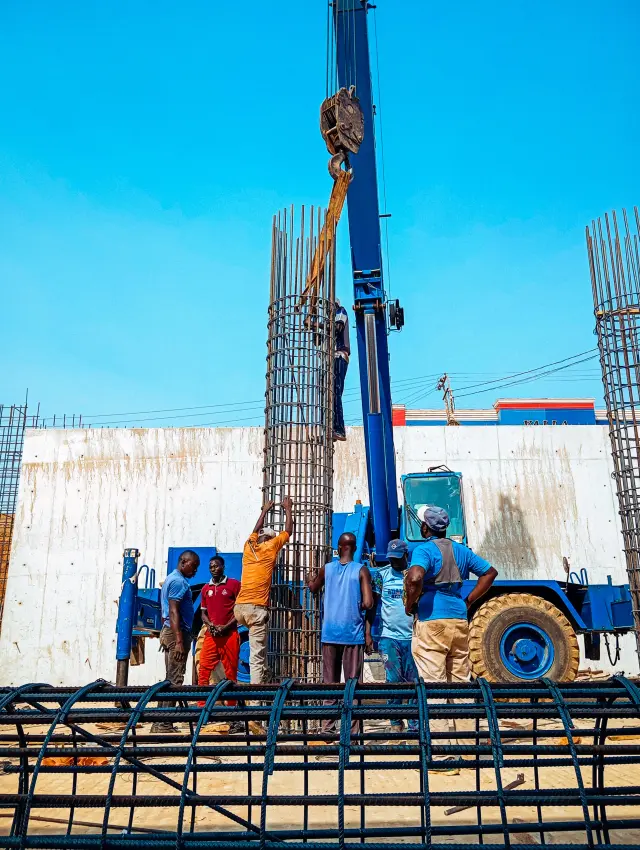
Nigeria is in the midst of one of its largest construction booms. Due to rapid urbanization and population growth, the subsequent rise in infrastructure, and the growth in the private sector investment, the skylines of major cities in Nigeria like Lagos, Abuja, Port Harcourt, and Ibadan have changed.
 Then there are high-rise buildings, rich estates, trade fairs and trade-complex projects, and communications projects, which reflect economic ambition and national growth. Nonetheless, as the
construction industry is booming, a pertinent question is: is this boom
reflected in affordable houses to the common Nigerians?
Then there are high-rise buildings, rich estates, trade fairs and trade-complex projects, and communications projects, which reflect economic ambition and national growth. Nonetheless, as the
construction industry is booming, a pertinent question is: is this boom
reflected in affordable houses to the common Nigerians?
Housing is one of the most acute social and economic
problems in Nigeria. Millions of citizens have poor housing, congestion,
increasing rental prices, and slums. Though there is apparent growth in the
cities, most of the low- and middle-income families cannot afford housing. This
presents a paradox because cities are dominated by cranes and construction
sites, and homelessness and housing insecurity remain.
Herein, in this blog, the author focuses on the construction boom in Nigeria and discusses what affordable housing really means. It evaluates economic forces, state policies, the role of the private sector, financial limitations, material expenses, city planning issues, technological innovation, social implications, and the future.
Through knowledge of the
correlation between the high-speed construction expansion and the affordability
of housing, stakeholders will be able to find the points of intervention to
help develop more inclusive, sustainable, and equitable housing options in
Nigeria based on its increasing population.
The Construction Boom in Nigeria and the Economic Motivators.
The construction boom in Nigeria is influenced by a blend of factors, which are the demographic factors, the economic factors, and the infrastructural factors. Nigeria is the most populous country in Africa, which increases in population by millions annually, which results in the growth of residential, commercial and industrial buildings.
Urban migration is on the
increase as the rural population moves to cities in search of jobs, education as
well as improved living standards. This change in population subjects massive
demand on housing supply in cities, which encourages both private and
governmental construction.
Construction growth has also been nurtured as a result of economic diversification. Other than oil and gas, the government and individual investors are investing in real estate, manufacturing, technology parks, transportation centers and public.
The high-profile projects like roads,
bridges, railways, airports, and smart city developments create demand in
construction services and materials. Also the foreign direct investment,
diaspora remittances have facilitated the development of real estate, especially
in the high-end residential and commercial real estate.
Once more another force is the growing middle class in
Nigeria that yearns to own houses and live better lives. Mortgage institutions,
real estate developers and financial technology platforms are being developed
to satisfy this need. The construction activity, however, is focused on the
high-income groups and luxury property and corporate projects instead of
affordable housing in the mass market.
As much as the boom will help in job creation, economic growth, and better infrastructure it does not necessarily fix the affordability of houses.
The development of construction should be strategically linked to the
inclusive housing policy so that the growth of the economy will not be the
advantage of only affluent investors and high-end consumers.
The Increasing Housing Shortage and Pressure of Demand.
There is a huge shortfall of housing in Nigeria, which is
approximated tens of millions of units. This shortage has been on the rise, with
population increasing much faster than the delivery of housing. Strain is most
pronounced in urban centers where the demand of affordable housing is far much
above the supply. This leads to an increase in rents, unaffordable home prices,
and the growth of informal settlements.
There are a number of factors that lead to this deficit.
Homeownership is challenging for ordinary citizens due to inaccessibility to
affordable mortgage financing. The cost of land acquisition, legal bottlenecks, and delays by individuals in the bureaucracy slow down housing
development. Poor infrastructure, including water, electricity, and transport, makes housing projects in affordable communities even harder at a large
scale.
This gap has not been bridged by the construction boom since
developers tend to focus on the profit margins rather than affordability. The
luxurious apartments and gated estates have higher returns as compared to the
cheap housing projects. Therefore, though construction cranes are seen in large
cities, they are not necessarily for buildings that low-income earners
can afford.
There is also demand pressure brought by the increasing
rental population. The use of rental housing is becoming more costly to young
professionals, marriage couples, and low-income employees. This would result in
a cycle where people use much of their earnings on rent, which restricts them
on saving to purchase a house.
The housing shortage in Nigeria should be tackled through
concerted efforts on the part of the government and the business sector,
financial policies, better land policies, and specific incentives to make
investors invest in affordable housing instead of making luxury development a
priority.
Government Policies and Affordable Housing Policies.
The Nigerian government has undertaken several projects that
are meant to tackle shortages in housing and affordability. National housing
schemes, mortgage refinancing schemes, public-private ventures, and social
housing initiatives are aimed at adding more housing supply and ensuring that
the poor and the middle-income earners have access to housing.
The housing development authorities and mortgage finance
institutions are agencies that are significant players in policy
implementation. Interest rates on home loan reduction programs, subsidies for first-time buyers, and mass housing development have proven to be possible.
Affordable housing estates have also been invested in by some state governments, as
they provide installment payments to civil servants and poor families.
Nevertheless, the implementation of the policies is also a
significant problem. The constraints on funding, issues of corruption, sluggish
bureaucracy and unstable regulatory systems tend to undermine the
effectiveness of the program. Most housing projects that are projected with
high hopes do not even come to fruition or become available because of prices that are more than their target income brackets.
Development is also complicated by land tenure laws and
paperwork. The legalities associated with land acquisition and building
approvals may take several years to happen, a factor that will put off
developers willing to venture into low-margin affordable housing. Moreover,
poor urban planning and development of infrastructure also make the communities
of affordable housing less livable, which makes them less appealing to their
prospective inhabitants.
To make government housing programmes effective, the government needs to reform the programmes through transparency, simplification of approvals, enhancement of financing systems, and partnering with private developers.
The policies should be aimed at lowering the cost of development,
enhancing infrastructure, and making sure that the affordable housing projects
do benefit the people who need them.
The issue of the impact of private sector on the affordability of housing.
Nigeria has a construction sector that is mainly controlled by the private sector; it is through this sphere that trends in the supply of housing and pricing, as well as design, are influenced.
The real estate
developers, construction firms, investment companies, and financial institutions
are at the front line in deciding the kind of housing constructed and those who
are able to afford them.
The developers are also driven by incentives and profit, and
thus most of them target high-end residential estates, luxury apartments, and
commercial properties. Such projects produce better returns and investors with
interest in premium real estate investments. This market orientation, however, regrettably restricts affordable housing choices for average Nigerians.
Another factor that affects the choices of the private sector is the construction costs. Increased costs of cement, steel, imported building materials, and skilled workers raise the cost of the project.
The
developers transfer these expenses to the purchasers and make houses more
expensive. The pricing issues are further increased because of fluctuations in
currency and inflation, which creates uncertainty in long term planning of
projects.
In spite of these, there is hope with the innovation in the
private sector. Other developers are looking at low cost housing schemes,
modular construction and cost effective strategies of design. Collaborations
between government agencies and private companies can lessen the risks and
enhance affordability by sharing the funds and infrastructure.
Stimulating the purchase of affordable housing by individuals
has to be done through specific incentives that include relief of taxes,
availability of low-interest loans, granting of land, and regulation. When the
private sector aligns profitability with social responsibility, it will be able
to transform positively in increasing affordable housing in Nigeria.
Increasing building prices and supply issues
The increasing cost of construction materials in Nigeria has
been one of the biggest obstacles of affordable housing in the country. Inflation
and supply chains disruptions as well as depreciation of the currency have
contributed to the increased cost of cement, steel, aluminum, roofing sheets,
tiles, electrical components, and imported fixtures.
Most of the building materials are imported subjecting the
developers to global market fluctuation and foreign exchange volatility. Costs
of energy, transportation costs and production inefficiencies affect even local
produced materials. The overall costs pressure pushes an increase in project
budgets and eventually the cost of housing.
There is also cost of labor which is a factor that makes it
difficult to afford. Professional craftsmen, engineers, architects, and
contractors require attractive salaries, and since skilled work is lacking in
certain trades, time wastage and higher costs may occur. There are also safety
standards, building codes and environmental regulations that increase costs of
development.
Alternative materials and new building techniques would be
useful in reducing such challenges. There are possibilities of saving money
on locally found materials, recycled materials and sustainable building
technologies. Prefabricated housing, modular construction, and 3D printing are
also proving to be cost effective that can transform the delivery of housing
that is affordable.
To lower construction expenses, there should be cooperation
among government regulators, material manufacturers, developers, and technology
suppliers. To reduce the costs and enhance the affordability of housing in the
country, it is possible to support local manufacturing, stabilize the foreign
exchange policies, and invest in research and development.
Urbanization, Infrastructure and Planning Stipulations
The rapid urbanization in Nigeria has offered both
opportunities and challenges towards affordable housing in Nigeria. With the
growth of cities, housing demand increases, yet the development of
infrastructure does not match the increase in population growth. Poor
urbanization, road congestion, lack of facilities, and insufficient means of
transport make the development of houses in major urban centers difficult.
In any affordable housing project, the environment must have
good infrastructure, such as roads, electricity, water, sewage, schools, and
hospitals. Devoid of these necessities, the low-cost housing estates may end up
becoming isolated or underdeveloped societies. Lack of sufficient
infrastructure raises the cost of development and demotivates investment in
low-priced areas.
Another very important issue is the availability of land. The
prices of urban land are on the increase because of speculation, pressure on
demand, and inelastic supply. Developers who would have avoided the expensive
cost of land in Sydney cannot get the land at cheaper rates and have to plan
their projects at the outskirts of the city where infrastructure would not be
available.
Urban planning policies can enhance housing affordability in
cities through attraction of mixed-income communities, efficient land use, and
comprehensive transport systems. Affordable housing areas can be made
livable, and commuting costs can be minimized through smart city planning,
zoning changes, and transit-oriented development.
Cracking down on city planners, housing governments, and infrastructure organizations is critical to sustainable housing development. Planned urban settings can make housing more affordable, less socially unequal, and increase the quality of life of millions of Nigerians.
Technology and Innovation of Affordable Housing Solutions
Nigeria has an affordable housing crisis that can be solved
through technological innovation. The new construction technologies, online
services, and greener construction already can help to decrease the prices and
time to clean up the project, and enhance the quality of a dwelling place.
The modular construction would enable housing units to be
assembled at the manufacturing site, and once there, the units can be fastened
within a short time, which would cut down labor costs and also minimized time
spent in projects, as the technology of 3D printing can be used to make the
housing parts at lower costs and there is also a reduction in materials
wastage. The intelligent building systems enhance the efficiency of energy
saving the residents' long-term utility costs.
Access to housing is also changing with financial
technology. There are digital mortgage platforms, real estate project crowdfunding, land register blockchain, and mobile payment, which will increase the
level of transparency and accessibility. These inventions can ease property
deals, decrease fraud, and increase the financing opportunities of low-income
purchasers.
To ensure that technology has a significant influence, the
stakeholders have to allocate funds to training, research, and enabling rules.
The affordability gap in Nigeria can be bridged by encouraging innovation in
construction and housing finance that would also facilitate sustainable
development.
The social effect of affordable housing to society
Affordable housing is crucial in society and economic
empowerment, as well as community development. With affordable housing, families
would be able to invest more into education, medical care, business, and
individual savings. Housing insecurity, on the other hand, increases poverty,
inequality and social vulnerability.
In Nigeria, poor access to affordable housing is one of the
factors that cause overcrowding, slum growth, and informal settlements. These
living conditions do not have the basic sanitation, safety, and the ability to
have basic services, which pose an increased risk to health and social
difficulties. Children brought up in unstable housing situations encounter
impediments to education and self-development.
Ownership of homes has the ability to lead to financial
stability, civic participation and intergenerational wealth. The programs of
affordable housing, which are based on inclusive community design, civic facilities, and integration into society, may enhance the strength of
neighborhood cohesiveness and overall well-being.
It is necessary that construction development brings a
positive impact to vulnerable populations through planning, social
investment, and accountability. Housing affordability is not an economic
problem/question alone; it is also a pillar of social equity and national
development.
Conclusion
The construction boom that Nigeria is going through marks
ambition, economic growth and potential development though it is not
necessarily going to provide affordable housing. As new constructions are
erected in big cities, millions of Nigerians are still left with the problem of
housing insecurity, skyrocketing rent, and poor home acquisition space.
The way of affordable housing has to be approached purposefully. The policies of the government should focus on achievement, accountability, and non-discriminatory financing. The social responsibility and profitability of the private sector have to be balanced.
They should adopt innovation to lower the
cost of construction and increase accessibility. City planning should be able
to make affordable housing neighborhoods habitable, linked, and sustainable.
Affordable housing is not just a real estate problem, but it
is a key to economic balance, social justice, and national growth. With proper use of its construction momentum, Nigeria has the opportunity to turn
the ongoing boom into an opportunity that will see millions of citizens get
safe, affordable houses.













LEAVE A REPLY