

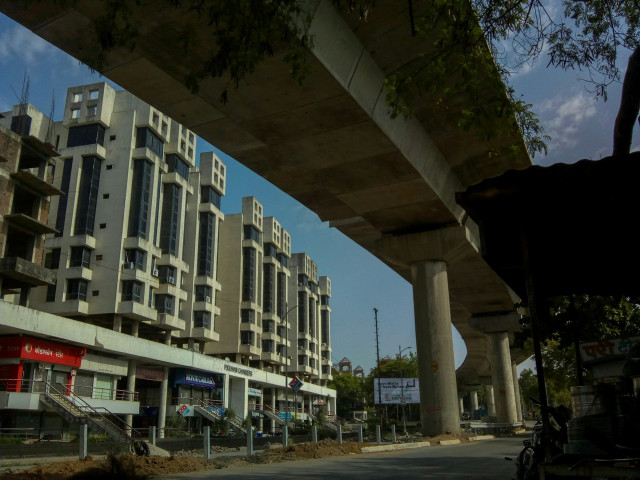
Nagpur's Property Tax Amnesty: A Step towards Slum Regularization
The transformation of India into urban areas has beheld the following characteristics: rapid population growth, rural-urban migration, and the boom of the cities that have never encountered such kind of challenges before. One of the main urgent problems is the existence of informal housing and slums, as they are still the dwelling places of millions of urban population, despite decades of policy intervention. To most families, slums are a source of opportunity as well as tragedy: the closeness to work and services is usually compensated by weak tenure, inferior infrastructure, and non-membership in formal systems of government.
In this respect, Nagpur, which is among the rapidly expanding cities in Maharashtra, has gone to a major experiment a property tax amnesty scheme to incorporate slum households into the formal municipal system. Although property tax can be regarded as a conventional means of generating revenues of the city government, its implementation as the tool of slum regularization is a significant shift in traditional solutions. With extending amnesty to households that have long been irrelevant to the tax base, the municipal government of Nagpur is not only striving to enhance its financial foundation, but also to legitimize and serve the communities that had been kept out of the urban planning order.
This program provokes serious concerns: Is it possible to make property tax amnesty a means of slum regularization? What does it tell us about the interaction of informal settlements with formal government? What is the sustainability of this model and what does it teach other Indian cities struggling to address the same problems? This blog discusses these issues in detail, by discussing Nagpur property tax amnesty in the six perspectives, which includes historical background of slum housing, the reasons why this amnesty plan was initiated, how the scheme was structured and its goals were, how slum regularization was affected by the amnesty, the barriers to its implementation, and what long-term vision this scheme can bring.
The Historical Context of Slums in Nagpur
Nagpur, popularly known as the Orange City, is a city in Maharashtra that over decades has been a significant urban centre in terms of being a commercial, industrial and educational centre. Nonetheless, its development has been unequal as it is common in many Indian cities. The removal of rural areas has added to the growth of informal settlements as people in the large numbers migrated to the cities. Despite the fact that these slums house thousands of people, they are not always secured in terms of tenure, access to sanitation and access to sufficient water supply among other basic services.
Slums in Nagpur (and India in general) have beheld historically through the prism of illegality. Residents were viewed as encroachers of municipal systems of governance in either the public or private land. As a result, slums turned out to be parallel urban life: overcrowded areas that were not strongly incorporated into urban planning. Policy actions over the years have been found to be between demolition drives and resettlement schemes but both were highly limited. Demolitions destabilized livelihoods and served as catalysts to social ills, and resettlement efforts tended to move people to remote locations where there was a lack of proper infrastructure.
The slum policies of the state government such as Slum Rehabilitation Authority (SRA) model in Mumbai tried to incorporate slums into the mainstream urban planning in Maharashtra. However, in some smaller cities such as Nagpur, such massive plans were not necessarily popular. In this case, it had to be feasible to identify locally viable, financially viable and socially inclusive mechanisms. It is against this background that property tax reform appeared as a realistic point of entry. The municipal authorities at Nagpur started to change the discourse on legitimacy and urban citizenship by treating slum households as taxpayers as opposed to encroachers.
The Rationale behind Property Tax Reforms
In India, property tax has been one of the major source of revenue to the municipalities. Property taxes have become a stable, predictable source of income unlike higher-level government grants that can be reinvested in local services, including sanitation, roads and street lighting. However, the collection of property tax in most Indian cities has long been pathetically low due to inefficiencies, poor records, corruption and avoidance.
The Nagpur municipal corporation experienced a two-fold challenge in Nagpur; the city experienced dwindling revenue and a growing population of urban residents that had to receive assistance. The slum area is what makes up a large part of the population that was not even in the tax bracket. This exclusion was in part because they did not have formal land titles which made assessment and billing hard. In addition, taxation of slum households by the local governments was often reluctant due to political repercussions and demonstrations.
This strategy was however unsustainable. The lack of involvement of slum dwellers into the tax system kept municipal revenues at a low level, compromising the services that the communities so much needed. Simultaneously, the exclusion of slum households continued to make their status informal, which strengthened illegitimacy and neglect cycles.
The logic behind the reform therefore became obvious: through the inclusion of slums into the property taxation framework, the city would be able to both expand its revenue base and open a route to regularization. A political strategy of tax amnesty emerged, in which penalties or arrears or disputes would be waived, to get compliance. Instead of penalizing historical non-payment, it provided residents with a chance to become a part of the formulated system with fewer financial conditions. This re-conceptualized the notion of taxation as something that is not punishment but an inclusion-strategy.
Structure and Objectives of the Amnesty Scheme
The Nagpur property tax amnesty scheme had twofold purpose; first, raise municipal collections, and second, to encourage slum regularization. It was pragmatic and inclusive in its structure. Those households who had never paid property tax received a chance to be registered and pay dues with no punitive arrears or penalty. On the same note, the balance holders were motivated to pay their dues at lower charges.
The scheme gained wide publicity, the officials held outreach campaigns in the slum areas. There was involvement of the community leaders and local representatives to gain a sense of trust and talk about the gains of having to participate. Notably, the scheme highlighted that property tax payment would not be considered an evidence of unlawful occupation. Rather, it was positioned as an acknowledgement of households as citizens of urban areas that should enjoy municipal services.
The purposes were not restricted to collection of revenue. The municipal corporation gave a positive indication by including slum households in the property tax bracket that they were ready to recognize these communities as a part of the formal city. This acknowledgement had physical advantages: the ability to access sanitation, waste management, water connections and infrastructure improvements became more politically and administratively possible after the recipients were identified as taxpayers.
The amnesty program was in short a experiment in redefining the issue of citizenship in urban India. To the slum dwellers, paying property tax was not only a monetary duty but a symbolic gesture of belonging- a move towards regularization and a certain security of tenure. To the municipality, it was a strategy of broadening its fiscal base and also encouraging social integration.

Impacts on Slum Regularization
Nagpur is one of the cities where the property tax amnesty scheme has been notably influential in influencing slum regularization both in the short term and in the long term. It was able to achieve success in the short term by swelling the ranks of households formally registered by the municipal corporation. Registration of slum dwellers as taxpayers produced a database that could be used to carry out urban planning, infrastructure delivery, and distribution of welfare.
To the people living there, the payment of property tax established a new legitimacy. Slum residents, who were long deprived of any recognition, started considering themselves to be formal city residents. This psychological change was not unequipped with practical advantages: a more ready disposition of municipal agencies to make basic services: streetlights, drainage, and garbage collection, available. In the long run, this increased living standard and led to social inclusion.
Further, the amnesty initiative preconditioned the regularization in the long term. Although property tax no longer granted land tenure rights, it left a written record of residence and service to the city. These records may prove to be very valuable in any negotiations that arise in the future regarding tenure security, redevelopment schemes or any infrastructure project.
On a more general scale, the scheme was also a challenge to dominant discourses about slums. Viewing the residents as taxpayers but not encroachers, the municipal corporation restructured slums as part of the city as opposed to illegal aberrations. Such a shift in concept is essential to the development of more inclusive urban governance.
With that said, the effects were not equally beneficial. Critics contend that the scheme cannot work without parallel reforms, including legalization of tenure or effective service delivery, or it would be no more than a revenue-generating instrument and not a real move toward regularization. However, it is a radical move compared to the previous practices that ignored, or criminalized slum settlements.
Implementation Challenges and Criticisms
Although novel, Nagpur property tax amnesty scheme has been marred with many difficulties. The most important have been administrative hurdles. Most slum families do not have addresses and assessment and billing becomes complicated. In other scenarios, the dispute over ownership of land or overlaps caused confusion as to who was to pay taxes.
Stiff neighborly opposition also arose. Slum households have long been out of the tax bracket and distrusted municipal authorities. Others were afraid that the payment of taxes might be turned against them in an eviction battle later or it meant that they were accepting limited rights without any guaranteed tenure. It took time to establish trust and that would put a strain on the municipal resources.
Additional complexity was a political set of dynamics. Local leaders even resisted the scheme either due to the fear of losing influence over informal patronage networks or fear of losing slum constituencies. Further, other critics of the scheme condemned it as an ad hoc intervention that was not put through the wider housing policy. One other criticism was based on equity. Even as slum dwellers were being urged to pay taxes, most of the rich households in formal communities were still evading property taxes because of laxity in enforcing them. This cast doubt on equity and equality in the application of tax laws.
Lastly, it is still not clear on whether the scheme can be sustained. The benefits of property tax regularization might not be long-term without corresponding land tenure, service delivery and housing policy reforms. The critics caution that the scheme is dangerously turning out to be a expedient measure and not a structural solution.
Long-Term Vision and Lessons for Other Cities
Nevertheless, the property tax amnesty scheme in Nagpur is an experiment with a promising future to other cities in India because of its obstacles. Its vision in the long term is the inclusion of slum dwellers in the fiscal and administrative system of the city thus eventually establishing tenure security and comprehensive development. The scheme defines the possibility of property taxation as not only a revenue generator. Tax policy formulated in an inclusive manner is a potential source of social recognition and regularization. It shows how slum regularization need not necessarily involve redevelopment on a large scale or costly resettlement programmes; that in some cases, a gradual process such as tax inclusion can prepare the way to integration.
Other cities derive some major lessons. At the beginning, there must be communication and trust-building. Unless communities are involved and tax is seen as a route to legitimacy, and not punishment, compliance will be low. Second, the reforms of the property taxes should be supported by the evident enhancement in services. When they believe they will get real benefits in exchange, the residents will be more ready to pay taxes. Third, it is essential to enforce it in an equitable manner. The raise in efforts to tax slum households needs to go hand in hand with raising the compliance of the richer residents.
Lastly, the scheme helps to emphasize the significance of connecting fiscal reforms to larger housing policy. The inclusion of property tax should be a start to the inclusion of more holistic policies that deal with land tenure, infrastructure and housing security. An example is the placement of amnesty in a larger vision of inclusive urban development that allows cities to make sure these initiatives are long-term routes to equity and not short-term solutions.
Strengthening Community Participation in Slum Regularization
The lesson of communal involvement in outcome shaping is one of the most significant in Nagpur property tax amnesty scheme. The residents of slums are not merely active beneficiaries of the policy but full-scale stakeholders whose co-operation is the decisive factor of success of reforms. The municipal corporation could achieve trust in the scheme and involve the communities with the help of community leaders, resident welfare associations, and local NGOs. The community-based method served to overcome the apprehensions that taxation was an explanation in the direction of eviction and instead re-packaged it as a channel to legitimacy and service delivery.
Engagement in the community also makes sure that slum regularization does not only depend on fiscal inclusion but evolves into an arena of greater empowerment. Involvement of residents in decision-making processes makes them feel stronger ownership and responsibility, and this enhances compliance and sustainability. Furthermore, in case communities are organized they can bargain as a group to foster infrastructure, tenure security and social amenities. Community participation in this manner serves as an interface between policy development and execution, making sure that policy reforms are based on daily life.
The importance of bottom-up approaches is demonstrated in this experience in relation to cities outside Nagpur. Monitoring attempts to implement regularization that meaningfully involves communities are more likely to achieve success in balancing the objectives of fiscal and social justice and inclusion in the long-term in the urban context.
Conclusion
The Nagpur property tax amnesty plan is a radical move in the direction of addressing the realities of informal housing with the demands of inclusive urban government. The city has increased its revenue base by including the slum households in the tax net besides providing the residents with some level of recognition that they would never have had before.
The project illustrates the potential of fiscal instruments, when used in a different way, to go beyond their conventional functions and social inclusion, as well as, slum regularization. Yet the voyage is not finished. Issues of implementation and equity, and lack of parallel tenure reforms demonstrate the weaknesses of the scheme. To be a real example of inclusive governance, it has to be in a larger vision that ties taxation to service delivery, legal recognition, and long-term housing security.
The core of the scheme is that of a fundamental yet insightful change: instead of perceiving slum inhabitants as trespassers, one can see them as citizens. Although this development is gradual, it can transform the future of Indian cities. Reproduced intelligently and accompanied by wider reforms, the Nagpur experiment might teach a new model of slum regularization, that of non-demolition and non-displacement, but of inclusion, dignity, and joint responsibility.
Also Read: Affordable Housing Tax Credit Program



-3dkuLgKhRD.jpg)
-49HupTvwDD.jpg)










LEAVE A REPLY