

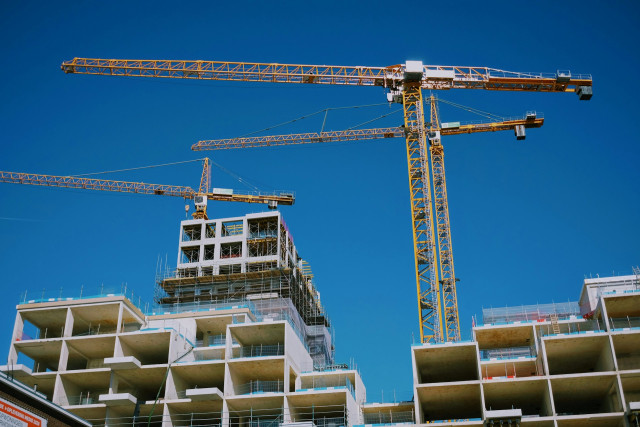
Modular Construction In Kenya: How It Can Help Close The Affordable Housing Gap
The increasing housing shortage in Kenya is due to the high
rate of urbanization, population increase and escalating land and construction
prices. The likes of Nairobi, Mombasa and Kisumu cities are still receiving
thousands of new residents annually seeking jobs and a greater future. The
housing supply has however failed to meet the demand and there are millions of
Kenyans in informal settlements or overfilled rental houses. The conventional
construction techniques, which are typified by time consuming schedules,
excessive use of materials, and labor intensive procedures are not sufficient
to deal with this challenge at this magnitude.
Modular construction has in turn been proposed as one such
promising option that can lead to faster delivery, cost reduction and a better
quality control. Modular construction entails production of building parts or
whole units of constructions in regulated factory settings and then ferrying
them to construction areas. Such a strategy is in opposition to the traditional
on-site building, in which the majority of the processes are held in the open
space that is vulnerable to weather delays and inefficiencies.
Modular construction has become popular globally as an
affordable way of housing, especially where there is a shortage of labor or is
expensive. In the case of Kenya, the modular construction would provide Kenya
with the opportunity to amend modular housing delivery by generating industrial
efficiency in the building industry. Modular systems have the potential to
close the affordable housing gap more efficiently than conventional methods by
reducing construction times, maximizing resource use and permitting
standardized production.
This blog discusses how modular construction can be used to
bridge Kenya housing shortage. It looks at the extent of the housing problem,
the workings of modular systems, the cost-benefit, policy and regulating
factors, financing and investing, and the socio-economic effect of the modular
systems in the long term. These six dimensions allow us to determine whether
modular construction can be one of the pillars of sustainable and inclusive
urban development in Kenya.
Understanding Kenya’s Affordable Housing Gap and the Urgency for Innovation
Kenya has a housing shortage of millions of units and it is
growing every year. The urbanization is taking place so fast that it surpasses
formal housing production. With the continued migration of people into the
cities seeking jobs, the straining urban infrastructure and housing stock
becomes heavier. The informal settlements have been spreading, as the
conventional methods of construction have failed to provide a good number of
affordable units.
This gap is caused by several factors. The prices of lands
in cities have soared and it is hard to build cheap houses in city areas.
Cement, steel and imported fittings are some of the construction materials that
can vary in price globally, thus raising project budgets. Skilled workforce
shortage and incompetence also extend the time and add to expenses.
Conventional construction techniques are usually followed in
a linear way and it may take months and even years to build a huge house
construction. Adverse weather conditions, ineffective supply chain and on-site
coordination issues are hindering advancement. Such inefficiencies restrict the
quantity of units that are to be produced on an annual basis.
Government affordable housing programs have been pursued to
increase production levels but its implementation is complicated. It needs a
paradigm shift in the construction of housing to deliver hundreds of thousands
of units annually. Modifications in traditional systems might not be enough to
ensure the size of demand.
This situation puts innovation under pressure. Modular
construction has a radically different solution. Modular systems allow parallel
manufacture of buildings, as opposed to building every building on-site, one at
a time. When the preparation of the site is being done, the housing units, or
components, could be produced at the same location in the factories. The
overlapping workflow contributes greatly in terms of minimizing the projected
time.
The magnitude of the housing shortage in Kenya requires mass
production of houses through industrialized construction that will not
compromise quality. Modular construction fits this requirement because it
brings manufacturing efficiencies to the construction envisage. It is a
structural solution but not a short-run solution.
Kenya may continue the cycle of housing shortages and
informal urban development without adoption of new technologies and processes.
Modular construction offers a chance to interrupt this cycle and shift to
large-scale and efficient housing provision.
How Modular Construction Works and Why It Is Different
Modular construction is a contrast to traditional building
methods in both procedure and ideology. Traditional construction involves
delivery of materials to a location where men build structures bit by bit. This
is a very sensitive method that is affected by weather conditions, site
accessibility and coordination of labor.
Modular construction, on the contrary, relocates a
significant portion of the construction process to the supervised factory
settings. Wall panels, floor systems, roof sections or even complete rooms are
manufactured in standardized processes. Such modules are then moved to the
construction site where they are quickly assembled.
There are a number of benefits associated with the
production of factories. To begin with, quality control is improved. The
production setting enables accurate measurements, standardization and
homogenous oversight. This minimizes errors and guarantees integrity of
structure. Second, the wastage of material is minimized. The factories can cut
and recycle unnecessary materials in a more efficient way to optimize the use
of materials.
Speed is another differentiating characteristic. The fact
that modules are created at the same time as the preparation of the site
reduces the project schedules to minimal proportions. A housing construction
project that would normally require 18 months to be carried out through
traditional means would be possibly finished half the time through modular
construction.
Scalability is also supported in modular construction. After
the design has been completed, the design can be effectively replicated in
several locations. It is a standardization that lowers design costs and allows
the procurement of material in large quantities and hence per-unit costs.
Notably, modular does not imply poor quality. Contemporary
modular construction can be up to or over the traditional building construction
standards. At the manufacturing level, they are able to add insulation,
plumbing, electricity and energy saving technologies.
As modules will have to be transported to different
locations, it is an aspect that has to be handled with caution. Nevertheless,
Kenya has a growing road network that can be used to sustain this model.
The modular construction brings predictability and
efficiency in the delivery of the houses by combining industrial production
with on-site assembly. The shift that occurred between craft-based construction
and factory-based manufacturing would improve Kenya housing gap ability
tremendously.
Cost Efficiency and Economic Advantages of Modular Systems
Cost effectiveness is one of the strongest reasons behind
the use of modular construction in Kenya. The low-priced housing demands a
tight rein on cost to make the ultimate selling prices affordable to low- and
middle-income earners.
The labor cost is decreased through the factory production
that simplifies the working process and minimizes the wasted time. Employees
work under organized shifts having specialization, which enhances a high level
of productivity. Since modules are constructed in an indoor way, delays caused
by weather conditions are avoided and this saves money that would have been
spent on such interruptions.
Cost reduction is also associated with material savings.
Accurate production reduces wastage and large-scale purchasing reduces the
input price. Standard designs lower the architectural and engineering costs,
since architectural designs may be re-used in other projects.
Reduced construction time saves on the financing costs.
Borrowed funds are normally used by developers and long term projects are
subjected to interests. Modular construction reduces the overall cost of
borrowing as it speeds up the delivery process which allows setting lower
prices.
Affordability is also increased by economies of scale. High
quantities of production enable the division of fixed costs between factories
and large quantities of units. The increase in output will result in a decrease
in per-unit costs. This scalability is in line with national housing goals that
need to be produced in mass.
Also, modular systems would be able to boost the local
production sectors. The setup of modular factories will provide jobs and
decrease the use of imported materials. This localization boosts the economic
resilience and facilitates the industrialization.
But there may be high upfront cost in modular factories. Capital is needed in equipment, training and setting up of facilities. Such investment has to be justified by long term demand security. Generally speaking, modular construction represents an avenue of reducing cost of production without affecting the quality. It is able to make affordable housing viable on a large scale by integrating speed, efficiency and scale.

Efficiency Policy, Regulation, and Institutional Support.
Regulating authorities should come up with regulations that
will identify the modular parts as meeting the safety and life span criterion.
Certain approval procedures minimise uncertainty and attract investors towards
the process.
Adoption can be speeded up through government incentives.
Favourable conditions are possible through tax breaks to modular manufacturers,
subsidies on affordable housing project with innovative technologies, and an
easy process of permitting. Capacity building and training is also important.
Engineers, construction professionals, and inspectors should learn the methods
of modular techniques to achieve good control over them.
The cooperation of institutions between the national and
county governments will help in integrating the modular housing in the urban
planning strategies. Pilot projects can be shown to be viable by allocating
public land and instill confidence. Consistency in the policy is vital.
Investors need to have predictable regulatory environments in order to invest.
Trust is enhanced by open procurement procedures and accountability systems.
By harmonizing regulations and innovation, Kenya is in a
position to establish an enabling environment of modular construction. The
institutional support will be used to find out whether modular will be a niche
experiment or mainstream solution.
Financing, Investment, and Private Sector Participation
Modular construction needs a big investment to scale. To
raise capital, the cooperation of the private developers, institutional
investors, and financial institutions is required. Risk can be mitigated by
mixing funding sources with a combination of both public and private funding.
There is long-term housing demand forecasts that assure the operators of the
factory.
It is important to increase the availability of affordable
mortgages to foster the demand of modular housing units. With the capacity of
households to be served with the flexible and affordable mortgage products,
households are in a better position to acquire homes that were manufactured
within the industrialized construction systems. Modular homes might be made
more accessible to the low- and middle-income earners by tailored financing
solutions and enhanced market acceptance of them.
The modular housing is also appealing to the pension funds
and can influence investors because of predictable production schedules, cost
control, and quantifiable social returns. The financial stability through
continuous cash flow and the change in the community positively makes it an
attractive long-term investment asset. Open and transparent governance systems
also enhance investor confidence in that they minimize risk and fund
management.
Public-Private partnerships based on a well-organized
large-scale developments of modular housing are able to accelerate it. Through
risk sharing, alignment of incentives and combination of public support with
efficiency of the private sector, the stakeholders will be able to hasten the
delivery and supply of affordable housing many times over.
Social Impact and Long-Term Sustainability
The concept of modular construction is much deeper than simply providing a faster or cheaper means to complete a project; it can have a major revolution in the way people live in the city. Modular systems can enhance the living standards in cities by ensuring that people have safe, durable and well-designed housing. Properly built houses promote security, lower the exposure to structural collapses, and provide the occupants with respectable living conditions.
The accelerated completion of the project also serves
the purpose of reducing congestion in the city attributed to an extended
construction process and enhancing housing standards leads to increased health
results among the populations. The families enjoy secure tenure, stable
utilities and provision of basic amenities, which promote stability and
development of community members over time.
The other key benefit of modular construction is
environmental sustainability. Since the components are produced under
controlled factory environments, the wastage of materials is reduced, and the
energy consumption is also maximized. Precision engineering helps to cut down
raw materials wastage, and recycling can be directly incorporated into the
production lines. Also, green technologies, including solar panels,
energy-efficient insulation, and saving on water, can be easily integrated into
modular buildings. These characteristics reduce the cost of operations to the
inhabitants and decrease the urban sprawl footprint.
The economic gains are also very important. Setting up
modules of production facilities generates jobs in the manufacturing, logistic,
design, and installation industry. Employees acquire expertise in their
specific area of technology enhancing the general ability and competitiveness
of the construction workforce.
In spite of these benefits, the perception of the population
is still a problem. Mistakes regarding the quality and sustainability of the
modular buildings may act as a deterrent. Confidence can be developed through
specific awareness campaigns and demonstration projects. After all, modular
construction is not only a technical novelty but also a strategic instrument of
non-discriminatory development and sustainable urban revitalization.
Conclusion
The lengthening housing deficit in Kenya requires grand measures in large scales, which transcends simple enhancement of conventional ways of building homes. The pace of urbanization, rise in population and escalation of construction costs have rendered the site-based construction in its traditional form more and more challenging to match the demand.
Modular
construction offers a radical alternative as it brings in the industrialization
process to the housing industry. Modular systems have the potential to greatly
shorten project schedules, contain expenses, and improve quality through
factory-based production and on-site assembly. By moving away the labor and
weather-dependent nature of construction sites to the leaner, more
industrialized surroundings, it is possible to make housing delivery more
efficient and predictable as well as scalable.
This transition alone cannot be successful. It has to have
positive and stable government policies that acknowledge and control the
modular building standards. There will be clear building codes, simplified
approvals and incentives on innovation to foster the participation of the
private sector. Long term investment is also very important especially in
setting up manufacturing plants, obtaining modern machines and developing
supply chains. A major role in the provision of risk reduction funding mechanisms
can be played by financial institutions and development partners in the
attraction of investors.
It is also important that a good workforce which can work in an industrialized construction environment is developed. Through training programs, technical education alliances, and certification, the engineers, technicians, and factory workers will be at a high standard of production and safety. It takes creativity, partnership and vision to eliminate the housing gap in Kenya. Providing an opportunity to reinvent the way the country builds, modular construction should be an effective part of the national housing strategies. It offers an avenue to a more inclusive and accelerated AS and smarter housing development that has the potential of fulfilling the needs of a fast urbanizing country.

-5yCS4OoVBg.jpg)















LEAVE A REPLY