

In Africa, urbanization has been rapid and has resulted in
increased need to have affordable, accessible and dignified housing. The past
models of urban planning such as residential, commercial and industrial areas
being divided do not necessarily respond to the dynamic demands of growing
populations. With the increased urbanization, city planners are adopting
mixed-use development as a viable and sustainable strategy of blending housing
with economic and social amenities, services and other services necessary to
the community. With an excellent planning of the mixed-use environment, the
inhabitants can afford to live, work and obtain their daily needs in the same
neighborhood, which has saved on time of travelling and enhanced their quality
of life.
To low-income
communities especially, mixed-use planning has new potentials that are enormous
in terms of lowering the cost of living, creation of jobs, and enhancement of
social inclusion. African cities may be inspired by the international best
practices and modify the mixed-use strategies to local economic, cultural, and
spatial realities. This blog discusses the ways of how mixed use development
and affordable housing can make urban spaces vibrant, resilient, and inclusive.
It also brings out the lessons that can be embraced by African cities to
facilitate the sustainable growth and to ensure that future cityscapes can
serve its present and future populations fairly.
Comprehending
Mixed-Use Development in the African Urban scenario.
Mixed-use development is the development that combines
residential, commercial, institutional, and recreational purposes in a single
space. This idea is not entirely new in a lot of African cities, and informal
settlements have always been characterized by organically mixed activities,
with small shops, street vendors, and home-based enterprises operating on
residential territory. Nevertheless, such informal patterns frequently appear
without any planning, which leads to the lack of proper infrastructure and
unhealthy living.
The modern mixed-use development provides an organized
option, which coincides the economic activity with appropriate zoning,
community facilities, and effective land use. With scarce and high-priced urban
land, mixed-use development enables cities to utilize the available space to
the fullest to prevent urban sprawl and conserve natural ecosystems. In
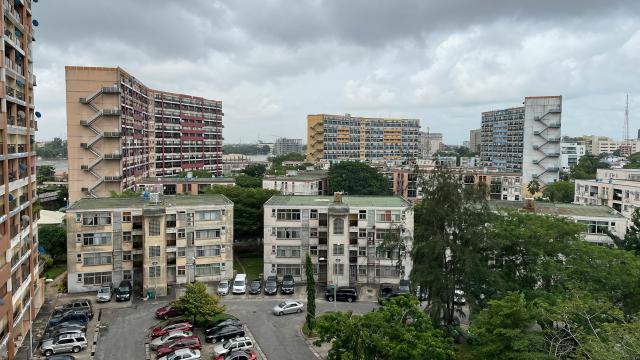
congested urban areas such as Lagos, Nairobi, Addis Ababa, and Johannesburg,
the commerce-housing-public services mix enhances inclusivity because it helps
the low-income families to be nearer to their workplaces.
The model is also
used to minimize the reliance on long-distance transport and therefore
congestion and environmental pollution are minimized. The African cities will
be able to create mixed-use environments that are safe, functional, and
sensitive to the realities of urban life by identifying the strengths of the
traditional informal patterns and integrating them with the formal planning
tools.
Optimizing Housing
Affordability by optimizing land use.
The good thing about mixed-use development is that it
utilizes the scarce urban land in an efficient way, and therefore it has a
direct impact in housing affordability. With population increase, increase in
land prices and the demand of centrally located housing, African cities
experience intense pressure on their land-use. Historical single-use zoning
usually results in discontinuous urban patterns such that low-income families
are forced to relocate to the outskirts of the city where land is inexpensive but
opportunities limited. This is challenged by the mixed-use development that
encourages small, vertically integrated buildings that embrace shops, offices,
living quarters on the same piece of land.
This is effective land use which lowers the unit housing
costs, assists developers to achieve higher returns on their investments, and
even motivate them to incorporate affordable housing units to their projects.
Also, in case of co-location of housing with economic activities, there is a
saving of transportation, accessibility to utilities, and time, making the
overall cost of living to be low. Local governments can make affordability
stronger by offering incentives like lower permit charges, density bonuses, or
tax breaks to developers who can incorporate affordable housing in their
mixed-use developments. Through more effective land use, the cities in Africa
can develop inclusive neighborhoods where affordability is not a secondary
consideration but the inherent aspect of an urban development.
Including Economic
Opportunities In Affordable Housing
Mixed-use developments also increase the potential to
generate income, and thus, it is especially helpful in low-income communities.
With the inclusion of commercial areas, markets, co-working facilities and
small business centers in residential areas, these developments allow the
inhabitants to get employment without the monetary and time weight related to
the long commuting process. The urban economy is based on informal
entrepreneurship in most African cities.
This entrepreneurial spirit is encouraged through mixed-use
environment which offers secure and convenient areas to micro businesses like
tailoring, food stands, hair salons and retail stores. The integration assists
in diversification of household incomes, enhance economic resilience, and
empower local economies. Furthermore, the mixed-use projects will be able to
draw bigger commercial investors who offer formal jobs and triggering the whole
economic development.
By combining housing and trade in the context of properly
designed systems, cities should be able to lower unemployment figures and
develop more localized economies. In the case of low-income residents, the
ability to earn an income at a walking distance to the house will increase
work-life balance, improve security, and decrease stress levels caused by
transportation. The ability to incorporate economic functions into housing
development is hence a strong instrument of rejuvenating societies and creating
a lasting socio-economic balance.
Encouraging Social
Inclusion and Community Integration
Mixed-use developments also provide massive social
advantages as they unite the various classes of people in one common urban
environment. Conventional zoning has a tendency to separate regions in terms of
income or use and as such, there is no interaction or shared experience within
these neighborhoods. On the contrary, mixed-use surrounding can encourage
social integration by offering communal areas, community centers, parks and
recreational facilities where people with diverse backgrounds can interact and
socialize. This helps build the community, social fragmentation is minimized
and cultural exchange takes place.
To households with low income levels, residing in mixed use
developments close to the middle-income or commercial districts can make better
schools, healthcare facilities and social services to be accessible. This kind
of integration aids in dismantling historic trends in inequality, as well as
contributing to upward social mobility. Furthermore, mixed-use planning
promotes safety due to natural surveillance, those places with a busy street
life are safer due to the presence of people, business owners, and visitors in
the places they use frequently. It is a model of crime reduction and
strengthening of the trust of the community as the so-called eyes on the
street. As a strategy of inclusiveness, African cities can establish
neighborhoods in which life at the community level flourishes and everyone does
not feel left behind.
Enhancing Urban
Mobility and Lightening Transport Burdens.
The transport issue has become a key problem in most African
cities where long travelling, traffic jam and poor transport systems are eating
up time and money. The solution that can be provided to this issue is the
mixed-use development, which will allow decreasing the daily use of
long-distance travel. In cases where the people are residing near the places of
work, markets, schools, and hospitals, then they are less dependent on cars, or
crowded mass transport. This does not only result in cost saving but also in
the betterment of the general standards of life.
By promoting walking
and cycling by designing pedestrian-friendly environments, shaded streets, and
bike lanes is also a way of making communities healthier and more sustainable.
Traffic congestion is also decreased, which allows cities to reduce carbon
emissions, which enhances the environment of crowded cities. To government,
mixed-use urban design relieves transport infrastructure overload as well as
minimizing the cost of maintenance. They also enable bus and rail systems to
have a greater efficiency of operation as they relate shorter and concentrated
routes of travel.
Essentially, the mixed-use development changes the meaning
of mobility and puts an emphasis on commuting long distances by focusing on
communities that are easily accessible and walkable. This change of mobility is
especially important to the low-income families, which are usually
disproportionately impacted by the increased costs of transportation and time
wasted in traffic jams.
Mixed-Use Housing on
the Strength of Public-Private Partnerships.
One key development critical in the deployment of mixed-use
developments in the African cities that integrate affordable housing is the use
of the public-private partnerships (PPP). The local governments have a lot of
money stacked away in their hands thus they are not able to invest in huge
residential projects. They can tap into more resources, experience and
innovations by collaborating with the private developers to realize the urban
development targets.
The governments in a PPP model can give out land, policy
incentives, or infrastructure assistance at the same time the private
developers will invest in the project, give their technical and construction
capacity. The collective responsibility also assists in lowering the total
project expenses and enables the incorporation of cheaper units to be possible.
The hybrid developments are of great appeal to the investors, in that the cost
of housing units that are affordable can be subsidized by the income generated
by commercial spaces. This cross-subsidy model has proved to be effective
elsewhere in the world so as to suit African situations.
Community groups and non-profit organizations are also
significant in making sure there is fairness, transparency, and social
inclusion. With the proper collaboration of the stakeholders, it is possible to
come up with high-quality mixed-use projects provided by PPPs, so that there is
a balance between economic viability and social equity. It is necessary to
strengthen these alliances to scale affordable housing in mixed-use settings in
Africa.
Strategic Planning of
Sustainable and Resilient Neighborhoods.
Mixed-use development can never be successful in the long
term without sustainable planning. The African cities are experiencing
increased issues concerning climate change, high population increase and
degradation of the environment. Mixed-use development presents the prospects of
a combination of green building processes, green landscape, and robust
community planning. Small projects that are vertically structured save on land
and conserve natural environments.
Green spaces can help to improve air quality, reduce heat
islands, and increase mental health. A blend of renewable energy sources like
solar panels can make the residents spend less money on utility bills whereas
water gathering and recycling systems will encourage the responsible use of
resources. Moreover, the neighborhood plans can incorporate sustainable waste
management, which would enhance the quality of the environment and the health
of the population.
Community resilience
is further enhanced through climate resilient designs, including high-rise
buildings in flood prone regions or building materials that can resist heat. By
focusing on sustainability in mixed-use planning, local governments develop
neighborhoods that are resistant to shocks in the environment and favorable to
the future generation. The mixed-use development is also economically justified
because these strategies do not only conserve the environment but they also
lower the operational expenses of residents and city authorities in the long
term.
Appearing to
Governance and Policy Barriers to Implementation
Although promising, mixed-use development encounters many
governance and policy challenges in the African urban centers. Innovation in
urban planning is often stifled by complex land tenure systems, slow approval
processes by bureaucracies and outmoded zoning regulations. Most planning codes
continue to depict colonial models of separating the land uses hence, it is
hard to carry out integrated development projects.
Also, corruption,
mismanagement, and absence of transparency may deter investing in the private
sector and causing distrust in the populace. The solution to these impediments
therefore requires governments to implement more transparent and lax regulatory
measures that facilitate mixed-use development but safeguard community
interests. The automation of the permit systems will minimise delays and
enhance accountability.
The concept of participatory governance (involvement of
citizens in decision-making) can be used to make sure that local needs are
considered in the development of the projects and they are accepted by the
population. It is also important to strengthen institutional capacity of the
planning departments, architects and engineers. In other words, through
resolving the policy bottlenecks and adopting a forward-looking manner in its
governance, African cities can unlock the potential of mixed-use development and
increase access to affordable housing.
International Mixed-Use Housing lessons of Successes.
A number of international cities have effectively executed
affordable, efficient, and sustainable mixed-use developments and this has a
lot to learn by African urban planners. Examples of such places as Singapore,
Curitiba, Amsterdam and Vancouver show how residential, commercial space areas,
and other constructions can be combined to form lively and accommodating urban
centers. Their strategies emphasize the need to incorporate vital services in
the areas of walking neighborhoods but with strong connectivity. The most
important lessons are the focus on higher-density development of the major
transit hubs to decrease traffic jams and increase mobility and the development
of open green areas that help preserve environmental health and the welfare of
the community.
It is also crucial to
create equal and transparent regulatory frameworks and prevent the displacement
of the low-income residents so that the fruits of development would be
distributed among all social classes. These examples indicate that mixed-use
development can greatly enhance urban life when it is properly planned and when
appropriate policies are in place.
The other lesson is that cross-subsidization is important
with commercial revenues funding affordable housing units within the same
development. Such nations as Brazil and India demonstrate how community
involvement can empower project results and make them culturally relevant.
African cities are able to learn by applying their local economic trends,
climate, and culture. However, it is critical that imported ideas need to be
adapted to African realities and not imported in wholesale. To establish resilient
and inclusive neighborhoods that are culturally relevant and have global
appeal, successful mixed-use development requires global inspiration and local
wisdom.
Conclusion
Mixed-use development has a great potential to be used in
solving the African increasing affordable housing crises and to create viable,
inclusive, and sustainable urban living conditions. Mixed-use planning allows
cities to maximize land especially by combining residential, commercial and
social uses, enhancing economies, minimizing transportation pressures, and
facilitating community cohesiveness.
In the case of
low-income households, it provides a chance to move nearer to economic
activities and other important services, which helps to decrease the number of
hardships imposed on them on a daily basis and enhance the quality of life in
the long term. Nonetheless, the potential of the mixed-use development can be
unlocked with the help of supportive policies, good governance, innovative
financing, and meaningful community involvement. African cities can be on the
forefront in coming up with housing solutions that are not only affordable but
revolutionary, by examining the experiences of the world and adapting them to
the local conditions.
Mixed-use development is not just a city planning trend but
a way of transformation to the African cities. It supports economic liveliness
by incorporating residential, commercial, and social activities into the
generic space, minimizes the level of travel, and enhances interpersonal
communication within the community. The strategy facilitates sustainable
development by optimising the utilisation of land, enhancing access to key
services, and development of inclusive and walkable neighbourhoods. With the growing
population in African cities, mixed-use developments will provide a viable and
long-term solution that will improve quality of life, improve the local
economy, as well as resilience of urbanized areas. At the end of it all, it
opens the door to a better, easier, and more successful future of millions of
citizens.







LEAVE A REPLY