

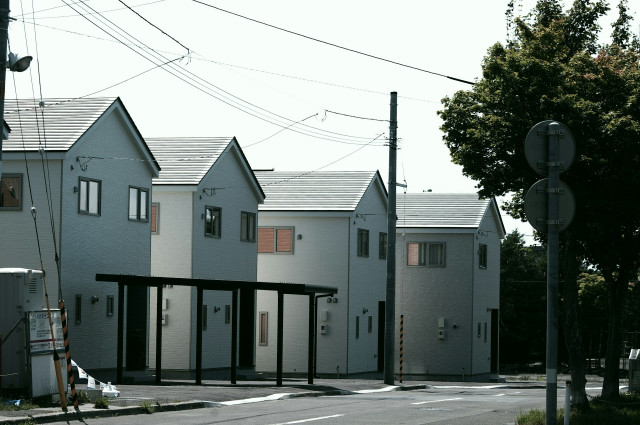
Missing Middle Housing - Exploring the Concept
The world housing system is facing an affordability, availability and accessibility crisis. Cities are growing at a breakneck speed, populations are on the rise, and yet the housing provision of the substantial supply capable of serving the needs of a variety of households, has not kept pace. In housing discourses, one extreme has been and continues to be single-family detached housing on one end of the spectrum and high-rise apartment buildings on the other.
Such a black-and-white take is what has created the massive gap in the housing continuum with what is known as the missing middle, which can serve to fill the gap between suburban sprawl and high-rise cities. Middle Housing Missing refers to a continuum of multi-tenure or clustered housing plus single-family housing with smaller sizes and generally acceptability to single-family homes, but with more density, affordability, and variety of selection.
The term originated in the work of architect and urban planner Daniel Parolek and has gained currency in the urban planning and housing policy literature as more cities confront the need to create inclusive housing options of affordability. Missing Middle Housing Frequently referenced of various types of two to four units, duplexes, four lexes, bungalow courts, courtyard apartments, townhomes, etc., which occupy an intermediate place in the continuum between a single-family house and an apartment building. Such housing types pervaded pre-war neighborhoods and disappeared in post-war planning largely because of zoning, auto-oriented city planning and changing cultural demands.
With affordability crises rising across the cities of North America as well as Europe, Asia, and elsewhere, it is important to reconsider the place of Missing Middle Housing. This does not only concern more supply of housing, it is more about restoring the balance in housing choices, enhancing walkable developments, less impact on the environment and availing of options to people of all ages and income range.
In this blog, we will discuss the Missing Middle Housing by considering its historical precedents, its application to the contemporary issues of housing, potential social and economic consequences of this kind of housing, impediments to its adoption, and the opportunities it provides when it comes to the development of equitable and sustainable communities.
Historical origins and demise of missing middle housing
Lost Middle Housing The availability of middle housing used to characterize the fabric of rich urban and suburban neighborhoods. Duplexes, triplexes and small courtyard apartments were common in cities around the world in the late 19 th century/early 20 th century. These forms of housing offered low-cost housing solutions to working-class families, new immigrants and individuals who sought a smaller living space at aradius near to towns and cities. They were frequently constructed next to single family housing and in the context of a neighborhood, there was a natural income mixture of residents, age structure, and household size. Missing Middle Housing design focused on areas that favored walking, compact, human-scale buildings, community access, and common areas.
One can trace the decline of these types of housing to various factors which overlapped each other in the mid-20 th century. Suburbanization was the feature of the rapid urban development after World War II. These taxes were encouraged through Government policies, i.e. mortgage incentives, highway development, which encouraged the building of single family homes on large lots. Zoning was introduced to enshrine low-density development and in effect ban duplexes, fourplexes and small apartments in much of the real estate. Cultural discourse in particular aggrandized the single-family home as the epitome of the American Dream, marginalizing other types of housing, at the same time.
High-rise apartments became the alternative that was frequently in the urban centers or constructed as the forms of the public housing. This segmentation- single family homes on one side and the large apartment complexes on the other- eradicated the gradient of housing types which have been most accommodating and flexible as well as quite affordable. Earlier Missing Middle Housing became rare in the construction pipeline into the late 20 th century, leaving cities with mechanically homogeneous neighborhoods that sprawled relentlessly, with or without high rises inserted into a blank urban canvas.
This historic background is critical to the understanding of present day issues. Lack of Missing Middle Housing (MMH) has left “housing deserts,” where moderate density, affordability, and variety do not exist. With cities struggling to fill housing gaps, turning back the clock on these forms is gaining greater currency as a means of restoring balance and choice, and undoing some of the exclusionary legacies of post-war planning.
Relevance of Missing Middle Housing in Today’s Housing Crisis
The contemporary housing crisis is complex in its nature, yet one of the most urgent aspects of it is the fact that the housing stock and the housing type that can be offered to different households are not well-matched with the latter. Multiple generations of families, singles, seniors and young professionals cannot afford or are unsatisfied by single family homes, on the one hand, and large apartment building complexes, on the other. Missing Middle Housing fills this gap with options that are affordable, community based, and flexible to meet population changes.
The change in demographics promotes diversity in housing. In most developed countries, nowadays the traditional nuclear families are the minority amongst households. There is a rise in single-person households, ageing populations and families that have more than one generation as well. The needs are better suited with a supply of duplexes, townhomes, or courtyard apartments than with the two options of large homes and high-rise apartments.
Older adults, distantly speaking, have a tendency to relocate to more compact, physically accessible outlets in the neighborhoods to which they already belong. Older youths are likely to want to have starter houses near employment and public transportation at an average price. Missing Middle Housing will offer solutions to both groups through a continuity of housing within the community.
Another essential aspect is the affordability Missing Middle Housing by nature yields greater housing density per lot, spreading land and infrastructure costs between several households. This inherently reduces unit costs as compared to the detached homes, without having to resort to having to utilize large-scale subsidies. It cannot be a miracle solution to affordability, but in constrained housing markets, co-location can produce significant changes. In addition these types of housing can be incorporated into already existing neighborhoods, as opposed to redevelopment projects which can be dis displacing.
Missing Middle Housing is especially noted in the urban sustainability. The moderate density allows people to live in close proximity, and they reduce car use by walking to get around neighborhoods. Medium-density urban areas decrease the emission of greenhouse gases and allow people to use a better-structured public transportation system. Simultaneously, they open new doors to local businesses to prosper with the rise of foot traffic and vitality in the neighborhood. With two crises--climate change and affordability- fixing cities today, Missing Middle Housing serves an overarching commitment to resilience and sustainability.
Most importantly Missing Middle Housing removes choice. Cities that reintroduce a greater variety of housing can provide a greater choice of homes that suit the lifestyle, life stage and budgets of residents. Rather than shoving people into either expanses of sprawling suburbia or the fortresses of high-rise housing blocks, the communities can accommodate many different kinds of needs in one neighborhood. It is this variability that stands at the heart of why Missing Middle Housing is catching on today in the discourse of urban planning.

Social and Economic Impacts of Missing Middle Housing
The costs of missing middle housing are social and economic in nature and far beyond the issues of affordability and density. The core of this form of housing makes communities stronger, increases equity, and establishes chances to grow inclusively.
Socially, Missing Middle Housing promotes heterogeneity and the bonding of a community. The mixing of the various housing types in neighborhoods also enables the bringing together of people of varied age, income, and family structure. A street of varied single-family homes, duplexes, and courtyard apartments mixed together offers the chance to interact and can limit social isolation and promote neighborliness. These facilities also accommodate intergenerational living whereby seniors, young families and singles are made to live in harmony with each other. There is evidence of an increasing concern with social fragmentation, and the built environment can become extremely important in creating a sense of belonging and connection.
There is an economic merit to Missing Middle Housing: it maximizes use of land, infrastructure, and relieves municipalities of the costly stress. Sprawl is also expensive to service, especially low-density sprawl, which comes with a heavy price tag because of the vast roads, utility, and servicing infrastructure that is underpinned by sprawl. Moderate-density housing, in turn, builds on the existing infrastructure and is a better source of revenue per acre. This brings financial profitability of cities and this increases stability in long run in terms of finances.
Moreover, the build of Missing Middle Housing will also stimulate the local economies because of the employment opportunities in design to building to maintenance provided mainly by smaller-scale builders more located within their communities. It allows the possibility of local investment and entrepreneurship since local developers are allowed to develop in increments, as opposed to the single effort of larger developers.
Another main impact is equity Exclusionary zoning has been contributing to racial exclusion and economic segregation since time immemorial with inexpensive housing readily available in less desirable residential areas. The reintroduction of Missing Middle Housing will help cities to break these obstacles to inclusive access to high-opportunity places. When approached in a thoughtful manner this can mitigate housing disparities that can be the cause behind education, employment, and health factors.
Essentially, the economic and social effects of Missing Middle Housing are both connected. Creating communities that are affordable, diverse, and economically sustainable multigenerational neighborhoods does not only solve the housing crisis, but can also lead us to achieve greater visions of justice, resilience, and shared prosperity.
Hurdles to Missing Middle Housing
Although promising, the practice of Missing Middle Housing has a considerable setback to its implementation. These include zoning chief. In most cities, large-lot single-family residential development occupies and is often zoned to preclude most moderate-density housing. Such a regulatory setting is one of the most formidable barriers to repopulating Missing Middle Housing since it codifies low-density and exclusion.
Another obstacle is the community opposition those used to a neighborhood of primarily single-family homes and structures tend to be opposed to actions that bring in increased density, such as high-rise structures, as they discourage property values, traffic flow, or the appearance of the neighborhood. This NIMBY attitude has stymied or impeded most attempts to restructure zoning or allow Missing Middle Housing projects. Breaking this opposition comes through careful discussion, education and illustration of the advantages of housing types.
Financial and market obstacles are also involved. The developers usually believe that it is more profitable to build either large projects or one family building because the financing systems such as the market organization aimed at these two extremes. Individual, small-scale and incremental developments such as duplex houses or apartment courtyards can lack access to funding, insurance and economies of scale. Transformation in financing structures to promote Missing Middle Housing will play a key role in facilitating its spread.
Marketing/construction skills are other barriers. Years of investment disinvestment at moderate-density housing types would signify that many architects, construction workers and urban designers are inexperienced with these models. The outdated building codes are in place, such designs may become a problem and slow down innovations. Professionals require training, resources, and updated codes to access, implement and deliver high-quality Missing Middle Housing.
Finally, housing preferences are still culturally biased. The single-family house as a focal idea remains deeply rooted in the large majority of locations. To alter this story, it is essential to adjust not only the policies but also the culture where the emphasis will be put on the importance of community, sustainability, and diversity rather than isolation and exclusivity.
Opportunities for Revitalizing Missing Middle Housing
The obstacles are superb, but so are the opportunities to revitalize Missing Middle Housing. One of the fronts of this movement is zoning reform. Minneapolis and the state of Oregon are leading states and cities that have already gone radical to remove single-family zoning, making duplexes, triplexes, and more legal across formerly restricted communities. These reforms established strong precedents to other jurisdictions, demonstrating that legal revolutions can accommodate diversity to reform housing.
Opportunities are also made possible by technological innovation Using prefabrication, modular design, and DD tools will make it cheaper and easier to deliver Missing Middle Housing. These technologies can distinguish by making smaller scale projects more profitable and fit into the moderate-density incremental tendency of the community-based development.
Another source of support is through the public policy support. State and city governments have the ability to offer incentives, subsidies, and tax credits to Missing Middle Housing projects, especially those which are prioritized to affordability and equity. Community land trusts and cooperative ownership forms of housing, along with nonprofit housing developers can also play important assets as a means of ensuring that these forms of housing do not become exclusive.
Cultural momentum is also come on strong as well with the question of housing affordability becoming a key political consideration, the stance on the population may have to change: it is no longer a question of growth at the cost of sustainability but a balancing of both. The younger generations, especially, are less resistant to a variety of housing, walkable communities, and compact living conditions. Due to this cultural change, there is ripe ground to reintroduce Missing Middle Housing as not only a form of practical solution but as a vision of the future.
Last, but certainly not least, Missing Middle Housing provides a chance to reconsidering cities in terms of more inclusive, equitable, and resilient cities. The combination of affordability, sustainability and diversity enables communities to stop living within the confines of the post-war planning process and start living within a housing system that mirrors real life in a more modern society.
Conclusion
In exploring the concept of Missing Middle Housing, we not only learn of a missing part of the housing spectrum, we also find a method of combating some of the most poignant issues encompassing cities today. History-oriented yet highly practical in terms of addressing contemporary housing needs, Missing Middle Housing can be described as a middle ground between single-family and mega-apart mental housing, some affordable, sustainable, and community-oriented housing solutions.
It has both social, economic, and environmental implications as it promotes people to live in diverse, walkable, and equitable communities. There exist a lot of barriers (newly zoning-restrictive, neighborhood resistance, monetary and cultural problems) but the potentials of revitalization are so many. Missing Middle Housing is a bricks-and-mortar solution that once again should be a foundational element of the city, made possible by zoning reforms, policy encouragement, technological advances, and a change in culture.
To today where housing shortages, climate change, and inequality are rampant, Missing Middle Housing is much more than a technical solution- it is a vision of a more inclusive and sustainable future. By achieving this understanding, cities will produce not only more but well-formed housing: housing that accommodates the desires of people of many ages, incomes and lifestyles and also constructs resilient communities to last several decades.
Also Read: Incremental Housing vs Traditional Housing: Key Differences









LEAVE A REPLY