

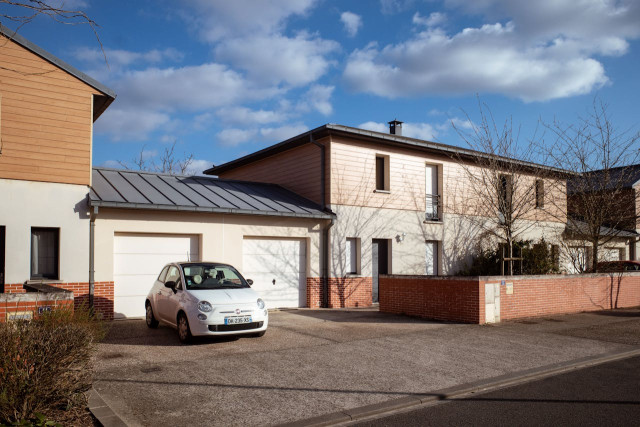
Middle-Class to the Rescue: How Rising Incomes Drive Housing Demand
The economic performance of Bangladesh in the recent past decade has changed the life of millions of people. Whether working in a garment, or a service-based occupation, the urban families are seeing their incomes go up, their lives become more stable, and the quality of life higher. The towns like Dhaka, Chattogram, Sylhet, Rajshahi and Gazipur are transforming their skyline- not only with tall buildings, but also with colonies of middle-income households that dream of improved dwellings. This social-economical transition is transforming the housing demand scenario no longer in the quantity, but also in the quality, sustainability and design.
The emerging middle classes no longer want to be content with shelter anymore; what they want is to live in a house with clean utilities, neighborhood, school, park, and easy access to market and place of work. They also meet international standards including the lower end of the prices. The emergence of this demand creates a window through which the Bangladesh housing market can be changed, altering the situation of informal and under-regulated construction to formalized, inclusive and quality-oriented development. However it is also risky because, in case developers and policymakers do not react and reduce its negative effects in time, expensive prices and limited availability may lead many people to illegal settlements or mortgage-based consumption.
This blog discusses the impact of the increase in the number of people in the middle-income range on the demand of houses in Bangladesh. It also observes the issues and opportunities in four major dimensions including quality expectations, formal market innovation, the supportive policy, and the total cost of ownership. The last part indicates that even as growth of income is crucial, sustainability and equity should be the way to go.
Income and the Rising Housing Expectations
The last 10 years have seen a transformation in many the urban households who have netted out of basic rentals and developed ownership desires on the strength of higher wages, remittances and financial inclusion. Such households are not satisfied with poor amenities anymore government is looking at homes that have good water utilities, ventilation, safe kitchen exhaust pipes, hard finishing and room to plant small gardens or create balconies. Micro-apartments or split up houses are more being disfavored in well planned 2 3 bed rooms.
This change is particularly observed in the case of dual-income households and in younger professionals. Although prices are still sensitive, they can stretch the budgets because of financial flexibility-and lifestyle upgrading in small chunks. When savings are increasing and formal credit is available, such households will be more willing to take mortgages or rent-to-own or cooperative ownership schemes. Mid-level purchasers usually listen to the reputation of developers, quality of earlier projects, and legal understanding. This has led to a competitive demand, which requires developers to demonstrate transparency, online interaction, and after sale services to generate trust.
To the market it is a demographic change, the middle-class is turning into the mainstream consumer of formal housing and is no longer a fringe population. The increasing need is loftier buildings that were constructed with this group in mind, that are located close to transit stops, schools and work corridors; in short, mid-range apartment structures. The content of the affordable housing is shifting not only price per square foot, but the whole experience.
Official Market Expansion and Innovator Creativity
The supply is being driven by increasing demand of the middle-class buyers. With a promise of new potential, developers are coming up with projects that would cater directly to the mid-income producers. These are well planned mid-rise and satellite zone projects that are ranging between BDT 30 lakh to BDT 1 crore. In order to bring in the needs and demands of the borrowers, financial institutions have started to underpin customized mortgage programs that allow some flexibility in terms of flexible down payment, tenure extension and shared ownership structure.
Make-up is accelerating. Modular building materials lowers wastage and accelerates delivery- enabling developers to satisfy demand in a shorter time and at a lower price. Passive designs which have cross ventilation, thermal insulation and solar orientation consider cost and utility in terms of future and past comfort and the homes are more competitive and cost effective. Affordable green housing is not a peculiarity anymore; it is coming to the center of the development scheme.
The advertising has also changed. By using digital platforms by developers with 3D walkthroughs, offline booking after selection as well as uniform legal documents it makes the process of buying easier to the middle-class clients, who have an easy availability of the technology. The real-time analytics provide the best guidance to developers in terms of size, facilities and pricing. The need to find a competitive edge is a force behind transparency-unit price, quality of material and time schedules of project delivery.
Small and medium developers do not have problems with financing. Mid-scale projects are turned away by the rising land prices, zoning ages, and the time it takes to get a license. This may restrict the amount of service-oriented affordable developments unless care and support policy measures (e.g. fast-track approvals or tax rebates) are put in place.
Policy Mandates of Sustainability of Middle-Class Housing
The government also occupies the center stage in transforming the housing demand into inclusive supplied. Middle-class housing should not be sold as an asset to exploit, but it needs to be considered as an urban infrastructure investment by local and national authorities. Zoning policies ought to foster a mix-income community, a transit-oriented development and a development of higher-dense housing that serve the urban centers. Supply can be kick-started through the allocation of publicly owned land or providing flexibility to land use of mid-tier housing.
Economic benefits play essential roles. Formal housing can be affordable to the middle income through mortgage guarantee schemes, interest subsidies to first time buyers, rent-to-own systems and through cooperatives housing funds. The market-led supply should be coupled with the social aims by using public-private partnership, with government contributions in terms of land or incentives and developers bringing affordable units.
Quicker approvals are still necessary. Fragmented regulatory control and complex licensing slows down small developers and prolongs the project development process. Efficient municipal procedures and online permits would make their processes cheaper and faster.
Investments in transport, utilities, schools and health facilities in the growth corridors should be given a first priority. With infrastructure connected correctly, not only housing, but social mobility and economic prospects are provided. Finally, policy structures should embrace housing affordability as a social right and not an incidental common part.

Holistic Affordability: Beyond Price per Square Foot
To the middle class, price competence is more than just the initial price. Is it viable in the long term? The cost of ownership will be total cost of ownership comprising utility bills, transport expenses, service charges and maintenance. Additions, such as solar, energy efficient appliances, smart meters, rainwater harvesting and efficient waste, cut back on the repeated expenses, which are considered to be essential to most middle income families.
Affordability is also influenced in smart building methods. Prefabrication saves money on labour force and lists of delays, and a climate-responsive design creates comfortable spaces needing no energy. Walkable community planning and access to public transportation makes mobility affordable. Affordability also has long-term benefits as it is easy to access affordable education, and care when living in the area.
Affordable housing can be quickly realized when these new features are added by developers and assisted by the policymakers in one way or another, through certifications, incentives, or provided through utility subsidies. In this case, an affordable housing becomes possible not only affordable to purchase but live in. Middle-income families are making choices not only according to the price but also according to the value.
The Urban Shift: How Middle-Class Growth Is Redefining City Landscapes
A significant transformation is taking place on demographics in Bangladesh. Cities in Bangladesh, such as Dhaka, Chattogram, Khulna and Sylhet, are redesigned, not only in terms of physical area, but also in terms of social and spatial features due to high rates of urbanization and the increased size of the middle classes. With increment in the level of income, middle-class families want improved housing conditions, cleaner conditions, and also urban services. This middle-income urban wave of demand not only exerting pressure on house supply but is also overturning the definition of what cities should deliver.
The new middle class of the urban population is focused on the accessibility of employment opportunities, security, availability of education and medical facilities, appropriate infrastructure of roads, drainage and transport. Their increased expectations are causing neighborhood design and even urban policy. Semi-walls, sub-rise blocks, multi-purpose projects and accommodations close to great transport facilities are on the rise. Where people live is as significant as the houses they are living in.
The trend is also increasing densification in strategic areas as well where it is found that the desire of the families is to obtain a smaller, but well situated apartment than isolating large houses. Consequently, the vertical skyline in Dhaka is increasing, which creates new opportunities to developers but also increases the burden of utilities, roads, and other people services. Without the rate of planning, overcrowding and service shortages might counter the advantages of investing in the middle-class.
Interestingly, this change does not apply to mega-cities only. Population inflow is also occurring in secondary cities which are now starting to receive middle-income residents who can no longer afford living in Dhaka. When the appropriate infrastructure and real estate planning are in place, cities such as Gazipur, Cumilla and Mymensingh can act as centres of growth of the middle-income house and even new economic centres on their parts.
The transformation of the urban environment that is propelled by the rise of middle classes is two-edged. On one hand, it will develop vibrant, economic diverse and resilient cities. It is, on the one side, able to increase inequalities and environmental pressure when not controlled successfully. Unless inclusive zoning, transparent governance and equitable infrastructure investment accompany this boom, the poor may be left behind and sprawl will be enhanced.
Urban planning agencies need to reconsider the way cities are planned- be it zoning regulation, construction approvals, transportation networks and the utilization of land property. By so doing they will be able to capture the middle-class growth energy and provide superior urban futures not only to the emerging consumers, but also to all urban inhabitants.
Online Lending and Homeownership: How the Middle Class Can Use FinTech
Financing has conventionally remained one of the largest obstacles to the middle-class homeownership in Bangladesh. Even large portions of the population could not afford formal banking services, and mortgage systems were either regarded as something complicated and slow to go through, or only available to the wealthier part of the population. However, everything is shifting with the development of digital finance and fintech platforms rapidly.
The advent of mobile financial services, online lending platforms and credit decision engines has made financial services more democratized. More middle-income households are now able to establish a credit profile, borrow credits online, and know the status of their finances by using mobile devices. To most potential home owners this translates into the fact that they can now access home loans which they have not been able to access before.
Fintech is providing tailored mortgages, particularly to the salaried, small business people. Such online channels facilitate easier access to loans with immediate approvals, more flexible EMIs and payment schedules and a real time update on the EMIs and dues. Previously, a family that had got a decent and regular income would not obtain the loans because it lacked a collateral or credit history. Nowadays, even mobile payment transactions, the utility bills, and online pay slips can be used to build financial credibility.
Moreover, digital markets have eliminated the role of intermediaries’ developers and buyers are no longer linked. Home buying with middle-income customers is becoming easier and transparent, as virtual property tours, online booking portals, escrow-facilitated transactions, the use of AI-based pricing, and automated valuation models eliminate the middle men and decrease the fraud.
Meanwhile government-supported housing finance programs and online KYC (know your customer) mechanisms are accelerating the release of loans and decreasing bureaucracy. Fintech is also being exploited through the public-private partnerships to administer subsidized housing programs and check eligibility of low- and middle-income families automatically.
In spite of these developments, challenges are there to be overcome. A majority of the digital mortgage products still require substantial down payments, which are outside the reach of the younger generation of families or even the unorganized sector. Fintech has to come up with novel products which will be suited to the variable income streams like freelancing or seasonal workers. Banks-digital platform risk-sharing possibilities can promote lower interests rates and increase inclusion.
Digital literacy is yet another major threat to the development of fintech in housing. Although the small companies claim to streamline the transactions, in recent years when the economies and the population of people with middle income and those purchasing homes for the first time grows and with it, the digital contracts and online money-related transactions remained rather new and even scary.
The issues of fraud, uncertainty and failure to be provided with the human assistance usually instigate an unwillingness of people to trust or employ these systems. It will be impossible to benefit fully in terms of what fintech intends to achieve without filling these gaps. It takes more than technology to build confidence so how can we expect customer education, bespoke support and friendly platforms in local tongues to win a customer? Users become willing to engage, when they feel informed and supported.
An interactive user guide, multilingual interface, and responsive customer service go a long way towards making digital housing finance more friendly and inclusive. Families with strengthening awareness can be enabled to make the big step into formal home ownership using convenient, reliable and clear digital platforms.
However, the possibility is revolutionary. Fintech isn’t merely opening up mortgages to the population; it is empowering people financially and cultivating a sharing society of home owning dominance in their growing middle classes in Bangladesh. With digital infrastructure growing and growing, the trend will only gain momentum, unleashing new demand in quality housing and opening the doors to strong and sustainable economic performance.
Conclusion: Middle-Class Demand Can Power a Housing Revolution—If Sustained by Systems
The emerging middle-income population in Bangladesh bears endless possibilities of correcting the housing market by pushing it to formal supply, transparency, and improved living. Their demands are influencing the developer conduct, finance, and policy designs. However, spurring up-incomes are not sufficient in ensuring positive results.
To have this demographic turnaround diminish housing shortage in a constructive and lasting way, market prompting should be augmented by responsive policy, encompassing regulation, and investment in infrastructure. Zoning should embrace inclusion density. Real household income patterns should be used to finance. Smart design and environmental sustainability should be no longer an option, but an everyday combination.
When such conditions are achieved, the middle-income households can actually become the backbone of housing transformation in Bangladesh. They will fuel demand, increase quality and enhance urban development that is more equitable. However, when systems are not flexible, demand will exceed supply-or households will resort to dangerous lending practices, or informal housing settlements.
Bangladesh is on a crossroad. The demand of housing is running on rising incomes. Yet in order to deliver on that promise, that is, to bring about stable, broad-based, urban development based on dignity and environmentally viable access, policy cannot only focus on what sells.
Also Read: Housing_Conditions_and_Demand_for_Housing





-3dkuLgKhRD.jpg)
-49HupTvwDD.jpg)









LEAVE A REPLY