

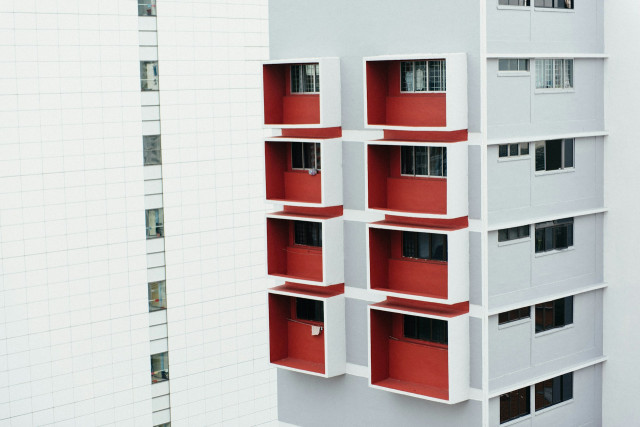
Exploring the Role of Micro-Apartments in Addressing Housing Shortages
With urban populations continuing to increase and the cost of housing skyrocketing in cities worldwide, cities are becoming more and more innovative in order to provide solutions to severe shortages in housing. One of the most drastic and appealing of those remedies is the micro-apartment: small living units, usually less than 300 square feet that are highly efficient in small spaces. Previously regarded more as transitory ones or accommodations provided by living-smaller movements, micro-apartments are attempting a resurgence as a permanent and expandable alternative within densely populated urban centers.
Proponents: micro-units can extend affordability, curb sprawling development, and appeal to lifestyles of the single working professionals and students. The question professional critics raise however is whether or not such limited living spaces are efficient or healthy in the long term, or whether micro-apartments simply displace the burden of providing more successful means of housing. The debate only gets louder as cities in New York to Tokyo, experiment with hyper-efficient micro-unit developments as rents rise and demand outpaces supply.
This blog goes further to quantify how micro-apartments are being used to help solve the housing shortages problem and its advantages, as well as constraints, and future changing role in the current urban development.
The need of Space Efficiency and Urban Density
Rapid urbanization is one of the most alarming trends of the world that impact the popularity of micro-apartments. It is projected that 68 percent of the world population will be urban as of 2050. High demand spaces in cities, like Hong Kong, San Francisco and London, are becoming less and less common. Land values have increased exponentially and extensive apartment developments proved to be costly and time consuming to build. Micro-apartments are an effective utilization of excessively scarce space as high city densities can be finessed to host more residents without any further footprint growth.
Micro-units enable the developer to maximize the amount of housing units on the same building envelope. A conventional building which would have the capacity of providing 40 regular one bedroom apartments would have the capacity to provide as many as 60 or 70 micro apartments. Such increased number of units can assist with supply imbalances quicker, appealing to the consumers who value location more than square footage.
Moreover, micro-apartments resonate with changes in contemporary society, with small living and eco-friendliness. Reduced carbon footprints are natural because the smaller homes use less energy on heating cooling and lighting. This is in support of larger city objectives regarding sustainability and green city design. When the public transport is highly developed, then the necessity in large living spaces decreases because people are going out more often and enjoy the amenities that were created in the city: parks, cafes, co-working places just to name a few.
However, there are concerns of quality of life because of this densification. Criticizers fear that the living arrangement, even in stand-alone units, can cause heightening levels of stress or societal isolation unless countered by common space and the projective interface thereof. Ultimately, micro-apartment solutions to housing shortages rely not only on numbers but must be carefully designed, must facilitate shared social spaces, and must be planned at the citywide level to be livable.
Low Cost, and Market Accessibility
The low cost possibly has been discussed as the most cited micro-apartment advantage. Young people working, students and unattached renters are at risk of being forced out of the major city housing markets. Conventional apartments or studio apartments of a one bedroom are often not affordable. Designed on considerably smaller floor plans, micro-apartments have cheaper monthly rentals and utility bills, which adds to their potential lifesaving role to those who are keen on residing in the urban centers.
Depending on the market, monthly rates of micro-units can be twenty to thirty-percent less than of traditional studios. Such difference in prices could spell the distinction between the ability to afford living in a nice and secure neighborhood to being forced to trek far away suburbs with long drives to work. To individuals interested in locational factors be they job, networking or lifestyle, micro-apartments are a good point of accessibility to the city.
But what is cheap can get relative. In cities such as New York City, micro-apartment rents can run upwards of 2,000 dollars a month, casting some doubts as to whether micro-apartment is to aid low-income workers. With such circumstances, micro-units are increasingly seen as a niche product that serves a more upwardly mobile population, not a solution that is broad based and inclusive to housing inequity. Incentive/subsidy policies (such as subsidies to micro-unit developers) might also be effective in securing the presence of some fraction of affordable housing.
Alienation Common amenities are common to be part of the attraction and reason behind higher micro-unit rents. Typical micro-apartment complexes include communal kitchens, rooftop terraces, and gyms and shared lounges. Such common spaces are also extensions of the living unit and provide social and recreational activities in place of lost personal space. The paradigm of the globalized rat race and the luxurious share plenty of this world-is-my-oyster that is a key ingredient in the appeal of micro-apartments to market to a Millennial and Gen Z professional.
Nevertheless, the affordability issue is complicated and is situation-specific. Though the micro-apartments are viewed as the solution that provides cost relief, which is fine, they ought to be part of the broader mosaic of housing solutions such as social housing, subsidies, inclusionary zoning, which, would, in turn, solve the housing crisis at all income levels.

Lifestyle Evolution and Changing Demographics
Micro-apartments are not just a response to market factors, they are also an expression of changing lifestyles as well as changes in the demographics. There is an increasing desire among urban dwellers today that they would spend money on experiences rather than property, move around rather than be sitting permanently and enjoy convenience rather than have a large estate. Single young adults as well as digital nomads and urban professionals are not getting married, or buying a house as fast as they used to. These dwellers value proximity to employment, restaurant and club zones, and transport routes and cultural sites and tend to live at the cost of space.
These changing interests have been noted by the developers. Micro-apartments may be smaller living spaces to elicit a minimalistic living style with convertible furniture (e.g., Murphy beds and folding tables), small storage, and built in shelves to minimize cluttered space. To residents with most of their time out of the house in offices, eateries and other social occasions, a limited living room is a viable sacrifice.
Micro-apartments have come with co-living models, which merge in some cases, between studios and common spaces. Under co-living arrangements, there can be separate bedrooms and common kitchen or living room. This combination model also demonstrates how community and shared amenities should be used to conceptualize the living space as opposed to just square footage. There are also the demographic trends causing a need in smaller units with elder populations. Micro-apartments may also appeal to retirees seeking to downsize and be more proximate to urban services without having to take care of a large residence as long as such residences are easily accessible.
However, these instrumental arguments of the lifestyle do not dispel the fear that it might be overcrowded, have mental health effects, and may result in loss of privacy. The effectiveness of micro-apartment in achieving modern living lies in the well-thought urban design and the infrastructure surrounding them in the form of communal programs and public space and mental health support resources.
Regulatory issues and zoning codes zoning policies
Micro-apartments are subject to regulatory barriers in most jurisdictions despite their potential. New building. The failures of legislative efforts to permit building of units below a minimum size, constraining zoning requirements, and community opposition of developments usually make it impossible to increase the density of housing units in that way. Such laws may have safety and health-related grounds, but they may also be tainted by what we probably think of as obsolete standards of what already makes up acceptable livable space.
The cities seeking to engage in micro-apartments as part of its housing approach should review the zoning codes to enable more development of high density in suitable locations. There has been some trial with pilot programs or special permits to build micro-units in some municipalities, but here as well adoption has been limited. Additionally, the building codes (fire safety, sanitation, light and ventilation) are mandated to be tightly adhered to such that they safeguard the welfare of the residents.
Another strong obstacle can be the resistance of the population. The surrounding neighborhoods can make the claim that the micro-apartments will lower the quality of the community, traffic, or overwork the infrastructure. Breaking NIMBYism can be done, by communicating and educating residents on the positives these units can bring not just to their new neighbors but to the local economy as well, due to higher foot traffic and economic growth.
It is also important that city planners pay attention to infrastructure capacity. The intake of the population in a dense place will necessitate improvements in traffic, garbage and park space. When not keeping up with the increase in population, infrastructure could lead to the over-population of micro-apartments and the over-use of government facilities, and eventually the sustainability of the product will be compromised.
In order to include micro-apartments effectively, regulators must have sufficient leeway to support innovation and the right level of rigidity to defend minimum levels of dignity and livability. Such a balance means that micro-units become responsible vehicles in the housing market, not get-outs to save money at the cost of resident welfare.
Not a Cure but Complement to a Housing Crisis
Although micro-apartments offer great strengths in the form of reviving housing shortages, they are not a silver bullet. The housing crises are based on the many-faceted level that comprise inequality, lack of affordable housing in all sizes, stagnant wages and speculative investment. The main population addressed by micro-units is a discreet majority namely singletons or child-less couples, medium incomes. Families, low income earners and people with disability may not have the same advantage on micro-apartments.
Hence, micro-apartments must be considered to be a part of a wide housing access expansion plan along with several other tools. Micro-apartments have to co-exist with large-scale affordable housing projects, rent-regulated buildings, subsidized housing, and housing the vulnerable populations. Micro-units can offer an attractive adjunct in mixed-income projects, adding much-needed density and housing type variety and discouraging sprawl.
Towns with a diversified housing approach, one that includes micro-units to large apartments and co-living apartments, as well as senior housing, achieve healthier, more inclusive in town living environments. This ecosystem approach is vital to the success of micro-apartments. In the absence of complementary housing and socio-economic balance, micro-units only may lead to imbalanced or exclusionary results wherein the benefits feather only on some groups.
Moreover, the micro-apartment receives more profound answers to philosophical considerations of the question of the degree of living space at which it is possible to be proud of the person. Although for others, the simple life is not a problem, it is possible that under an economic pressure that people are made to live in a small unit, and that this strengthens inequality instead of overcoming it. Making sure that micro-apartments are not the worst choice but choice per se will be a necessary condition to make them ethical.
Social and Psychological Impacts of Living Small
Although the micro-apartments have undeniable economic and space efficiency benefits, there is increasing evidence of the social and psychological effects of micro-apartment life that we should bear in mind. Micro-living has the potential to promote independence and minimalism, yet it has also fostered mental-health and privacy issues and well-being.
Micro-apartment is intentional to many young workers, students, or digital nomads and complies with a hectic lifestyle. When a person spends the bulk of his day either at work or socializing or taking advantage of the conveniences of city living, then the small interior space might be a surprising liberation, not a shrinking place. Other residents have even claimed less stress to have less furniture to move, less rent to pay and less of a routine to follow.
But to another (especially the homeworker or indoor person) the absence of space may make one feel constricted. In the absence of a fractured physical space separating work areas, relaxation, and play, it may be more difficult to support healthy boundaries. This can lead to burnout or anxiety with time. To even a small nook to have a desk, or a corner to relax is important to the health of mind of many individuals.
The other exercise concerns isolation. Although most micro-apartment buildings have shared lounges and rooftops to foster a sense of community, not everyone is the outgoing or social type and would be happy to socialize with people they have just met. Poorly or not often frequented communal spaces can lead to the residents being isolated in their tiny rooms and spending hours alone. This risk is replaced with the most perilous alternative loneliness- a problem with severe health consequences in contemporary societies.
Sound and confidentiality can also prove to be a problem. Sound can travel through the walls or common hallways in buildings that have very high unit density. Having neighbors in close proximity a few feet away may be an uncomfortable experience to individuals who prize privacy. That is where intelligent architectural crafting is important: soundproofing, natural light and access to fresh air can make a world of difference in an everyday micro-unit existence.
Finally, it all boils down to social and psychological functioning of micro-apartment success in the way that the built environment enables people to satisfy other needs and not just shelter. Green spaces, social programming, and mental health services, and flexible communal spaces may not only make small living manageable, but also even pleasant. Micro-apartments will only continue providing a viable solution to the housing shortage problem if cities take into account these human factors in the planning and approving of such developments- not merely square footage.
Conclusion
Micro housings have become an interesting invention in combating the scarcity of houses, particularly in the densely populated cities. They present an interesting opportunity as a tool that can be utilized by policy makers and developers because of their potential to add to the number of available houses, make them more affordable, and suit new lifestyle needs. Capturing overall trends in preferred living styles, micro-units have taken on board space-efficient design, sustainability, and community-based lifestyles in the modern city.
Nevertheless, they do not serve as wonder cure. They are only effective when regulatory barriers are considered, living standards are upheld and when they are a part of an overall housing strategy, where unit types are diversified and affordability solutions are in place. Micro-apartments do not need to substitute conventional housing solutions, but be complementary. With careful consideration, they can be used to increase housing and promote the livelihood and diversification of cities.
The question of micro-apartment in alleviating housing shortage is, in short, a question of balance, a balance between space and price, safety in privateness and communality, novelty and control. Micro-apartment towns that can achieve this balance might realize that micro-apartment housing is not just an urban fad but will become a lasting aspect of the cities housing profile.
Also Read: Australia Affordable Housing Shortage











LEAVE A REPLY