

Making Building Codes “Pro-Poor” Without Compromising Safety
Building codes are important in defining cities, protection of lives, and structural integrity of the built environment. They are constructed in such a way that they guard the occupants against risks like fire, earthquakes, floods, and structural collapses.
 But, also in most of the
low- and middle-income countries, building regulations have been turned into
tools of exclusion. The norms based on the high-income settings tend to
presuppose the presence of formal land tenure, high building budgets,
professional contractors, and the availability of certified materials. These
assumptions are not true to millions of low-income households.
But, also in most of the
low- and middle-income countries, building regulations have been turned into
tools of exclusion. The norms based on the high-income settings tend to
presuppose the presence of formal land tenure, high building budgets,
professional contractors, and the availability of certified materials. These
assumptions are not true to millions of low-income households.
Consequently, significant portions of inner city population develop beyond the system of regulation. The reason informal housing is growing is not because they are unwilling to be safe, there are just not able to afford the current codes due to financial constraints and procedures.
When compliance
is not possible, the enforcement is not overboard, corruption flourishes, and
safety performance is deteriorated instead of enhanced. This is a paradox of
its own because the same regulations put in place to safeguard the population
drive the poor into more dangerous lifestyles.
The issue is therefore not whether to have building codes, but how to reformulate them in such a way that they will be inclusive without reducing safety standards. Pro-poor building code does not imply the less-strong and unsafe house construction.
It implies rules that are locally
grounded, which acknowledge the incremental construction, and which are
concerned with minimizing risks and not with legal perfection.
To gain the advantages of building codes in reducing poverty, this paper will discuss how building codes can be pro-poor without altering their fundamental purpose of safeguarding the populace.
It analyses
the shortcomings of traditional codes, experienced realities of the low-income
building, the importance of incremental adherence, institutional modification,
and enforcement measures. The point is to show that safety and affordability
are not opposite to each other, but they can be mutually reached with the help
of smarter regulation.
Why Conventional Building Codes Exclude the Urban Poor
The majority of the building codes used in the developing countries are based on international prototype or colonial rule that was not meant to accommodate low-income housing.
These codes usually require materials,
construction methodology and design requirements that add a huge burden to
costs with little safety improvements of small-scale housing. Reinforced
concrete requirements, minimum plot sizes, setbacks, and professional
certification are often beyond the means of low income households or unavailable.
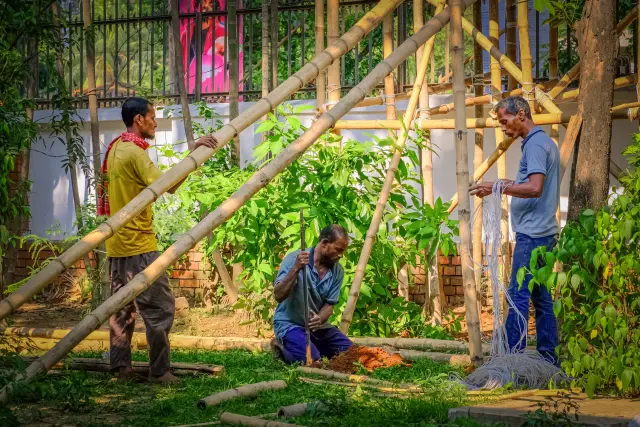
In most cases, the poor households have their houses constructed in phases, where the savings during a period of time are used to build the house.
Rooms are also added when resources allow and building may be
done by local builders instead of licensed ones. Traditional building codes,
however, presuppose the one-time construction, formal permission, and adherence
to it. Such a mismatch successfully criminalizes survival-based housing.
Exclusion is further increased by procedural barriers. Land titles, approving plans, and various inspections that are part and parcel in obtaining building permits are both expensive and difficult.
The compliance
process is not available even in the places where the safety standards are
technically reasonable. Consequently, most low-income housing is built without
permission, leaving the occupants beyond the law.
This omission has grave safety impacts. In the case of
informal construction, authorities are not visible and have no control, and it
is more difficult to consider the safe practices. Rigid codes drive
construction underground as opposed to advising builders on safer
consequences. Lack of involvement between regulators and communities exposes
them to the vulnerability to disaster, fire, and structural failure.
In this regard, traditional building codes do not achieve
not only equity but also safety goals. They only secure the minority of formal
constructions but not the majority. Being pro-poor in making codes involves
recognizing that exclusion itself is a significant safety hazard as well as
that viable regulation has to begin with the facts about how and why low-income
households build.
The Risk-Based Approach to Safety
Another way to approach building codes pro-poor is by starting to redefine the concept of safety in low-income settings. The concept of safety is not realized by means of idealized standards, but decreasing the greatest dangers to life and health.
This involves prioritizing hazards
depending on their probability and severity and not implementing the same rules
on all building types.
The highest risks of fire propagation, structural collapse on the basis of poor foundations, unsafe staircases, and susceptibility to floods or earthquakes are the highest in most informal settlements and low-income settlements.
The process of solving these risks does not necessarily
need intensive engineering or expensive material inputs. The use of simple
measures like correct loading paths, wall thickness, sound roof connections,
fire breaks and ventilation will help to significantly reduce the impact of
safety.
Risk-based codes are performance oriented, but not prescription oriented. They do not require a particular material or design but establish the safety outcomes which could be realized in many ways.
This means
that households and builders can use materials and methods that can be found
locally as long as they are of basic safety standards. This flexibility is
necessary in terms of affordability and local adaptation.
Notably, a risk-based approach is also aware that zero risk
does not exist, especially when resources are limited. The idea is to mitigate
risk and not to remove it completely. Millions of millions of homes of gradual
advances in safety have a much more significant effect than the absolute
compliance of a few formal buildings.
Building codes can also be used as an engagement tool as
opposed to an exclusion tool by focusing on their practical aspects, instead of
being based on strict standards. This methodology is safe with the safety as
the main goal, but with various ways to reach it.
Construction of the Compliance in Phases and Incremental.
The prevalent type of housing is incremental construction by
the urban poor. Homes are constructed by rooms, floor by floor, according to
income. Conventional building codes usually do not consider this fact as they
treat unfinished constructions as a breach of code, but not a building
progress. This lack of connection compromises safety and compliance.
The incremental building must also be a recognized practice in pro-poor building codes. This is by enabling gradual compliance whereby various safety requirements are enforced at various construction stages.
As a
demonstration, initial phases can be concerned with the foundation stability
and wall strength, whereas subsequent phases will be concerned with the vertical
expansion, electrical security and sanitation.
Staged compliance lowers initially incurred expenses and
motivates households to participate in regulatory systems at an early stage.
The builders will be more guided and checked when they understand that partial
compliance is welcome and encouraged. This leaves the authorities opportunities
to affect the quality of construction in the long run as opposed to when unsafe
structures are occupied.
The incremental codes also decrease the urge to take illegal
shortcuts. When there is a full compliance or all or nothing there is a total
disregard of regulations by the households. When compliance is slow and
attainable, regulation will be a channel and not an obstacle.
Phased compliance however, demands institutional change.
Inspectors need to be trained in order to evaluate construction stages not the
completed constructions. The systems used in documentation need to follow the
time progress. Above all, the government should change its enforcement approach
based on punishment to advisory involvement.
Incremental compliance makes no reduction of standards of
safety; it orders them realistically. With the correspondence between
regulation and the reality of the way housing is built, cities will be able to
increase safety outcomes and reach a greater number of people with building
codes that they need the most.
General Community Involvement and Institutional Reform.
Making building codes pro-poor is not just a technical issue
it is also an institutional issue. Regulatory agencies tend to be understaffed,
centrally located and constructed towards formal construction. In order to
reach the low-income housing, the institutions are forced to assume a different
role as the facilitator of safety and not compliance enforcer.
One of the reforms is decentralization. Local governments and institutions at the community level are in a better position to know the settlement conditions, building practices, and risk profiles.
By providing them
with powers to interpret and use codes, there is enhanced responsiveness and
lessening of delays. In cases where there is limited capacity, community-based
surveillance and peer-reviewing may supplement the formal inspection.
There is the need of community participation as a prerequisite of legitimacy and effectiveness. The better the residents can know the purpose of safety guidelines, and they can influence their design, the more they will adhere to them.
The participatory code development can help find
which standards are not realistic and which safety measures are the most
necessary. This is a process that develops trust and responsibility.
Another important institutional measure is to train the local builders and masons. The majority of low-income housing is built by unprofessional people who cannot access formal certification.
Practical
training that is linked with pro-poor codes can also help in enhancing quality
of buildings a great deal. When constructors are made partners in safety, and
not the objects of policing, there is an improvement.
Corruption and discretion should also be addressed as an
institutional reform. Simple and transparent codes minimize rent-seeking and
arbitrary enforcement. The response to clear and achievable rules is compliance
and high regulatory credibility.
Finally, the pro-poor building codes become successful when
the institutions become not gatekeepers of safe houses but enablers.
Enforcement, Urban Long-term incentives, and Urban Safety.
The implementation mechanisms will either make or break
pro-poor building codes. Conventional punishment is based on fines, threats of
demolition and stop-work orders. These strategies prove to be ineffective and
unhelpful especially in low-income settings. They raise informality, suspicion
and unsafe construction procedures.
Pro-poor implementation focuses more on rewards and
encouragement than penalization. Conforming to compliance can be boosted by the
reduced fees, technical support, accelerated approvals, and availability of
subsidized materials. Incentives can also be enhanced by connecting compliance
with the availability of services, like water and electricity, or tenure
security.
Another significant tool is graduated enforcement.
Authorities are able to give notices of improvement with strict guidelines and
schedules rather than imposing direct punishments in case of non-compliance.
This strategy identifies the limitations, but it is accountable.
Pro-poor building codes help to make cities more resilient
and safer in the long-term. Housing which is of low income and in good
structure will reduce disaster losses and enhance the level of public health
and hence the infrastructure investments will yield higher returns. Prevention
is much cheaper compared to the reconstruction process of the disaster.
Local Materials, Informal Technologies and Code Recognition
The lack of awareness regarding local materials and informal
construction technologies is among the greatest obstacles to the construction
of building codes that are pro-poor. Traditional code tends to favor
industrially manufactured construction products including reinforced concrete,
fired bricks, and steel, whereas it excludes earth construction, bamboo, timber
and other locally sourced materials. These exclusions have a drastic effect on
low-income households, whereby the construction cost is raised without
necessarily enhancing safety.
Local materials are highly utilized not due to their insecurity but since they are cheap, readily available, and familiar with local constructors. Most of them have excellent performance records in their proper use.
Non-standardised testing data or any guidelines are however not codified,
which usually results in a ban or discouragement of their use by regulators.
This either compels households to construct illegally or to replace unsuitable
materials which can actually be more risk increasing.
This gap can be bridge by introducing pro-poor building codes to include performance-based recognition of local materials. Codes can establish structural, fire and durability standards that various materials should correspond to rather than prohibit them.
The safe construction practices
with non-conventional materials can be developed by using simple testing
procedures, demonstration projects, and empirical evidence.
The identification of informal technologies is also
resilience enhancing. In most of the high-risk areas, the local building
techniques are more suited to the climatic and seismic conditions of the area
than foreign designs. Codes that disregard this knowledge will fail to take
advantage of the low cost of safety enhancement.
This transition depends on the institutional support. The
governments and technical agencies can make investments in research,
documentation, and training of local construction systems. By codification,
such practices give explicit directions to the builders and inspectors, thus
lessening discretion and uncertainty.
Climate Risk, Disaster Resilience, and Pro-Poor Regulation.
With the growing severity of climate change, low-income residents are becoming increasingly exposed to floods, heat waves, storms, and seismic events, which affect the safety of their residential buildings.
Since
the land market excludes informal settlements, which are often found in
high-risks areas, pro-poor building regulation is a very important disaster
risk reduction instrument. Conventional building codes, though, often do not
deal with such realities in an effective manner.
The pro-poor building codes have to create coordination between climate and disaster risk taking into account in a manner that is feasible to low-income households. This means it is necessary to prioritize the most frequent and serious risks instead of implementing all-inclusive but far-fetched requirements.
Considering the example of raising plinths in
flood-prone regions, enhancing roof fixings in cyclone regions or even simply
ensuring basic seismic reinforcement can save a lot of life at a relative pittance.
Strict codes, which demand complete hazard-proofing, can
unwillingly make buildings more vulnerable by pushing the building outside of
regulation. On the contrary, soft standards focusing on incremental resilience
foster participation and adherence. Protective measures are more accepted in
households that are affordable and with which there is a clear connection to
real safety benefits.
Spatial sensitivity is also needed to respond to climate in
a way that is responsive. Unified city wide standards might not apply in areas
where the risks are very different. It is possible to use pro-poor codes
permitting localized adaptations on the basis of hazard mapping, settlement
typologies as well as construction practices. This is a focused strategy that
enhances efficiency and does not require higher expenditure.
The sustainability of cities will be improved through the
inclusion of climate and disaster risk mitigation into pro-poor building codes,
which will safeguard the most vulnerable groups of people in the city and
enhance resilience of the cities in general. The regulation is not degraded
when it is adjusted to reality, it is improved.
Conclusion
It is both technical and ethical to ensure that building
code is made pro-poor, and at the same time, that the safety of users is not
put at risk. The exclusionary laws do not eradicate unsafe housing; they just
drive that out of the limelight. The fact that most population living in the
cities are unable to meet the building code is not the fault of the people but
the regulations.
A pro-poor strategy acknowledges the truths of incremental
construction, resource constraint and informal work, but main focus on
minimizing risks and preserving life. It puts emphasis on outcomes rather than
strict obedience, punishment instead of collaboration, and exclusion as opposed
to inclusion.
Cities can significantly enhance low-income housing safety by implementing risk-based standards, progressive compliance, institutional reform and enforcement through incentives. These reforms do not water down the aim of building codes; they satisfy it.
Also read: Safety on Construction Sites: Low-Cost Compliance That Prevents Delays













LEAVE A REPLY